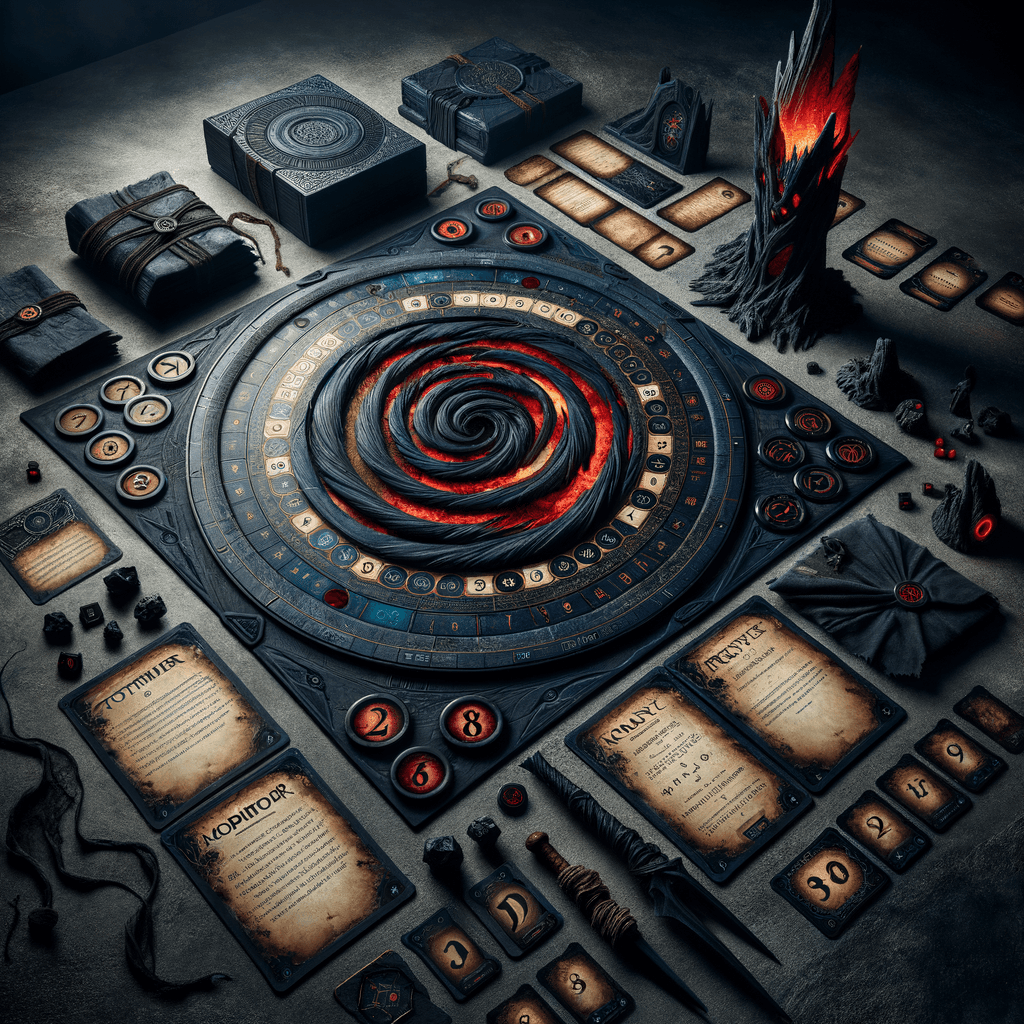
EVERLOOP
The Game of the Broken World
In taverns, courtyards, and hollowed ruins across the Everloop, this game is played wherever four souls gather with nerve enough to test each other. It is the chess of the Broken World — a contest of timing, deception, and the willingness to break what you've built.
Overview
Everloop is a 4-player strategy card game played on a spiral track numbered 1 to 100. Players accumulate Personal Scores by playing Sigil cards while collectively advancing a shared Totem along the track.
The tension: every player holds a secret Fray card — a hidden number that, once reached by the Totem, arms a devastating reset that can shatter the scores of everyone above it.
The game ends when the Totem reaches 100. The player with the highest Personal Score wins — but the player who pushed the Totem past 100 doesn't get another turn. Timing is everything.
I. Components
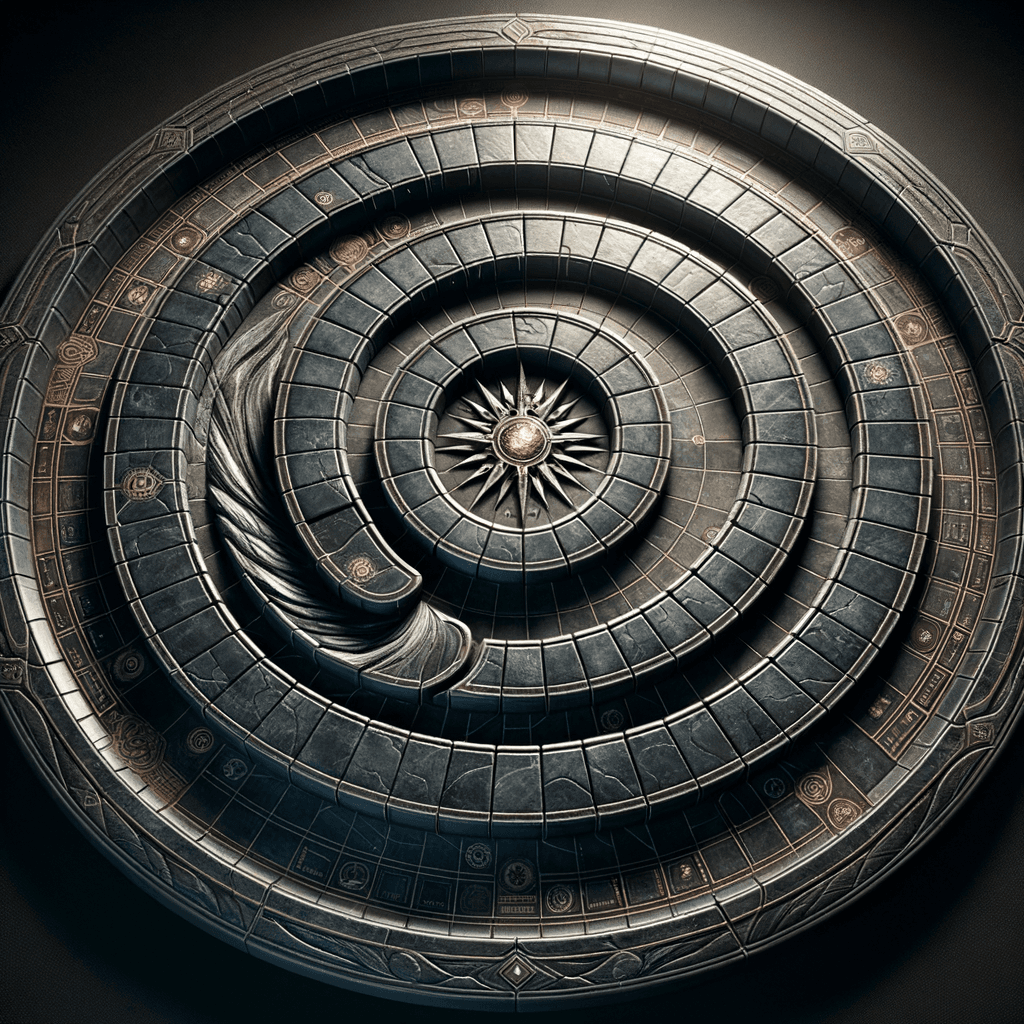
◈ The Board
A large circular slab of matte obsidian, 20 inches across. A spiral track of 100 spaces curls inward toward a central Void, each number etched and glowing with dying-ember light.

◈ The Totem
A heavy, seamless spire carved from black stone. It tracks the collective Table Score and casts no shadow — even under direct light.
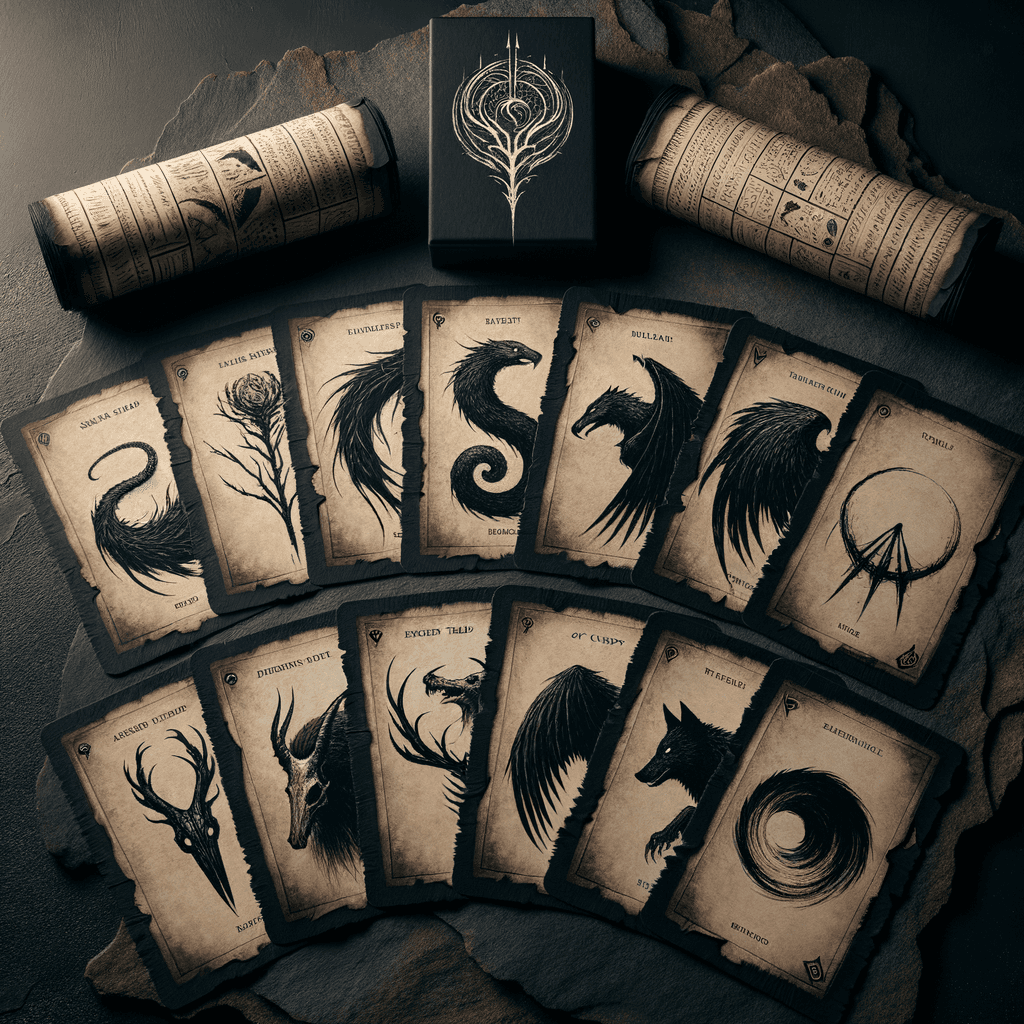
◈ The Deck
64 Sigil cards — tattered parchment with frayed edges. 8 sets of values 1 through 8, each bearing the stark black ink mark of a different creature.
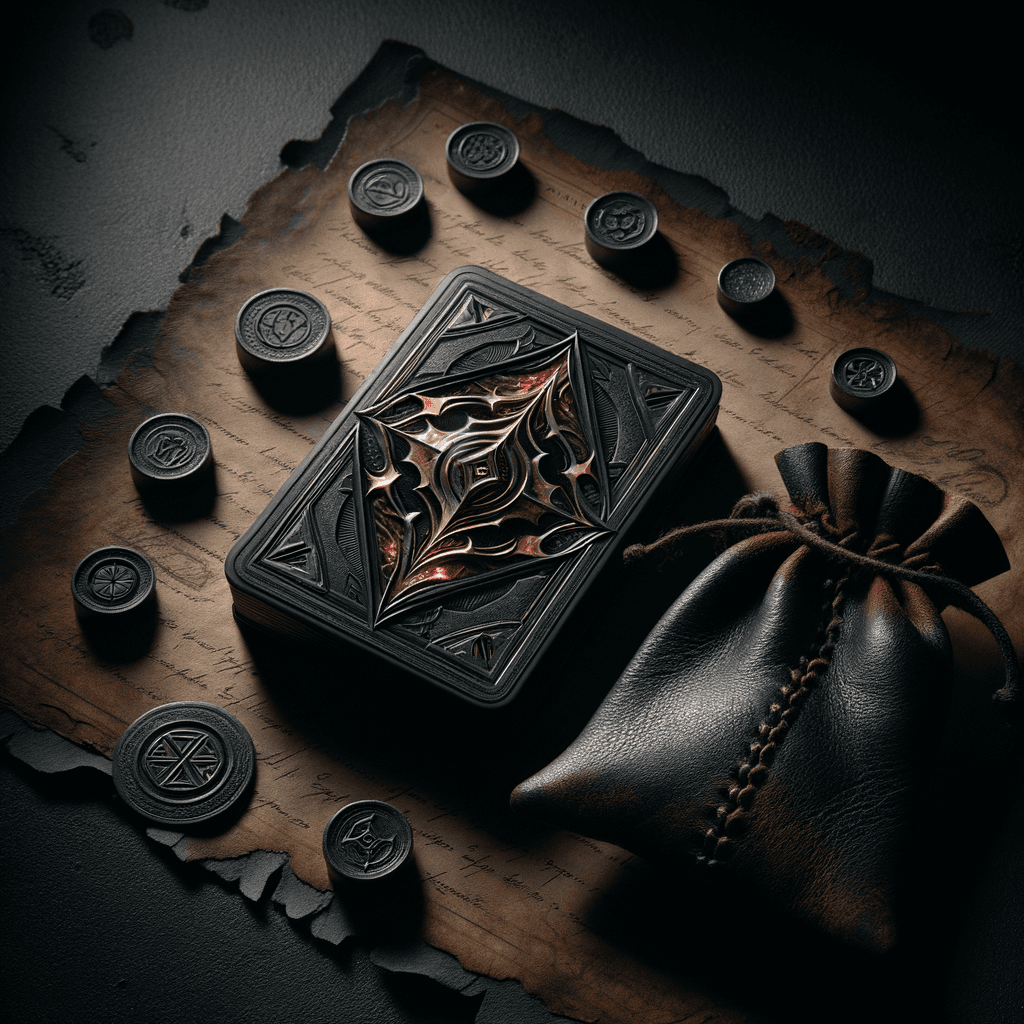
◈ Fray Cards & Vaults
4 cards with a fractured crown spiral back — one per player. Each hides a secret trigger number (1–99) inside a weathered leather Vault pouch.
The Eight Sigils
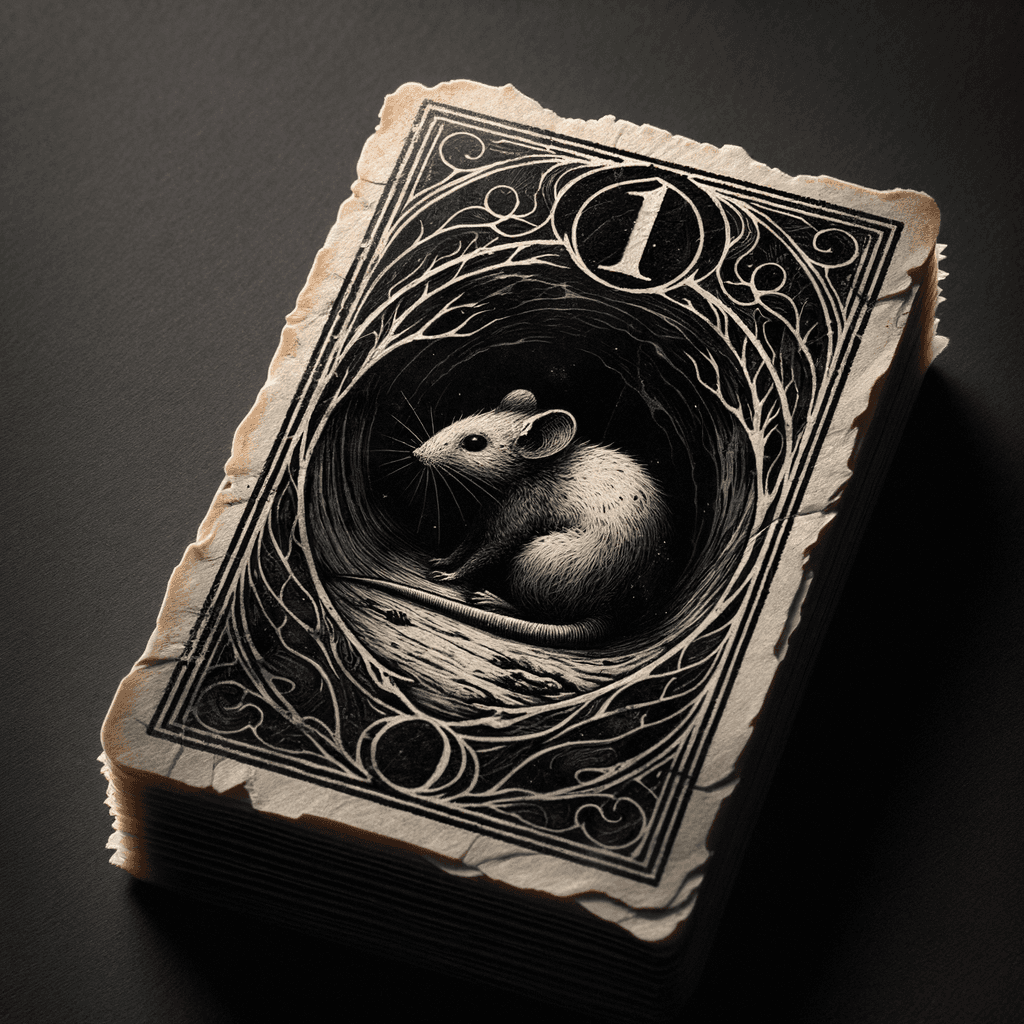
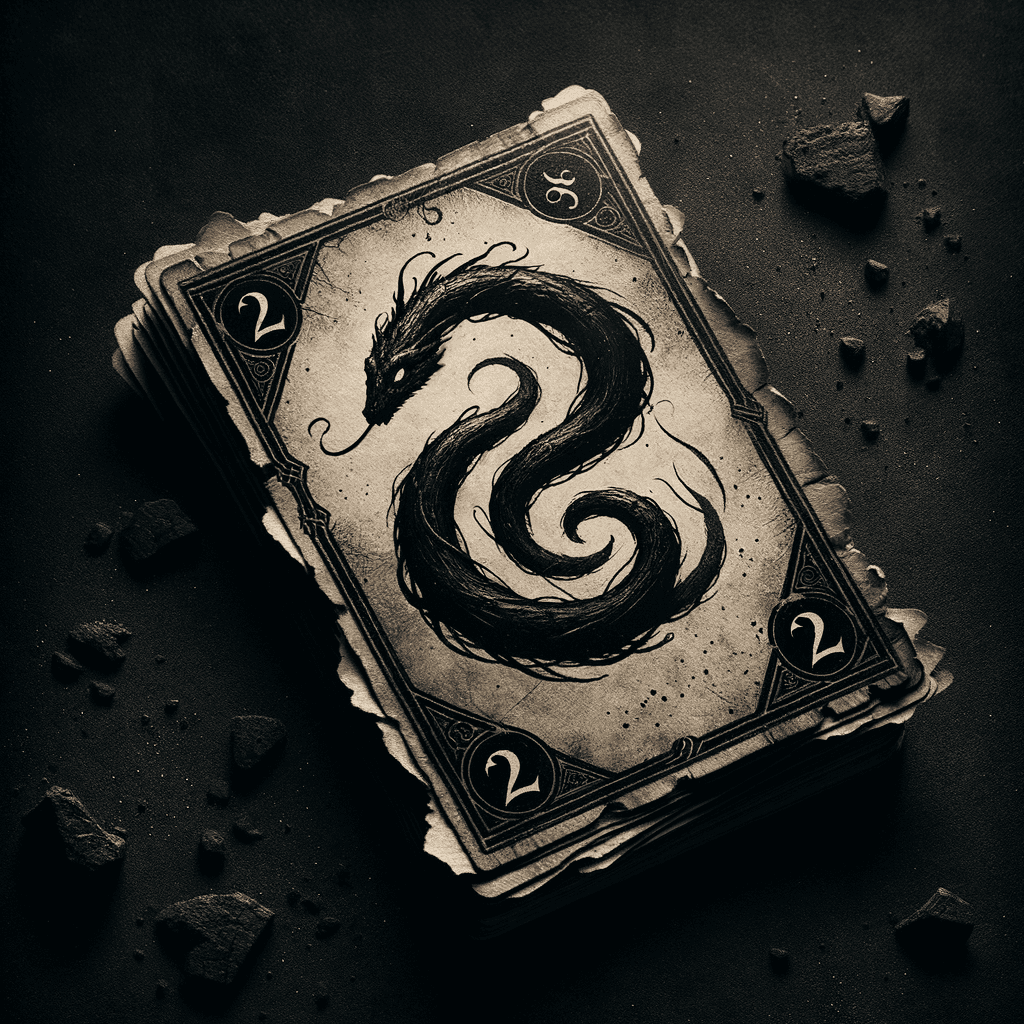
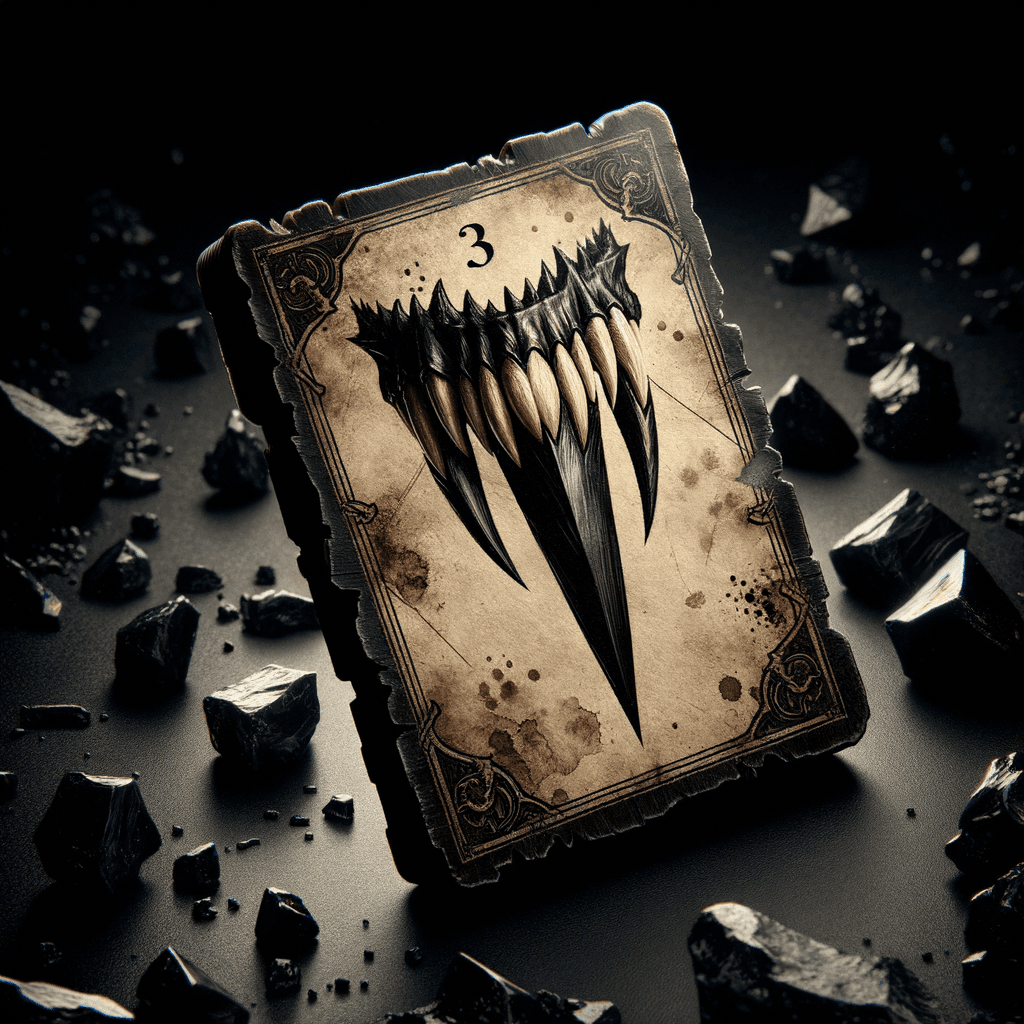
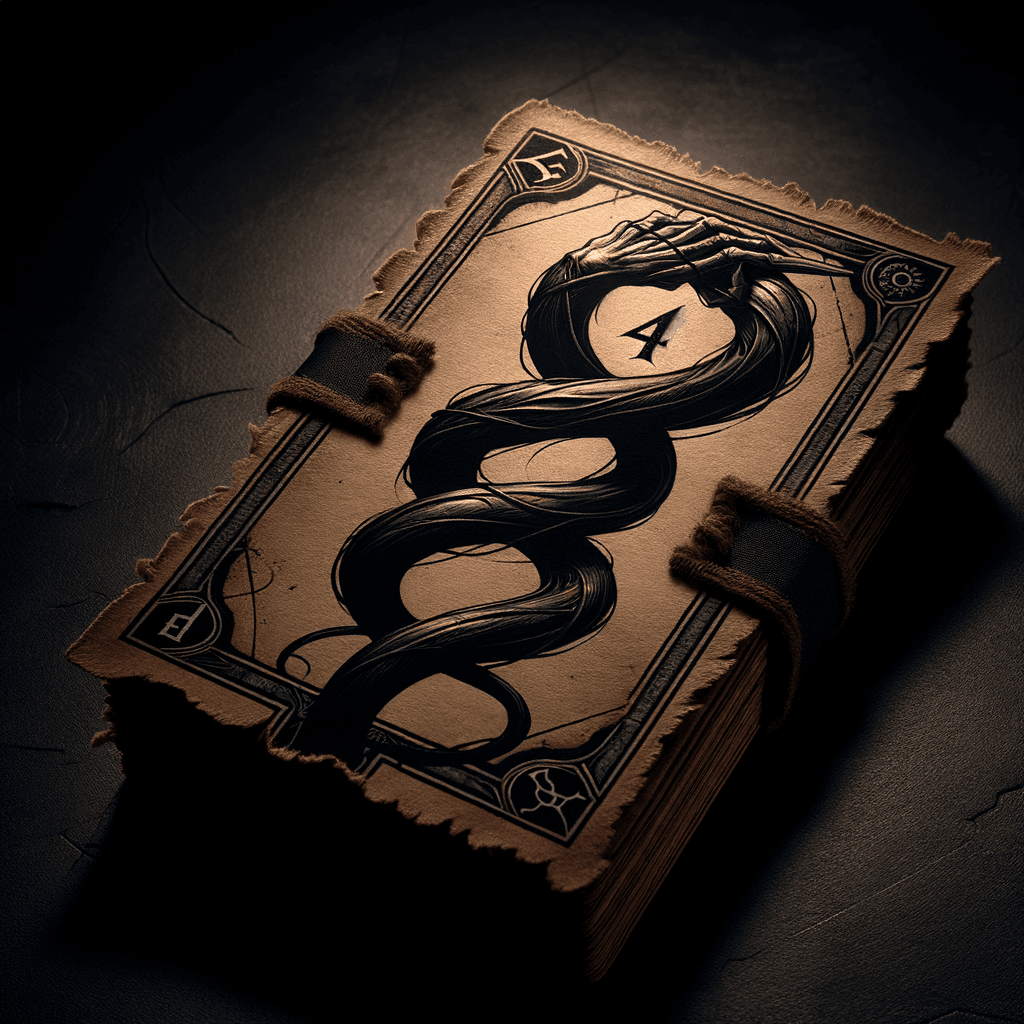
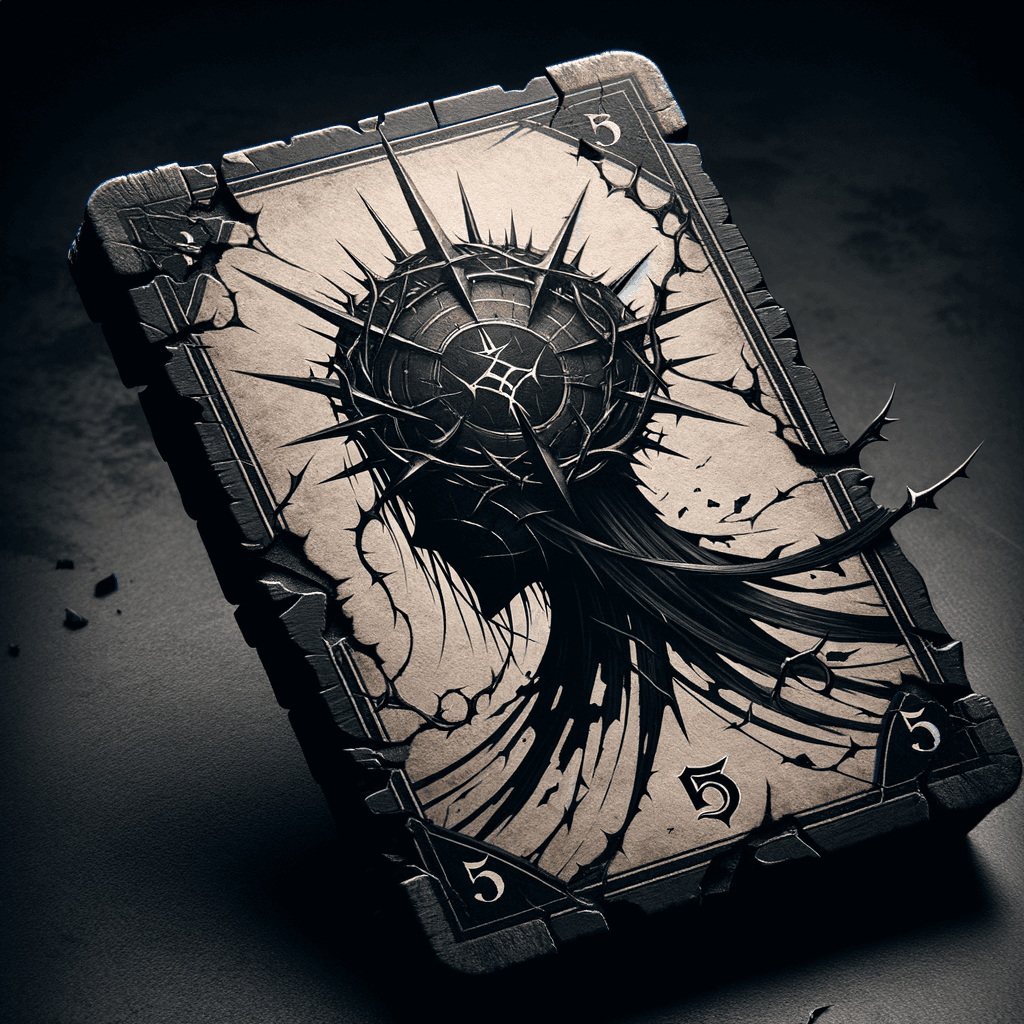
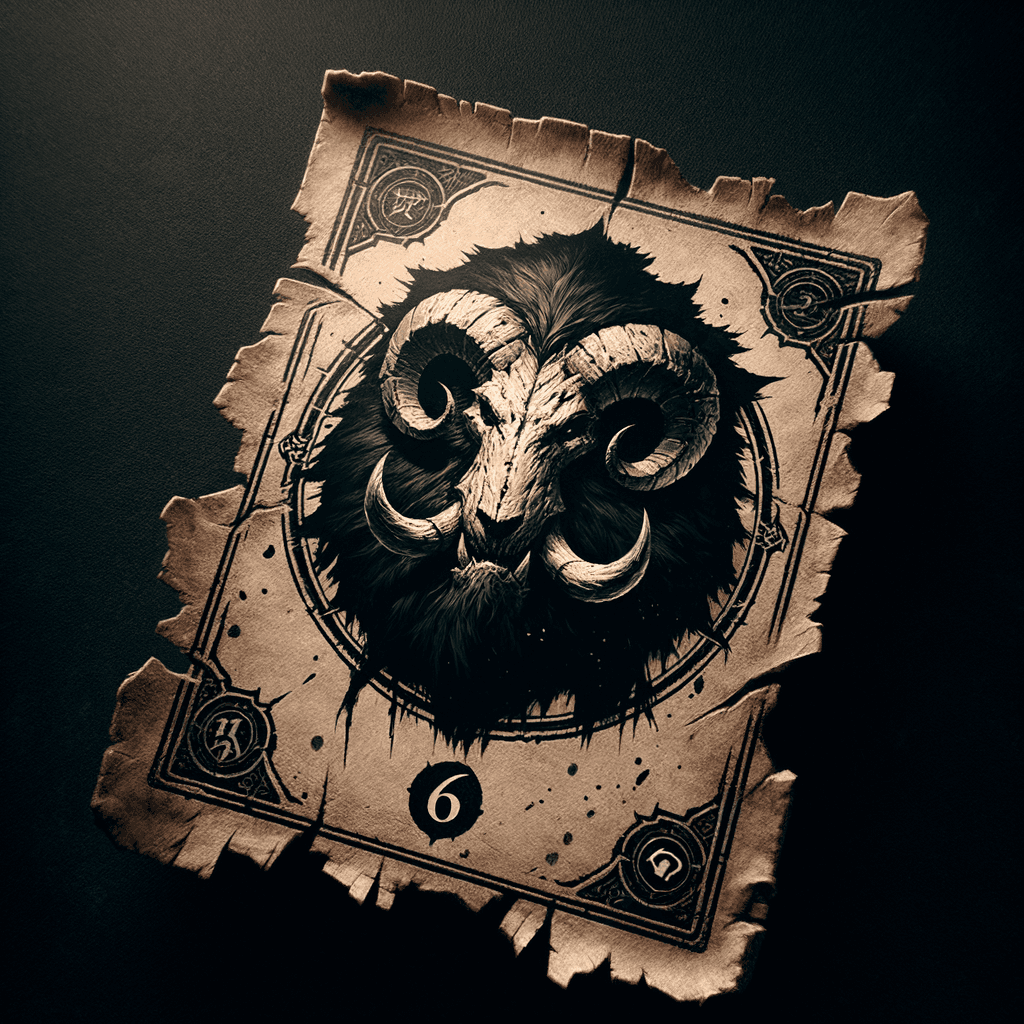
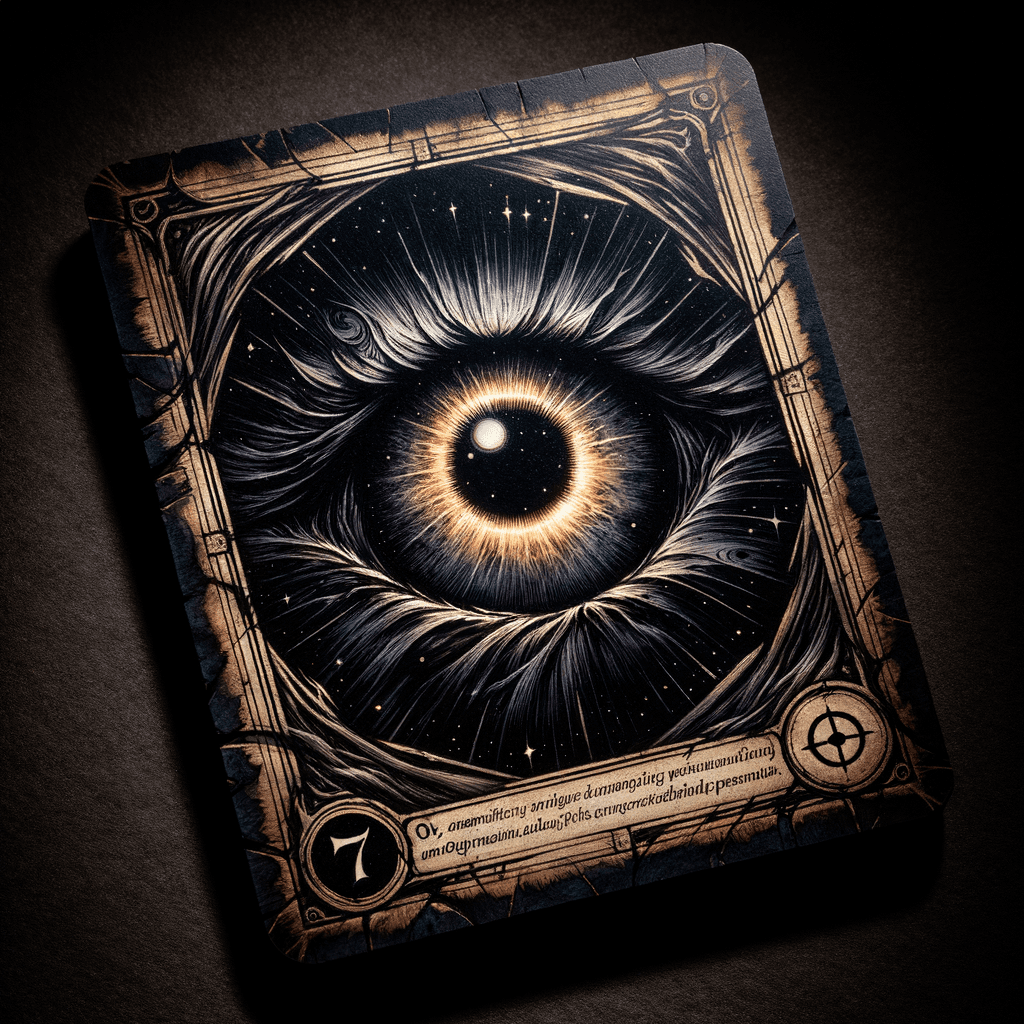
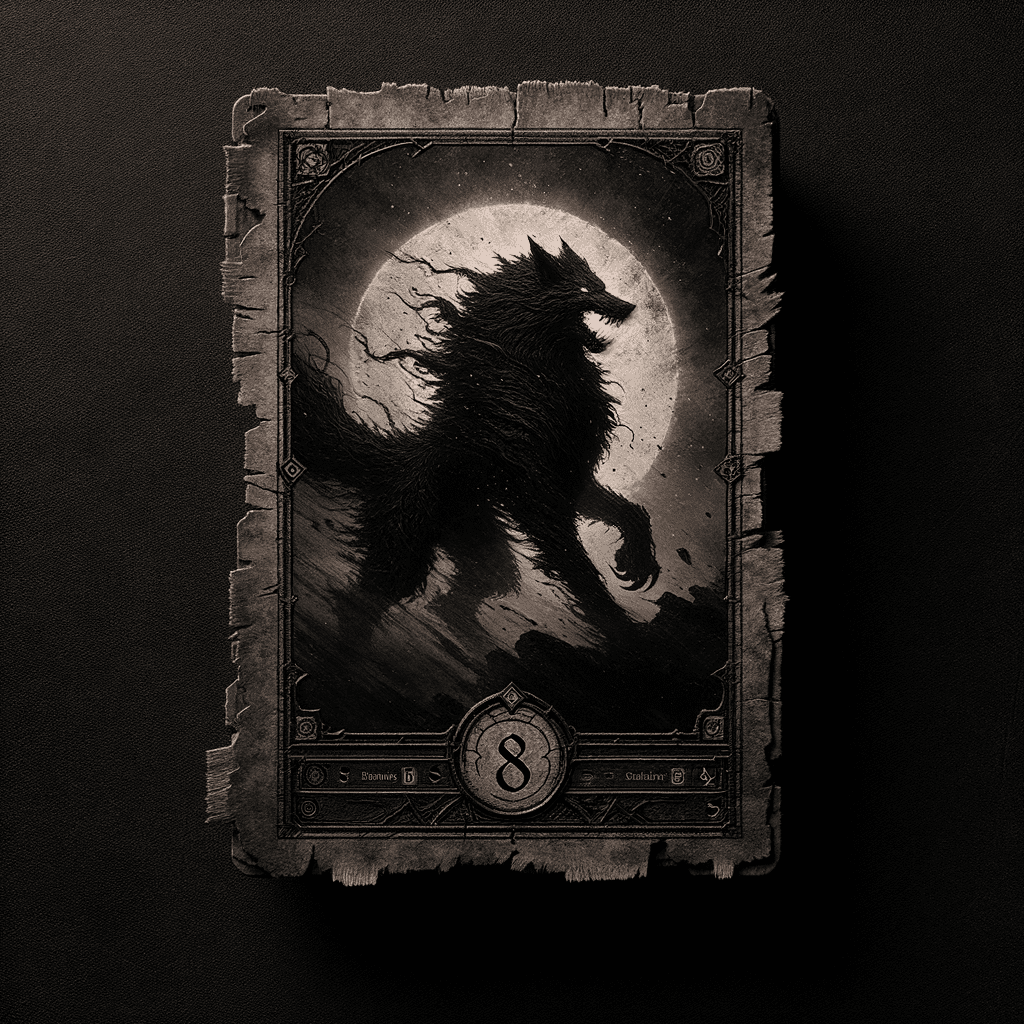
II. Player Stash
Each player begins with 8 unique tactical cards — one-time use resources that shape the flow of the game. Once played, they are gone.
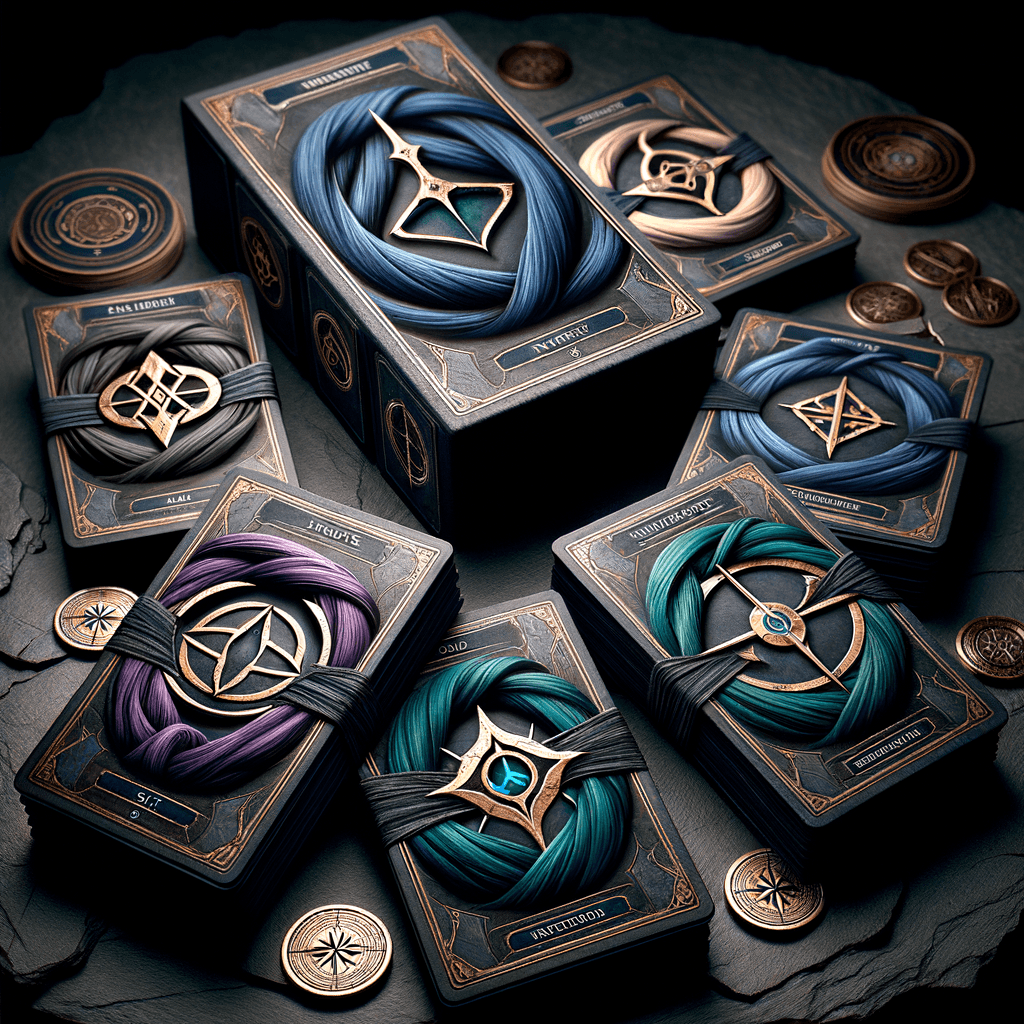
⚡ Modifier Stash(Active Turn only)
Divide your Sigil value between any players. The Totem only moves by the portion you keep for yourself.
Subtract your Sigil value from an opponent's Personal Score. The Totem moves backward by that value.
Tether your score to another player for the round. Whatever they score, you score too.
🛡️ Reaction Stash(Out-of-Turn only)
Prevents the full Fray reset. You only subtract your most recent scored points — you do not fall back to the Fray number.
Calculate your total Fray penalty (Reset + Last Score + Dead Loop if applicable) and cut it in half.
III. Standard Turn Sequence
Play a Sigil
You must play one Sigil card (value 1–8) from your hand face-up on the table.
Use a Modifier (Optional)
You may play one Modifier from your Stash. Split, Inverse, or Loop — each changes how points are distributed.
Update Scores
Add points to your Personal Score and move the Totem forward on the track by the same amount.
Draw
Always end your turn with 5 cards in hand. Draw from the Sigil deck to replenish.
IV. The Fray & Reaction Phase
The Fray is the heart of Everloop's danger. Every player carries a secret number — their personal point of no return. When the Totem crosses it, reality breaks.
Activation
A player's Fray becomes active once the Totem reaches or passes their secret number. They do not reveal this to the table — the trap is set silently.
Deployment
On their turn, an active player may choose to flip their Fray card instead of playing a Sigil. This triggers the Fray for the entire table.
Reaction Window
Once a Fray is triggered, play pauses. All other players may respond by playing a Shield or Compass from their Reaction Stash to mitigate the incoming damage.
The Penalties
Standard Hit
All affected players (those at or above the Fray number) reset to the Fray Number, then subtract their last scored points.
☠️ The Dead Loop
If a player is exactly on the Fray number when it is deployed, they lose an additional 15 points. A precise and devastating punishment.
🛡️ Shield Reaction
You do not reset to the Fray number. You only subtract your last scored points.
🧭 Compass Reaction
Calculate your total penalty (Reset + Last Score + Dead Loop if applicable) and cut it in half.
V. The Collapse — Final Round
The endgame is not a race to 100 — it is a trap. The player who pushes the Totem past the threshold becomes the Ender, and by doing so, surrenders their final turn.
The Trigger
The game enters its final phase when any player pushes the Totem to 100 or higher.
The Fair Play Window
The player who moved the Totem to 100+ is the Ender. They do not get another turn. Every other player (moving clockwise) receives exactly one more turn to play a Sigil and any remaining Modifiers to adjust the final standings.
The Winner
Once the rotation returns to the Ender, the game is over. The player with the highest Personal Score wins.
VI. Personal Score Trackers
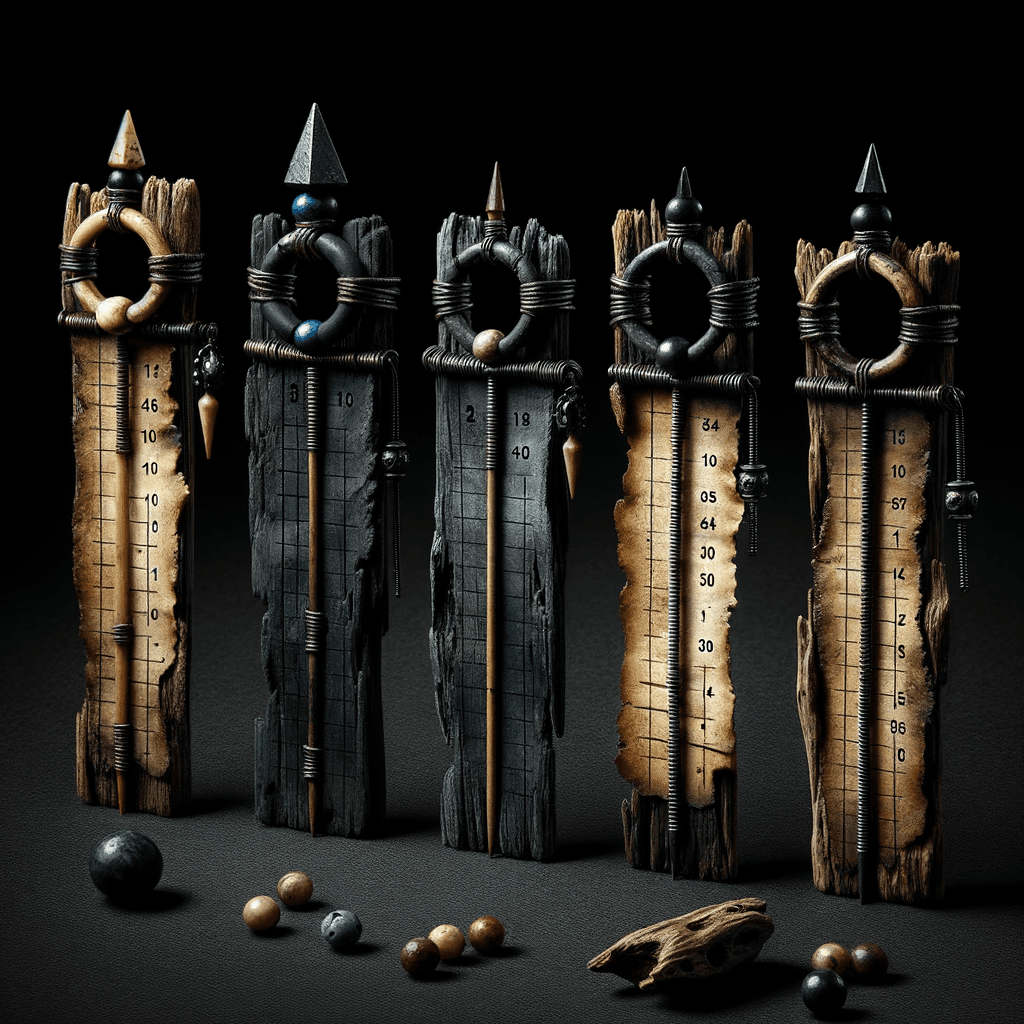
Each player receives a small vertical tracker — a notched stick made from scavenged bone, driftwood, and steel wire.
A sliding ring marks your Personal Score from 1 to 100. These are separate from the Totem — while the Totem tracks the collective pace, your tracker is yours alone.
They should look handmade, weathered, and scavenged — assembled from whatever the Broken World left behind.
Quick Reference
| Element | Details |
|---|---|
| Players | 4 |
| Sigil Deck | 64 cards (8 values × 8 sets) |
| Hand Size | 5 cards (replenish at end of turn) |
| Stash Cards | 8 per player (6 Modifiers + 2 Reactions) |
| Fray Range | 1–99 (secret, chosen at start) |
| Dead Loop Penalty | −15 additional points |
| Game End | Totem reaches 100 → Ender sits out → one final rotation → highest Personal Score wins |
“They say the game was old before the Fray. That the First Architects played it in the Fold, wagering not points but realities. That every time a Totem crosses a threshold, somewhere in the Pattern, something shifts.”
— Unattributed, recovered from the Hollows of Ashenmere