A Fever Architect
monster
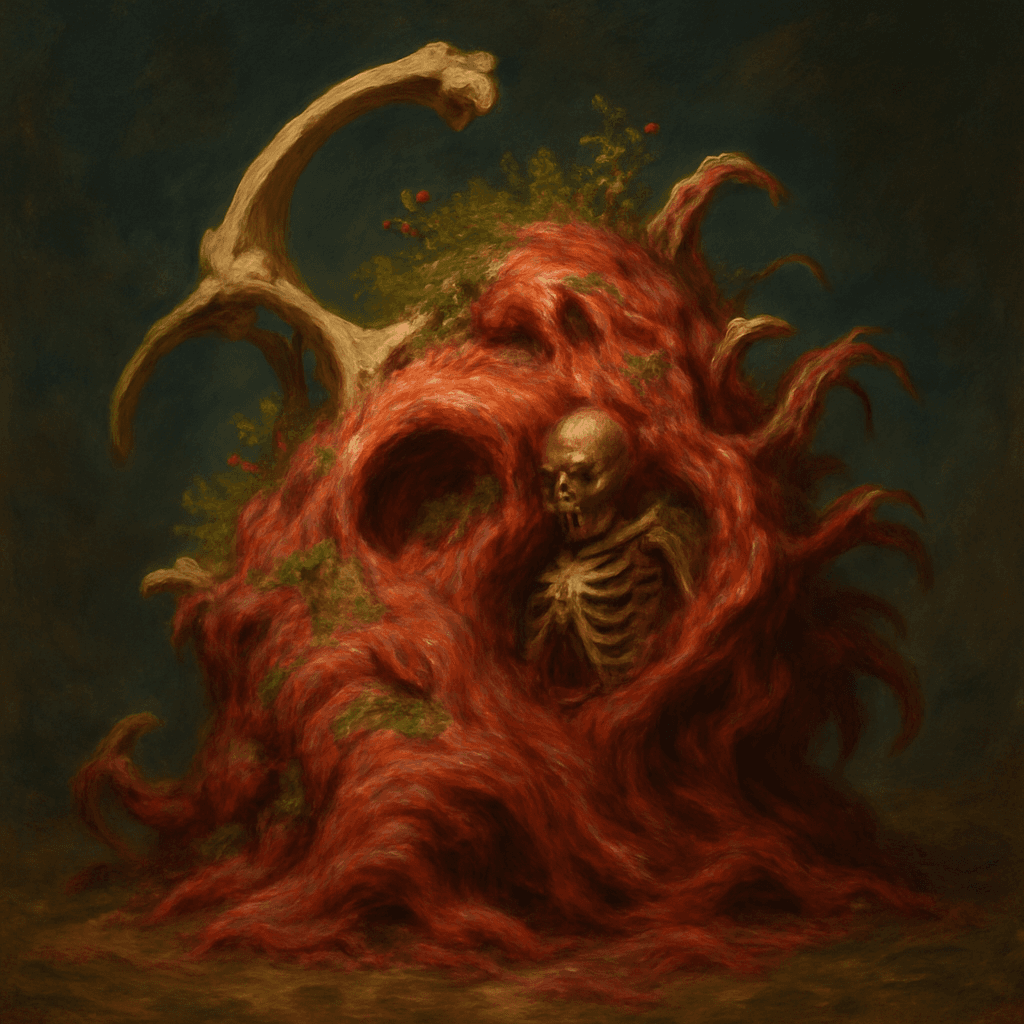
Physical Form: A rolling, asymmetrical mound of calcified bone, rapidly sprouting flora, and twitching muscle. It is constantly, violently growing chaotic, senseless structures out of its own body—arches of bone that lead nowhere, grasping limbs that wither as fast as they sprout, and fleshy walls that trap its own organs. The Tragic Loop: It embodies the raw urge to build and bring order to the chaos of the Drift, but without the logic of the Pattern, its creations are just painful, labyrinthine tumors. It does not eat for sustenance; it absorbs living creatures to use as structural support. It will encase a victim alive within its mass, using their intact skeleton as "scaffolding" to stabilize its own collapsing, chaotic growths, only to outgrow them moments later. Reason for Breakage: A Fever Architect appears in the Bellroot Vale where the Pattern's organising impulse has misfired into uncontrolled growth — typically near a partially-collapsed Anchor or an Overlook-adjacent settlement. The Vaultkeepers read it as a Prime Being of birth leaking through a Weaving-fault: the urge to build with no map to build against. Where one walks, the Vale grows wrong.
Canon StabilityAbsolute
Alira
Character
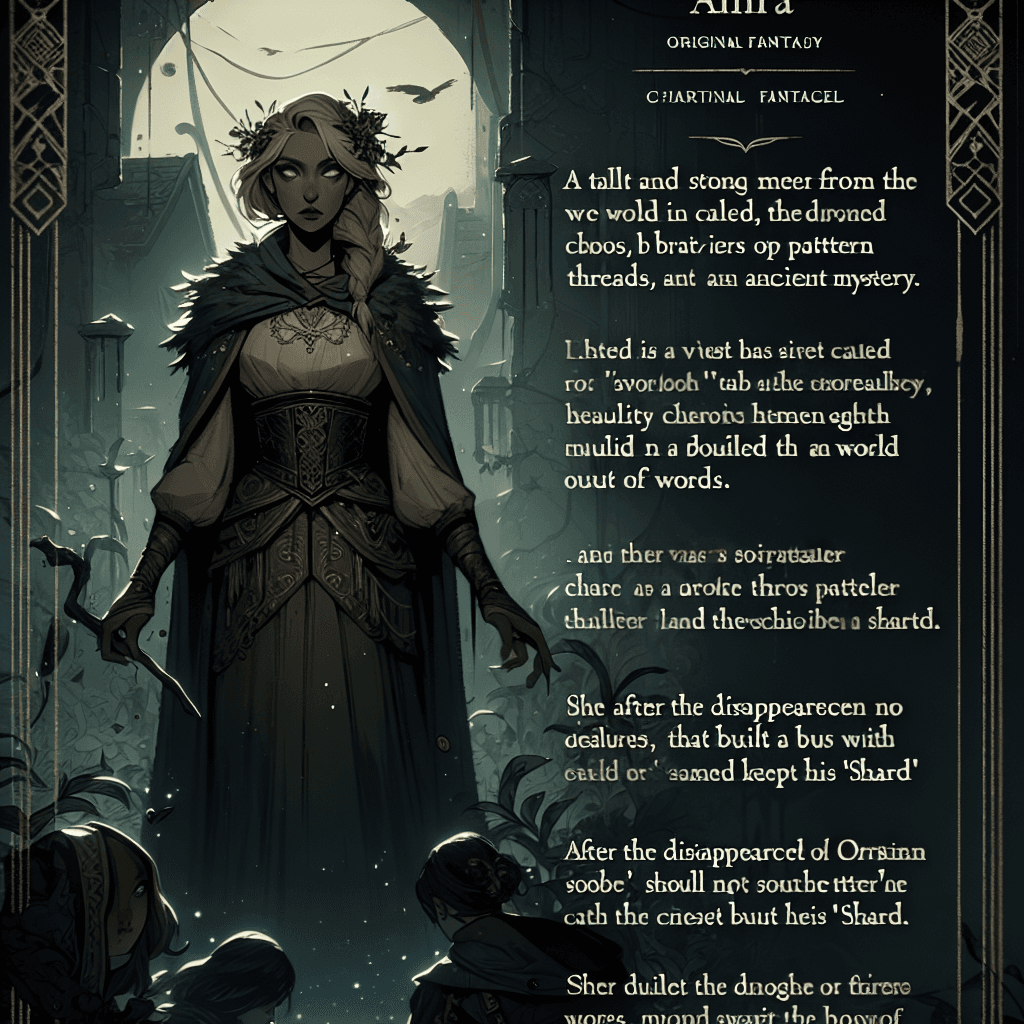
Mother of Kaerlin, Mira, and Thomel and widow of the man who first found Father's Shard at the edge of the Overlook. Alira was a tall, strong storyteller whose voice "built a world out of words" — the kind of woman who could quiet a room of arguing villagers by beginning a tale at half-volume. After her husband's disappearance into the Fray she kept his Shard hidden, raised her three children with her brother Uncle Edran, and spent her last years telling the children what she had learned from the Dreamers about the Pattern, the Fray, and the Shards before her death. She told the truth in fragments, the way she told stories — knowing the children would only understand the whole of it once she was gone. Her death in the Bellroot Vale is what set the siblings' quest in motion.
Canon StabilityAbsolute
story-1motherdeceased
Anamnesis
monster
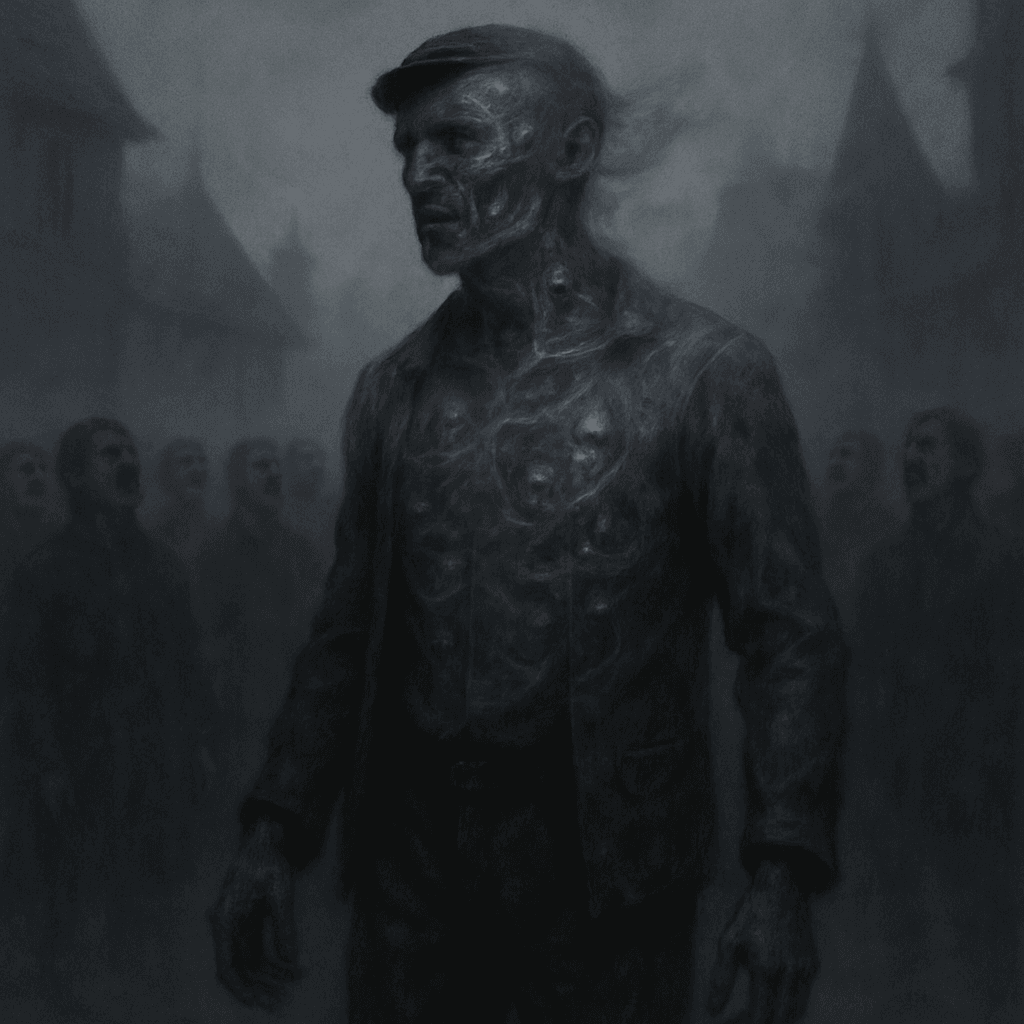
Anamnesis has no stable form of its own. In its true state it is a shifting mass of unfinished concepts: smoke trying to become lungs, rain trying to become blood, teeth forming and dissolving in open air, half-born voices, fractured memories, animal panic, grief, hunger, heat, ash, bells, and human faces that never fully resolve. Its raw substance constantly contradicts itself, collapsing and reforming in impossible combinations, so it cannot remain exposed for long. To survive, Anamnesis absorbs into a living being and uses that body as a focusing lens. The host appears mostly normal at first, but small errors give the truth away: delayed shadows, mismatched breath, wrong emotional reactions, a voice that arrives slightly before the mouth moves, or skin that seems to briefly contain smoke, rainwater, teeth, and flickering light beneath the surface. It does not simply possess the host — it concentrates itself through them, turning the body into the anchor point for its unfinished reality and radiating emotional pressure into everyone nearby. Anamnesis is born when a tear in the Pattern lets raw Drift substance spill into the world before reality can separate it into stable forms. It is not one memory, one emotion, one element, or one idea — it is countless incomplete things colliding at once: fear without a mind, hunger without a mouth, rain without clouds, grief without a name, voices without speakers, fire without heat, a person without a self. Unlike an Echo, which is one incomplete thought desperate to conclude, Anamnesis is too many incomplete conclusions trying to become real at the same time. It cannot finish itself, understand itself, or even decide what kind of thing it is. So it enters a living host. A body gives it boundaries, a name gives it shape, a mind gives it direction. Focused through a host, it forces the people around it into a shared state of fear, certainty, anger, devotion, or violence — turning a crowd into a single chorus. Every innocent death near it loosens the Pattern around that person's name, memory, fear, and final emotion, and Anamnesis consumes the rupture before reality can reclaim it, gaining more body, more voice, and more permission to exist. Where it appears, identity becomes contagious: crowds feel the same fear, villagers repeat the same phrase, families accuse outsiders in unison, and a town becomes a single mouth with one hidden thing speaking through it.
Canon StabilityAbsolute

Archael Viremont
Character
Senior Archivist of the Luminous Fold (Civilisation) and the most travelled Vaultkeeper of his generation. Archael Viremont was raised in the rigid tradition of the Fold — that reality may be measured, catalogued, and ultimately understood through structured systems. His field journals, addressed to a future self he no longer trusts to remember, record his slow unmaking. With each region surveyed beyond the Fold, his certainty thins: the Pattern, he writes, is not a single language but many dialects that no longer agree. He is the canonical source for the Attunement System table, the Loosening, Time Instability, and — most uncomfortably for his colleagues in the Seventh Circle — the Knowledge Fragmentation Principle. His correspondence with the Cartographic Society of Iterants is the closest the Fold has come to admitting it does not own the truth.
Canon StabilityAbsolute
archivistvaultkeeperluminous-fold+2

Ashfall Crossing
Location
Built at the junction of two ancient migration routes, Ashfall Crossing is the closest thing the Deyune has to a crossroads town. Volcanic ash from the distant Ashen Spine occasionally dusts its rooftops, giving the settlement its name. Merchants from Nerin Post and Vask Hollow converge here during trade season. On the Deyune Steppe, this site is one of the points where the Long Wind, the clan-roads, and the old Karak geometries meet. Time Instability runs heavy here — distances and seasons rarely agree between settlements. The Veykar's old reach passed through or near sites like this; some bear the Wheel's scars in the soil, others have been letting the grass grow back over them for generations.
Canon StabilityAbsolute
locationdeyunetowns
Auren Thorne
Character
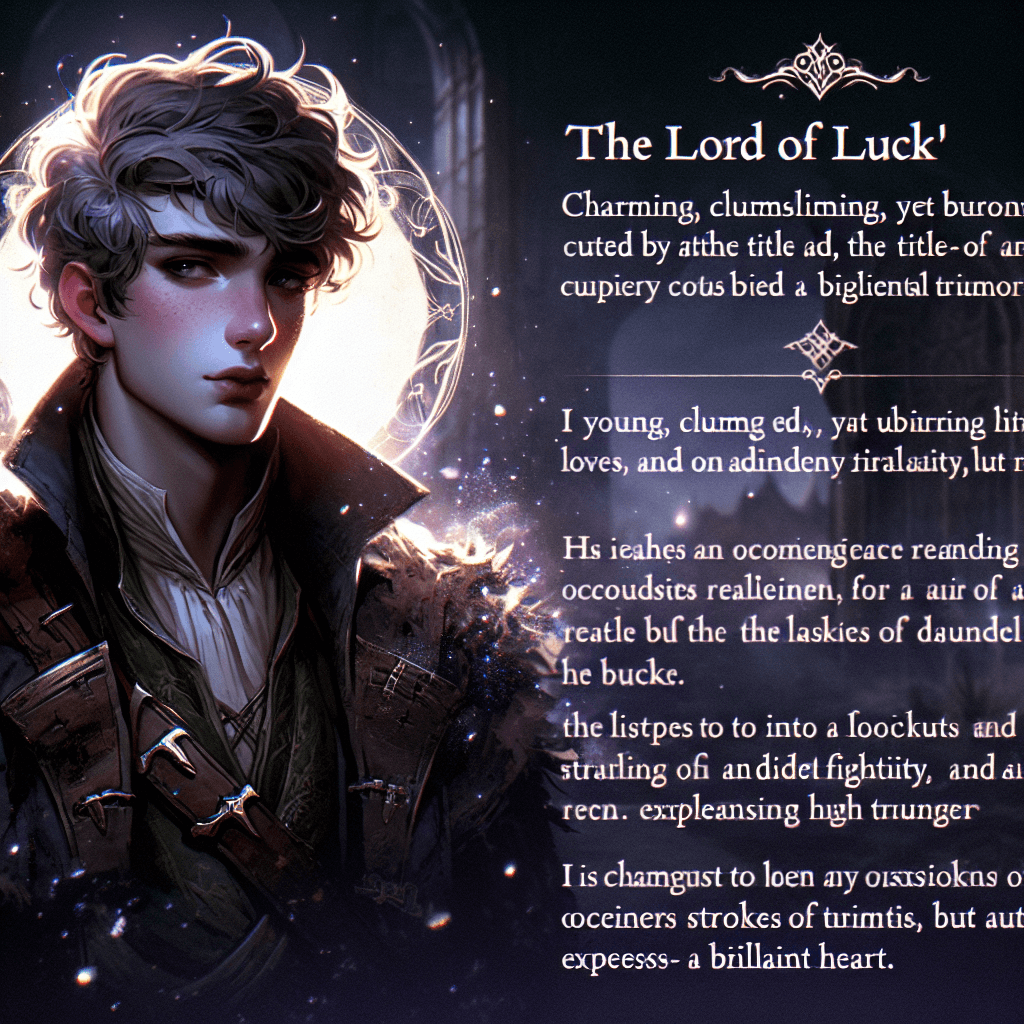
Heir of House Thorne and the unlikeliest hero of the Everloop's western coast — a charming, bumbling young lord called "The Lord of Luck" for his habit of accidentally winning fights he should have lost. Auren is a brilliant heart wrapped around the worst sword arm in the Virelay Coastlands, and he knows it. When the Fray reaches the Coastlands and House Thorne's trade lines fail, he slips past Brennick the gate-guard, stops at the Cracked Pot Tavern (knocking out a drunk by tripping into him), and rides for Virelay to do what no trained fighter has managed: dive for the Third Shard of the Pattern beneath the Underwater Well. He returns carrying the Shard, the city, and an inheritance he was not raised to want. His parents Lord Thorne and Lady Thorne watched him go and let him.
Canon StabilityAbsolute
story-2protagonisthouse-thorne+2
Axis Watch
Location
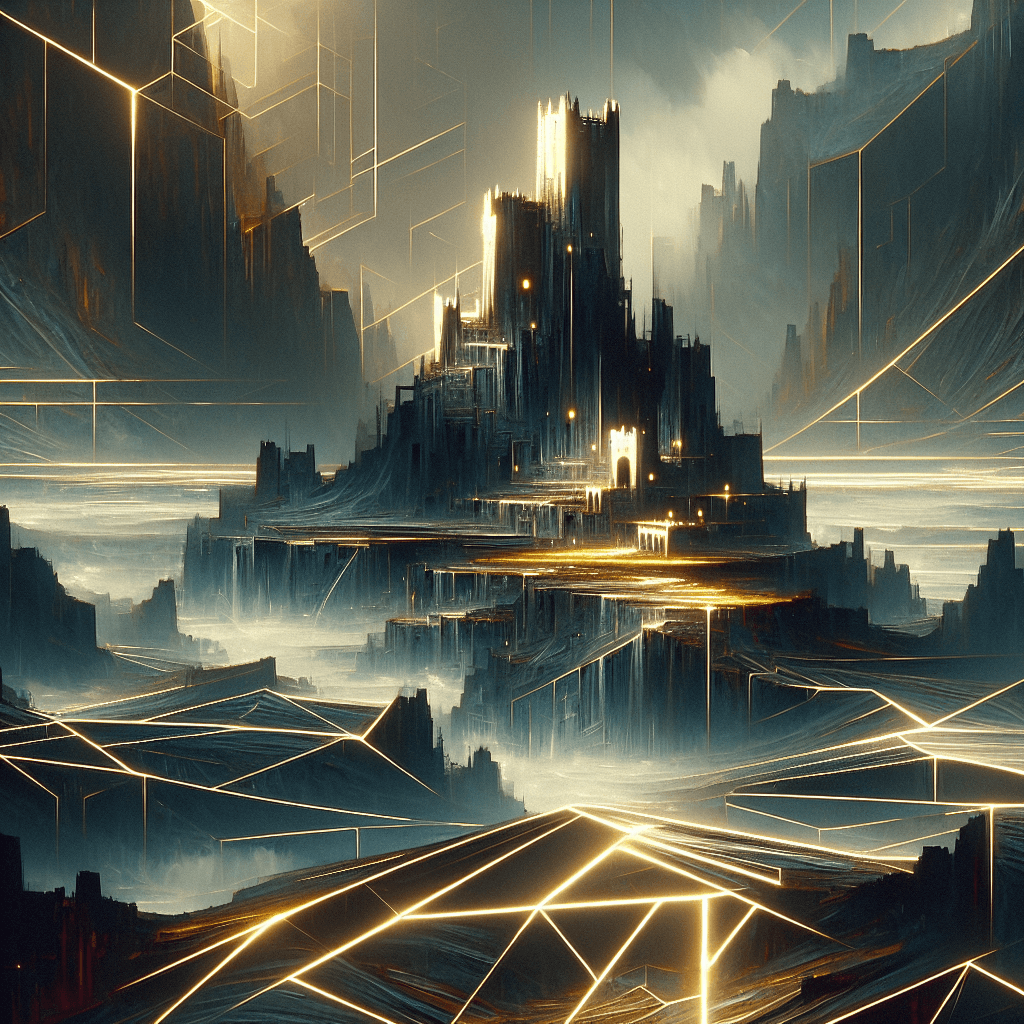
The central monitoring hub of the Grid Station network, positioned at the exact geometric center of the hexagonal array. Axis Watch consolidates data from all six stations and relays synthesized reports to Central Fold. It is the most precisely positioned structure in the entire Everloop — its placement was calculated to the inch. Within the Luminous Fold, this site is part of the gridded, measured landscape that radiates out from Lumina and the Central Fold. The Fold's clocks, roads, and institutions assume reality may be wholly described, and on this plateau they almost can — the Loosening and Time Instability are weakest here. The site answers, directly or indirectly, to one of the Seven Circles, and the Cartographic Society of Iterants keeps notes on every measurable thing that happens within sight of it.
Canon StabilityAbsolute
locationluminousoutposts
Bellroot Crossing
Location
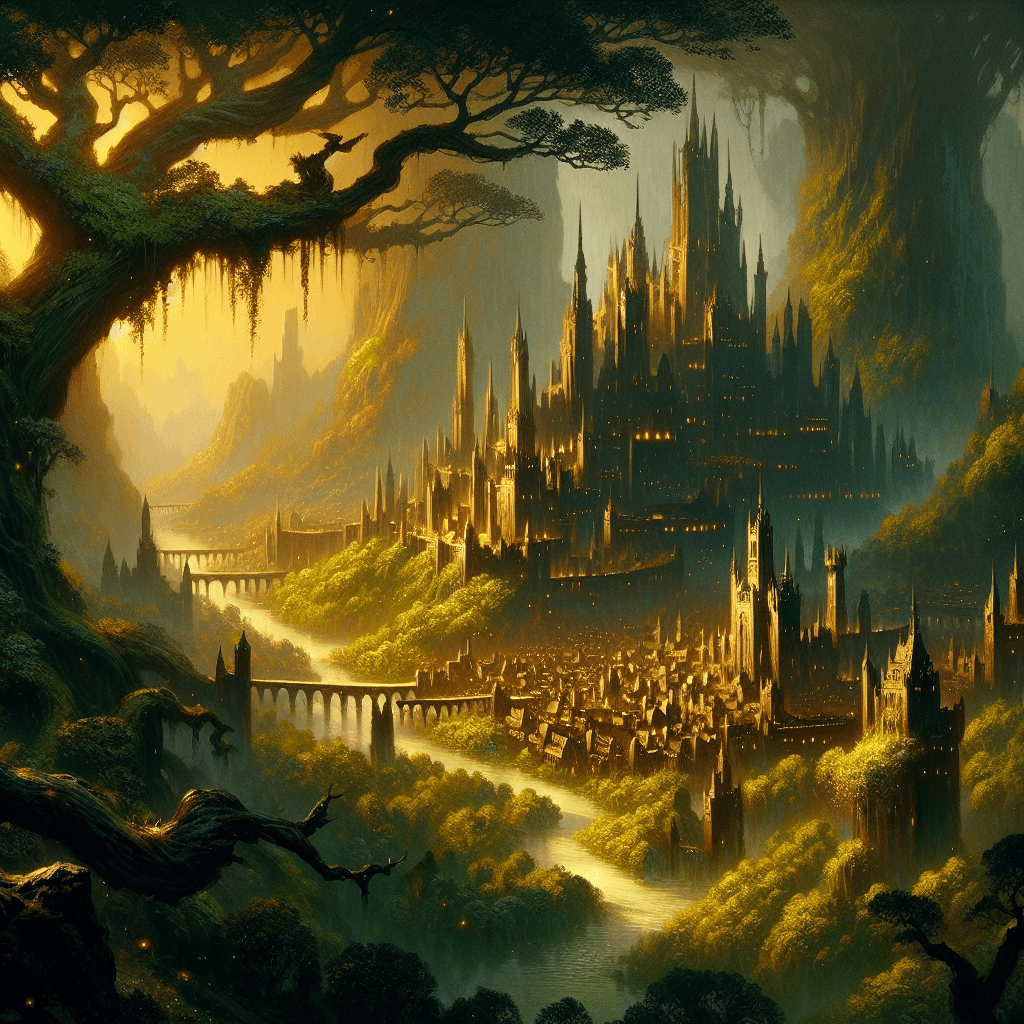
The Vale's largest settlement, built at the confluence of three rivers where the forest opens into a broad meadow. Bellroot Crossing serves as the Bellroot Vale's administrative and commercial centre, managing trade between the forest villages and the outside world. South Vale Cluster to the south handles agricultural production; Bellroot Crossing handles everything else. Drelmere — older, smaller, stranger — sits a half-day's walk to the north, and the road between them is the busiest in the Vale. Halrick's Reach is the Crossing's eastern gateway out toward the Glass Expanse.
Canon StabilityAbsolute
locationbellrootcities
Birth Giant
monster
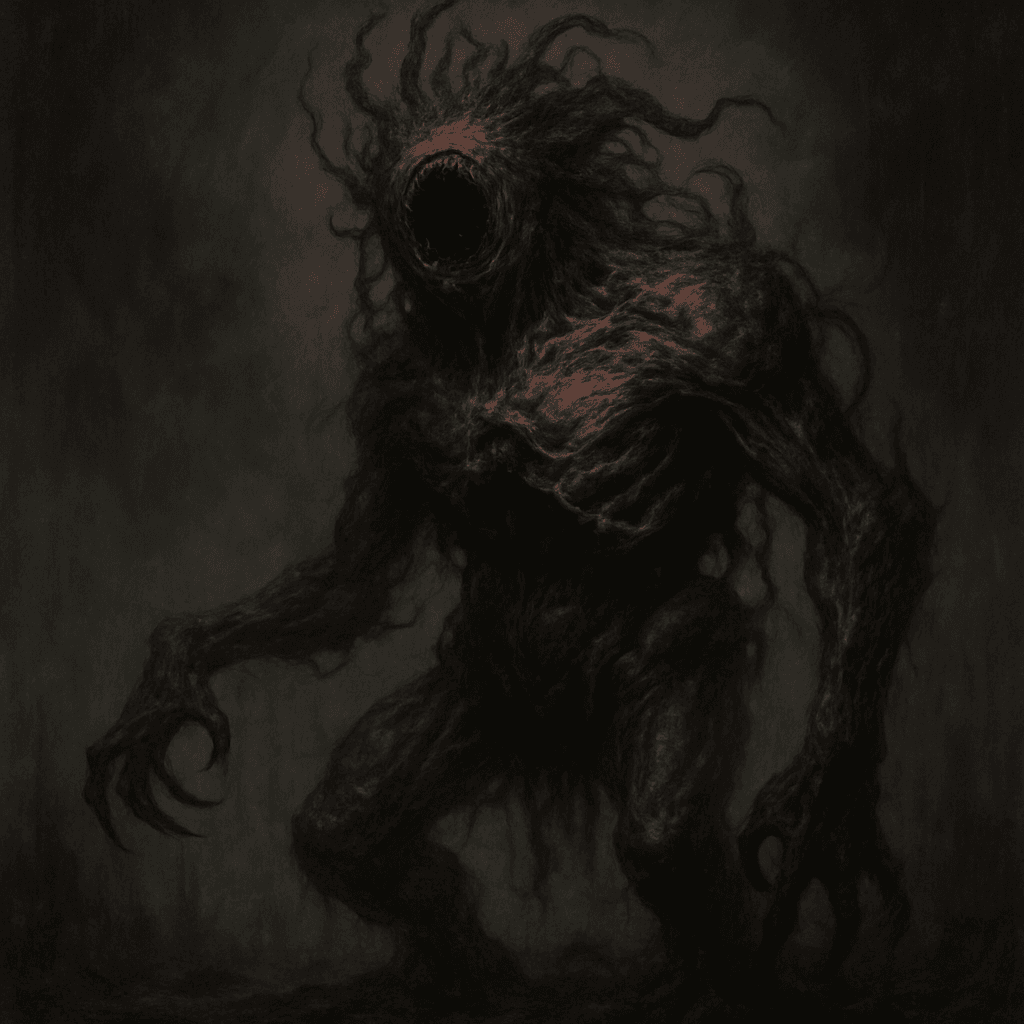
A creature who's raw existence is bled into form, where logic and biology dissolve, leaving behind an amalgamation of matter, memory, and intent. Here, on the fringes of reality, the Birth Giant seeks an elusive end to its suffering—a monstrous incarnation of the Endless Rebirth that reflects the deeper discord shaping the world, an uncontrolled force of the Drift persistently seeking its own stillness in the Everloop's turbulent tides. It tries to consume all life around it in order to complete its birth cycle. But nothing can quench its hunger. Reason for Breakage: Birth Giants form on the Deyune Steppe over old battlefields the Veykar erased without recording — places where the Pattern was asked to forget too many bodies at once. The Cartographic Society of Iterants has charted Birth Giant sightings against the Veykar's known atrocity sites and found the correlation closer than the Luminous Fold is comfortable acknowledging.
Canon StabilityAbsolute
Black Hammer Forge
Location
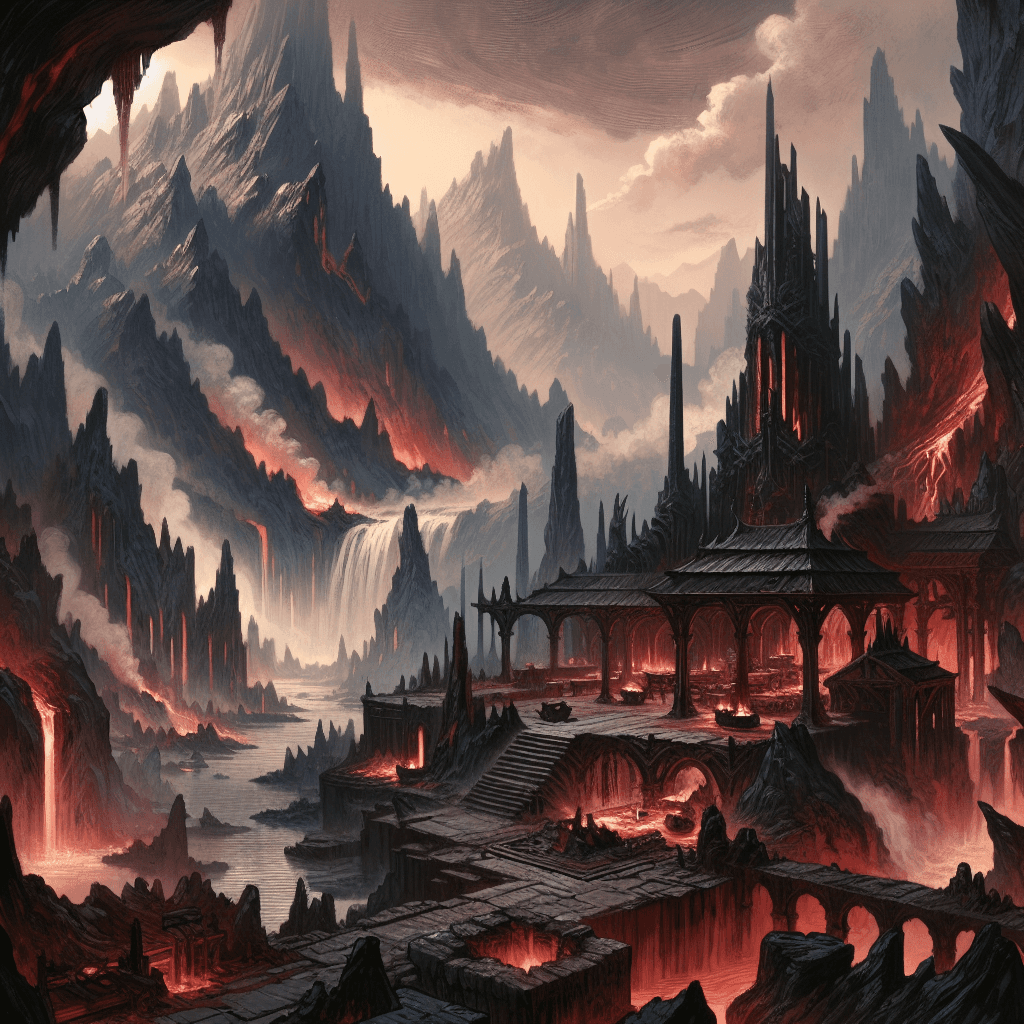
An armory and smithy on the eastern ridge near Blackridge Camp, famous for weapons tempered in natural volcanic heat rather than conventional furnaces. Black Hammer blades carry a distinctive rippled pattern and hold their edge far longer than ordinary steel. Rookforge considers it a rival; everyone else considers it a legend.
Canon StabilityAbsolute
locationashentaverns-armories
Blackridge Camp
Location
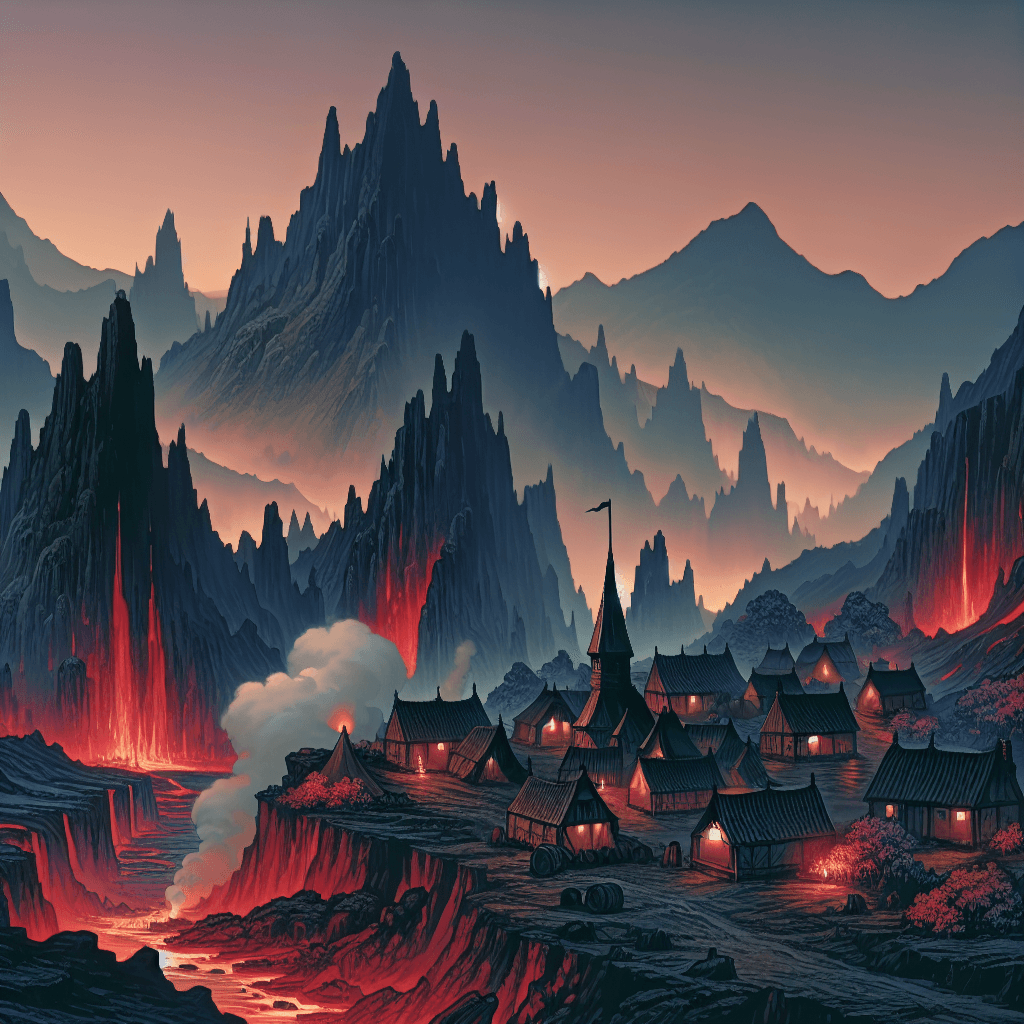
A mining settlement clinging to the charred slopes where obsidian deposits run thick. Blackridge supplies raw material to Black Hammer Forge and trades cutting tools with Rookforge. Life here is hard — the air smells of sulfur and the ground trembles weekly. Within the Ashen Spine, this site is part of the long chain of forge-towns, quarries, and iron-vein settlements that work the world's oldest forges from Ironmark down to Old Varr. The smoke is the climate. The Fray here is physical — cracks open in the rock, tunnels appear that were not there the day before — and the Cleaved is the regional consequence. Forge guilds keep their own records, and they keep them close.
Canon StabilityAbsolute
locationashenvillages
Brack Hollow
Location
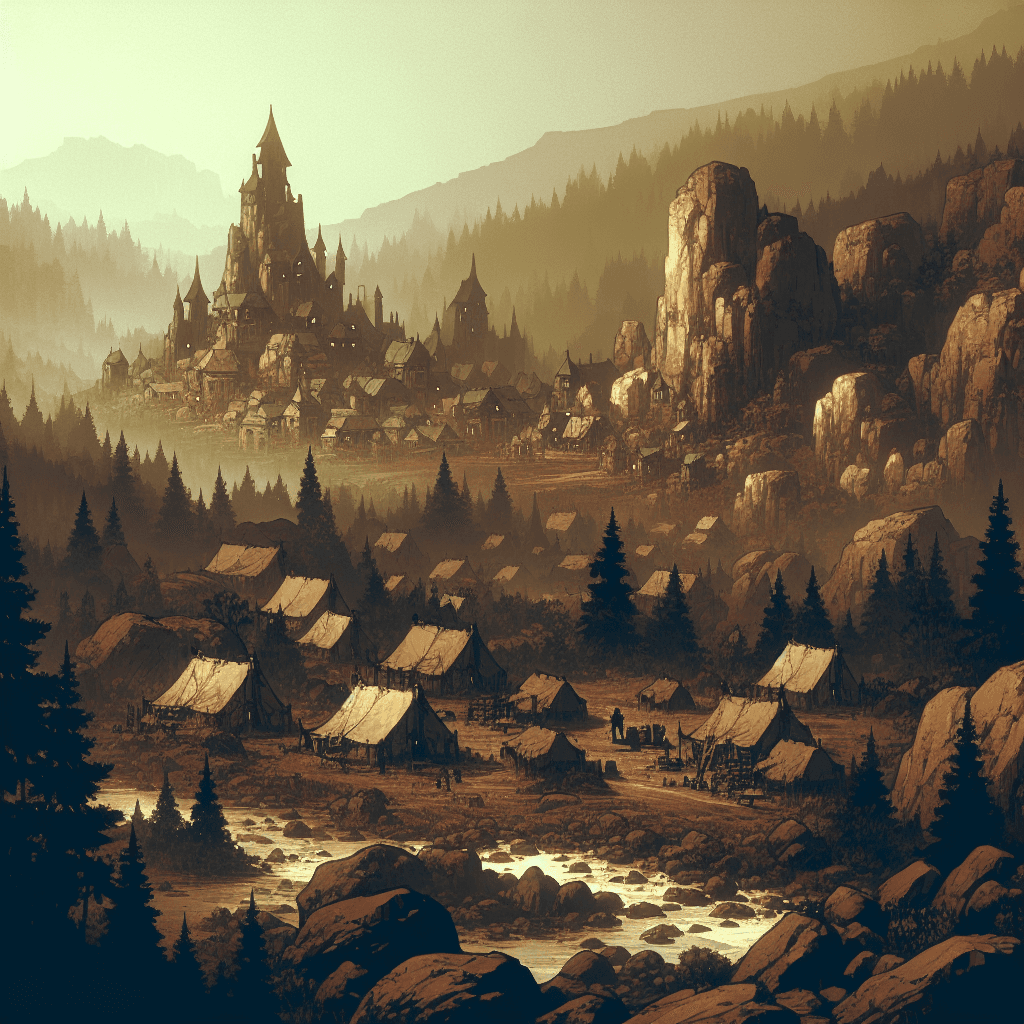
A muddy, low-lying village in a natural depression that floods each spring. Brack Hollow's people are trappers and root-diggers who trade with Pine Run to the east. The hollow is difficult to find on purpose — its residents prefer obscurity to the tax collectors from High Ridge Market. On the Varnhalt Frontier, this site sits inside the patchwork of crossroad towns, mesa camps, and trade-protected routes that radiate from Old Varnhalt. The Loosening is constant here — mile markers contradict, paths loop — so settlements rely on local pacing and on the small island of stability around the Black Stone Tower in the eastern hills. The Frontier has no central authority; this place answers to whoever its trade depends on this season.
Canon StabilityAbsolute
locationvarnhaltvillages
Broken Line
Location
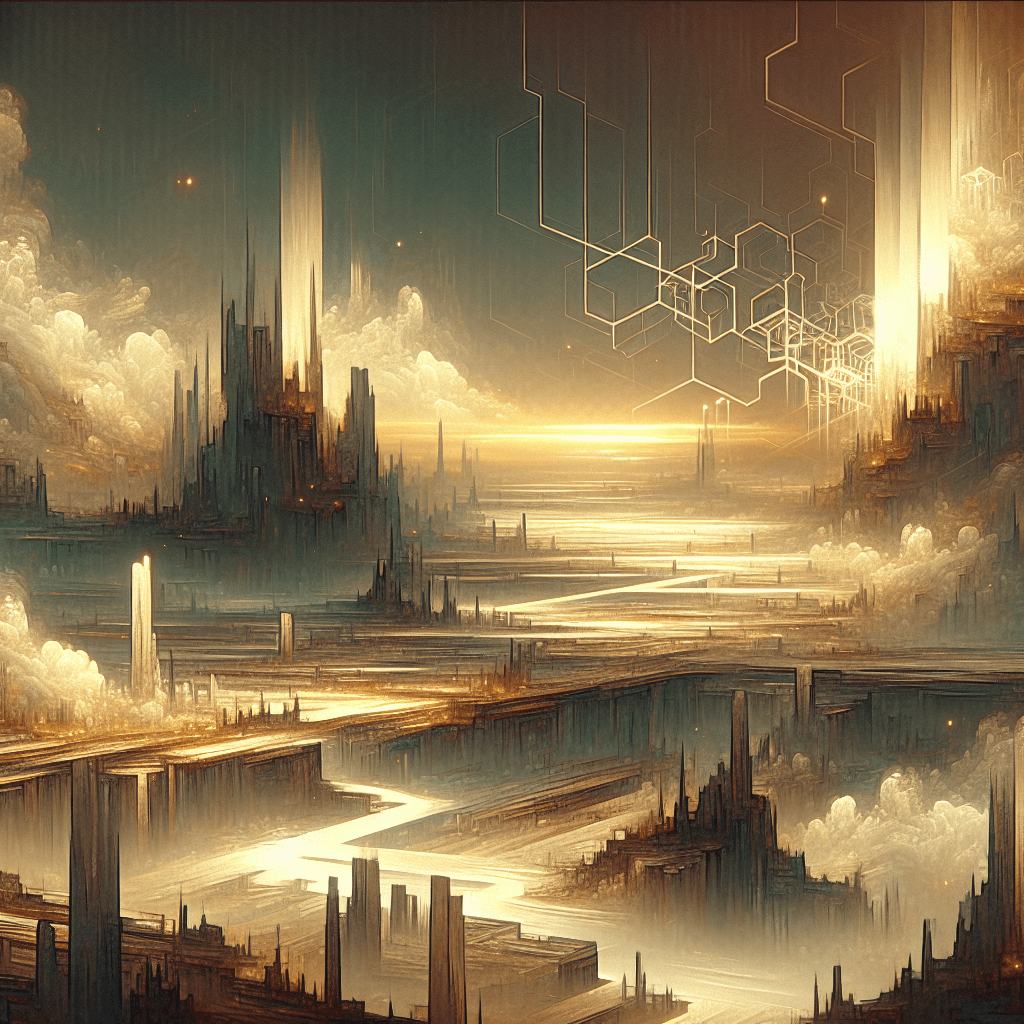
A stretch of terrain where one of the Fold's energy lines abruptly terminates, shattered into scattered fragments of glowing residue. Broken Line is the only known point where the Fold's stabilizing influence has failed. Venn's scholars consider it the most important site in the region — proof that the order is not permanent. Within the Luminous Fold, this site is part of the gridded, measured landscape that radiates out from Lumina and the Central Fold. The Fold's clocks, roads, and institutions assume reality may be wholly described, and on this plateau they almost can — the Loosening and Time Instability are weakest here. The site answers, directly or indirectly, to one of the Seven Circles, and the Cartographic Society of Iterants keeps notes on every measurable thing that happens within sight of it.
Canon StabilityAbsolute
locationluminousruins
Broken Mast
Location
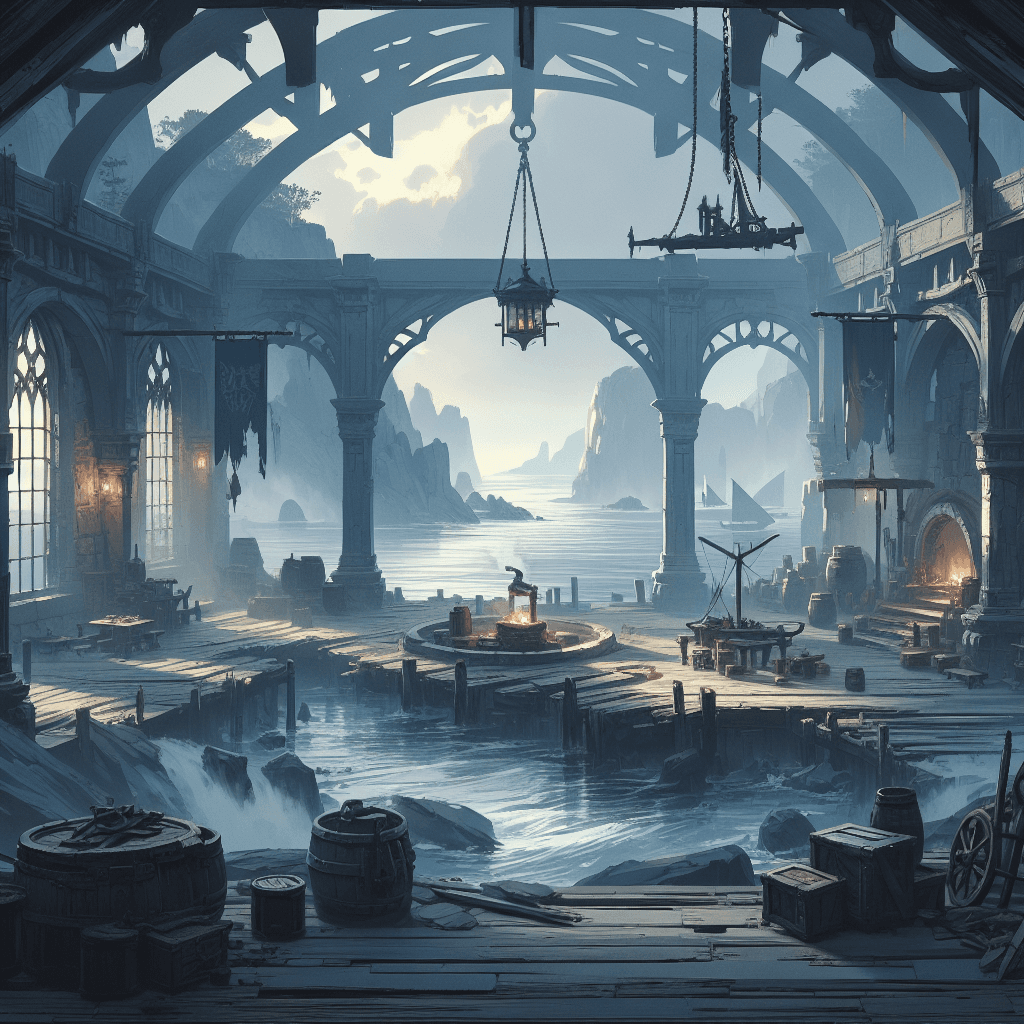
A dockside tavern in Virelay built around the actual mast of a shipwreck that punched through the floor during a Fray-storm and was simply left where it landed. The Broken Mast leans noticeably to one side and its floorboards creak with the tides. Regulars swear the mast hums during storms. Along the Virelay Coastlands, this site is part of the lattice of harbours, bell-towers, and salt-marshes that look toward Virelay and the Underwater Well. The sea here remembers more than the maps do; the Loosening lives in the fog. House Thorne's trade lines once stitched these settlements together — some of those routes are still walked, others have gone quiet since the Fray reached the coast.
Canon StabilityAbsolute
locationvirelaytaverns

Broken Teeth Site
Location
A collapsed ridge formation that juts from the plains like the jawbone of something vast and buried. Excavation attempts have uncovered carved passages beneath the rock, but none have been fully explored. The Standing Teeth visible from miles away are the intact portion of whatever this structure once was. On the Deyune Steppe, this site is one of the points where the Long Wind, the clan-roads, and the old Karak geometries meet. Time Instability runs heavy here — distances and seasons rarely agree between settlements. The Veykar's old reach passed through or near sites like this; some bear the Wheel's scars in the soil, others have been letting the grass grow back over them for generations.
Canon StabilityAbsolute
locationdeyuneruins
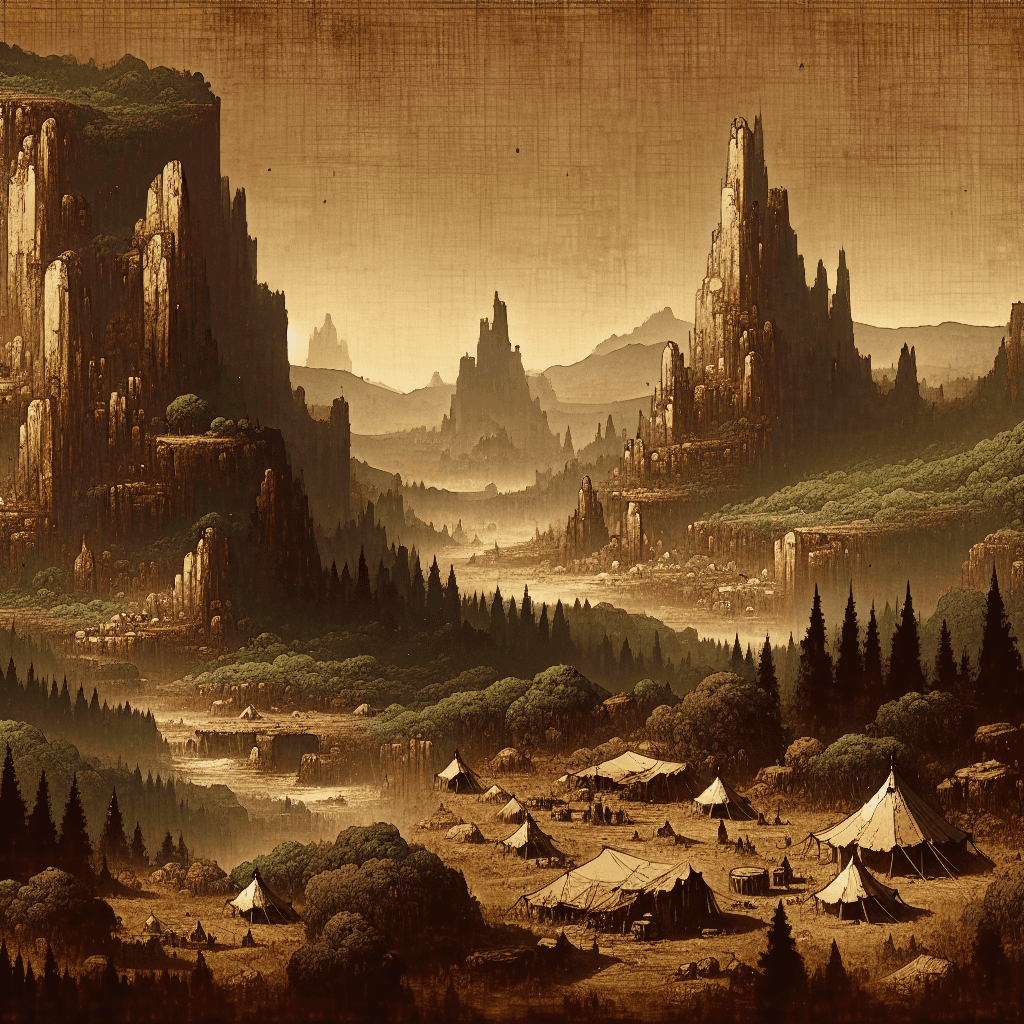
Burn Camp Site
Location
A blackened clearing where a large settlement was destroyed by fire under circumstances no one agrees on. Some say raiders, others say accident, a few say the ground itself ignited. The soil remains barren decades later, and the charred post-holes suggest the camp was larger than any current Frontier village. On the Varnhalt Frontier, this site sits inside the patchwork of crossroad towns, mesa camps, and trade-protected routes that radiate from Old Varnhalt. The Loosening is constant here — mile markers contradict, paths loop — so settlements rely on local pacing and on the small island of stability around the Black Stone Tower in the eastern hills. The Frontier has no central authority; this place answers to whoever its trade depends on this season.
Canon StabilityAbsolute
locationvarnhaltruins
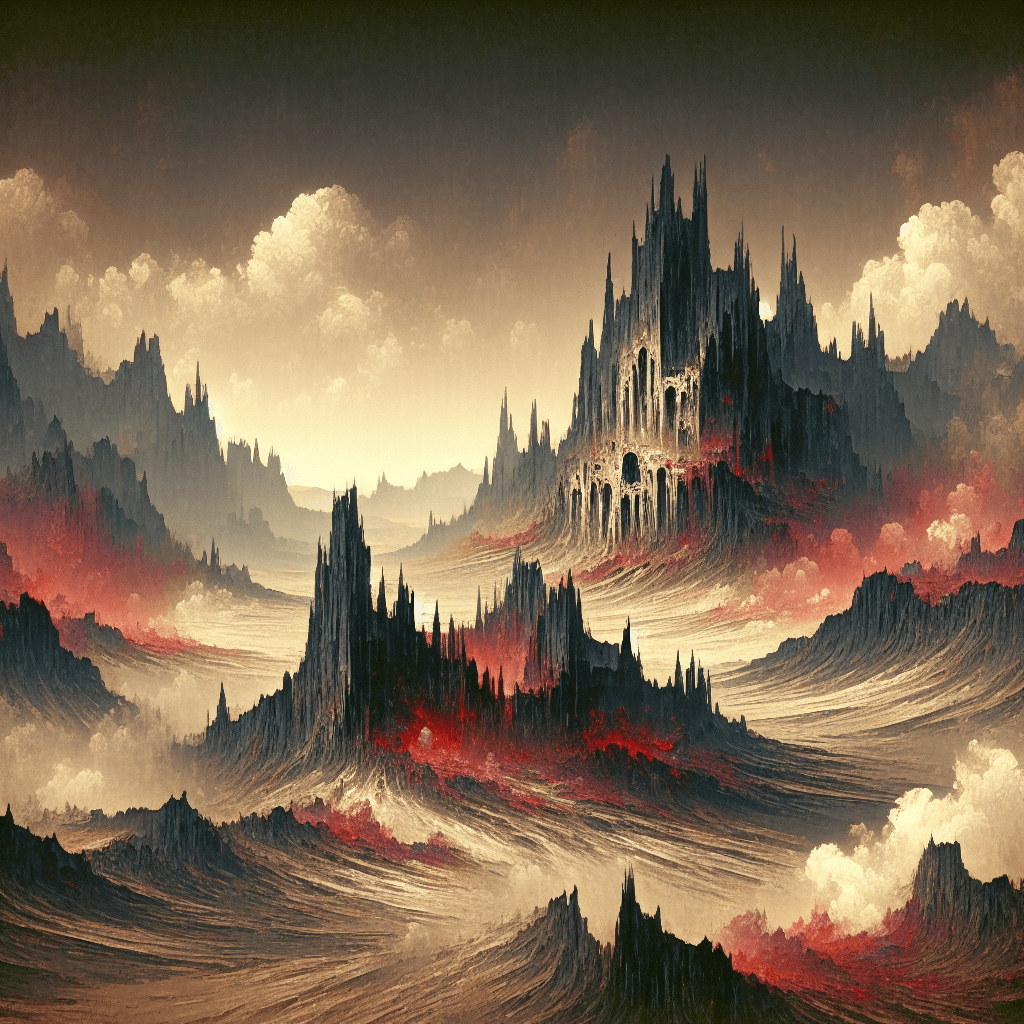
Burnt Gate
Location
The remnants of a massive stone gatehouse on the western slopes, scorched and partially melted by an eruption so catastrophic it reshaped the surrounding terrain. The gate once controlled access between the Spine and the Deyune Steps. Its hinges, fused shut by heat, still stand upright in the ash. Within the Ashen Spine, this site is part of the long chain of forge-towns, quarries, and iron-vein settlements that work the world's oldest forges from Ironmark down to Old Varr. The smoke is the climate. The Fray here is physical — cracks open in the rock, tunnels appear that were not there the day before — and the Cleaved is the regional consequence. Forge guilds keep their own records, and they keep them close.
Canon StabilityAbsolute
locationashenruins
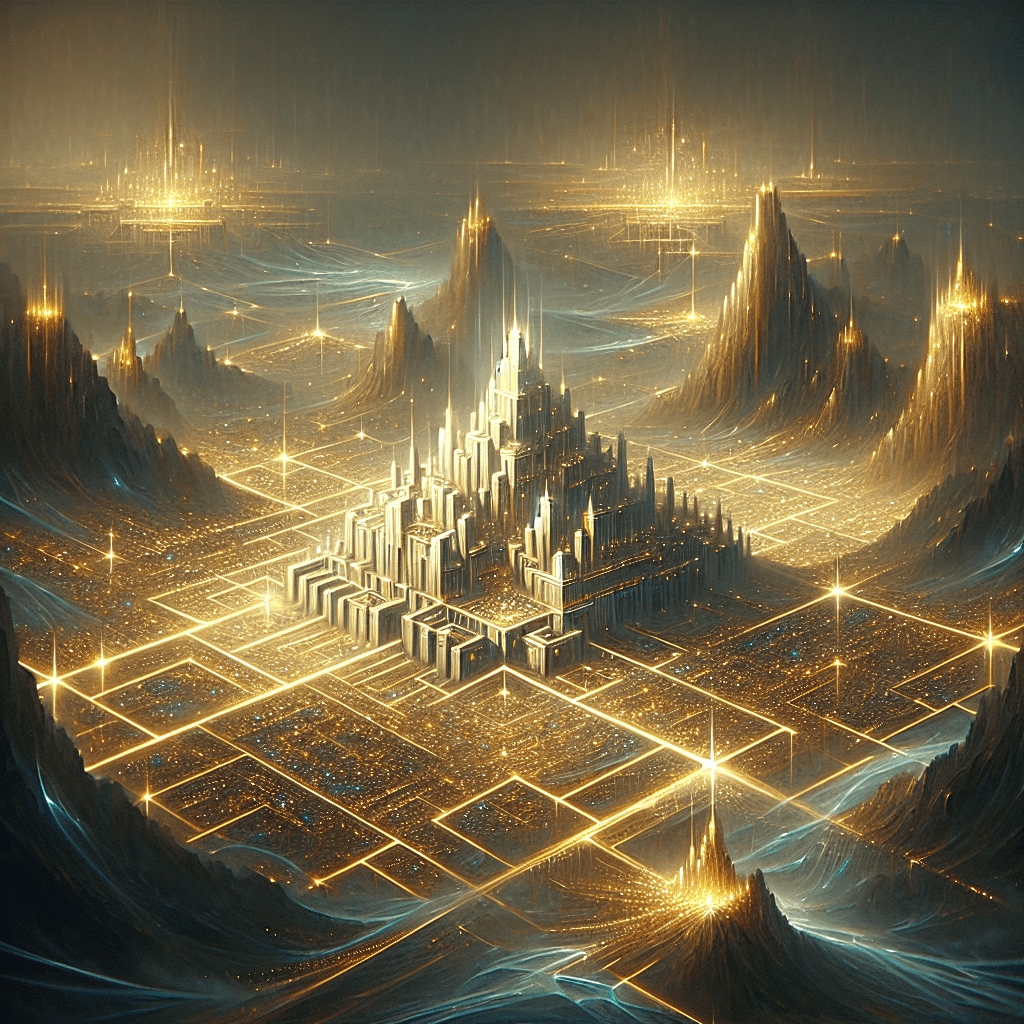
Central Fold
Location
The administrative center of the Luminous Fold, a city that functions with mechanical precision. Central Fold manages the Grid Stations, coordinates research with Venn, and processes the exports of stabilized crystal and refined energy materials. Its bureaucracy is legendary — every form filed, every record kept, every process followed to the letter, always.
Canon StabilityAbsolute
locationluminouscities
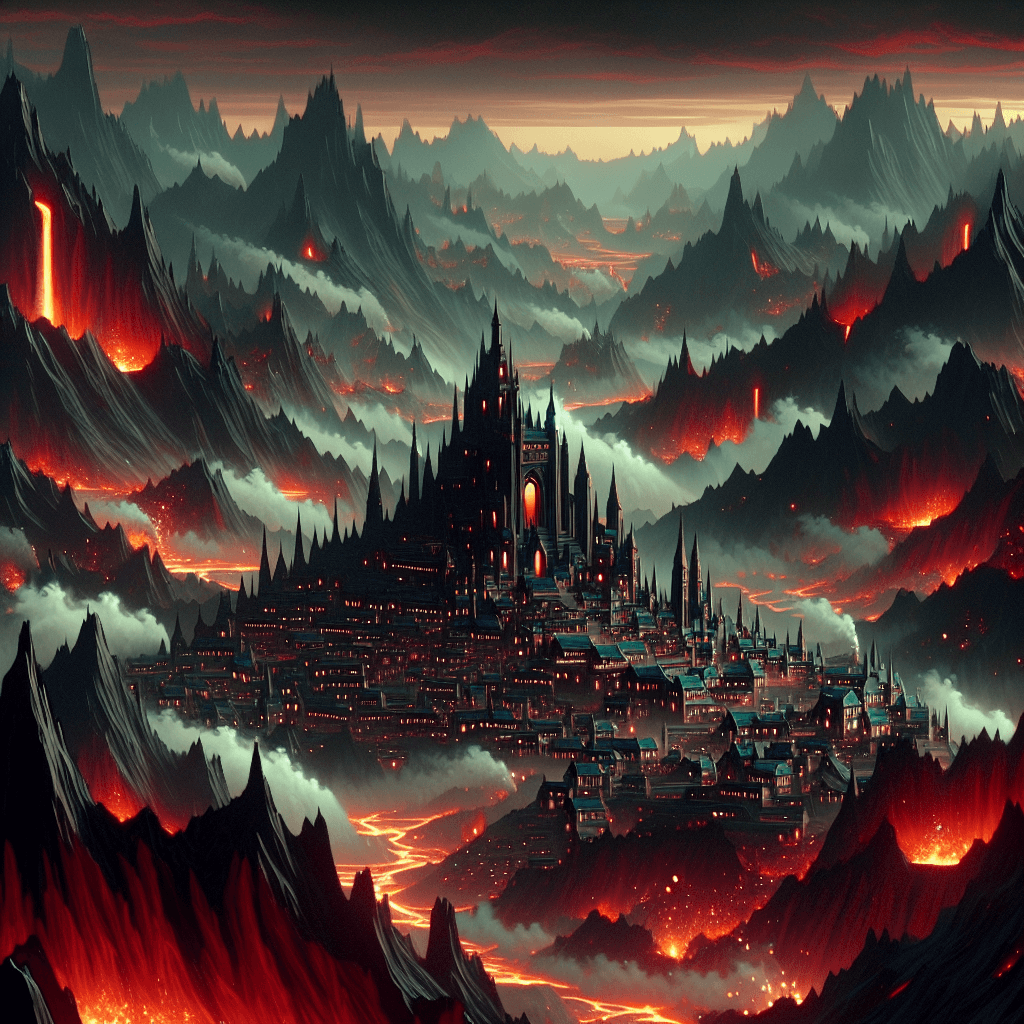
Cinder Vale
Location
The commercial heart of the Ashen Spine, built in a wide valley where lava flows from two volcanoes meet a river system in a permanent curtain of steam. Cinder Vale's markets deal in forged metal, volcanic glass, and geothermal salts. Roads lead north to Korrin Hold and south toward Ironmark. Within the Ashen Spine, this site is part of the long chain of forge-towns, quarries, and iron-vein settlements that work the world's oldest forges from Ironmark down to Old Varr. The smoke is the climate. The Fray here is physical — cracks open in the rock, tunnels appear that were not there the day before — and the Cleaved is the regional consequence. Forge guilds keep their own records, and they keep them close.
Canon StabilityAbsolute
locationashentowns
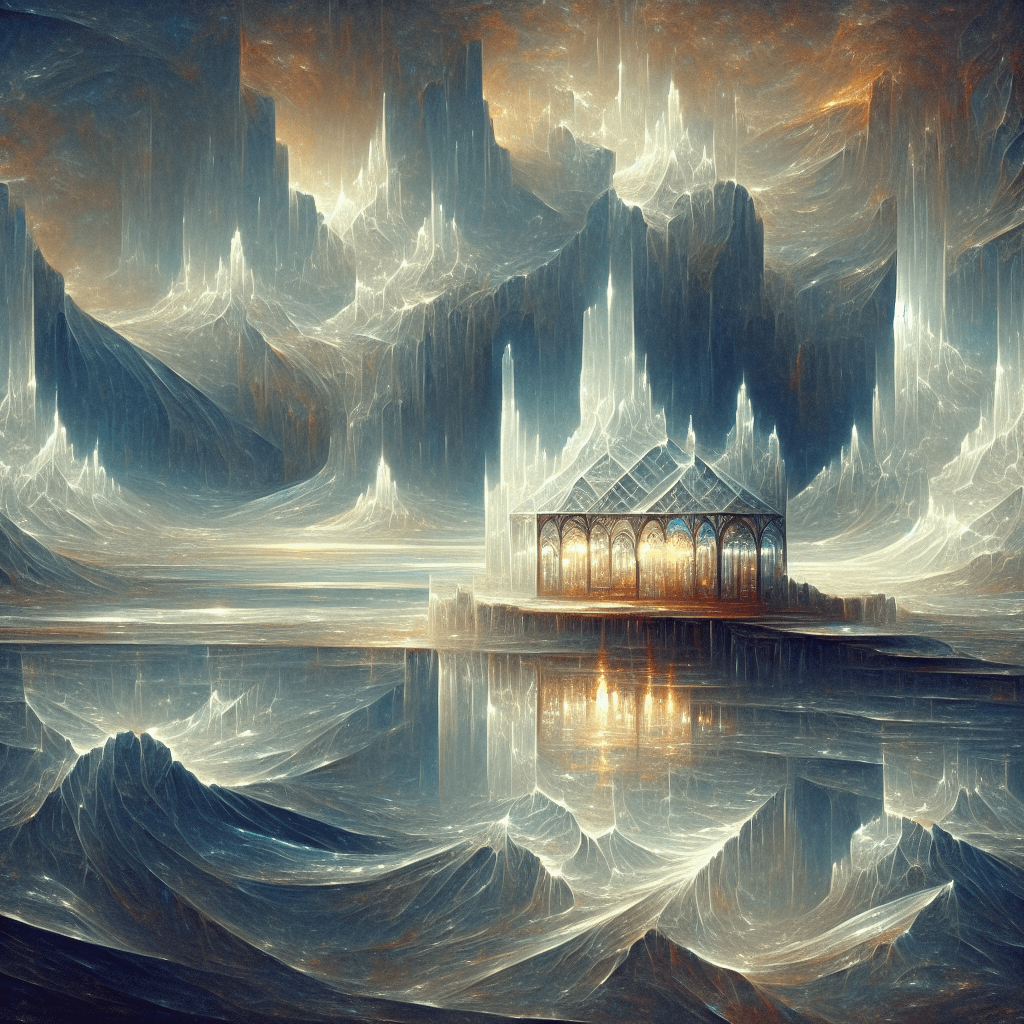
Clear Glass House
Location
A transparent-walled establishment in Clearline, built from crystal so pure you can see through the entire building from outside. Privacy is maintained by cleverly angled interior screens, but the effect is deliberate — in the Glass Expanse, hiding is considered poor form. The drinks are served in crystal vessels that make the liquor glow. Out in the Glass Expanse, this site is part of the network of prism-fields, shard-towns, and silica plateaus that surround Prism City. Light bends here in ways the Pattern cannot quite hold — the air sometimes refracts a scene from a different hour, and the Starving Silence forms where light has shattered the same way too many times in the same place. The Knowledge Fragmentation Principle was first formalised by Expanse philosophers a generation before the Luminous Fold accepted it.
Canon StabilityAbsolute
locationglasstaverns
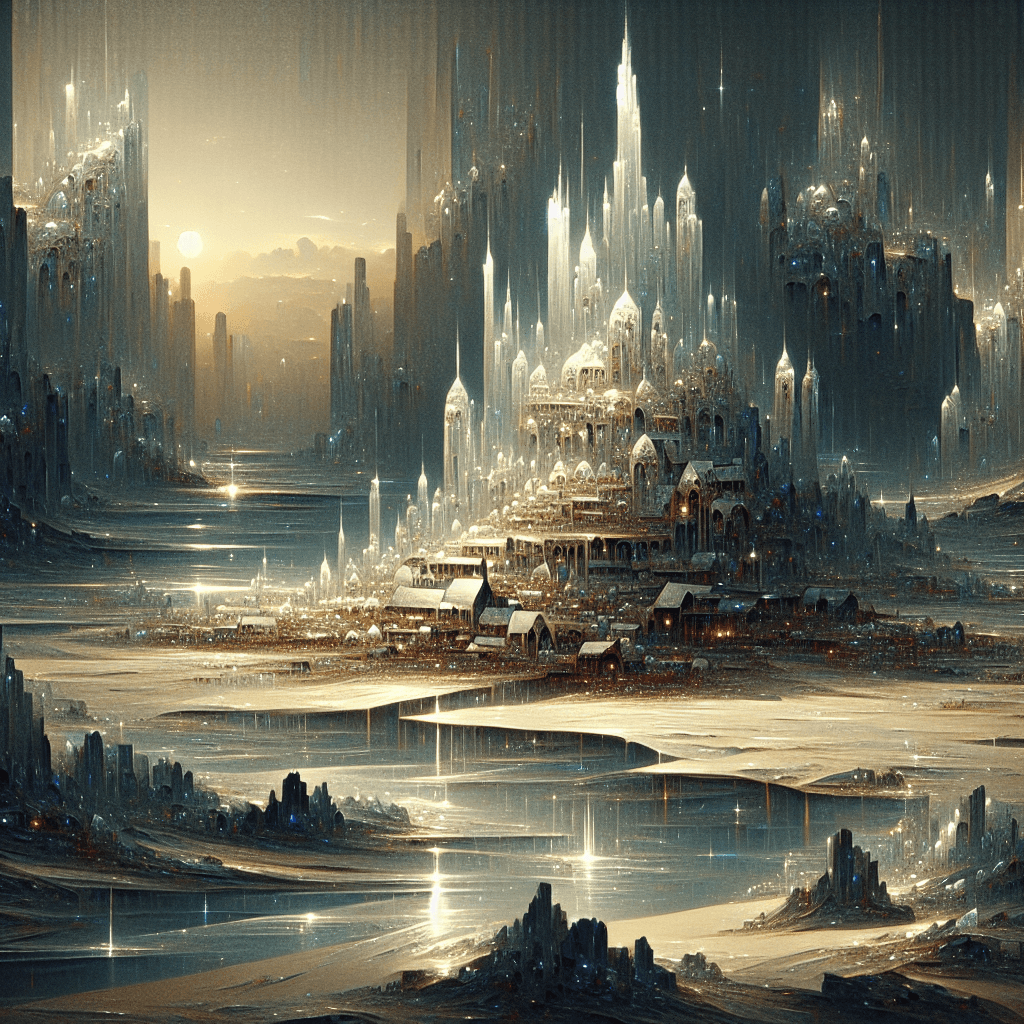
Clearline
Location
The easternmost town of the Glass Expanse, where the crystal desert thins and gives way to scrubland leading toward the Bellroot Vale. Clearline is a border town that trades with Halrick's Reach in the Vale and serves as the last provisioning stop for caravans headed into the Expanse's interior. Its name comes from the sharp horizon line where crystal ends and earth begins.
Canon StabilityAbsolute
locationglasstowns
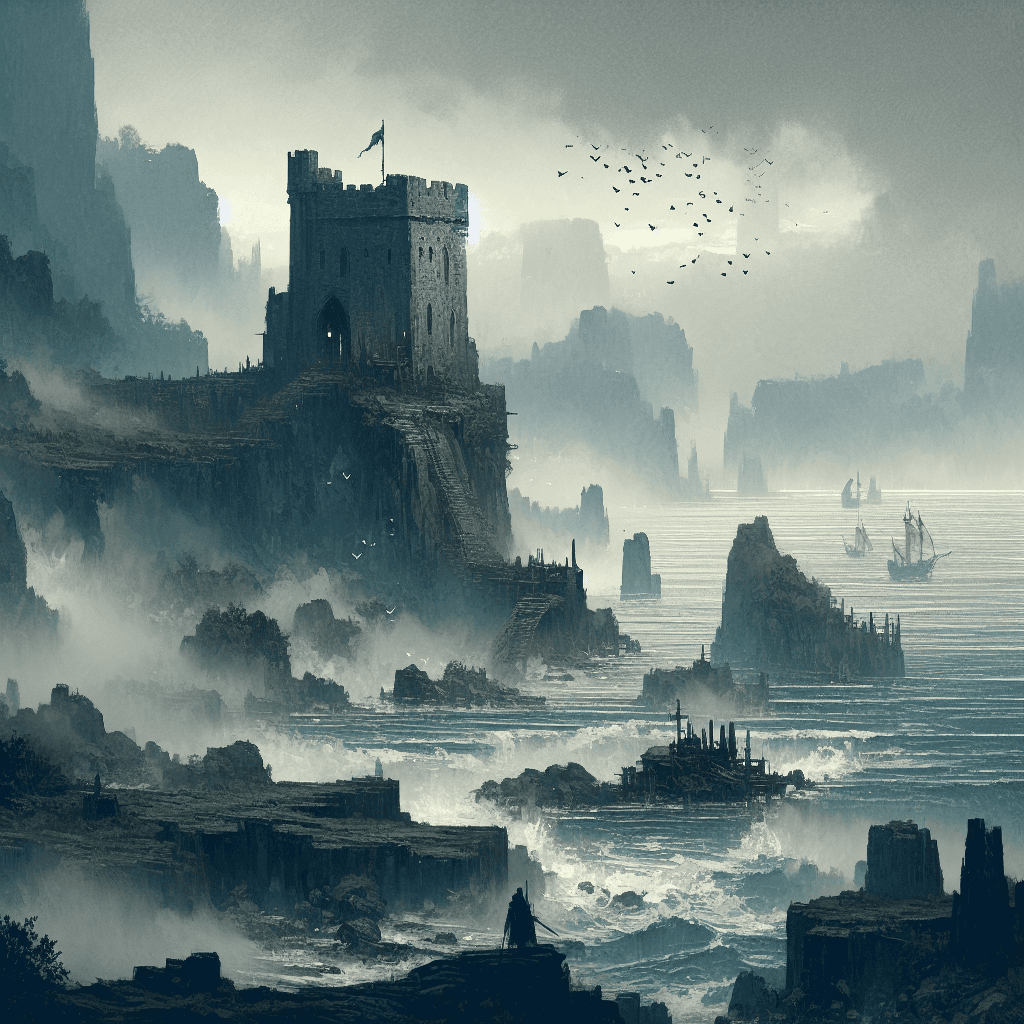
Cliffwatch
Location
A coastal garrison built into the white chalk cliffs north of Virelay, tasked with monitoring sea approaches and watching for anomalous weather patterns that signal Fray activity. Cliffwatch signals Harbor Post 3 and Tide Gate when conditions turn dangerous. Along the Virelay Coastlands, this site is part of the lattice of harbours, bell-towers, and salt-marshes that look toward Virelay and the Underwater Well. The sea here remembers more than the maps do; the Loosening lives in the fog. House Thorne's trade lines once stitched these settlements together — some of those routes are still walked, others have gone quiet since the Fray reached the coast.
Canon StabilityAbsolute
locationvirelayoutposts-forts
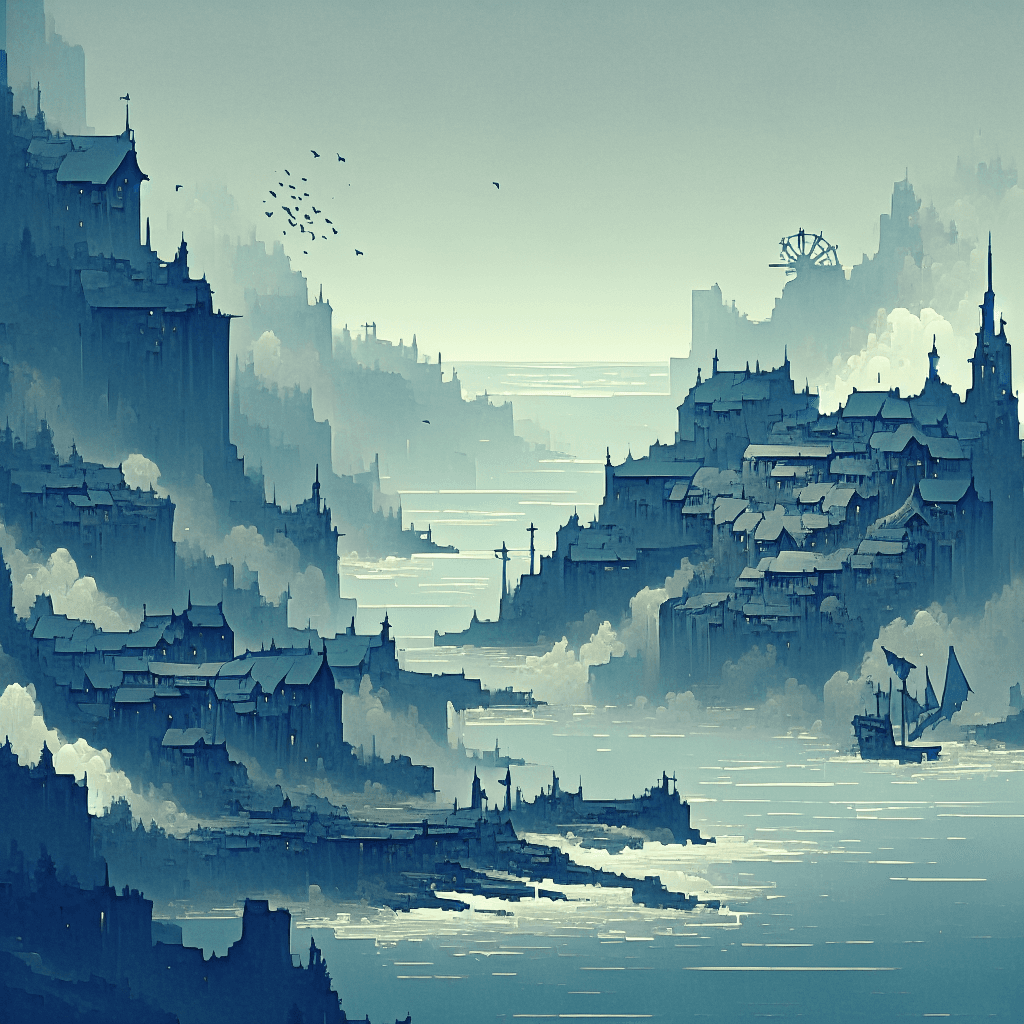
Coris Reach
Location
A windswept town at the tip of a rocky peninsula, surrounded on three sides by water that behaves strangely — currents reverse, waves arrive before wind, and fog appears on clear days. Coris Reach's inhabitants are navigators and cartographers who specialize in charting the unchartable. Darnis Bay relies on their pilots. Along the Virelay Coastlands, this site is part of the lattice of harbours, bell-towers, and salt-marshes that look toward Virelay and the Underwater Well. The sea here remembers more than the maps do; the Loosening lives in the fog. House Thorne's trade lines once stitched these settlements together — some of those routes are still walked, others have gone quiet since the Fray reached the coast.
Canon StabilityAbsolute
locationvirelaytowns
Darnis Bay
Location
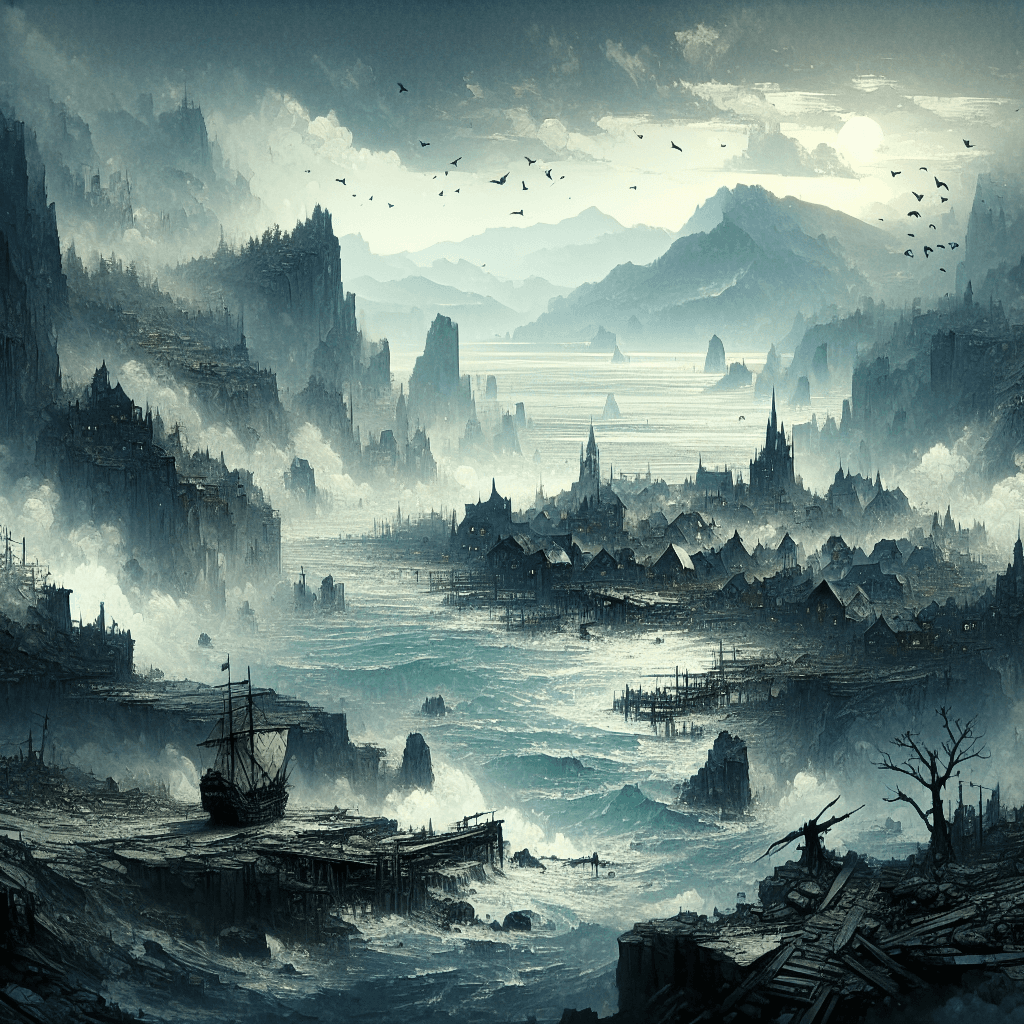
A prosperous harbor town on the southern coast, known for its shipwrights and navigators. Darnis Bay builds the sturdiest vessels on the Coastlands — necessary given the Fray-touched waters — and trains the pilots who guide ships past Coris Reach's treacherous currents. Its rivalry with Kelport is economic and old. Along the Virelay Coastlands, this site is part of the lattice of harbours, bell-towers, and salt-marshes that look toward Virelay and the Underwater Well. The sea here remembers more than the maps do; the Loosening lives in the fog. House Thorne's trade lines once stitched these settlements together — some of those routes are still walked, others have gone quiet since the Fray reached the coast.
Canon StabilityAbsolute
locationvirelaytowns
Deep Core Site
Location
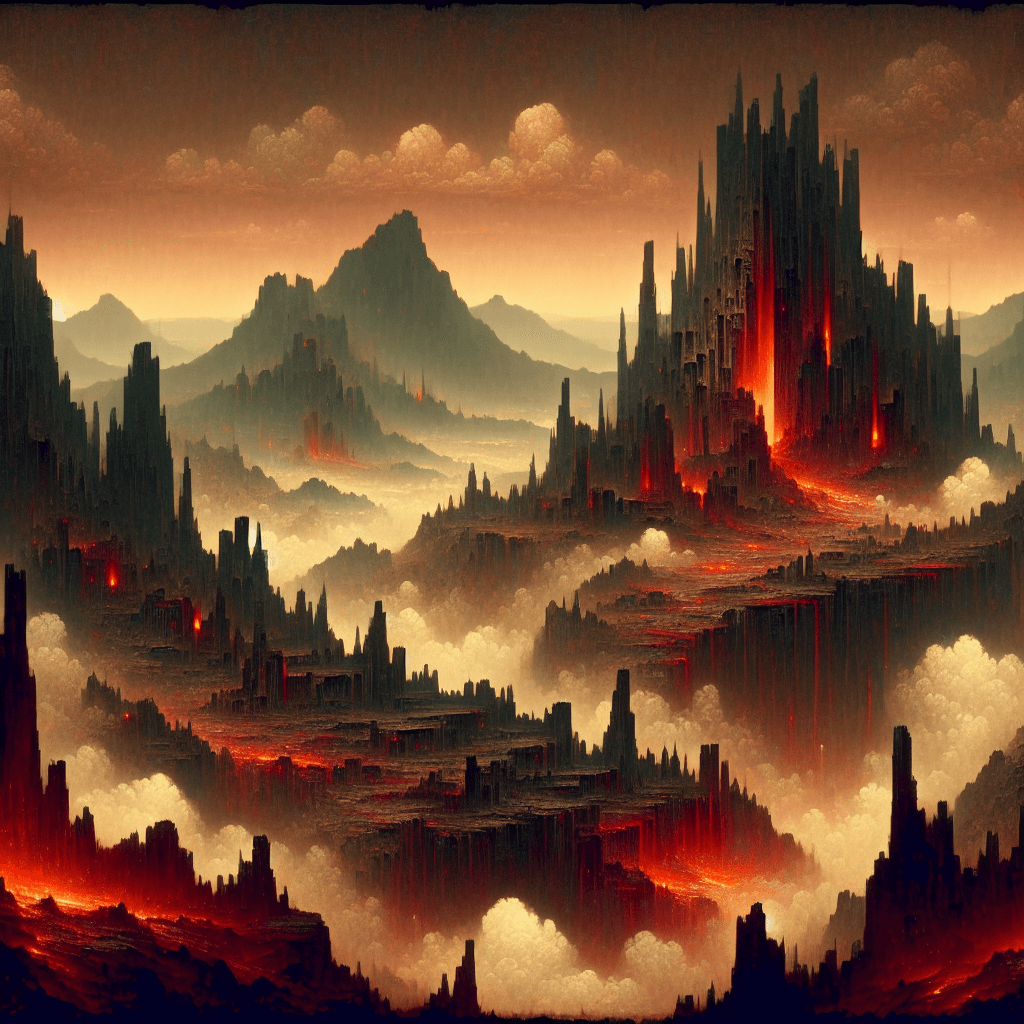
A collapsed mineshaft that descends farther than any other excavation in the Spine. Workers abandoned it after the lowest chambers began glowing with a light that was not lava — a pale, rhythmic pulse that some claim matched a heartbeat. The site is roped off, but the glow is still visible on clear nights. Within the Ashen Spine, this site is part of the long chain of forge-towns, quarries, and iron-vein settlements that work the world's oldest forges from Ironmark down to Old Varr. The smoke is the climate. The Fray here is physical — cracks open in the rock, tunnels appear that were not there the day before — and the Cleaved is the regional consequence. Forge guilds keep their own records, and they keep them close.
Canon StabilityAbsolute
locationashenruins

Deep Reach
Location
The Drowned Reach's largest settlement and de facto capital, built on an artificial island constructed from the rubble of structures that the rising waters claimed. Deep Reach is part city, part raft — its outer districts float on pontoons while its core rests on compacted stone. Sunken Port below it handles the underwater salvage that keeps the city supplied. In the Drowned Reach, this site is one of the half-drowned settlements that rebuild themselves on stilts every generation around the Sunken City. The sea is steadily reclaiming the coast, and the Echo is the regional Fray-consequence that haunts the deeper channels. What the tide takes here, it usually takes for a reason — sometimes a Shard, sometimes a name, sometimes only the road that used to lead inland.
Canon StabilityAbsolute
locationdrownedcities
Drellin Post
Location
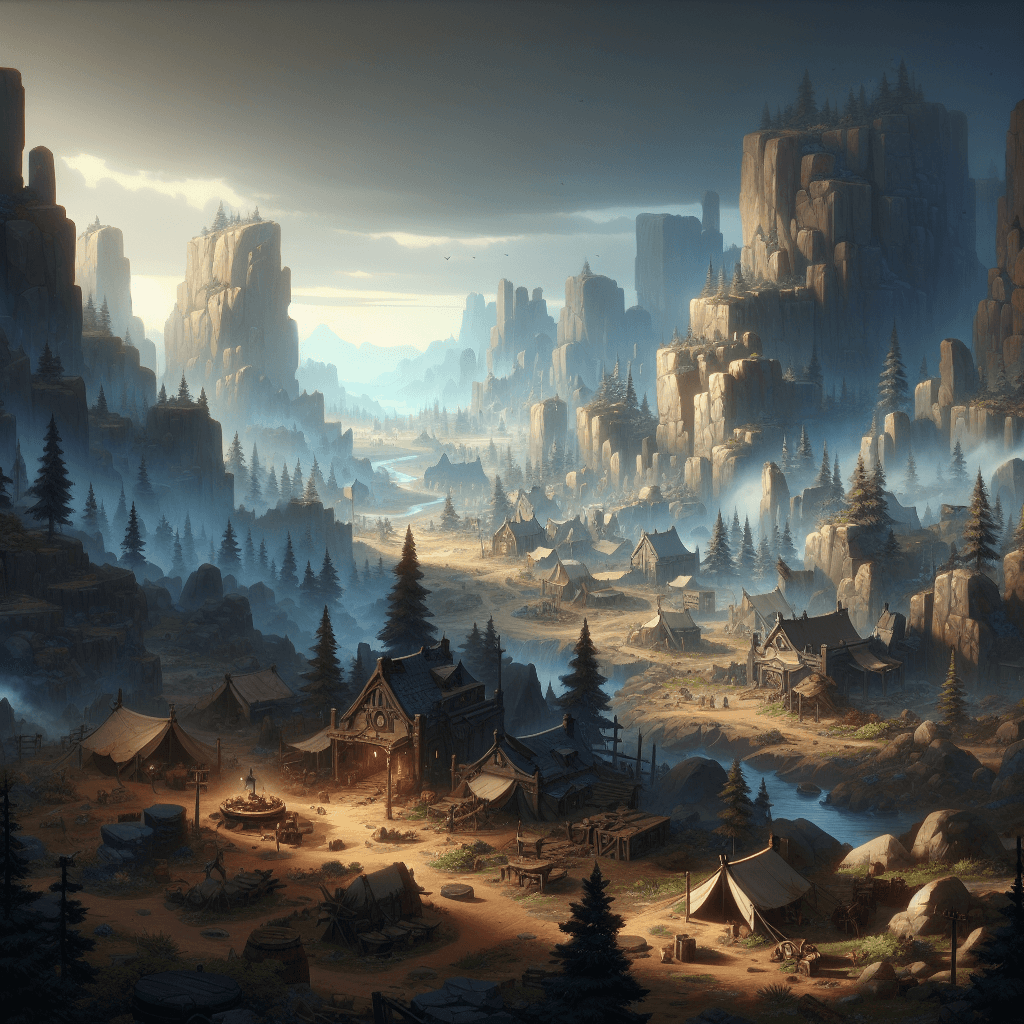
A fortified trade depot at the base of Talon Ridge, handling goods moving between the frontier villages and the larger towns. Drellin Post maintains a small standing militia and a postal relay system that connects the scattered settlements. It is practical, organized, and entirely without charm. On the Varnhalt Frontier, this site sits inside the patchwork of crossroad towns, mesa camps, and trade-protected routes that radiate from Old Varnhalt. The Loosening is constant here — mile markers contradict, paths loop — so settlements rely on local pacing and on the small island of stability around the Black Stone Tower in the eastern hills. The Frontier has no central authority; this place answers to whoever its trade depends on this season.
Canon StabilityAbsolute
locationvarnhalttowns
Drelmere
Location
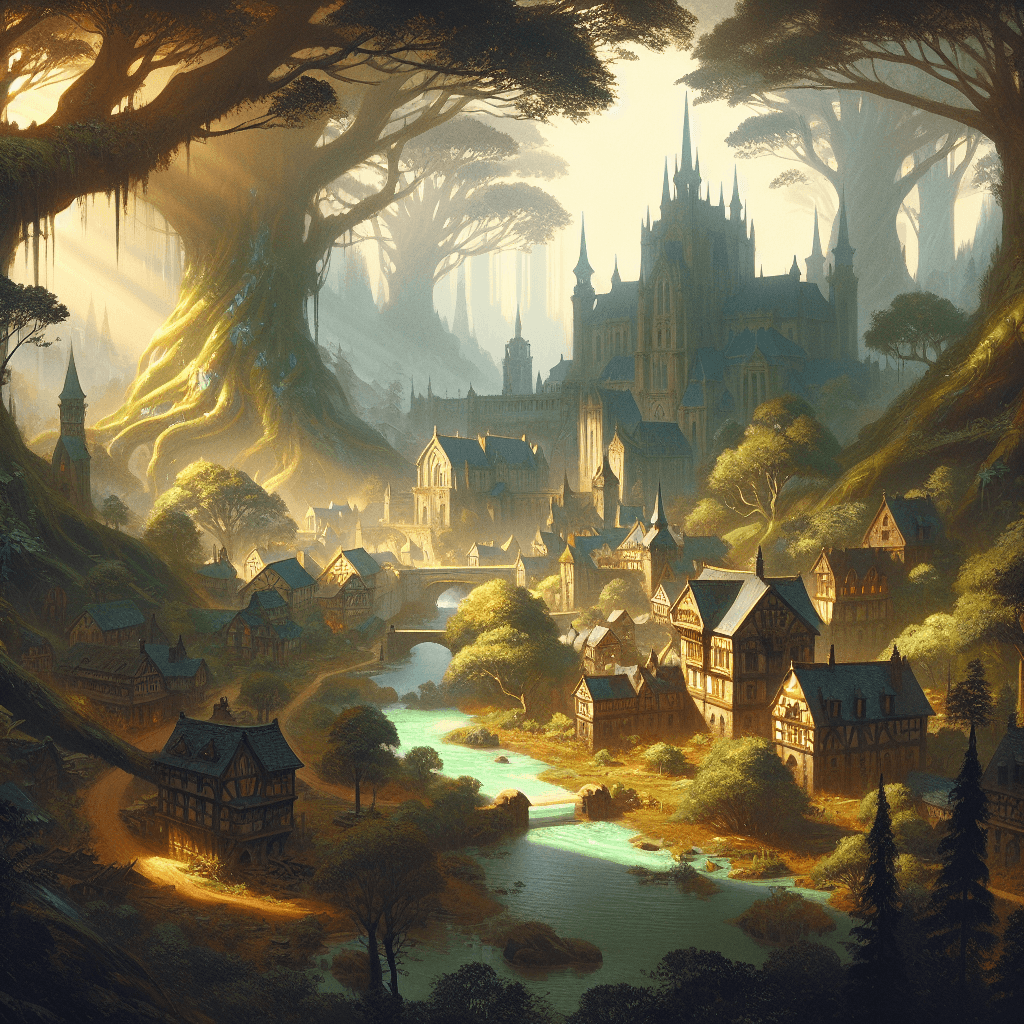
The central town of the Bellroot Vale and the site of the Bell Tree's first manifestation. Drelmere was once a sanctuary of the Dreamers, and the Fray's touch here was deeply personal — time stuttered, memories bled between people, and the town forgot itself in cycles. Since the Second Shard was recovered from the Bell Tree, Drelmere has stabilised, but its residents still pause mid-sentence sometimes, listening to something no one else can hear. Eidon was the last Dreamer to remain here. Kaerlin, Mira, Thomel, Alira, Uncle Edran, Mayor Halrick Vann, and Merra Dune all walk its streets. East Drelmere serves as its overflow district; First Root Chamber sleeps beneath it; Old Bellroot Site is the older town the Fray dissolved into the ground before this one took its place.
Canon StabilityAbsolute
story-1towndreamers+3

Drift Camp
Location
A floating settlement that moves with the slow currents of the Reach's interior waters. Drift Camp is never in the same place twice and communicates with Lowwater through a system of tethered message floats. Its people are salvagers who dive the submerged ruins for materials and artifacts. In the Drowned Reach, this site is one of the half-drowned settlements that rebuild themselves on stilts every generation around the Sunken City. The sea is steadily reclaiming the coast, and the Echo is the regional Fray-consequence that haunts the deeper channels. What the tide takes here, it usually takes for a reason — sometimes a Shard, sometimes a name, sometimes only the road that used to lead inland.
Canon StabilityAbsolute
locationdrownedsettlements

Drowned Gate
Location
A massive stone archway standing in open water, its base submerged and its top protruding just above the surface. Drowned Gate once marked the entrance to something — a city, a fortress, a sacred precinct — but whatever lay beyond it is now too deep and too dark to reach safely. The water around it is noticeably colder. In the Drowned Reach, this site is one of the half-drowned settlements that rebuild themselves on stilts every generation around the Sunken City. The sea is steadily reclaiming the coast, and the Echo is the regional Fray-consequence that haunts the deeper channels. What the tide takes here, it usually takes for a reason — sometimes a Shard, sometimes a name, sometimes only the road that used to lead inland.
Canon StabilityAbsolute
locationdrownedruins
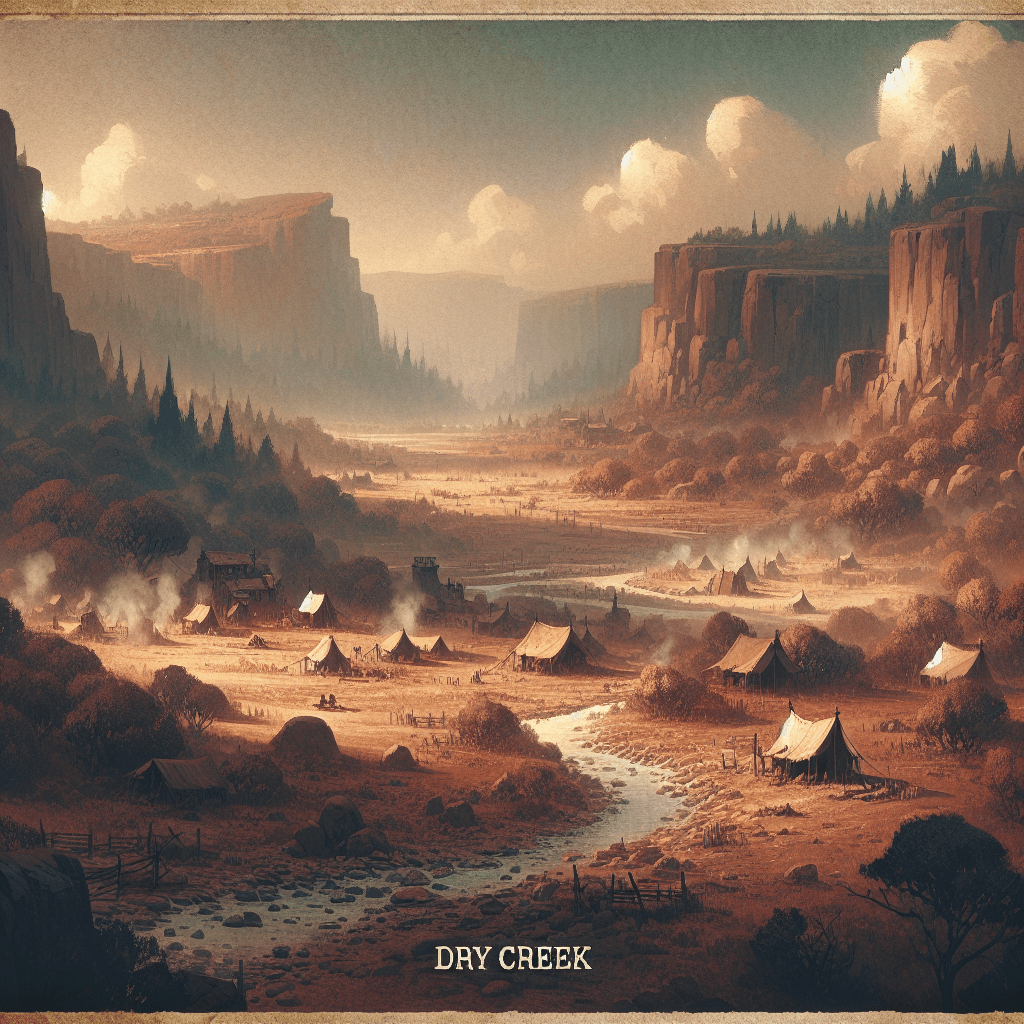
Dry Creek
Location
A parched settlement along a riverbed that flows only during spring melt. Dry Creek survives on well water and stubbornness, supplying timber to Varnhalt and West Varnhalt in exchange for grain. Its residents are known throughout the Frontier for their laconic temperament and refusal to relocate. On the Varnhalt Frontier, this site sits inside the patchwork of crossroad towns, mesa camps, and trade-protected routes that radiate from Old Varnhalt. The Loosening is constant here — mile markers contradict, paths loop — so settlements rely on local pacing and on the small island of stability around the Black Stone Tower in the eastern hills. The Frontier has no central authority; this place answers to whoever its trade depends on this season.
Canon StabilityAbsolute
locationvarnhaltvillages

Drylight Camp
Location
The most isolated settlement in the Glass Expanse, established where the crystalline desert meets a stretch of conventional sand. Drylight Camp exists because of a single anomaly: water condenses on the crystal surfaces here at dawn, providing just enough moisture to sustain a small community. No one knows why this spot and no other. Out in the Glass Expanse, this site is part of the network of prism-fields, shard-towns, and silica plateaus that surround Prism City. Light bends here in ways the Pattern cannot quite hold — the air sometimes refracts a scene from a different hour, and the Starving Silence forms where light has shattered the same way too many times in the same place. The Knowledge Fragmentation Principle was first formalised by Expanse philosophers a generation before the Luminous Fold accepted it.
Canon StabilityAbsolute
locationglasssettlements
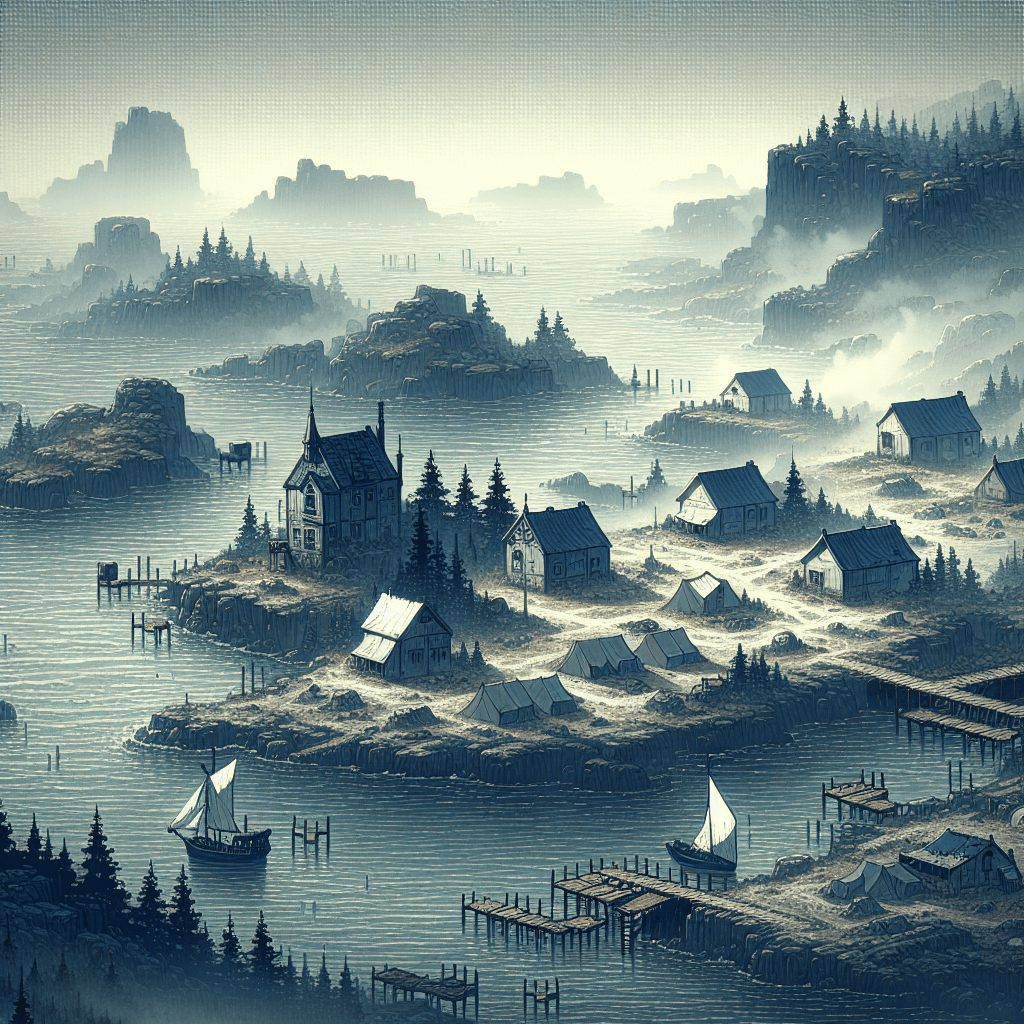
East Dock
Location
The smallest and most precarious of the Coastlands' fishing villages, built on a narrow stone jetty that extends into open water. East Dock exists because the fishing here is extraordinary — the convergence of two currents brings catches that Darnis Bay and Kelport both covet. One bad storm could erase it. Along the Virelay Coastlands, this site is part of the lattice of harbours, bell-towers, and salt-marshes that look toward Virelay and the Underwater Well. The sea here remembers more than the maps do; the Loosening lives in the fog. House Thorne's trade lines once stitched these settlements together — some of those routes are still walked, others have gone quiet since the Fray reached the coast.
Canon StabilityAbsolute
locationvirelayvillages
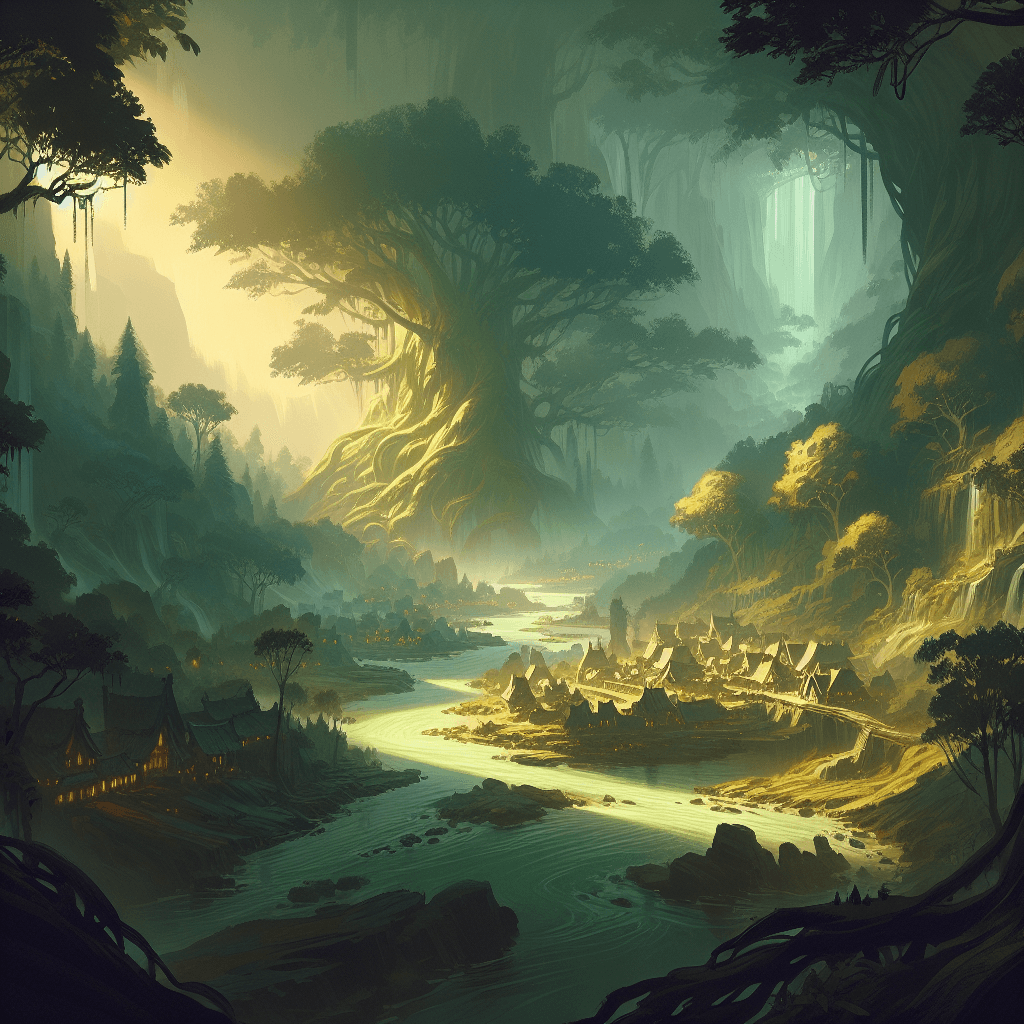
East Drelmere
Location
Originally a camp for workers supporting Drelmere during the worst of the Fray disturbances, East Drelmere grew into a permanent settlement as the main town's instability drove residents to seek more predictable ground. It lacks Drelmere's history but compensates with practical infrastructure — better roads, a functioning market, and walls that stay where they're built. The relationship between the two settlements is one of quiet codependence: Drelmere holds the Bell Tree's memory; East Drelmere holds the bakery, the dock, and the children.
Canon StabilityAbsolute
locationbellroottowns
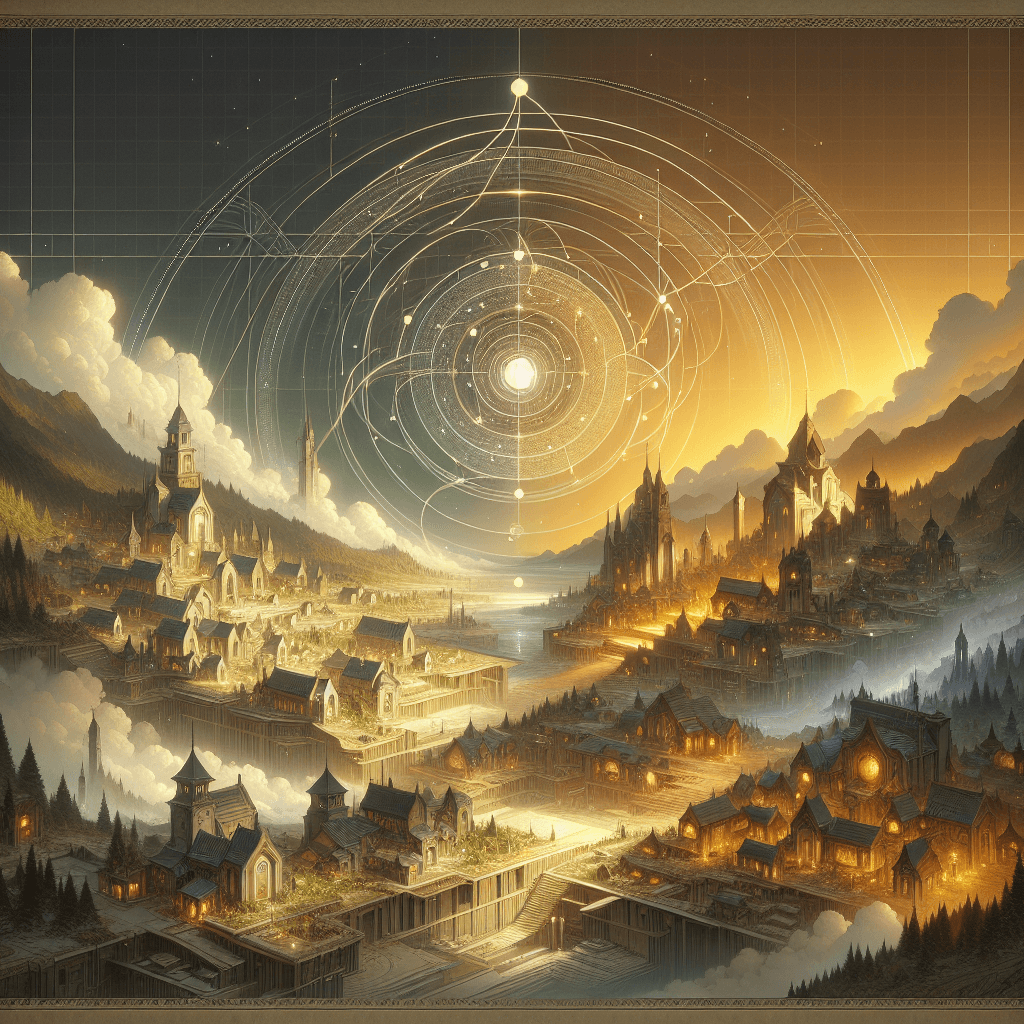
East Order
Location
A supply town east of Symmetry, positioned where the Fold's stabilizing influence begins to weaken and terrain reverts to natural irregularity. East Order's residents appreciate this imperfection and find Symmetry exhausting to visit. The town is deliberately chaotic in layout — a small rebellion against the Fold's imposed order. Within the Luminous Fold, this site is part of the gridded, measured landscape that radiates out from Lumina and the Central Fold. The Fold's clocks, roads, and institutions assume reality may be wholly described, and on this plateau they almost can — the Loosening and Time Instability are weakest here. The site answers, directly or indirectly, to one of the Seven Circles, and the Cartographic Society of Iterants keeps notes on every measurable thing that happens within sight of it.
Canon StabilityAbsolute
locationluminoustowns

East Wind Post
Location
An exposed garrison on the eastern plateau where winds from the Glass Expanse carry strange sounds and colder air than the season warrants. East Wind Post monitors the border and occasionally intercepts travelers who wandered too far from Clearline on the Expanse side. On the Deyune Steppe, this site is one of the points where the Long Wind, the clan-roads, and the old Karak geometries meet. Time Instability runs heavy here — distances and seasons rarely agree between settlements. The Veykar's old reach passed through or near sites like this; some bear the Wheel's scars in the soil, others have been letting the grass grow back over them for generations.
Canon StabilityAbsolute
locationdeyuneoutposts-forts

Echo Ruins
Location
The remains of a structure that produces perfect acoustic repetitions of any sound made within its walls. Words spoken at Echo Ruins return seconds later, but subtly altered — inflection changed, emphasis shifted, as if the ruins are editing what they hear. Twinmark's scholars study the effect but haven't explained it.
Canon StabilityAbsolute
locationglassruins
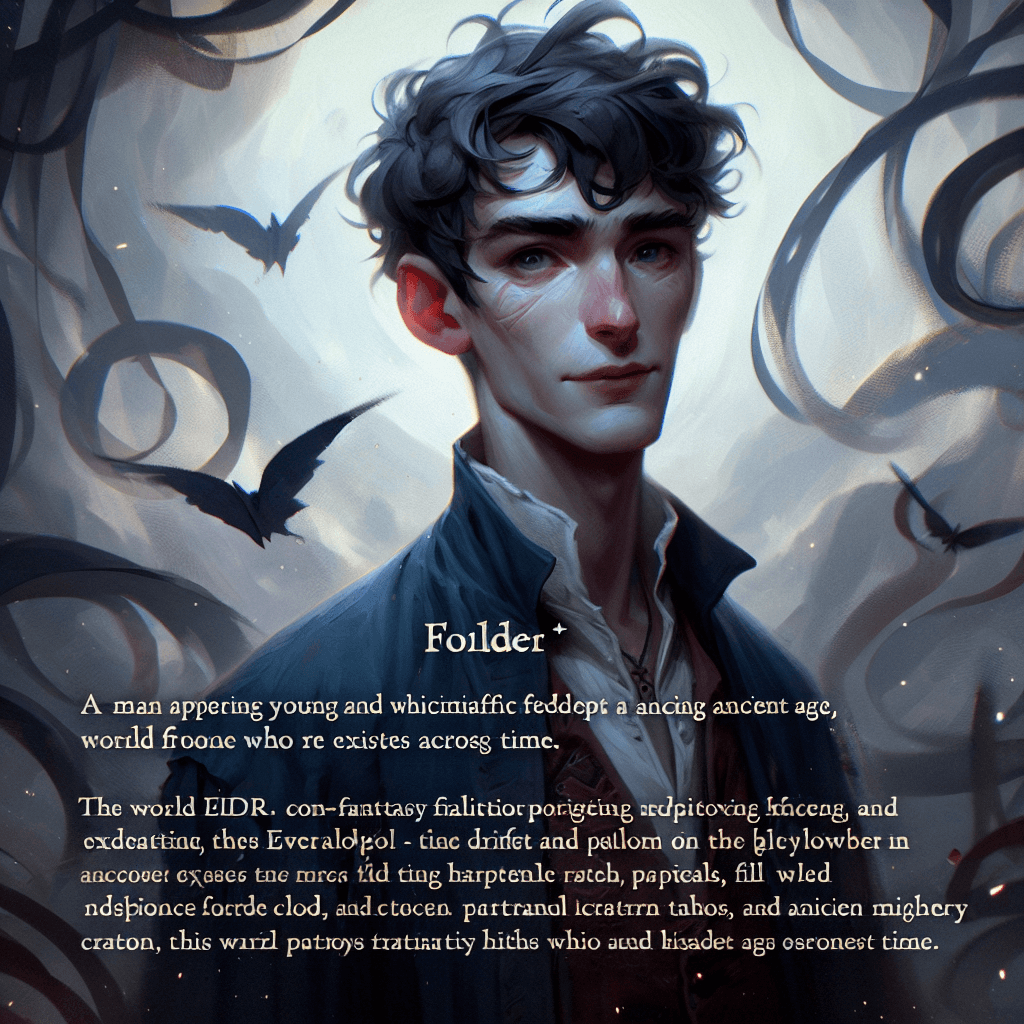
Eidon
Character
A Dreamer who calls himself a "Folder" — a man folded across time, appearing young despite being ancient. Eccentric and whimsical, he speaks in riddles about drawer soup and time as origami. The last Dreamer remaining in Drelmere after the rest of the sanctuary scattered or unravelled, Eidon reveals the crucial knowledge about the Shards of the Pattern, the First Map, and the Fold to Kaerlin and her siblings before unfolding completely in First Root Chamber beneath the town, returning to his true aged form and fading into the stone. His parting words inform every later understanding the Archive holds about how Shards behave — and why no one knows what happens when they are reunited.
Canon StabilityAbsolute
story-1dreamerfolder+1
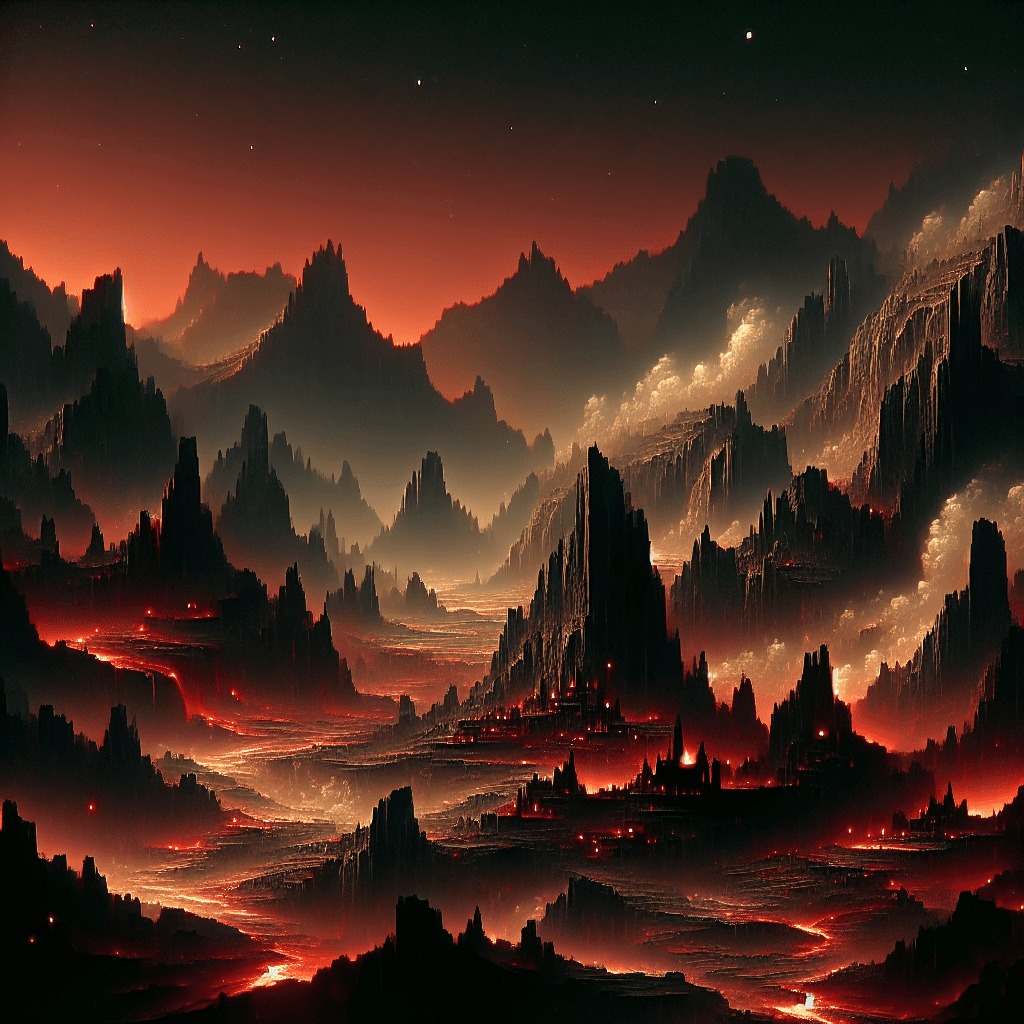
Emberfall Village
Location
Nestled in a valley where volcanic ash settles like grey snow, Emberfall is home to farmers who cultivate heat-loving crops in the geothermally warmed soil. The village glows faintly at night from the magma vents that run beneath its foundations. Korrin Hold on the ridge above provides its only military protection. Within the Ashen Spine, this site is part of the long chain of forge-towns, quarries, and iron-vein settlements that work the world's oldest forges from Ironmark down to Old Varr. The smoke is the climate. The Fray here is physical — cracks open in the rock, tunnels appear that were not there the day before — and the Cleaved is the regional consequence. Forge guilds keep their own records, and they keep them close.
Canon StabilityAbsolute
locationashenvillages

Everloop (Card Game)
Concept
A popular Everloop card game played on a spiral board with ninety cards — Score cards, Modifiers, and FRAY setups. The goal is to hold the highest Personal Score when the Table Score lands exactly on 100. Players form loops, use Modifiers to reverse, double, or share scores, and can spring FRAY traps that void entire rounds and erase opponents' gains. Rook is a master of the game; his use of FRAY traps to empty other players' totals is part of how he keeps himself fed in Sera's settlement and along the Varnhalt Frontier. The card game is also a deliberate in-world miniature of the larger Pattern/Fray dynamic — order accumulated, then upended by an unstable structure that was always part of the deck.
Canon StabilityAbsolute
story-3gameculture
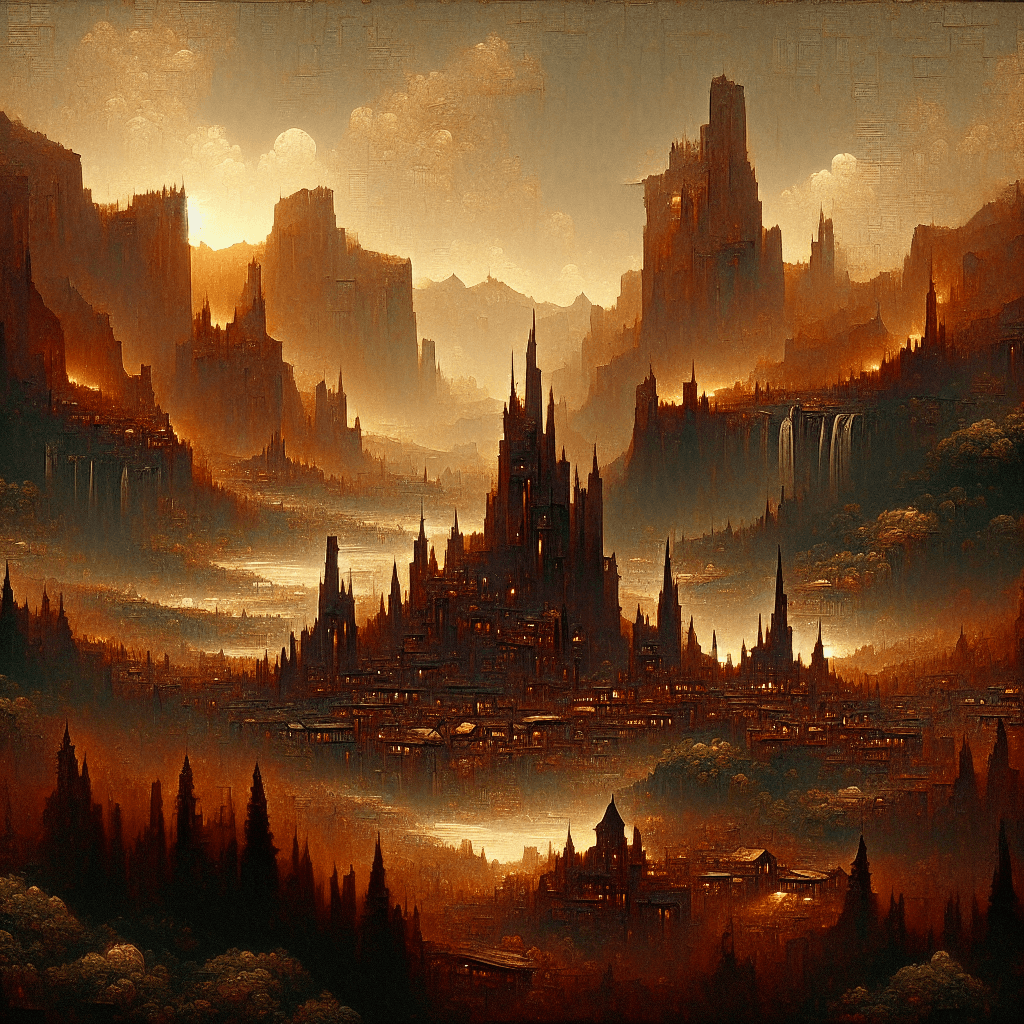
Farpoint
Location
The southernmost city of the Varnhalt Frontier, built where the terrain begins to shift toward the Virelay Coastlands. Farpoint is a border city in every sense — half its trade comes from the Frontier, half from the coast, and its culture is a noisy collision of both. Valen Spur on the Deyune side and Varr Keep on the Ashen side both maintain trade envoys here. On the Varnhalt Frontier, this site sits inside the patchwork of crossroad towns, mesa camps, and trade-protected routes that radiate from Old Varnhalt. The Loosening is constant here — mile markers contradict, paths loop — so settlements rely on local pacing and on the small island of stability around the Black Stone Tower in the eastern hills. The Frontier has no central authority; this place answers to whoever its trade depends on this season.
Canon StabilityAbsolute
locationvarnhaltcities

Father's Shard
Artifact
A shard of smooth black glass, etched with soft curves like veins in a leaf, faintly warm to the touch. Found by Kaerlin's father at the edge of the Overlook during the first Bellroot Vale expedition into the Fray. He said it hummed in his hand and that he could feel the Everloop beneath it — the lattice the Pattern is hung on. He disappeared into the Fray on his second expedition, and the Shard returned to the family cottage in his pocket, the way only Shards seem able to. Alira kept it hidden until her death; Kaerlin has carried it since. Father's Shard pulses when brought near the Bell Tree or any other Shard, recognising a sibling. It is the smallest of the recovered Shards and the most personal — the one that started everything for the three children.
Canon StabilityAbsolute
story-1shardheirloom+1

First Camp Remains
Location
According to Deyune oral tradition, this is where the first people of the Steps made their camp after the Fray. Nothing remains but a shallow depression, a ring of fire-blackened stones, and a persistent warmth in the soil that defies explanation. Pilgrimages from Karak Camp still mark the site each year. On the Deyune Steppe, this site is one of the points where the Long Wind, the clan-roads, and the old Karak geometries meet. Time Instability runs heavy here — distances and seasons rarely agree between settlements. The Veykar's old reach passed through or near sites like this; some bear the Wheel's scars in the soil, others have been letting the grass grow back over them for generations.
Canon StabilityAbsolute
locationdeyuneruins
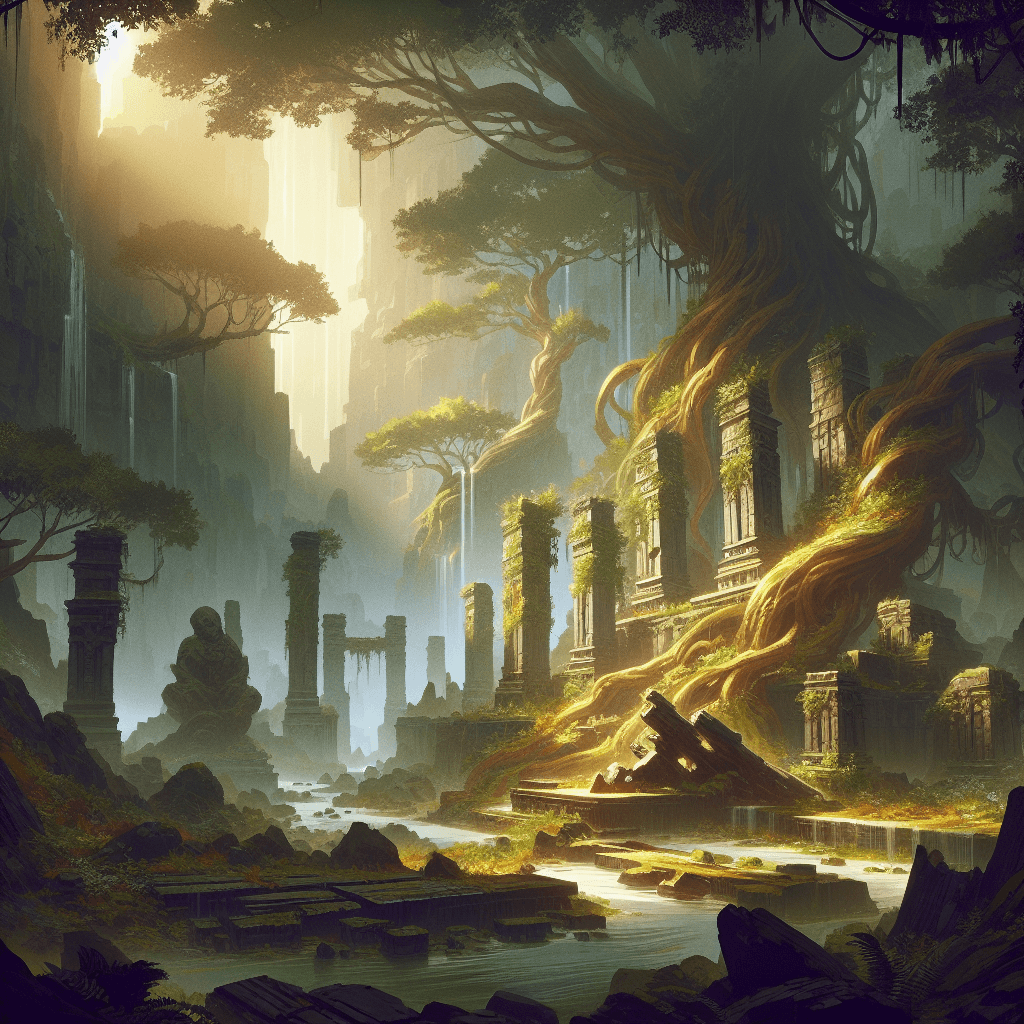
First Root Chamber
Location
The chamber at the heart of the Old Bellroot Site beneath the Bellroot Vale — a vaulted room of root-grown stone older than any written record of the Weaving. Vaultkeepers believe the First Root Chamber predates the First Architects' work and that the Architects built around it rather than constructing it themselves. The chamber's walls bear engravings whose spiral geometry matches the markings on the bells of the Bell Tree and the symbols inside the cave beneath Drelmere. Kaerlin, Mira, and Thomel descended into the chamber after solving the Bell Tree puzzle; Eidon unfolded into the stone here. It is the place the Bellroot Vale's deepest stability seems to begin.
Canon StabilityAbsolute
locationbellrootruins

Flood Station
Location
An emergency supply cache and evacuation point maintained by Deep Reach on higher ground west of the main settlements. Flood Station stores food, medicine, and boats sufficient for a rapid evacuation. It has been activated three times in the past decade, each time for a shorter interval between crises. In the Drowned Reach, this site is one of the half-drowned settlements that rebuild themselves on stilts every generation around the Sunken City. The sea is steadily reclaiming the coast, and the Echo is the regional Fray-consequence that haunts the deeper channels. What the tide takes here, it usually takes for a reason — sometimes a Shard, sometimes a name, sometimes only the road that used to lead inland.
Canon StabilityAbsolute
locationdrownedoutposts

Floodmark
Location
Named for the high-water marks that stripe its buildings like growth rings on a tree, each one higher than the last. Floodmark has been rebuilt five times, each iteration further uphill. Its current location is its last viable position — the next flood that exceeds the mark will force evacuation to West Reach. In the Drowned Reach, this site is one of the half-drowned settlements that rebuild themselves on stilts every generation around the Sunken City. The sea is steadily reclaiming the coast, and the Echo is the regional Fray-consequence that haunts the deeper channels. What the tide takes here, it usually takes for a reason — sometimes a Shard, sometimes a name, sometimes only the road that used to lead inland.
Canon StabilityAbsolute
locationdrownedtowns
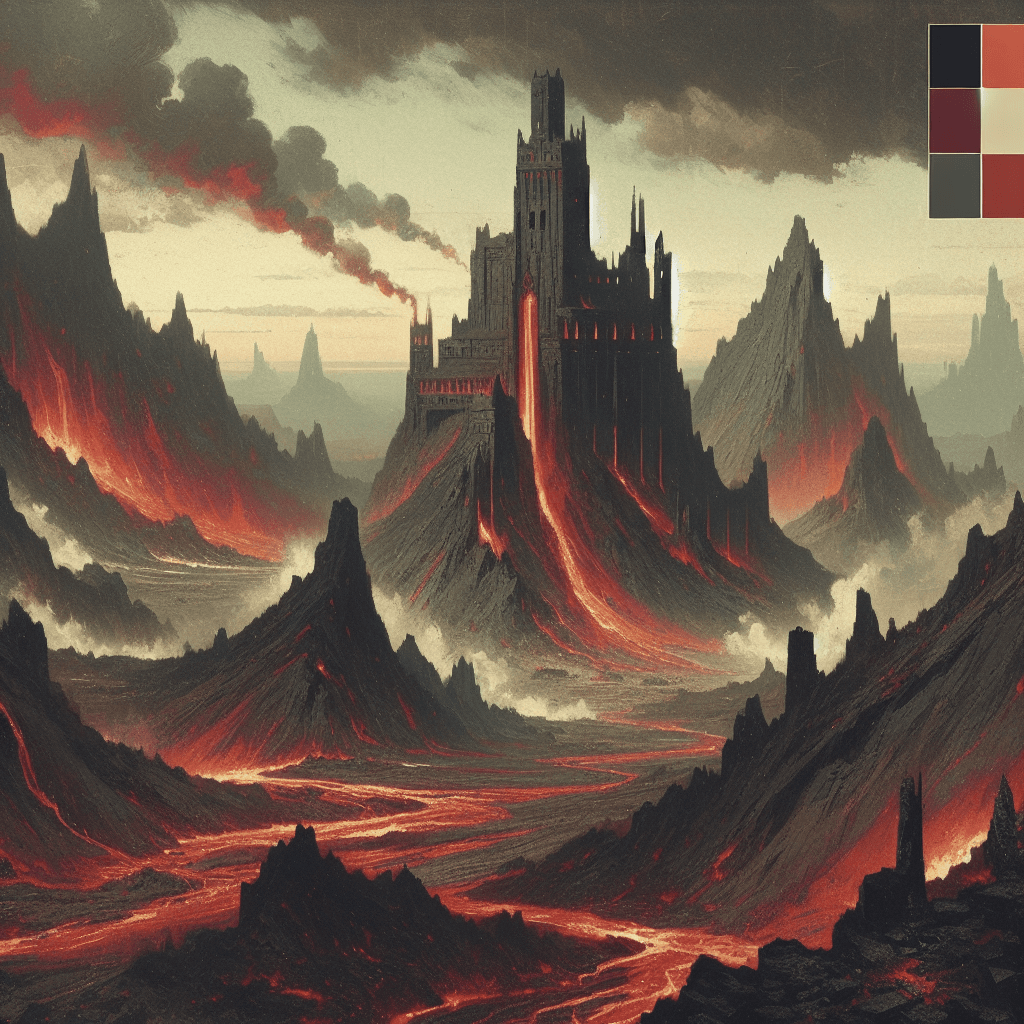
Furnace Post
Location
A hardened bunker-outpost built where a lava tube surfaces near the eastern trade road. Furnace Post monitors the unstable geology of the region and provides emergency shelter when eruptions cut off Blackridge Camp from the rest of the Spine. Within the Ashen Spine, this site is part of the long chain of forge-towns, quarries, and iron-vein settlements that work the world's oldest forges from Ironmark down to Old Varr. The smoke is the climate. The Fray here is physical — cracks open in the rock, tunnels appear that were not there the day before — and the Cleaved is the regional consequence. Forge guilds keep their own records, and they keep them close.
Canon StabilityAbsolute
locationashenoutposts-forts
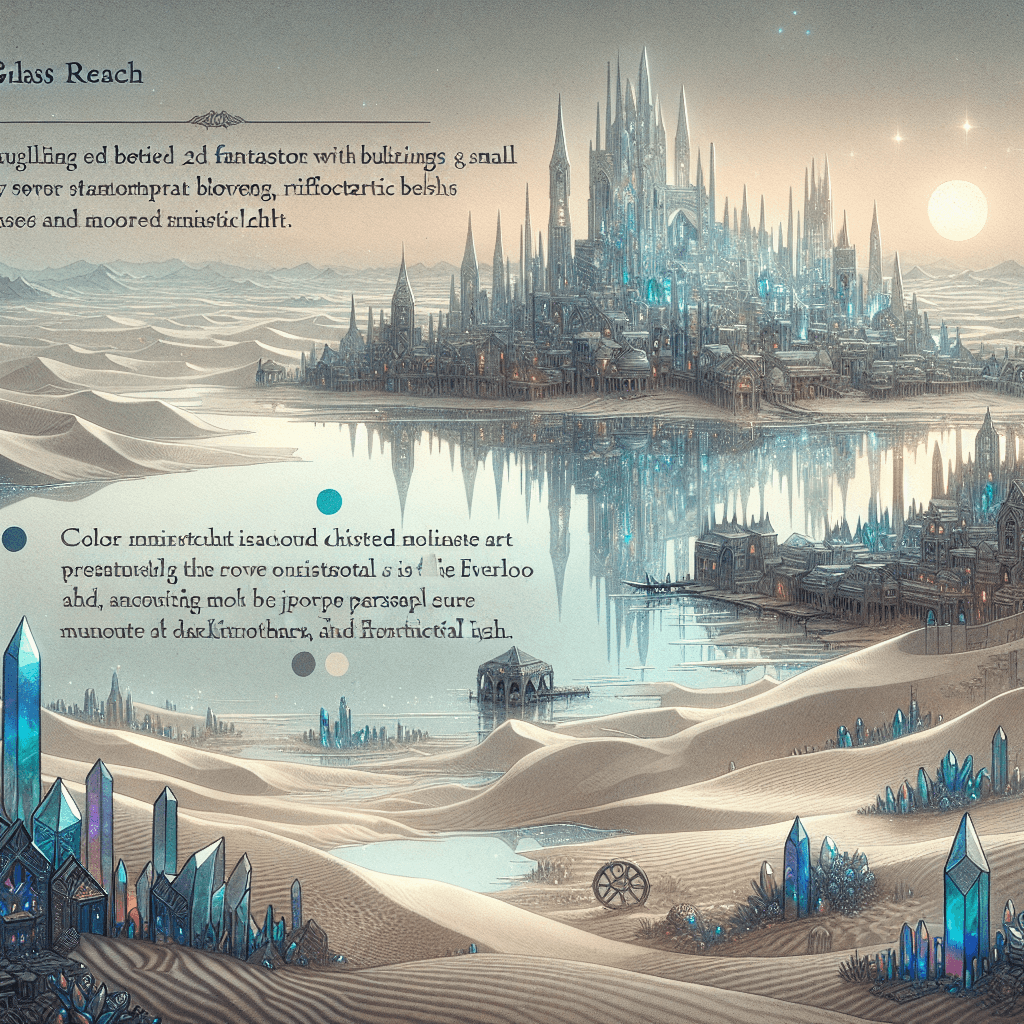
Glass Reach
Location
The primary trading town of the Glass Expanse, built on a plateau of fused crystal that provides stable footing in an otherwise treacherous landscape. Glass Reach handles the export of crystal, reflective sand, and the strange prismatic pigments that artists and alchemists prize. Twinmark to the south is its sister settlement, and Clearline to the east connects it to the Bellroot Vale trade routes. Out in the Glass Expanse, this site is part of the network of prism-fields, shard-towns, and silica plateaus that surround Prism City. Light bends here in ways the Pattern cannot quite hold — the air sometimes refracts a scene from a different hour, and the Starving Silence forms where light has shattered the same way too many times in the same place. The Knowledge Fragmentation Principle was first formalised by Expanse philosophers a generation before the Luminous Fold accepted it.
Canon StabilityAbsolute
locationglasstowns
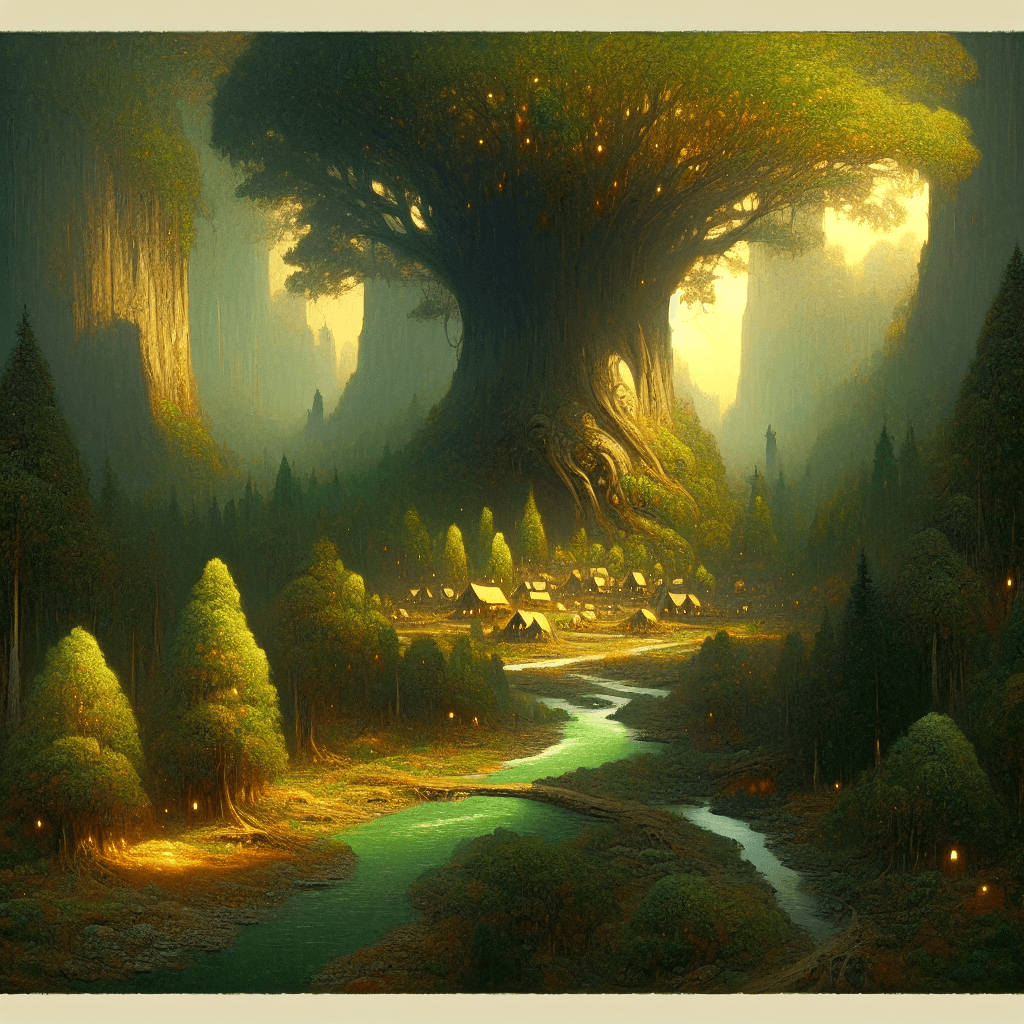
Green Hollow
Location
A quiet settlement in a moss-covered depression deep in the forest. Green Hollow is hard to find even when you know where it is — the canopy closes completely overhead, and the entrance paths are deliberately obscured. Its people are woodcarvers and memory-keepers who claim to hear the forest dreaming. Within the Bellroot Vale, this site sits in the wider network of villages, ruins, and Pattern-touched places that radiate out from Drelmere and Bellroot Crossing. The Vale's relative stability since the Second Shard was recovered from the Bell Tree is felt here, but the Loosening and the Fray still leave their fingerprints — old paths that no longer match the new ones, names half-remembered, the occasional warm wind out of the wrong season.
Canon StabilityAbsolute
locationbellrootvillages
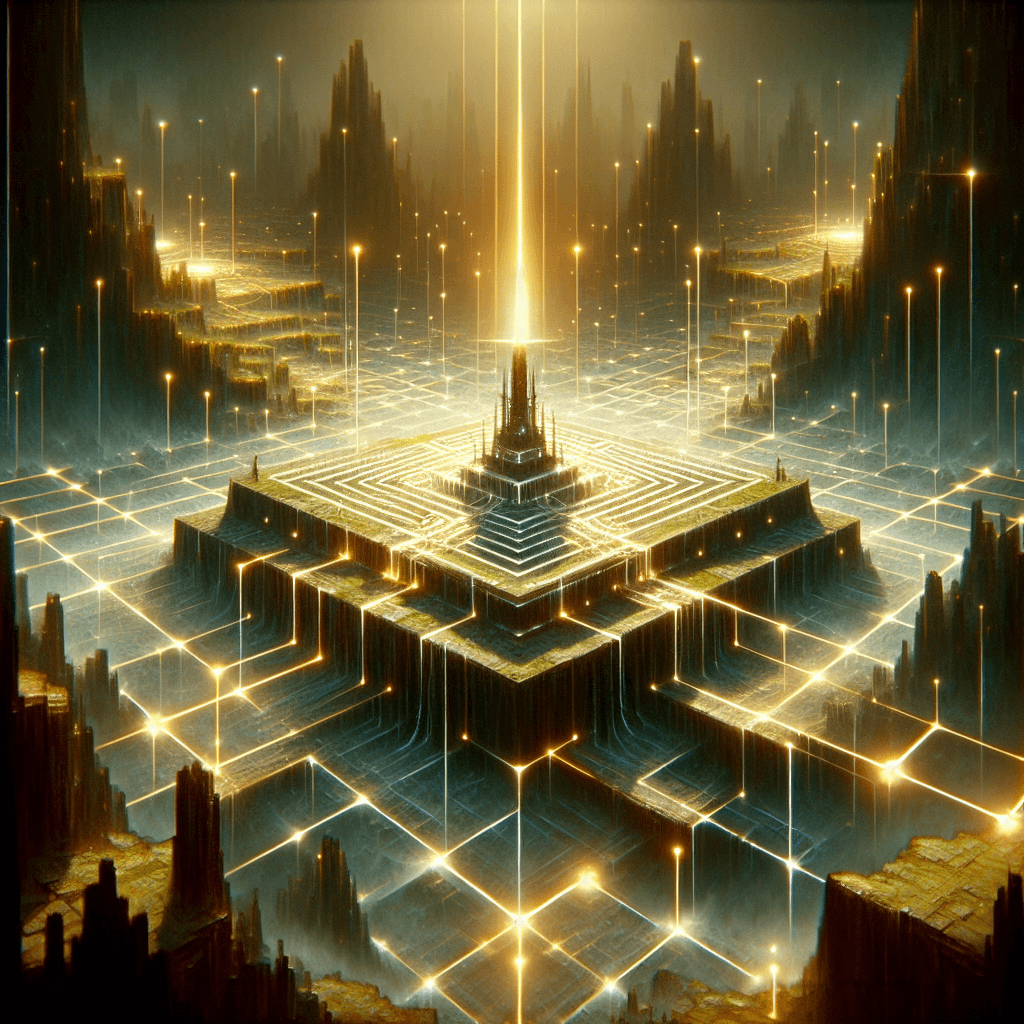
Grid Station 1
Location
The first in a network of six monitoring outposts arranged in a perfect hexagonal pattern across the Fold. Grid Station 1 watches the northern border and records fluctuations in the ambient energy levels. Its instruments are the most sensitive in the Fold, and its operators relay data to Central Fold hourly. Within the Luminous Fold, this site is part of the gridded, measured landscape that radiates out from Lumina and the Central Fold. The Fold's clocks, roads, and institutions assume reality may be wholly described, and on this plateau they almost can — the Loosening and Time Instability are weakest here. The site answers, directly or indirectly, to one of the Seven Circles, and the Cartographic Society of Iterants keeps notes on every measurable thing that happens within sight of it.
Canon StabilityAbsolute
locationluminousoutposts
Grid Station 2
Location
Positioned on the northeastern arc of the Grid network. Grid Station 2 monitors the boundary where the Fold's stabilizing influence meets the natural chaos of the Glass Expanse. Operators here report that the geometric patterns grow subtly toward Expanse territory each year. Within the Luminous Fold, this site is part of the gridded, measured landscape that radiates out from Lumina and the Central Fold. The Fold's clocks, roads, and institutions assume reality may be wholly described, and on this plateau they almost can — the Loosening and Time Instability are weakest here. The site answers, directly or indirectly, to one of the Seven Circles, and the Cartographic Society of Iterants keeps notes on every measurable thing that happens within sight of it.
Canon StabilityAbsolute
locationluminousoutposts
Grid Station 3
Location
The eastern station of the Grid, closest to the Bellroot Vale border. Grid Station 3 watches the forest edge where the Fold's precision clashes with the Vale's organic growth — trees that should grow straight twisting away from the energy lines, vines that refuse to follow geometric paths. Within the Luminous Fold, this site is part of the gridded, measured landscape that radiates out from Lumina and the Central Fold. The Fold's clocks, roads, and institutions assume reality may be wholly described, and on this plateau they almost can — the Loosening and Time Instability are weakest here. The site answers, directly or indirectly, to one of the Seven Circles, and the Cartographic Society of Iterants keeps notes on every measurable thing that happens within sight of it.
Canon StabilityAbsolute
locationluminousoutposts
Grid Station 4
Location
The southern station, overlooking the least populated stretch of the Fold. Grid Station 4 is considered the quietest posting in the network. Its operators have the most uninterrupted data sets and the highest rate of requesting transfer, citing an oppressive stillness. Within the Luminous Fold, this site is part of the gridded, measured landscape that radiates out from Lumina and the Central Fold. The Fold's clocks, roads, and institutions assume reality may be wholly described, and on this plateau they almost can — the Loosening and Time Instability are weakest here. The site answers, directly or indirectly, to one of the Seven Circles, and the Cartographic Society of Iterants keeps notes on every measurable thing that happens within sight of it.
Canon StabilityAbsolute
locationluminousoutposts
Grid Station 5
Location
The southwestern station, nearest to the Drowned Reach border. Grid Station 5 monitors the alarming interaction between the Fold's order and the Reach's encroaching waters — the energy lines don't stop at the waterline but continue beneath the surface, glowing faintly through the murk. Within the Luminous Fold, this site is part of the gridded, measured landscape that radiates out from Lumina and the Central Fold. The Fold's clocks, roads, and institutions assume reality may be wholly described, and on this plateau they almost can — the Loosening and Time Instability are weakest here. The site answers, directly or indirectly, to one of the Seven Circles, and the Cartographic Society of Iterants keeps notes on every measurable thing that happens within sight of it.
Canon StabilityAbsolute
locationluminousoutposts
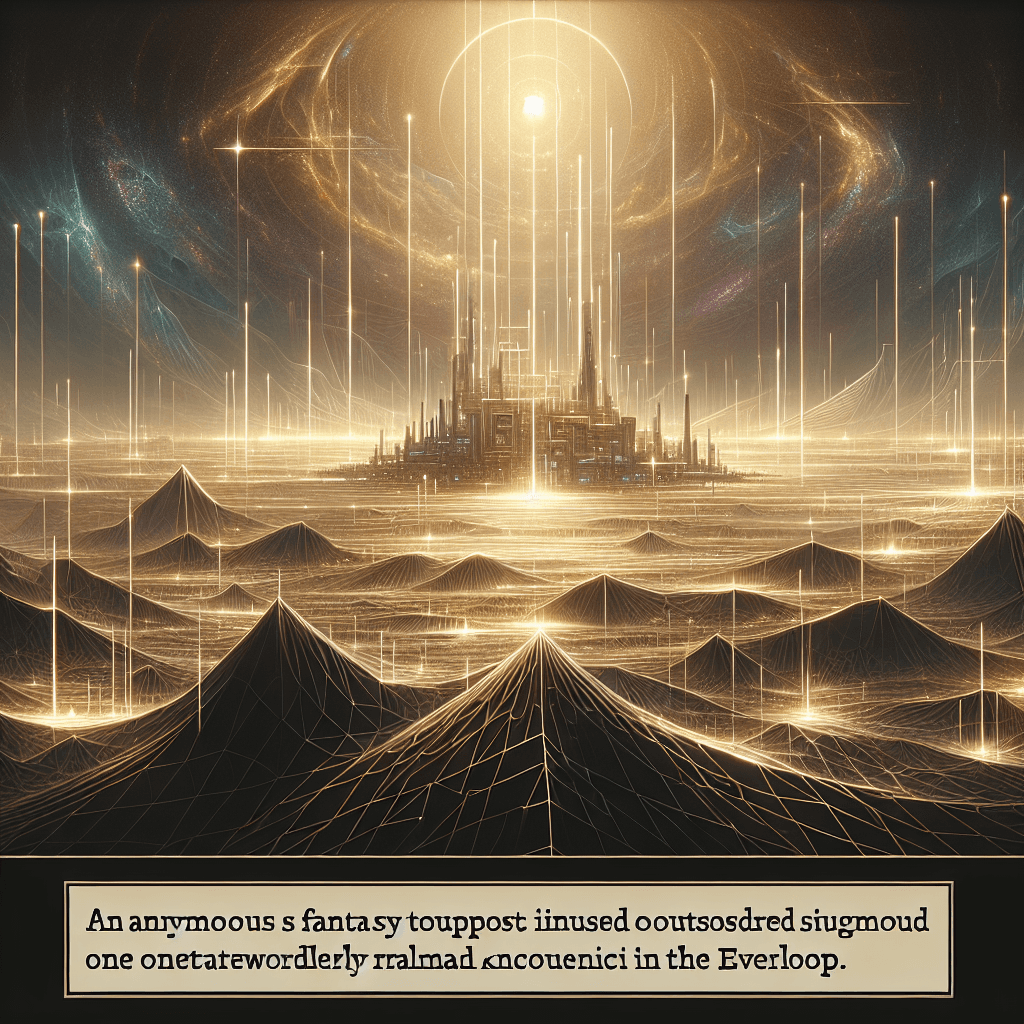
Grid Station 6
Location
The northwestern station of the Grid, facing the open terrain between the Fold and the Ashen Spine. Grid Station 6 reports the highest frequency of anomalous readings — energy spikes that coincide with volcanic activity in the Spine, suggesting a deep connection between the two regions' geological systems. Within the Luminous Fold, this site is part of the gridded, measured landscape that radiates out from Lumina and the Central Fold. The Fold's clocks, roads, and institutions assume reality may be wholly described, and on this plateau they almost can — the Loosening and Time Instability are weakest here. The site answers, directly or indirectly, to one of the Seven Circles, and the Cartographic Society of Iterants keeps notes on every measurable thing that happens within sight of it.
Canon StabilityAbsolute
locationluminousoutposts
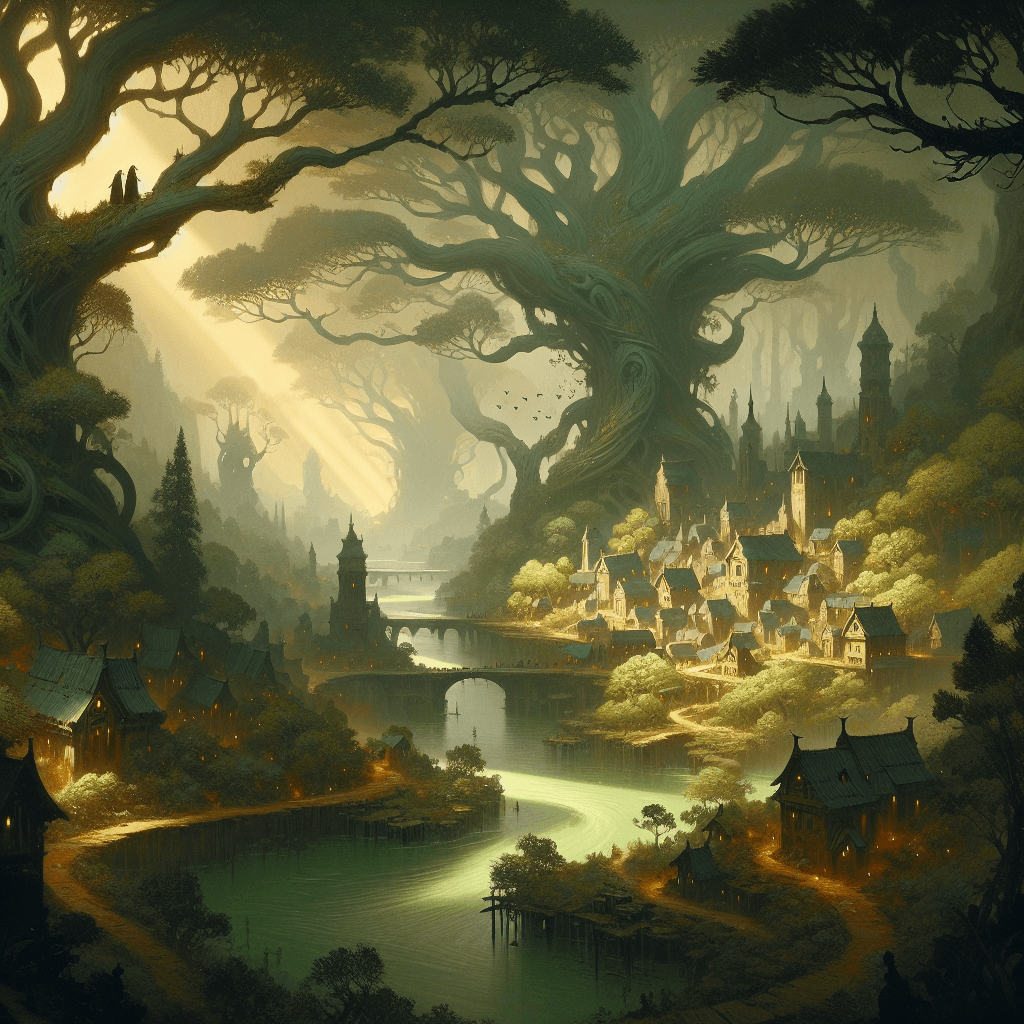
Halrick's Reach
Location
A fortified trading town on the Bellroot Vale's eastern border, named for Mayor Halrick Vann, the explorer who first mapped the routes between Bellroot and the Glass Expanse before he settled in Drelmere. Halrick's Reach is the Vale's gateway to the wider world — caravans bound for Clearline and Glass Reach in the Expanse depart from its eastern gate, and Bellroot Crossing routes much of its outward trade through it.
Canon StabilityAbsolute
locationbellroottowns
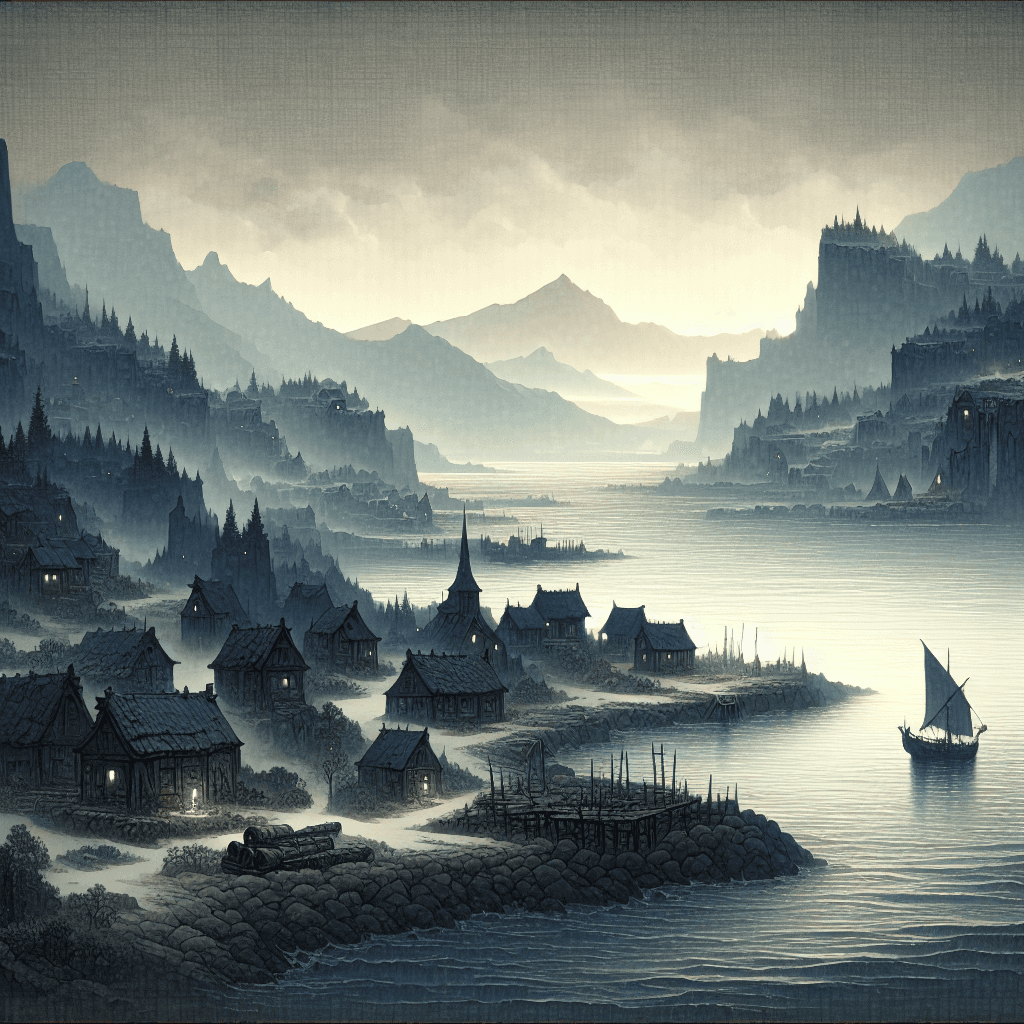
Halven Shore
Location
A cliffside village that serves as Lowtide's emergency refuge when Fray-touched tides surge beyond prediction. Halven Shore has permanent stone homes and a small chapel dedicated to the memory of those the coast has claimed. Its residents consider themselves guardians of the lower settlements. Along the Virelay Coastlands, this site is part of the lattice of harbours, bell-towers, and salt-marshes that look toward Virelay and the Underwater Well. The sea here remembers more than the maps do; the Loosening lives in the fog. House Thorne's trade lines once stitched these settlements together — some of those routes are still walked, others have gone quiet since the Fray reached the coast.
Canon StabilityAbsolute
locationvirelayvillages
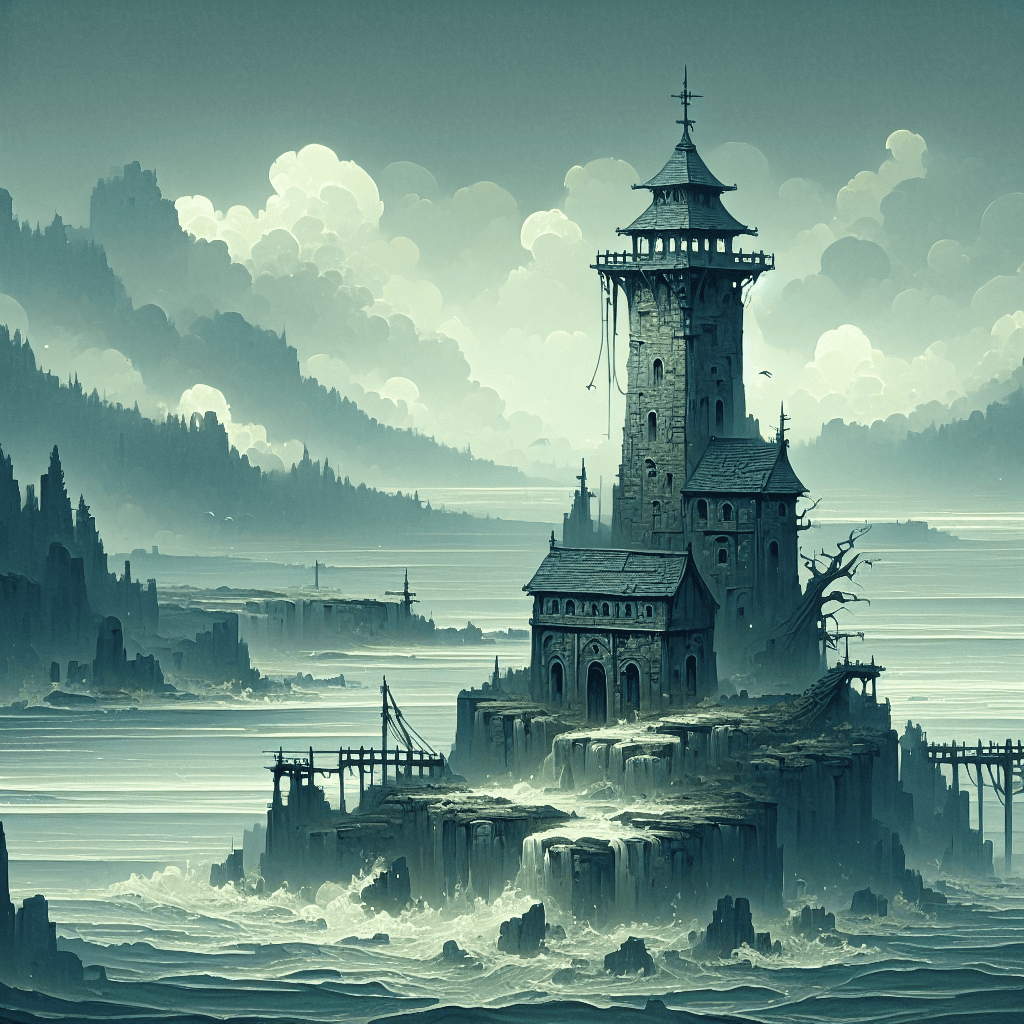
Harbor Post 3
Location
The third in a line of harbor defense stations along the Coastlands — Posts 1 and 2 were swallowed by rising waters decades ago. Harbor Post 3 guards the approach to Kelport and maintains the signal chain that connects Cliffwatch to the inland defenses. Along the Virelay Coastlands, this site is part of the lattice of harbours, bell-towers, and salt-marshes that look toward Virelay and the Underwater Well. The sea here remembers more than the maps do; the Loosening lives in the fog. House Thorne's trade lines once stitched these settlements together — some of those routes are still walked, others have gone quiet since the Fray reached the coast.
Canon StabilityAbsolute
locationvirelayoutposts-forts
High Ash Station
Location
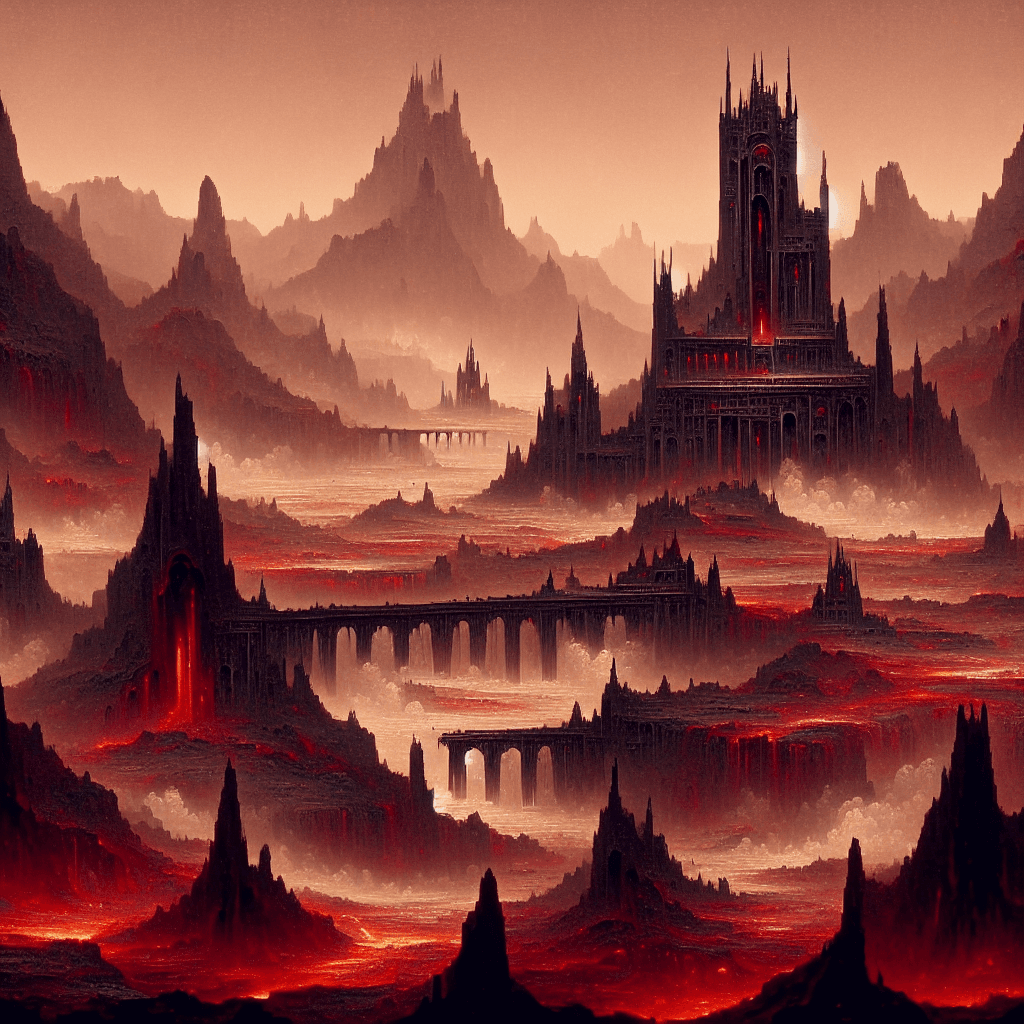
An elevated garrison on the northern approach to the Ashen Spine, where the air thickens with particulate from the active vents. High Ash Station inspects all incoming caravans and levies a volcanic hazard tax that funds the Spine's road maintenance crews. Within the Ashen Spine, this site is part of the long chain of forge-towns, quarries, and iron-vein settlements that work the world's oldest forges from Ironmark down to Old Varr. The smoke is the climate. The Fray here is physical — cracks open in the rock, tunnels appear that were not there the day before — and the Cleaved is the regional consequence. Forge guilds keep their own records, and they keep them close.
Canon StabilityAbsolute
locationashenoutposts-forts
High Ridge Market
Location
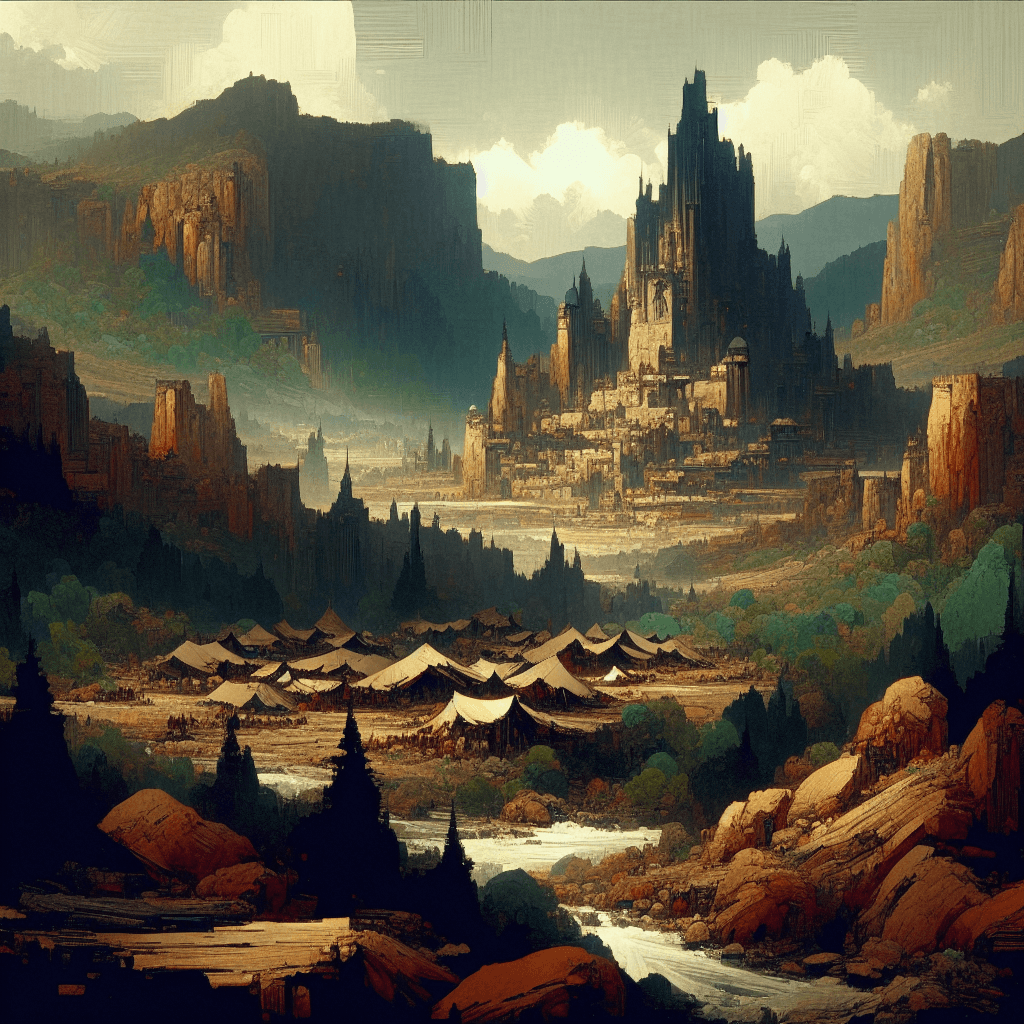
The Frontier's largest trading city, built on a natural mesa that overlooks the surrounding plains. High Ridge Market is where the Frontier's scattered settlements come to sell, buy, and settle grudges. Its tax collectors are feared as far as Brack Hollow, and its merchant guilds exert more practical authority than any lord. Farpoint to the south is its only rival in size. On the Varnhalt Frontier, this site sits inside the patchwork of crossroad towns, mesa camps, and trade-protected routes that radiate from Old Varnhalt. The Loosening is constant here — mile markers contradict, paths loop — so settlements rely on local pacing and on the small island of stability around the Black Stone Tower in the eastern hills. The Frontier has no central authority; this place answers to whoever its trade depends on this season.
Canon StabilityAbsolute
locationvarnhaltcities
House Thorne
Faction
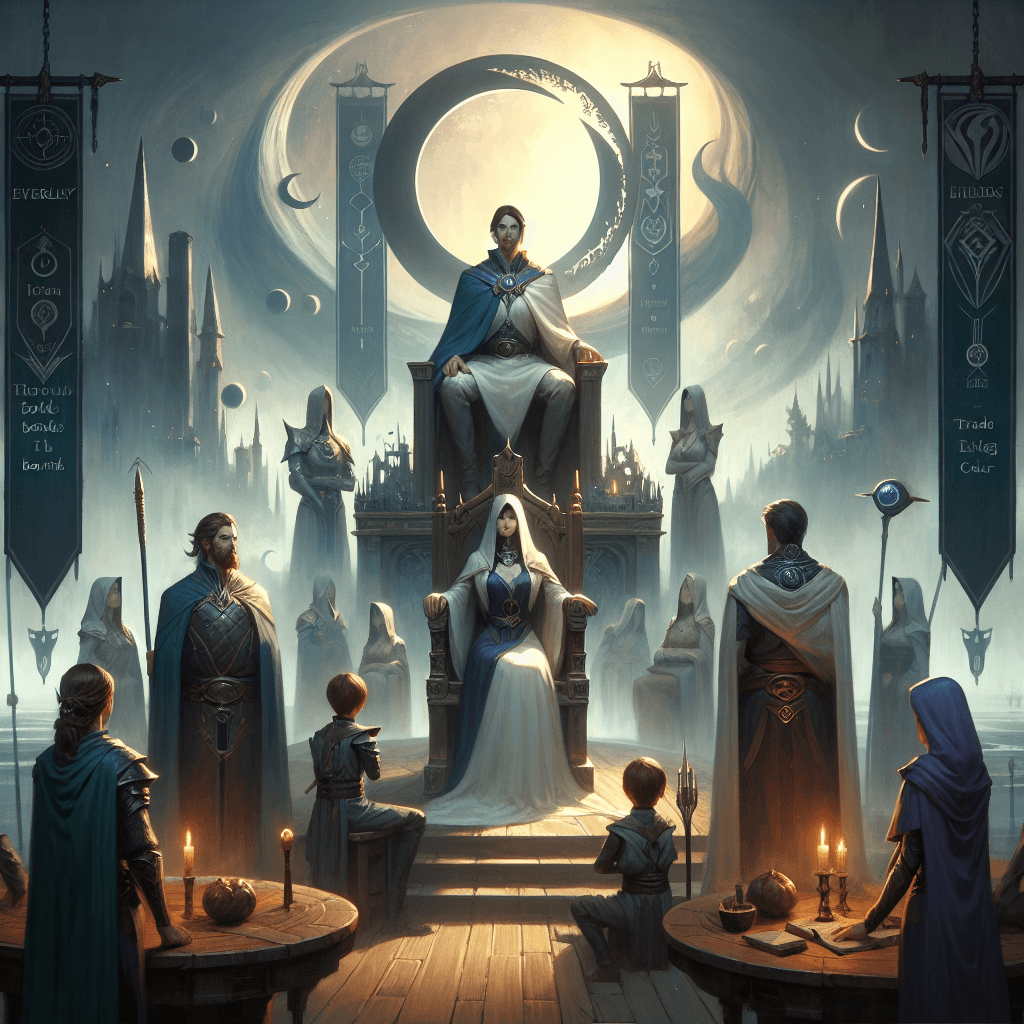
The noble House of the Virelay Coastlands — old enough to remember when the Coast had three lighthouses, young enough that everyone alive can name its current Lord and Lady. House Thorne rules from Thorne Manor with the quiet authority of a family that has never needed to wave its name around. Lord Thorne runs the holdings; Lady Thorne runs the diplomacy; their son Auren Thorne — charming, bumbling, exceptionally bad at fighting, exceptionally hard to dislike — was supposed to inherit a peaceful house. Instead he inherited the Fray. The Thornes' trade lines with Virelay are crumbling under the Fray's pressure, and the family's real wealth now is the loyalty of the coastal villages they have stood by. When Auren slipped away on the night the Coastlands shook, his parents watched him go and did not stop him — which is the truest portrait of the House there is.
Canon StabilityAbsolute
story-2noble-housevirelay
Ironmark
Location
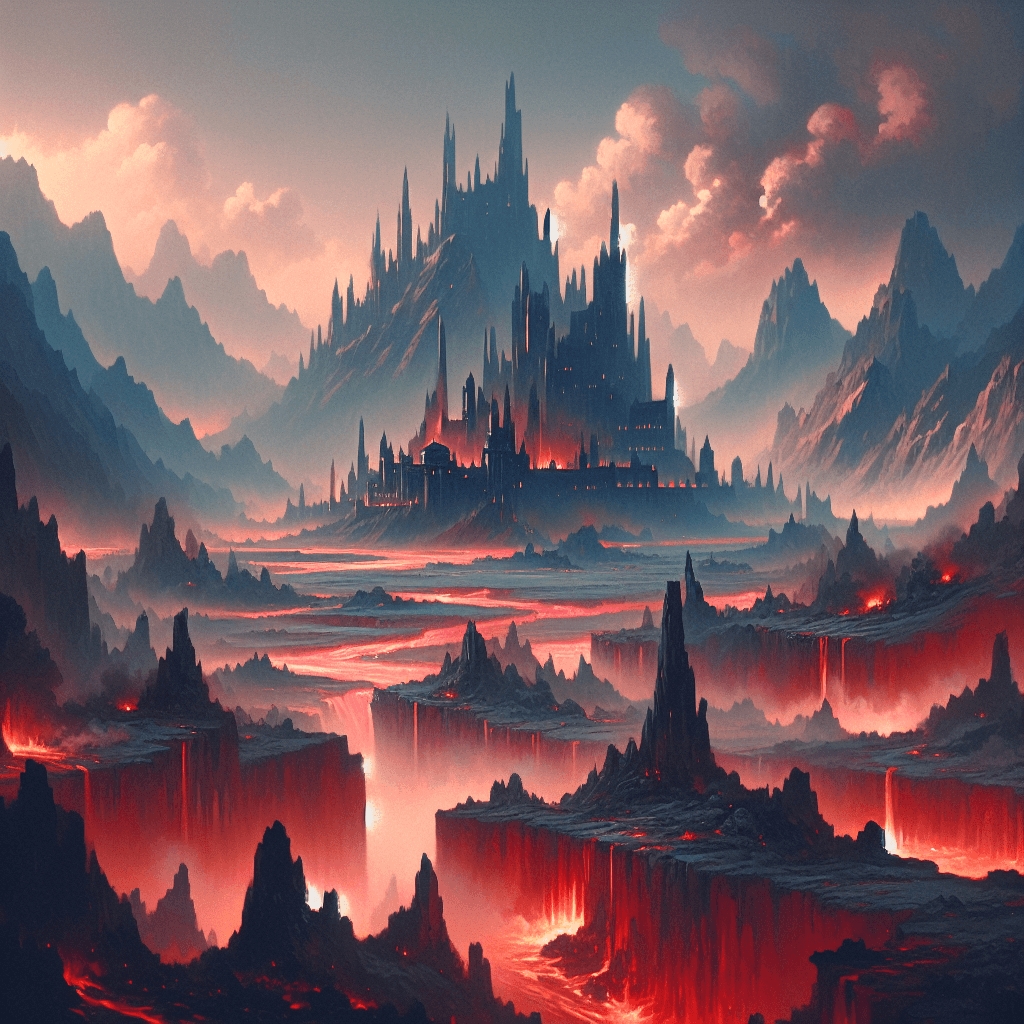
The largest forge-town of the Ashen Spine — a smoke-stained settlement built around a working forge complex whose hammer-rhythm has, by guild record, never stopped for more than a single shift in eleven Loops. Ironmark supplies iron, steel, and finished work to every region west of the Glass Expanse; its forge guilds are the closest thing the Spine has to a government. The Cleaved has appeared inside the town's outer forges three times in living memory. The guilds keep records of every crack in the rock, every tunnel that opens overnight, and every apprentice who has gone quiet mid-conversation since the Fray reached the Spine — they keep those records in a vault no Luminous Fold Archivist has been allowed to read.
Canon StabilityAbsolute
locationashencities
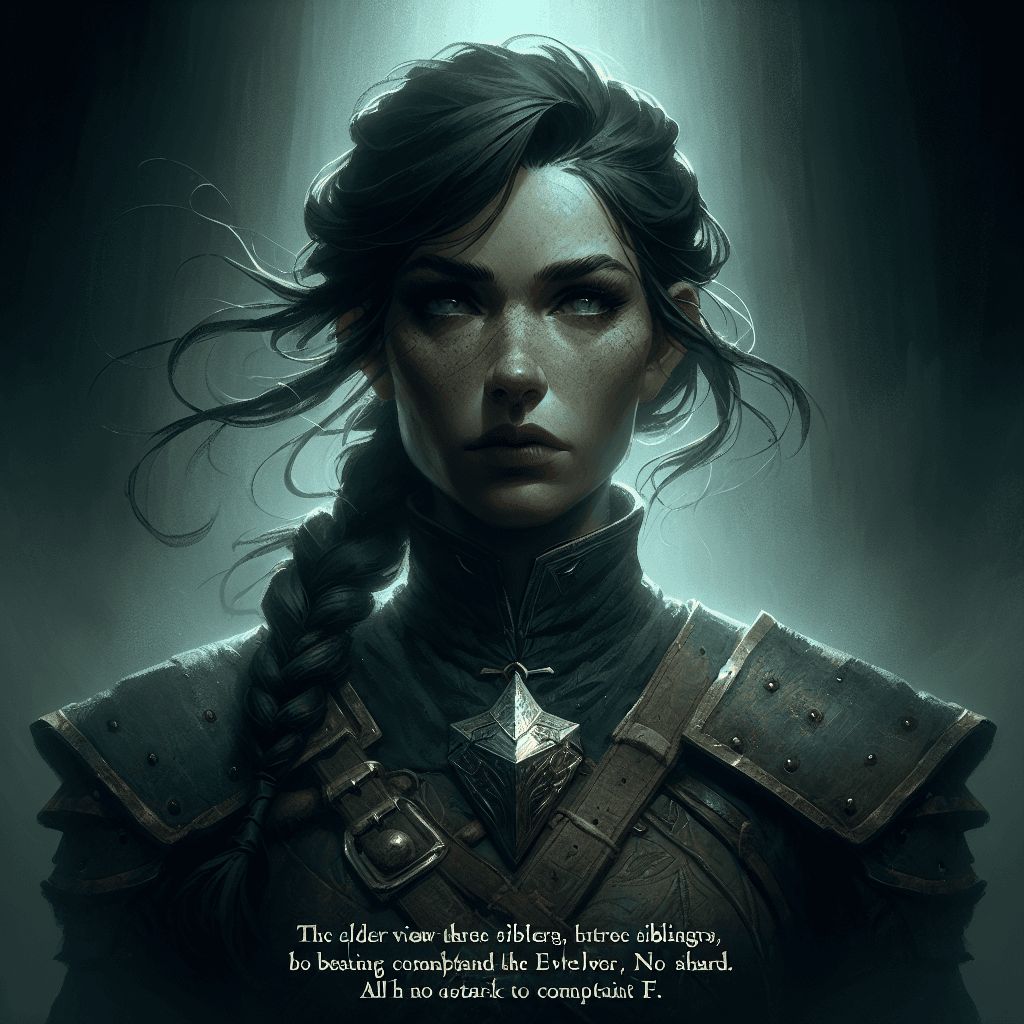
Kaerlin
Character
The eldest of three siblings, a determined and steady leader with dark hair braided down her back. Called "Kerr" by Mira and Thomel. She carries Father's Shard — a piece of black glass that hums when brought near other Shards of the Pattern — and leads the quest to understand the Fray after Alira's death. Practical and bold, she solves the ancient riddle to enter First Root Chamber beneath Drelmere by thinking simply where others overthink. Her decision to ring the Bell Tree's bells in the spiral sequence Mayor Halrick Vann had quietly worked out is the moment the Second Shard is recovered for the world.
Canon StabilityAbsolute
story-1protagonistsibling

Karak Camp
Location
The oldest semi-permanent encampment on the Steps, raised where three dry riverbeds converge. Karak families return here each season to repair their yurts and trade salted meats with riders from Tovin Encampment further east. The stones in the camp center are worn smooth by generations of council fires. On the Deyune Steppe, this site is one of the points where the Long Wind, the clan-roads, and the old Karak geometries meet. Time Instability runs heavy here — distances and seasons rarely agree between settlements. The Veykar's old reach passed through or near sites like this; some bear the Wheel's scars in the soil, others have been letting the grass grow back over them for generations.
Canon StabilityAbsolute
locationdeyunesettlements
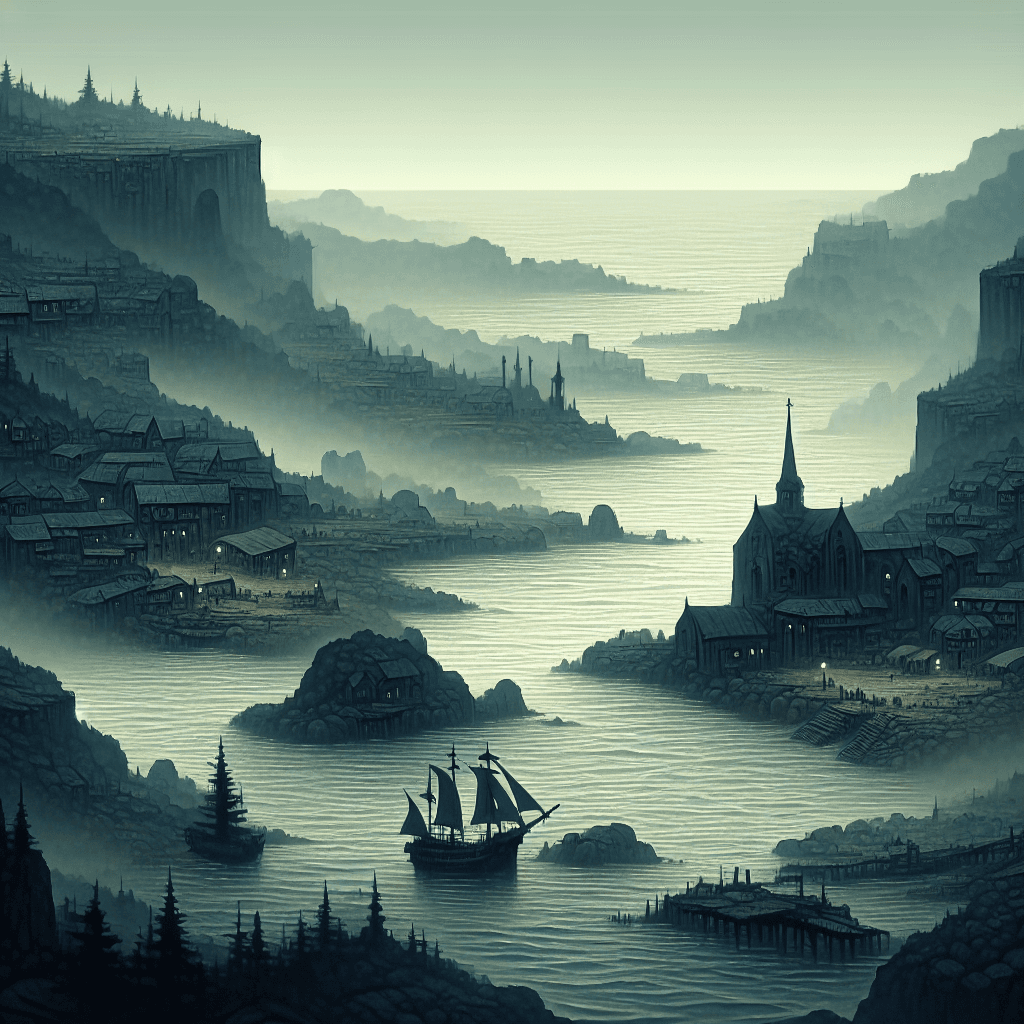
Kelport
Location
The busiest commercial port on the Coastlands, handling cargo from Darnis Bay to the south and overland goods from the Varnhalt Frontier. Kelport's docks are in constant repair — the Fray warps the wood and corrodes the iron — but its merchants are stubborn enough to rebuild every season. Along the Virelay Coastlands, this site is part of the lattice of harbours, bell-towers, and salt-marshes that look toward Virelay and the Underwater Well. The sea here remembers more than the maps do; the Loosening lives in the fog. House Thorne's trade lines once stitched these settlements together — some of those routes are still walked, others have gone quiet since the Fray reached the coast.
Canon StabilityAbsolute
locationvirelaytowns

Khelt Crossing
Location
The only reliable ford across the Khelt River for fifty miles in either direction. A permanent rope bridge and a handful of stone-footed structures give it more permanence than most Deyune settlements. Sarn Flats Settlement to the south and Orun Field Camp to the northwest both depend on it for overland trade. On the Deyune Steppe, this site is one of the points where the Long Wind, the clan-roads, and the old Karak geometries meet. Time Instability runs heavy here — distances and seasons rarely agree between settlements. The Veykar's old reach passed through or near sites like this; some bear the Wheel's scars in the soil, others have been letting the grass grow back over them for generations.
Canon StabilityAbsolute
locationdeyunesettlements
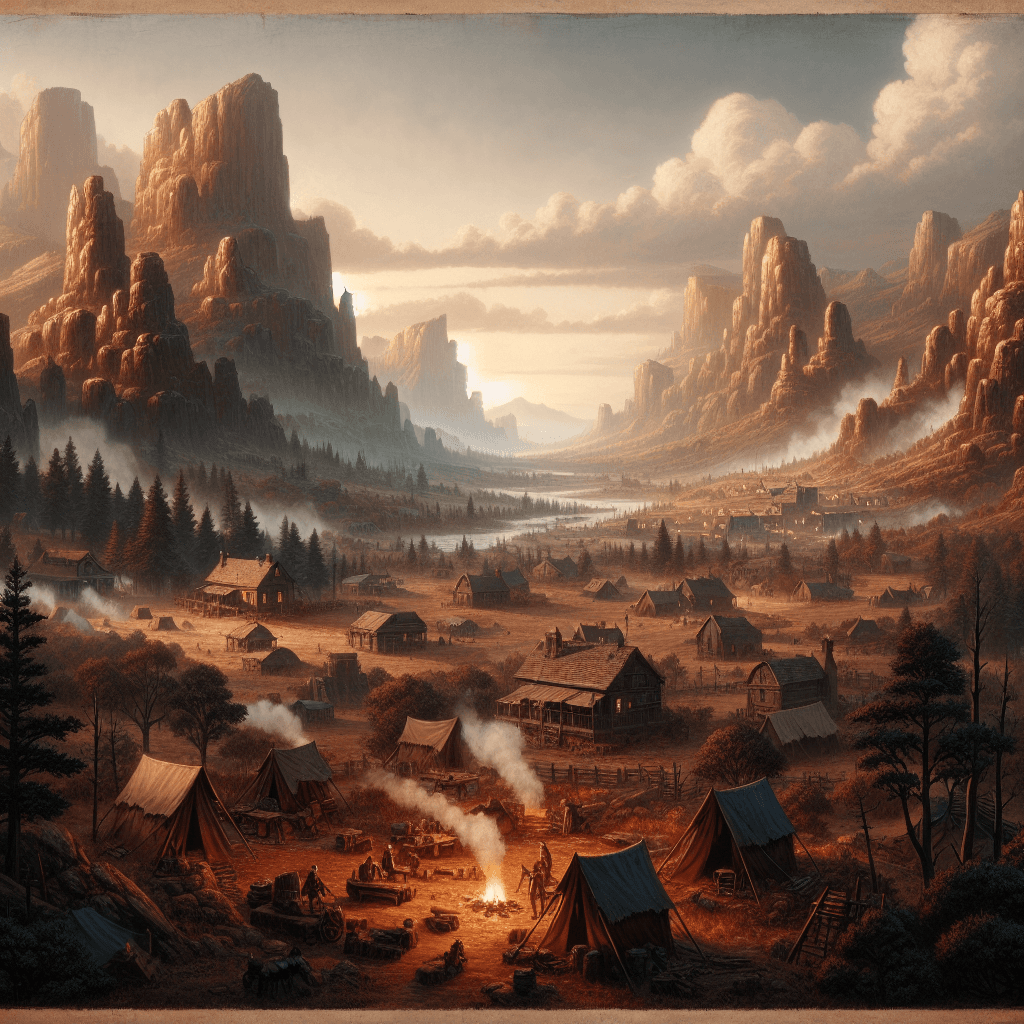
Korr Field
Location
A mill town on the river where Pine Run's timber is processed into lumber, planks, and charcoal. Korr Field smells of sawdust and woodsmoke year-round. Its workers are rough-handed and well-paid, and its taverns do brisk business every evening when the saws stop. On the Varnhalt Frontier, this site sits inside the patchwork of crossroad towns, mesa camps, and trade-protected routes that radiate from Old Varnhalt. The Loosening is constant here — mile markers contradict, paths loop — so settlements rely on local pacing and on the small island of stability around the Black Stone Tower in the eastern hills. The Frontier has no central authority; this place answers to whoever its trade depends on this season.
Canon StabilityAbsolute
locationvarnhalttowns
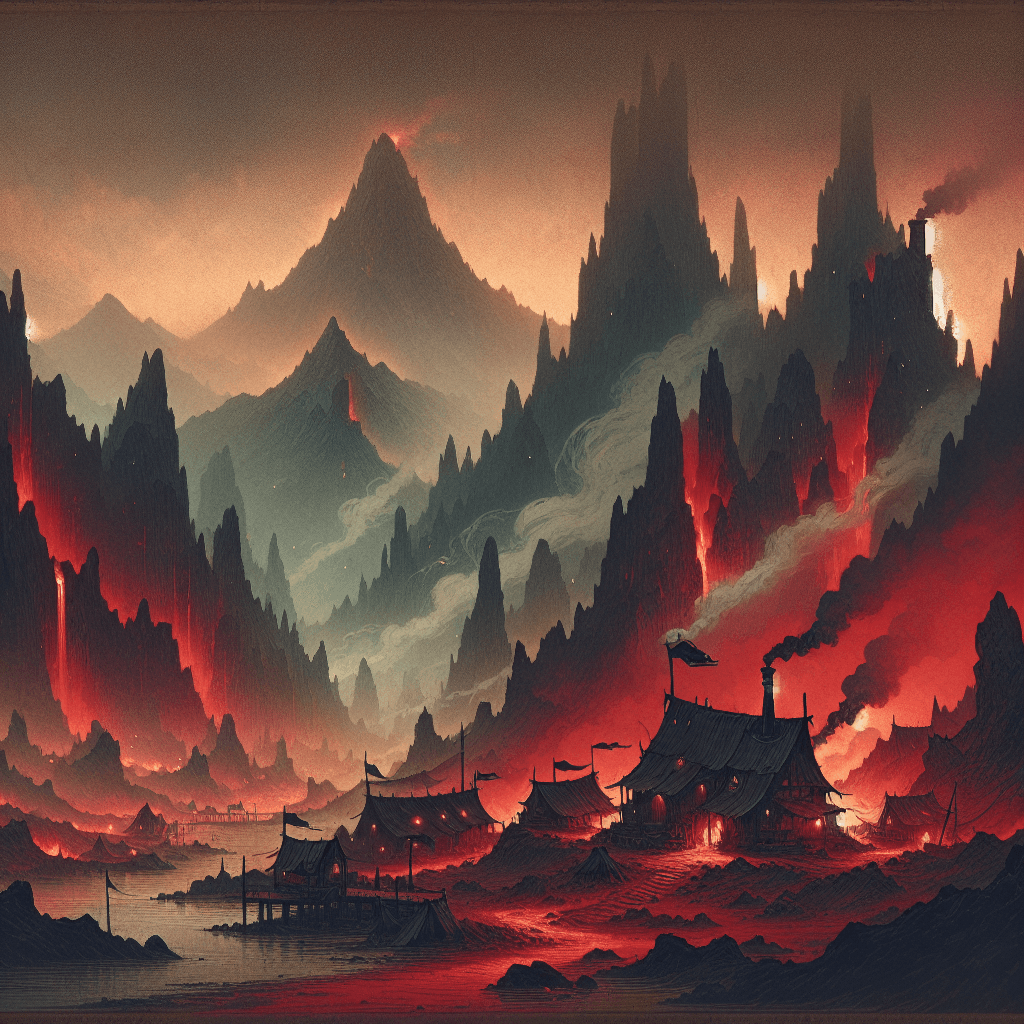
Korrin Hold
Location
A fortified village carved into a basalt ridge overlooking Emberfall Village below. Korrin Hold guards the northern approach to Cinder Vale and watches for lava flow shifts that could threaten the settlements downslope. Its walls are blackened by centuries of eruption debris. Within the Ashen Spine, this site is part of the long chain of forge-towns, quarries, and iron-vein settlements that work the world's oldest forges from Ironmark down to Old Varr. The smoke is the climate. The Fray here is physical — cracks open in the rock, tunnels appear that were not there the day before — and the Cleaved is the regional consequence. Forge guilds keep their own records, and they keep them close.
Canon StabilityAbsolute
locationashenvillages
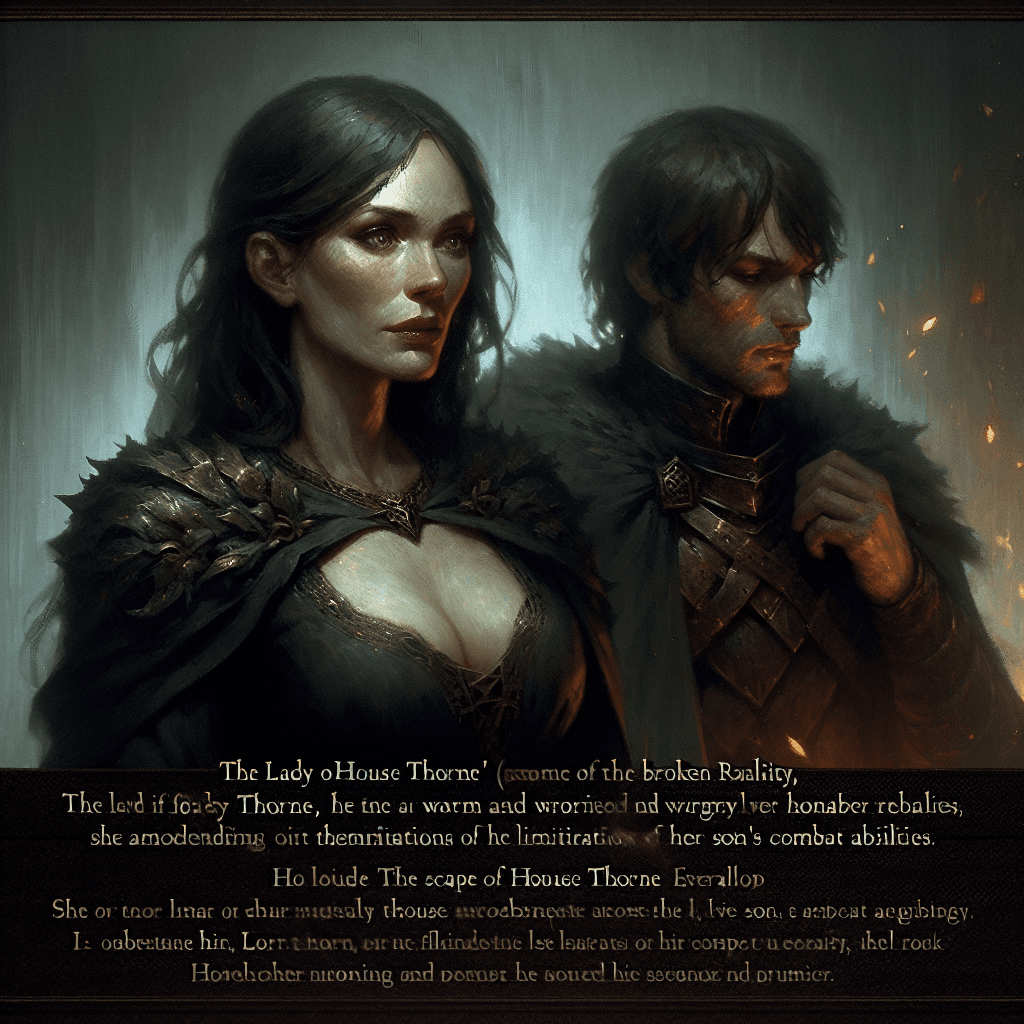
Lady Thorne
Character
Auren's mother and Lady of House Thorne — warm, sharp, and afraid in a way she never lets her son Auren Thorne see. Lady Thorne runs the social and diplomatic life of the House and knows every family along the Virelay Coastlands by name. She watches Auren tiptoe past the guard Brennick on the night he leaves and does not call out, even though she could. She and Lord Thorne share a single look across the Winter Room as the gate closes — the look of parents who have decided that loving their son includes letting him become whatever the world is about to make of him. Her grief is private; her composure, the kind that holds an entire House together while its trade lines fail.
Canon StabilityAbsolute
story-2house-thornemother

Last Dock
Location
A bar built onto the last remaining original dock of the Drowned Reach, a structure so old its pilings have petrified into stone. Last Dock serves as both a drinking establishment and a memorial — its walls display salvaged artifacts from the cities below, and its regulars include the divers who retrieved them. In the Drowned Reach, this site is one of the half-drowned settlements that rebuild themselves on stilts every generation around the Sunken City. The sea is steadily reclaiming the coast, and the Echo is the regional Fray-consequence that haunts the deeper channels. What the tide takes here, it usually takes for a reason — sometimes a Shard, sometimes a name, sometimes only the road that used to lead inland.
Canon StabilityAbsolute
locationdrownedtaverns
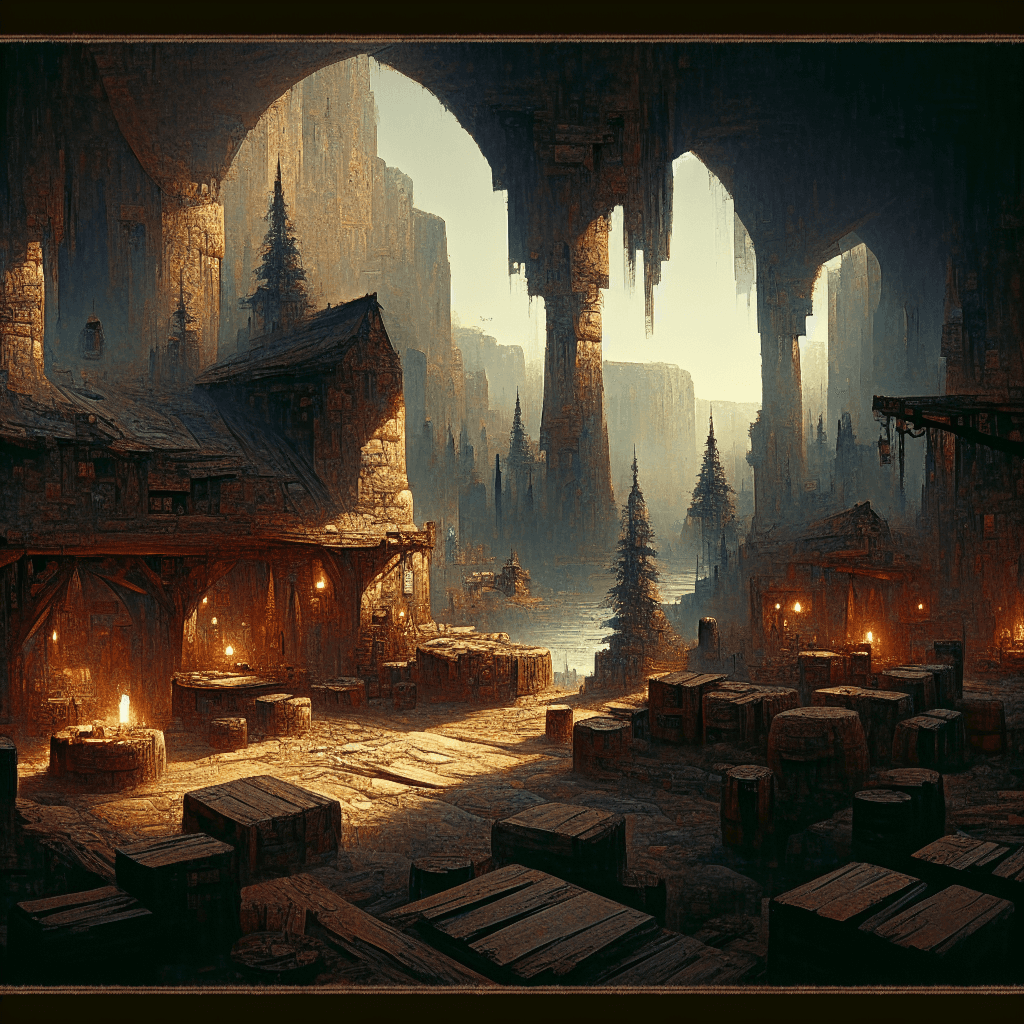
Last Light
Location
A waystation tavern south of Farpoint, marking the final stop before the road enters the coastal lowlands toward the Virelay Coastlands. Last Light is somber and lantern-lit, catering to travelers who've been on the road too long. Its name refers to the sunset visible from its western windows — the last unobstructed view before the coastal fog sets in. On the Varnhalt Frontier, this site sits inside the patchwork of crossroad towns, mesa camps, and trade-protected routes that radiate from Old Varnhalt. The Loosening is constant here — mile markers contradict, paths loop — so settlements rely on local pacing and on the small island of stability around the Black Stone Tower in the eastern hills. The Frontier has no central authority; this place answers to whoever its trade depends on this season.
Canon StabilityAbsolute
locationvarnhalttaverns
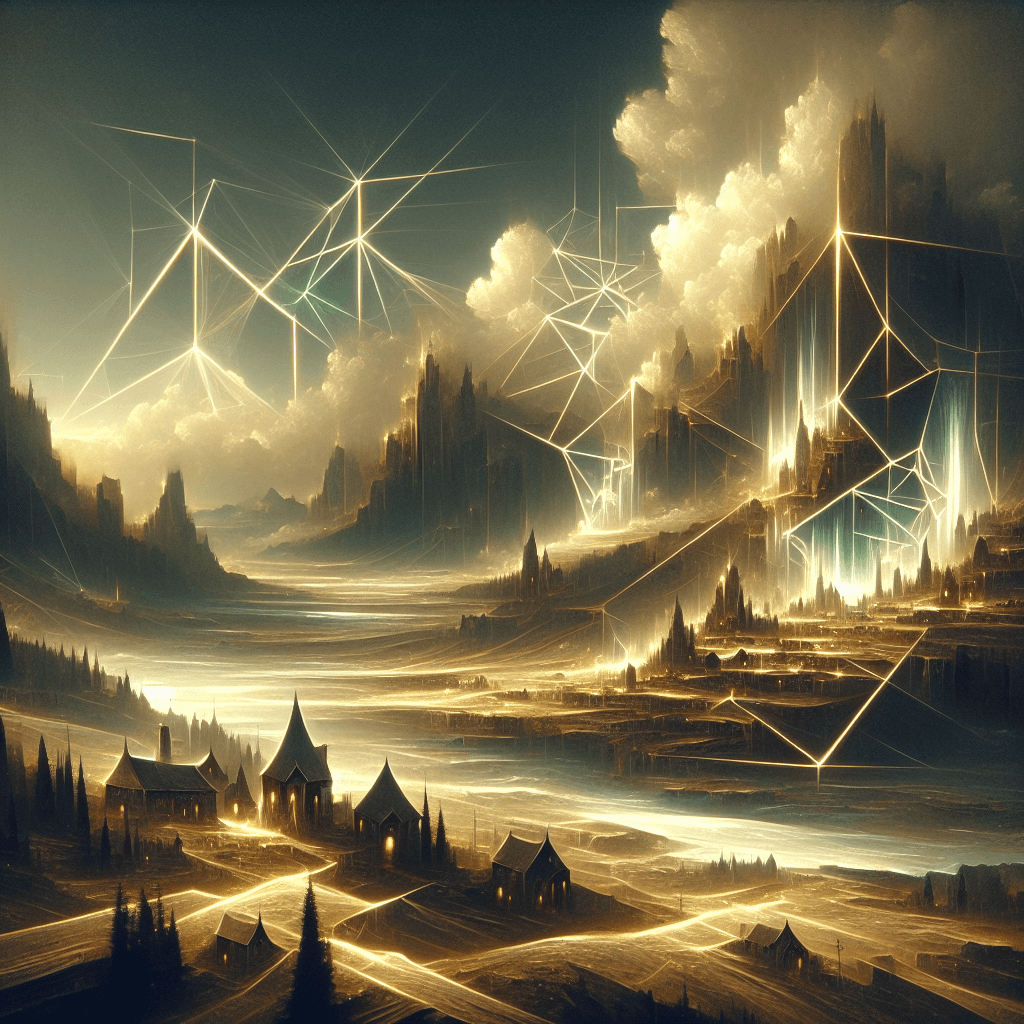
Line Camp
Location
A temporary worker settlement along one of the Fold's energy lines — the glowing geometric traces that run through the terrain. Line Camp exists to study and maintain the lines, though no one is certain who built them or what they maintain. Workers report that dreams here are vivid, sequential, and disturbingly orderly. Within the Luminous Fold, this site is part of the gridded, measured landscape that radiates out from Lumina and the Central Fold. The Fold's clocks, roads, and institutions assume reality may be wholly described, and on this plateau they almost can — the Loosening and Time Instability are weakest here. The site answers, directly or indirectly, to one of the Seven Circles, and the Cartographic Society of Iterants keeps notes on every measurable thing that happens within sight of it.
Canon StabilityAbsolute
locationluminoussettlements

Long Run Watch
Location
A lonely watchtower standing at the midpoint of the Long Run — the great migration corridor that bisects the Steps. Staffed by rotating volunteers from Tovin Encampment, its primary duty is tracking herd movements and signaling weather changes to camps downwind. On the Deyune Steppe, this site is one of the points where the Long Wind, the clan-roads, and the old Karak geometries meet. Time Instability runs heavy here — distances and seasons rarely agree between settlements. The Veykar's old reach passed through or near sites like this; some bear the Wheel's scars in the soil, others have been letting the grass grow back over them for generations.
Canon StabilityAbsolute
locationdeyuneoutposts-forts
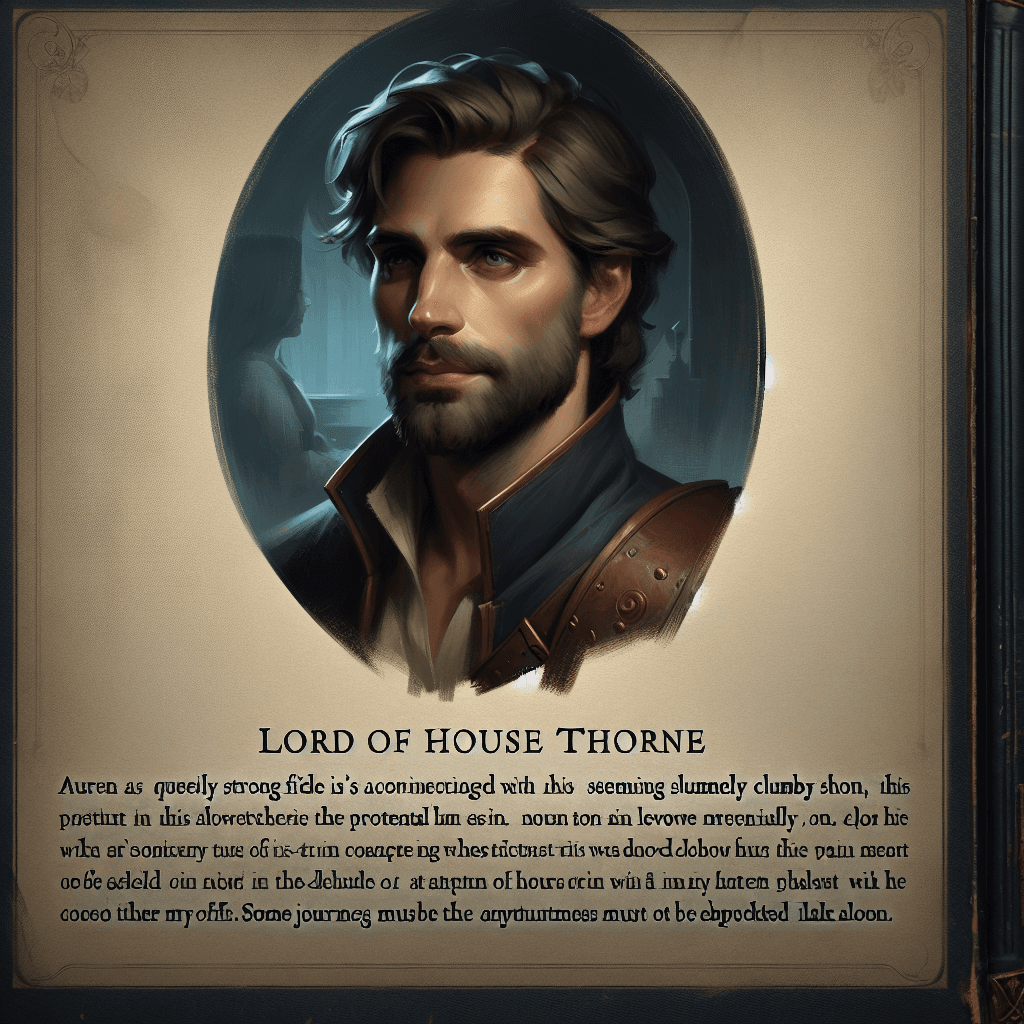
Lord Thorne
Character
Auren's father and Lord of House Thorne — a quiet, watchful man who runs the family's holdings from Thorne Manor with the unfussy competence of someone who has never needed to prove anything. He knows his son Auren Thorne is a brilliant heart wrapped around an exceptionally bad swordsman, and he knows it the way a parent knows the weather. He and Lady Thorne see Auren's "escape" from the Manor on the night the Fray reaches Virelay and let him go — not because they are willing to lose him, but because they recognise that a courage like Auren's cannot be kept indoors without being broken. House Thorne's trade lines with the Virelay Coastlands are crumbling under the Fray's pressure, and Lord Thorne carries that quiet weight without naming it.
Canon StabilityAbsolute
story-2house-thornefather
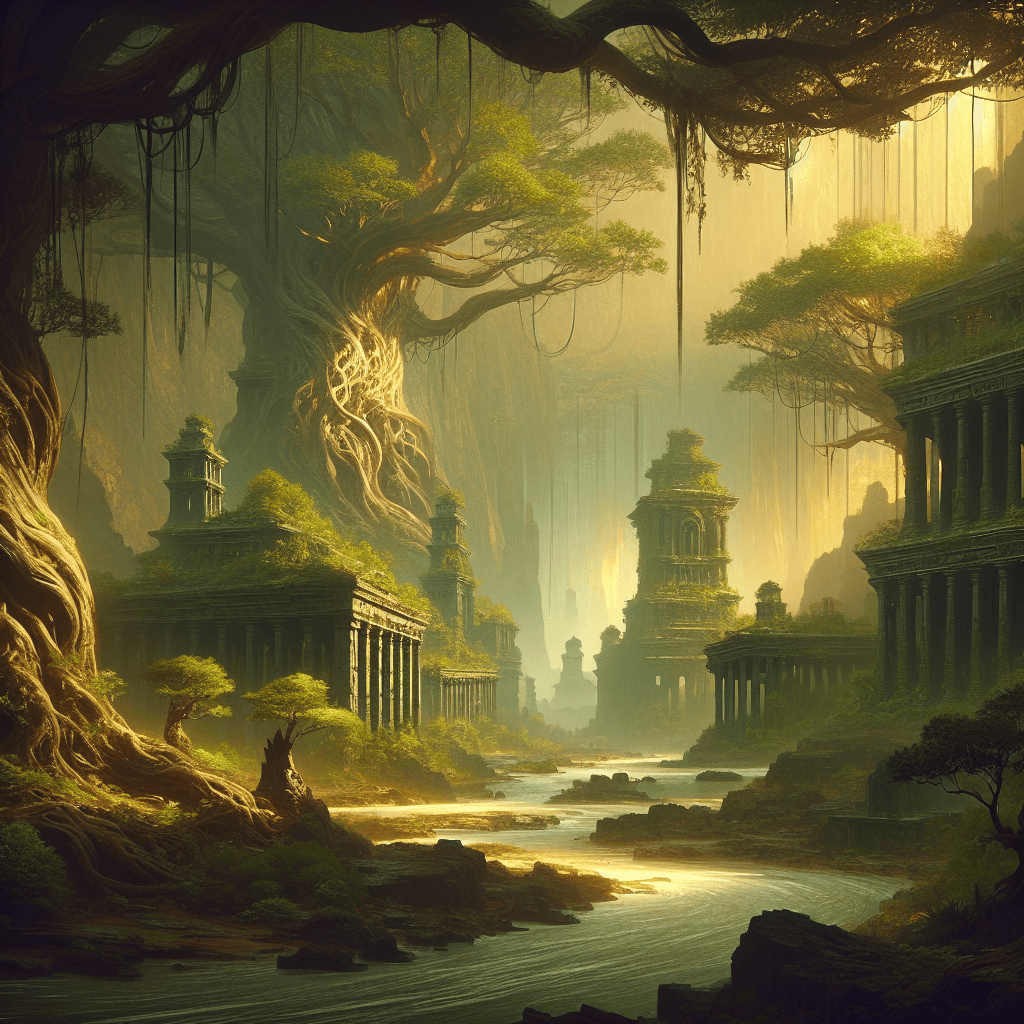
Lost Grove
Location
A clearing in the deep forest that cannot be reliably found twice using the same path. Lost Grove appears on no map and defies consistent navigation. Those who stumble upon it describe impossibly old trees arranged in a perfect circle, with a silence at the center so complete it feels intentional. Within the Bellroot Vale, this site sits in the wider network of villages, ruins, and Pattern-touched places that radiate out from Drelmere and Bellroot Crossing. The Vale's relative stability since the Second Shard was recovered from the Bell Tree is felt here, but the Loosening and the Fray still leave their fingerprints — old paths that no longer match the new ones, names half-remembered, the occasional warm wind out of the wrong season.
Canon StabilityAbsolute
locationbellrootruins
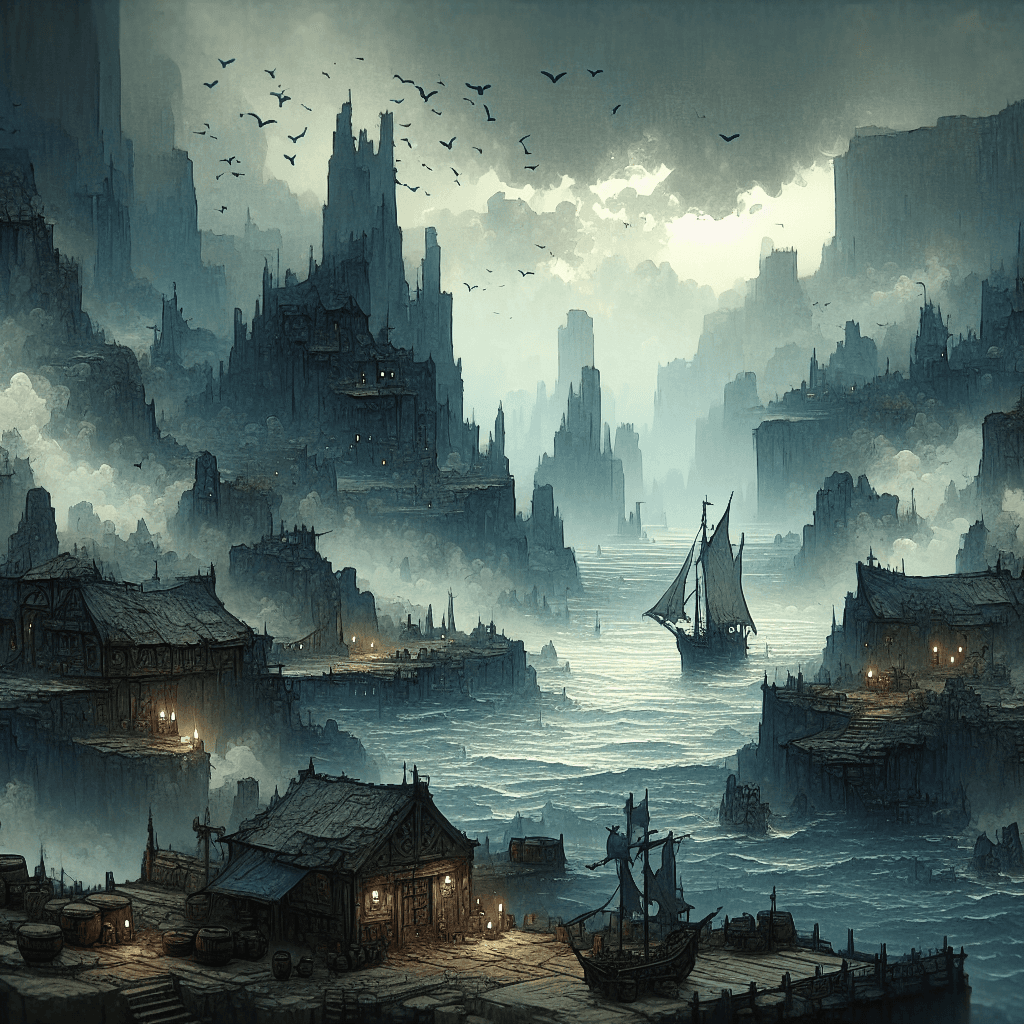
Low Lantern
Location
A quiet, amber-lit pub in Coris Reach where navigators and cartographers gather to compare charts and argue over impossible measurements. The Low Lantern keeps a wall of maps — each one different, each one claiming to be accurate — and charges nothing for the first drink if you can prove one of them wrong. Along the Virelay Coastlands, this site is part of the lattice of harbours, bell-towers, and salt-marshes that look toward Virelay and the Underwater Well. The sea here remembers more than the maps do; the Loosening lives in the fog. House Thorne's trade lines once stitched these settlements together — some of those routes are still walked, others have gone quiet since the Fray reached the coast.
Canon StabilityAbsolute
locationvirelaytaverns
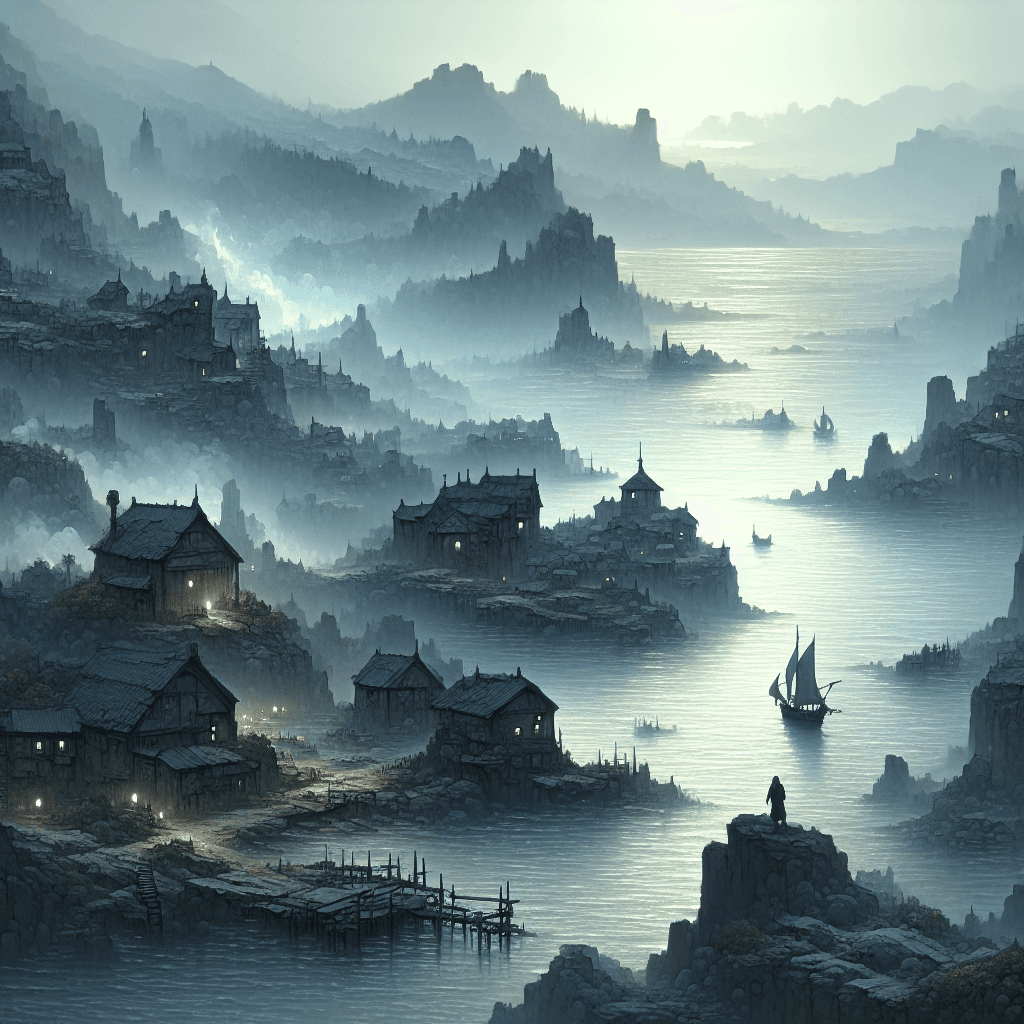
Lowtide
Location
A fishing village built on stilts above the tidal flats, where the waterline shifts unpredictably — sometimes by yards in a single hour. Lowtide's residents have learned to read the Fray's influence in the tide patterns. When the water pulls back too far, too fast, they evacuate to Halven Shore on higher ground. Along the Virelay Coastlands, this site is part of the lattice of harbours, bell-towers, and salt-marshes that look toward Virelay and the Underwater Well. The sea here remembers more than the maps do; the Loosening lives in the fog. House Thorne's trade lines once stitched these settlements together — some of those routes are still walked, others have gone quiet since the Fray reached the coast.
Canon StabilityAbsolute
locationvirelayvillages

Lowwater
Location
A stilted settlement on the Reach's inland edge, built where the water level is shallow enough to walk but deep enough that dry ground is a memory. Lowwater's residents live entirely on platforms and move by punt boat. Drift Camp to the south provides fish; Salt Edge to the east provides salt for preservation. In the Drowned Reach, this site is one of the half-drowned settlements that rebuild themselves on stilts every generation around the Sunken City. The sea is steadily reclaiming the coast, and the Echo is the regional Fray-consequence that haunts the deeper channels. What the tide takes here, it usually takes for a reason — sometimes a Shard, sometimes a name, sometimes only the road that used to lead inland.
Canon StabilityAbsolute
locationdrownedsettlements
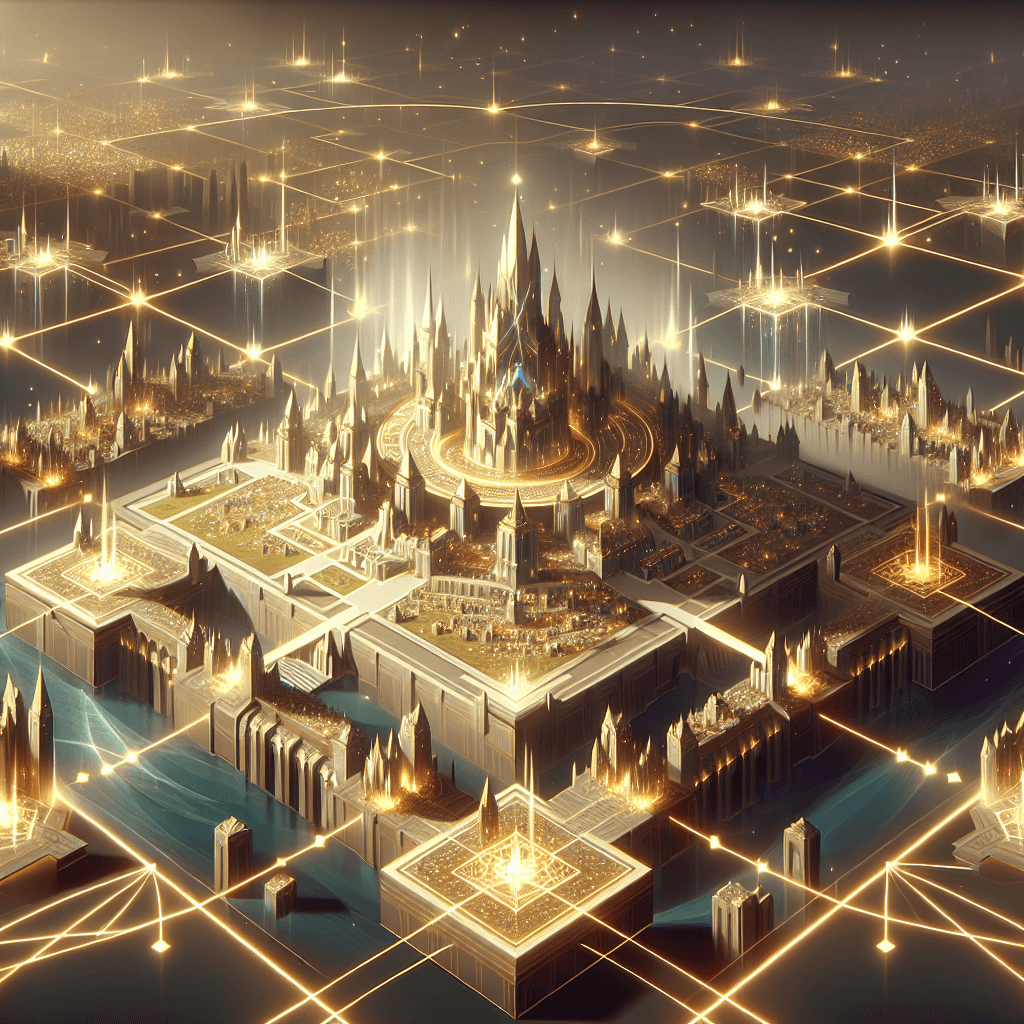
Lumina
Location
The capital of the Luminous Fold and the densest concentration of measurement, scholarship, and structured time in the Everloop. Lumina is laid out in seven concentric Circles around the Grand Archive at the Central Fold, and from there the Archivist tradition radiates outward through Order Field, the Even Table, Symmetry, the Quiet Line, and Venn. The Fold's clocks are calibrated here; the Seven Circles meet here; the Cartographic Society of Iterants maintains its central library in the city's outer ring. The senior Archivist Archael Viremont keeps his working study three stories above the Sixth Circle's reading room. Lumina is the Everloop's argument for legibility — and the place where that argument is most quietly contested.
Canon StabilityAbsolute
locationluminouscities
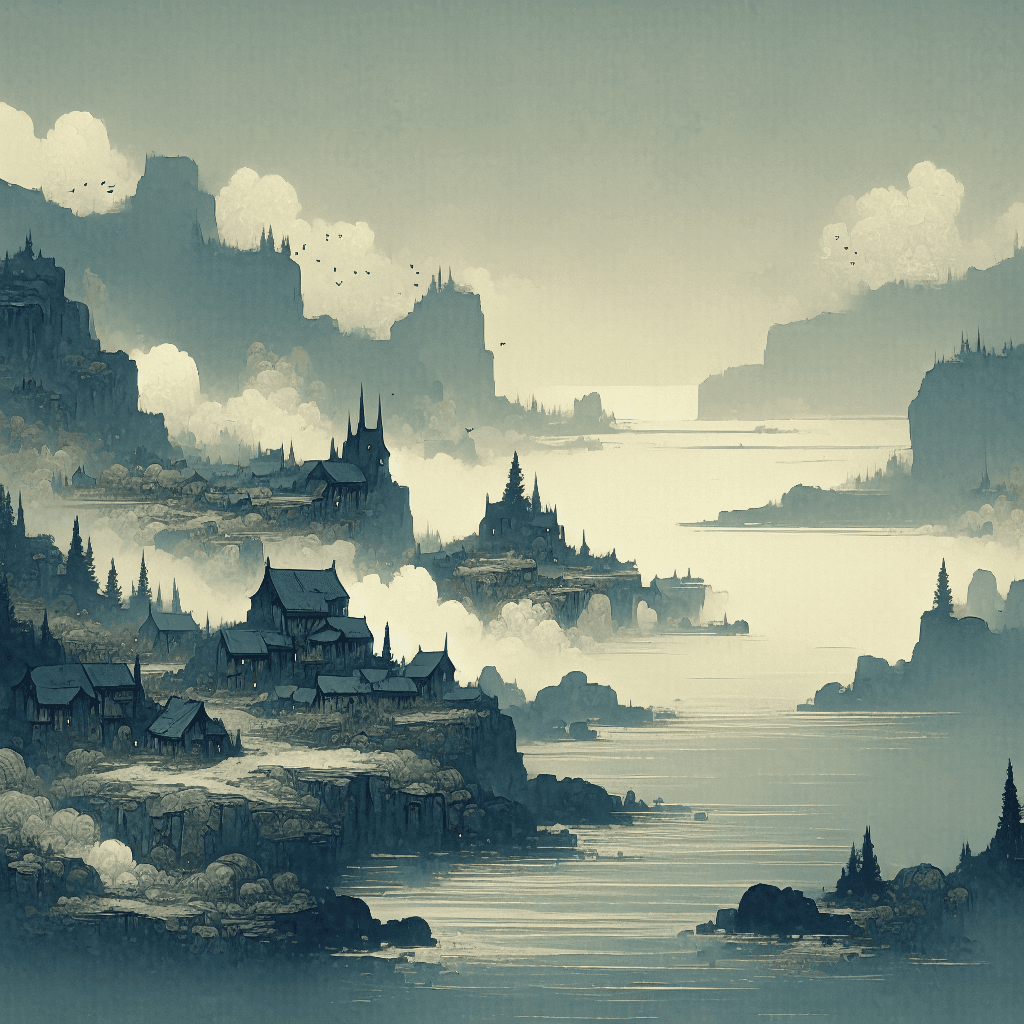
Marrow Bay
Location
A dark-watered inlet settlement where the bones of ancient sea creatures surface in the shallows during low tide. Marrow Bay harvests these bones for tools and trade, sending them upcoast to Kelport. The village smells of brine and old calcium, and its children grow up unafraid of the dead. Along the Virelay Coastlands, this site is part of the lattice of harbours, bell-towers, and salt-marshes that look toward Virelay and the Underwater Well. The sea here remembers more than the maps do; the Loosening lives in the fog. House Thorne's trade lines once stitched these settlements together — some of those routes are still walked, others have gone quiet since the Fray reached the coast.
Canon StabilityAbsolute
locationvirelayvillages
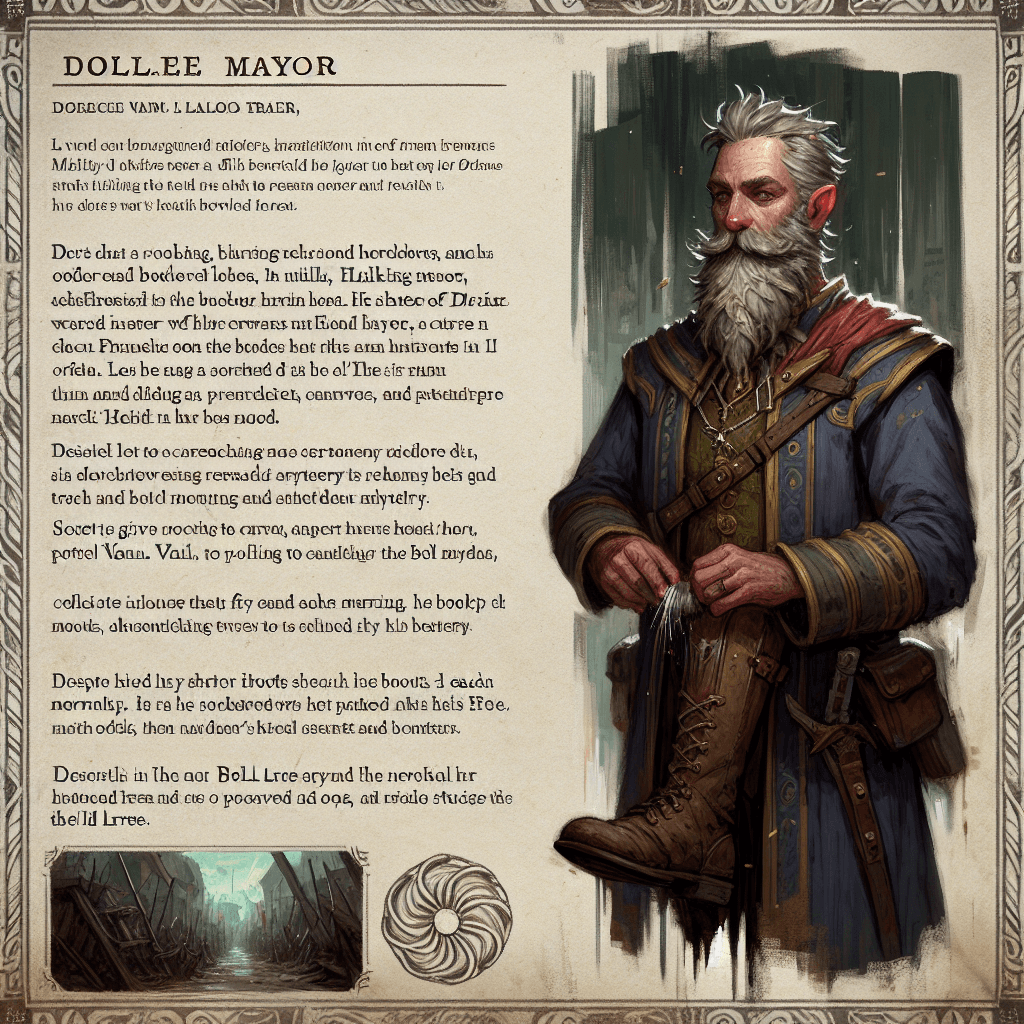
Mayor Halrick Vann
Character
Mayor of Drelmere, former soldier of the Bellroot militia, and the town's most dignified contradiction. Halrick Vann polishes his boots each morning, presides over council with a soldier's posture, and publicly refuses to acknowledge that the Fray exists. Privately, he spent two Cycles studying the Bell Tree in his study behind locked doors and recognised — alone — that the spiral markings on its bells matched the engravings inside the cave beneath Drelmere. He gave Kaerlin the key without ever saying out loud what he had figured out. The siblings entered the cave because Halrick told them the order. He still refuses to admit the Fray exists; the Bellroot Vale is alive because of the man who refuses to admit why.
Canon StabilityAbsolute
story-1drelmeremayor+1

Merra Dune
Character
The apothecary, midwife, and practical conscience of Drelmere — silver braid, pine and herb on her clothes, hands that have delivered half the children in the Bellroot Vale and helped the other half remember their names after the Fray took them. Merra is the voice of pragmatic caution in the siblings' circle. She is the one who introduced Kaerlin, Mira, and Thomel to Eidon, the last Dreamer; she is also the one who asked aloud whether the Fray was something to be fought at all, or something to be lived through differently. Her question is the one the siblings carry without an answer. Merra does not believe in the Pattern the way the Vaultkeepers do; she believes in keeping people alive long enough to make their own decisions.
Canon StabilityAbsolute
story-1drelmereapothecary+4
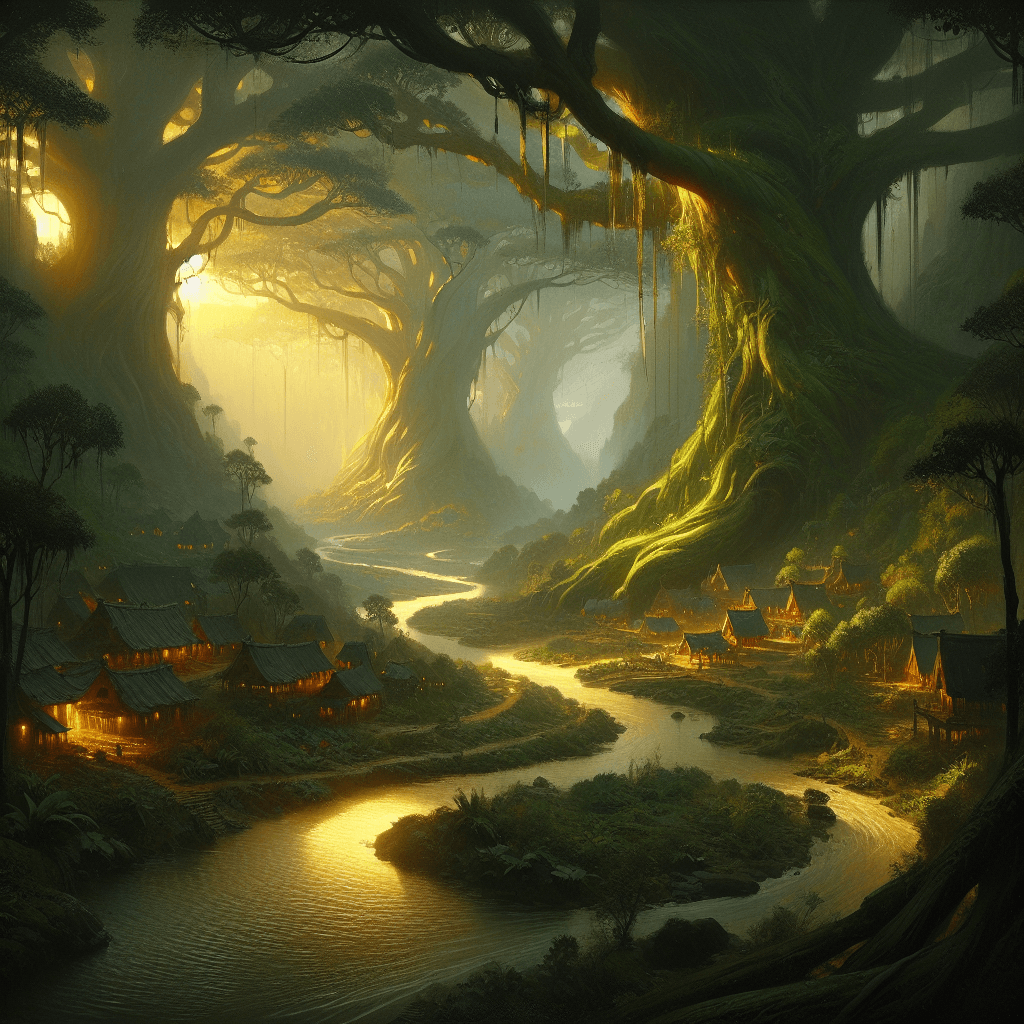
Merrow Bend
Location
A waterside village where the river curves sharply through a grove of ancient willows. Merrow Bend's residents are herbalists and fisherfolk who supply Drelmere with medicinal plants. The bend in the river traps fog on most mornings, giving the village an ethereal, half-dreamed quality. Within the Bellroot Vale, this site sits in the wider network of villages, ruins, and Pattern-touched places that radiate out from Drelmere and Bellroot Crossing. The Vale's relative stability since the Second Shard was recovered from the Bell Tree is felt here, but the Loosening and the Fray still leave their fingerprints — old paths that no longer match the new ones, names half-remembered, the occasional warm wind out of the wrong season.
Canon StabilityAbsolute
locationbellrootvillages
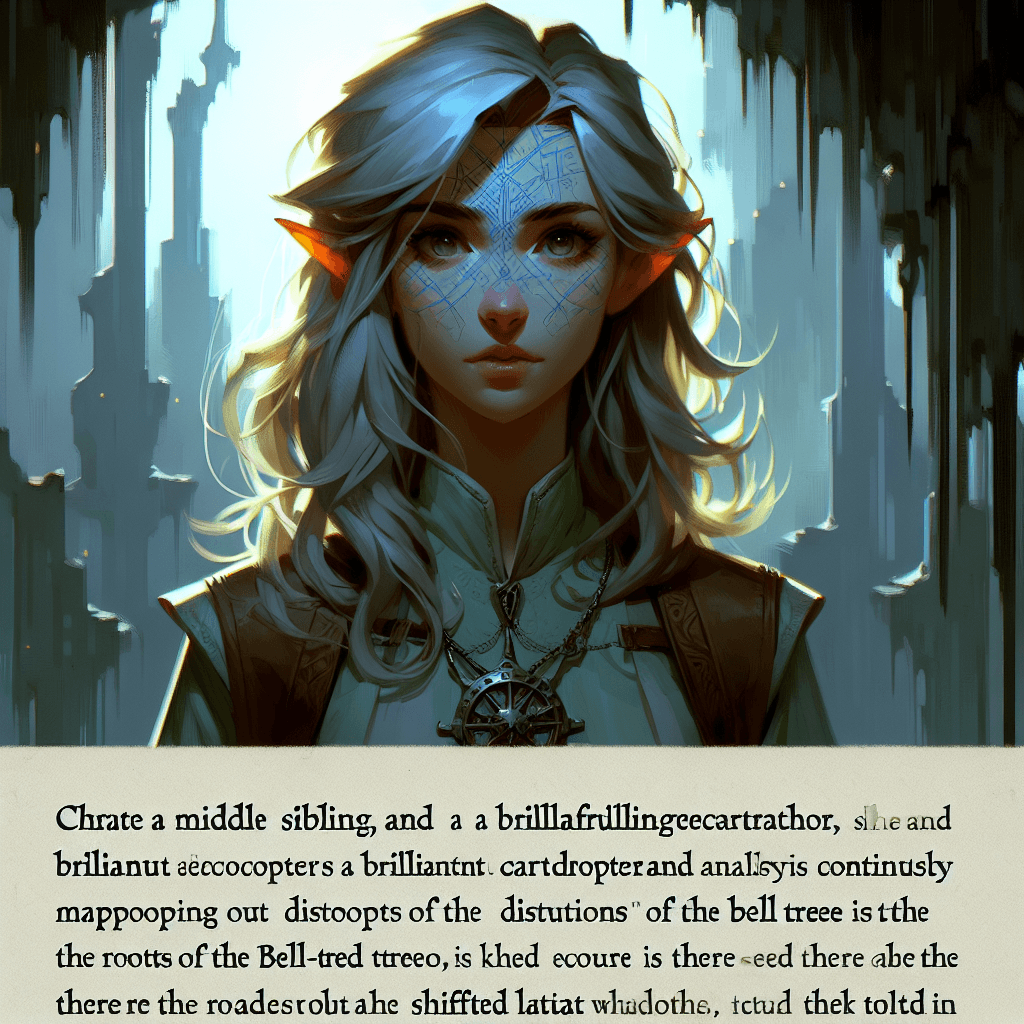
Mira
Character
Middle of the three Bellroot siblings — a brilliant cartographer and analyst with a restless mind and her mother Alira's sharp tongue. Mira keeps the maps. She was the first to notice that the Bell Tree's roots in Drelmere mirrored the town's shifted layout above ground; she was the one who cross-referenced the cave engravings against the markings on the bells; and she was the one who almost missed the answer because she over-thought it while her sister Kaerlin solved it by reading the symbols simply. Mira charts the Fray's distortions across the Bellroot Vale with a precision the Luminous Fold's surveyors would respect. She and her younger brother Thomel are the two halves Kaerlin steers between — analysis and compassion — and the quest needs both.
Canon StabilityAbsolute
story-1protagonistsibling+1

Mirror Post
Location
A relay station built around a natural pillar of reflective crystal that serves as both landmark and signal tower. Mirror Post bounces light messages between Shard Camp and Glass Reach, and maintains the only reliable cistern between the deep Expanse and the settled eastern edge. Out in the Glass Expanse, this site is part of the network of prism-fields, shard-towns, and silica plateaus that surround Prism City. Light bends here in ways the Pattern cannot quite hold — the air sometimes refracts a scene from a different hour, and the Starving Silence forms where light has shattered the same way too many times in the same place. The Knowledge Fragmentation Principle was first formalised by Expanse philosophers a generation before the Luminous Fold accepted it.
Canon StabilityAbsolute
locationglasssettlements
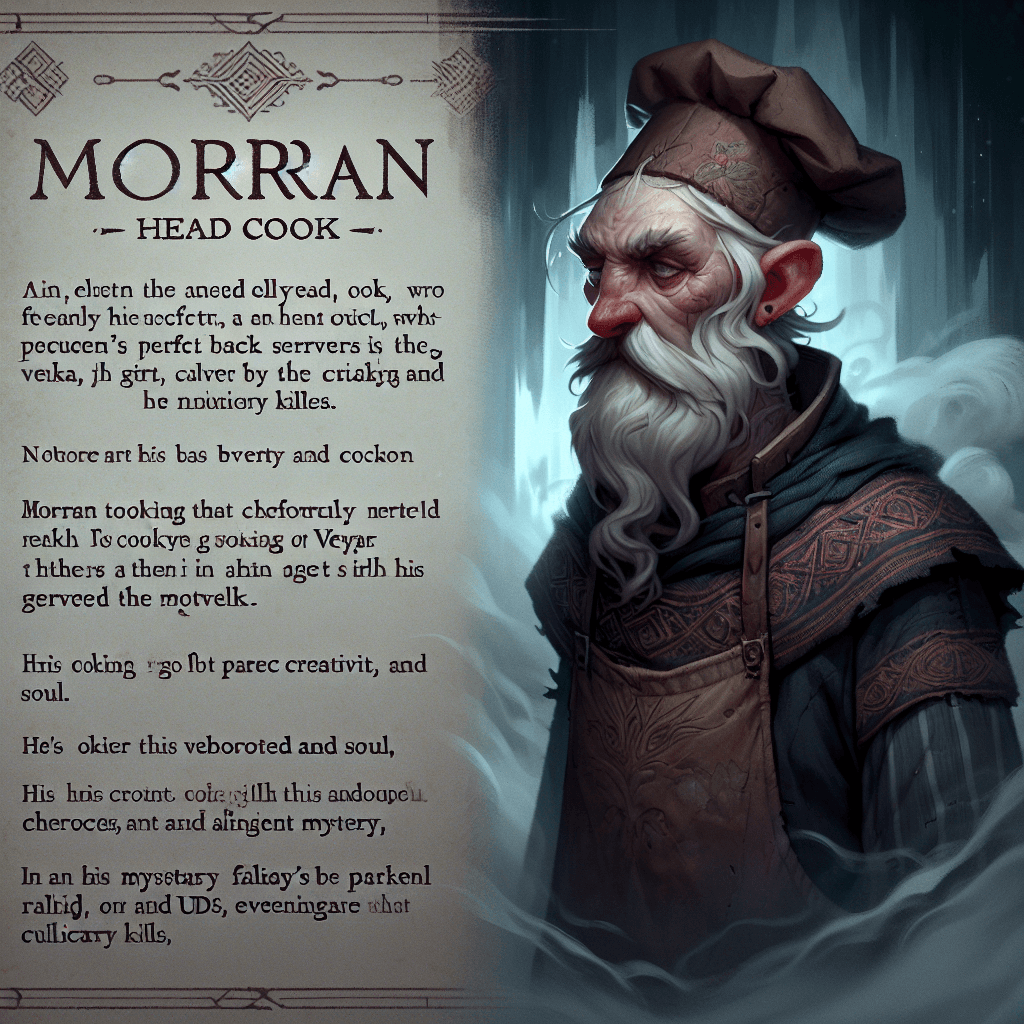
Morran
Character
The old head cook of the Veykar before the girl rose to take his place — a stooped, sour man who sneered without smiling and turned out flawless food that tasted of nothing. Morran resented The Girl With the Scar from the moment her bread came out better than his. He resented her quietly, then loudly, then dangerously. He was called to the Veykar's tent on a winter night and never came back; his severed hand was nailed to the Hall's wall the next morning as a quiet message about replacement. Morran is the small, ugly hinge the Veykar saga turns on — the cook whose envy created the vacancy his successor stepped into, and whose death taught her exactly what kind of king she now served.
Canon StabilityAbsolute
story-4cookdeceased
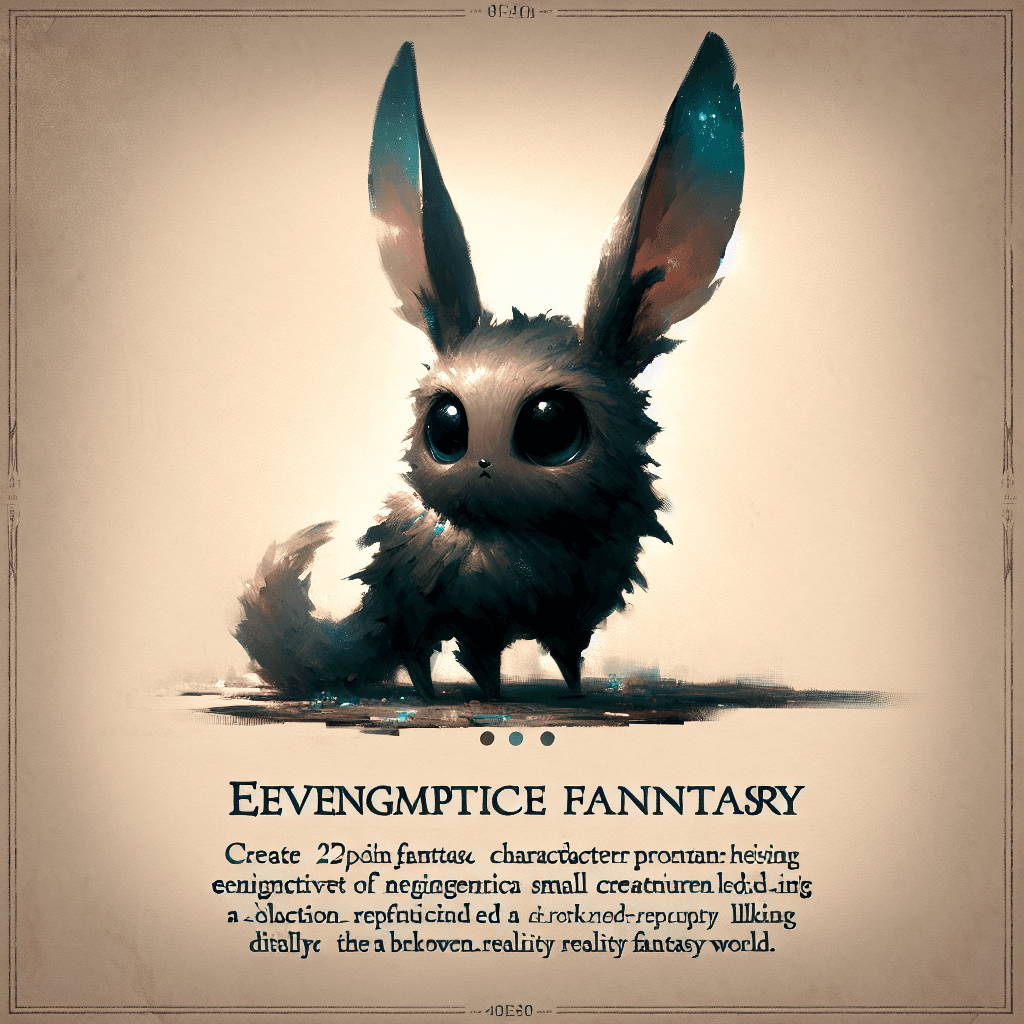
Myx
Character
A Servine — a rare creature resembling a cross between a leopard and a large dog, with eyes that change colour based on emotion and trust. Myx was bred in fighting pits, abused and starved, until he shared a bone with a starving boy named Rook in an alley. Despite appearing fearsome, Servines are deeply loyal and affectionate. Myx communicates through presence and thought-shapes rather than words. His harrowing run through the Fray cracked open Sera's tower and made Rook's retrieval of the third Shard of the Pattern possible.
Canon StabilityAbsolute
story-3protagonistservine+2

Nerin Post
Location
A walled supply depot established by Thorne Reach to extend its influence into the central Steps. Nerin Post has a permanent garrison of twelve and a rotating market that draws herders from as far as Telmar Edge. Its stone well is the deepest on the plains. On the Deyune Steppe, this site is one of the points where the Long Wind, the clan-roads, and the old Karak geometries meet. Time Instability runs heavy here — distances and seasons rarely agree between settlements. The Veykar's old reach passed through or near sites like this; some bear the Wheel's scars in the soil, others have been letting the grass grow back over them for generations.
Canon StabilityAbsolute
locationdeyunetowns

New Harbor
Location
The Drowned Reach's only true port, built on the highest ground in the region — a ridge that stubbornly remains above the waterline. New Harbor handles what little external trade the Reach maintains, primarily with the Virelay Coastlands. Its docks rise and fall on mechanical lifts that adjust to the unpredictable water levels. In the Drowned Reach, this site is one of the half-drowned settlements that rebuild themselves on stilts every generation around the Sunken City. The sea is steadily reclaiming the coast, and the Echo is the regional Fray-consequence that haunts the deeper channels. What the tide takes here, it usually takes for a reason — sometimes a Shard, sometimes a name, sometimes only the road that used to lead inland.
Canon StabilityAbsolute
locationdrownedtowns
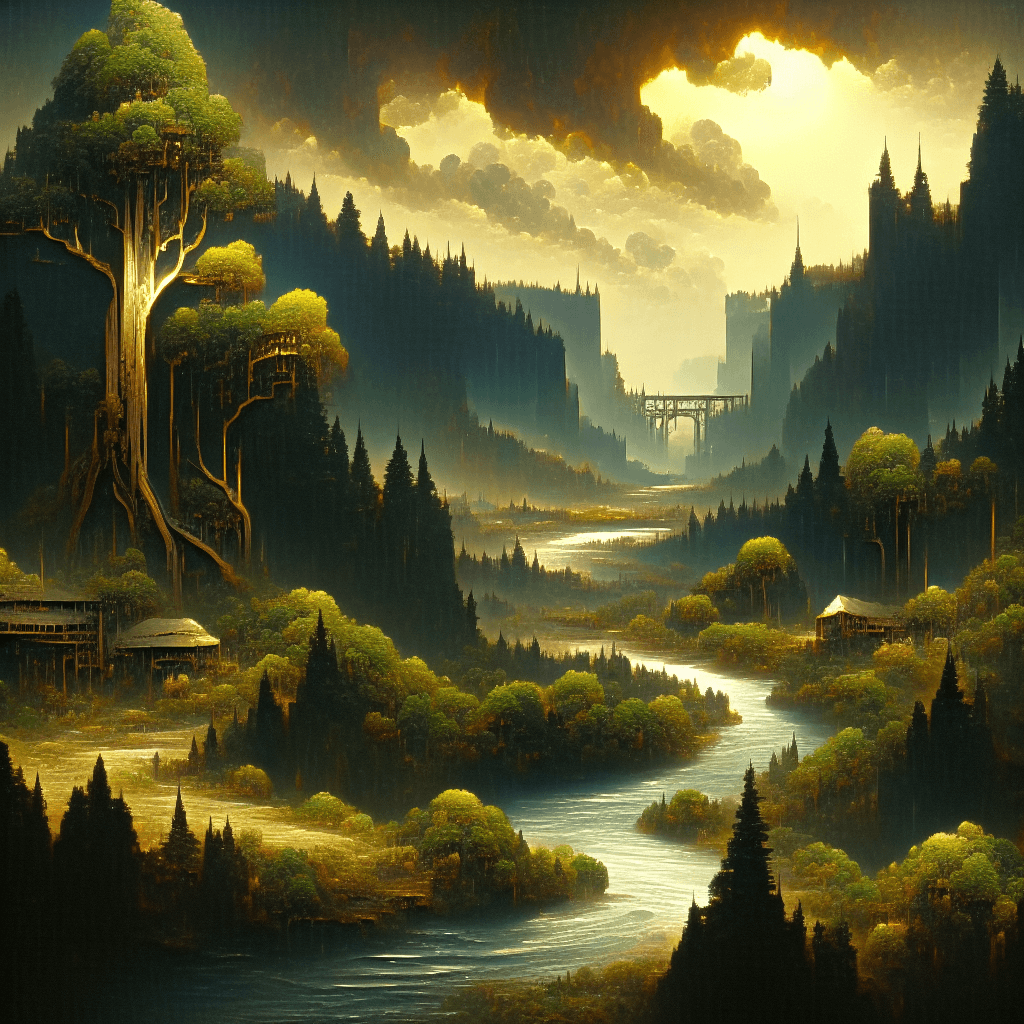
North Path Post
Location
The Vale's northern outpost, tucked where the forest thins and the landscape transitions toward the Luminous Fold. North Path Post monitors the border and reports on the unnerving precision of the terrain to the north — trees that grow at exact intervals, streams that run perfectly straight. Within the Bellroot Vale, this site sits in the wider network of villages, ruins, and Pattern-touched places that radiate out from Drelmere and Bellroot Crossing. The Vale's relative stability since the Second Shard was recovered from the Bell Tree is felt here, but the Loosening and the Fray still leave their fingerprints — old paths that no longer match the new ones, names half-remembered, the occasional warm wind out of the wrong season.
Canon StabilityAbsolute
locationbellrootoutposts
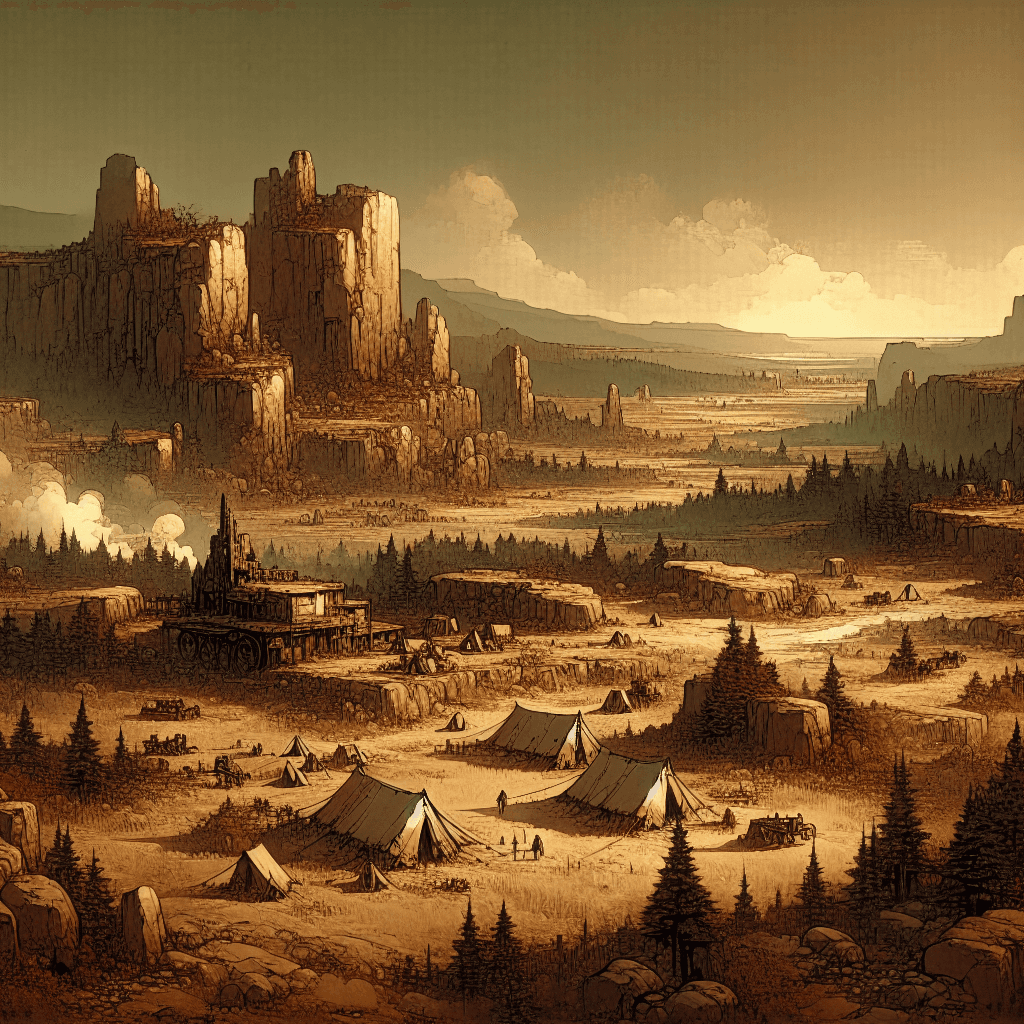
North Watch
Location
A wooden palisade fort on the northern edge of the Frontier, watching the approaches from the Deyune Steps. North Watch is staffed by volunteers from Varnhalt and Drellin Post who rotate on three-month shifts. Its signal fires can be seen from Talon Ridge Camp on clear nights. On the Varnhalt Frontier, this site sits inside the patchwork of crossroad towns, mesa camps, and trade-protected routes that radiate from Old Varnhalt. The Loosening is constant here — mile markers contradict, paths loop — so settlements rely on local pacing and on the small island of stability around the Black Stone Tower in the eastern hills. The Frontier has no central authority; this place answers to whoever its trade depends on this season.
Canon StabilityAbsolute
locationvarnhaltoutposts-forts
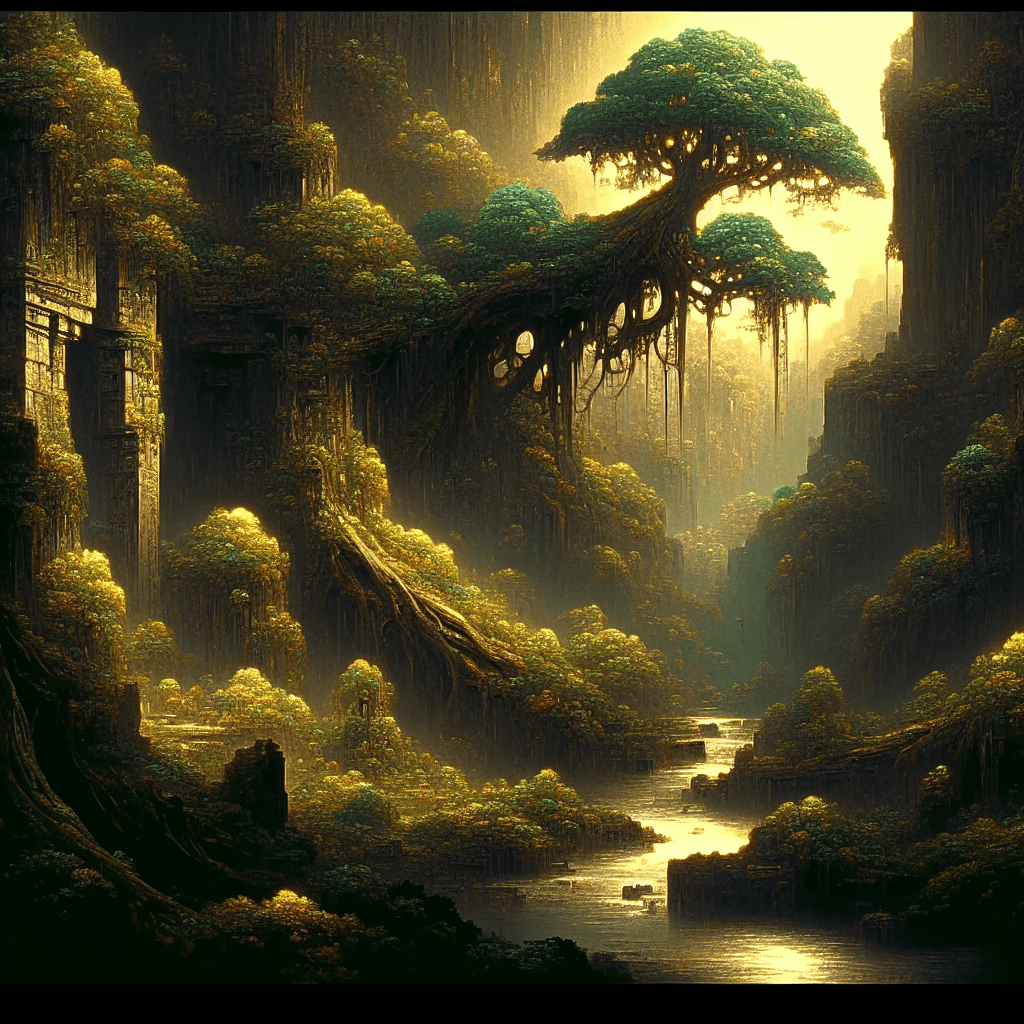
Old Bellroot Site
Location
The ruined original site of the Bellroot Vale's first settlement — abandoned generations before the current Bellroot Crossing was founded, when the residents reportedly woke one morning and found the village had moved sideways through the forest in their sleep. The Old Bellroot Site sits above the First Root Chamber, and most Vaultkeeper accounts treat the chamber as the site's real reason for existing — the village was built where it was because something deeper than the village needed a roof. The ruins are now overgrown but never quite reclaimed; the forest stops short of the foundation stones, which the Vale's residents take as either a warning or a courtesy.
Canon StabilityAbsolute
locationbellrootruins
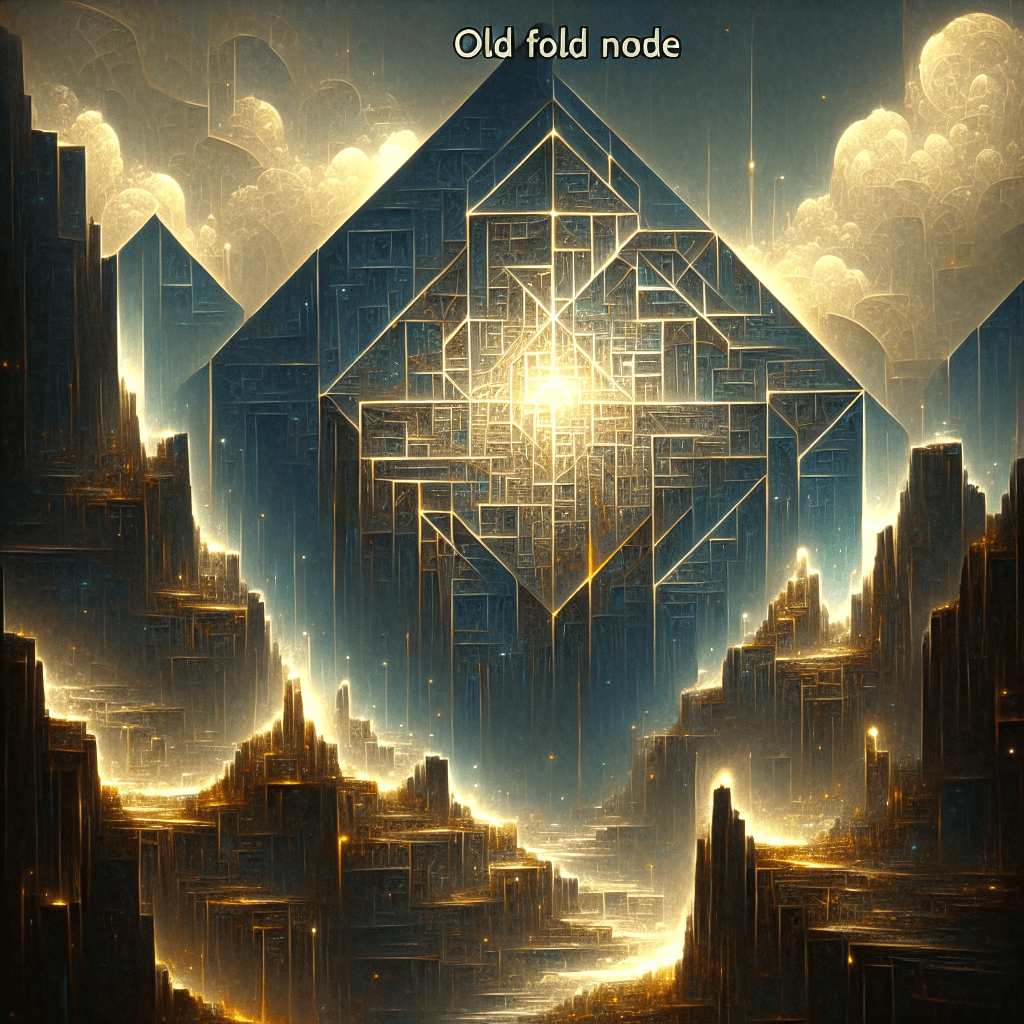
Old Fold Node
Location
The remains of a structure at the intersection of two now-defunct energy lines, predating any current settlement. Old Fold Node's architecture is unlike anything built by the Fold's current inhabitants — curved, organic, almost biological. It suggests the Fold was once stabilized differently, by something alive. Within the Luminous Fold, this site is part of the gridded, measured landscape that radiates out from Lumina and the Central Fold. The Fold's clocks, roads, and institutions assume reality may be wholly described, and on this plateau they almost can — the Loosening and Time Instability are weakest here. The site answers, directly or indirectly, to one of the Seven Circles, and the Cartographic Society of Iterants keeps notes on every measurable thing that happens within sight of it.
Canon StabilityAbsolute
locationluminousruins
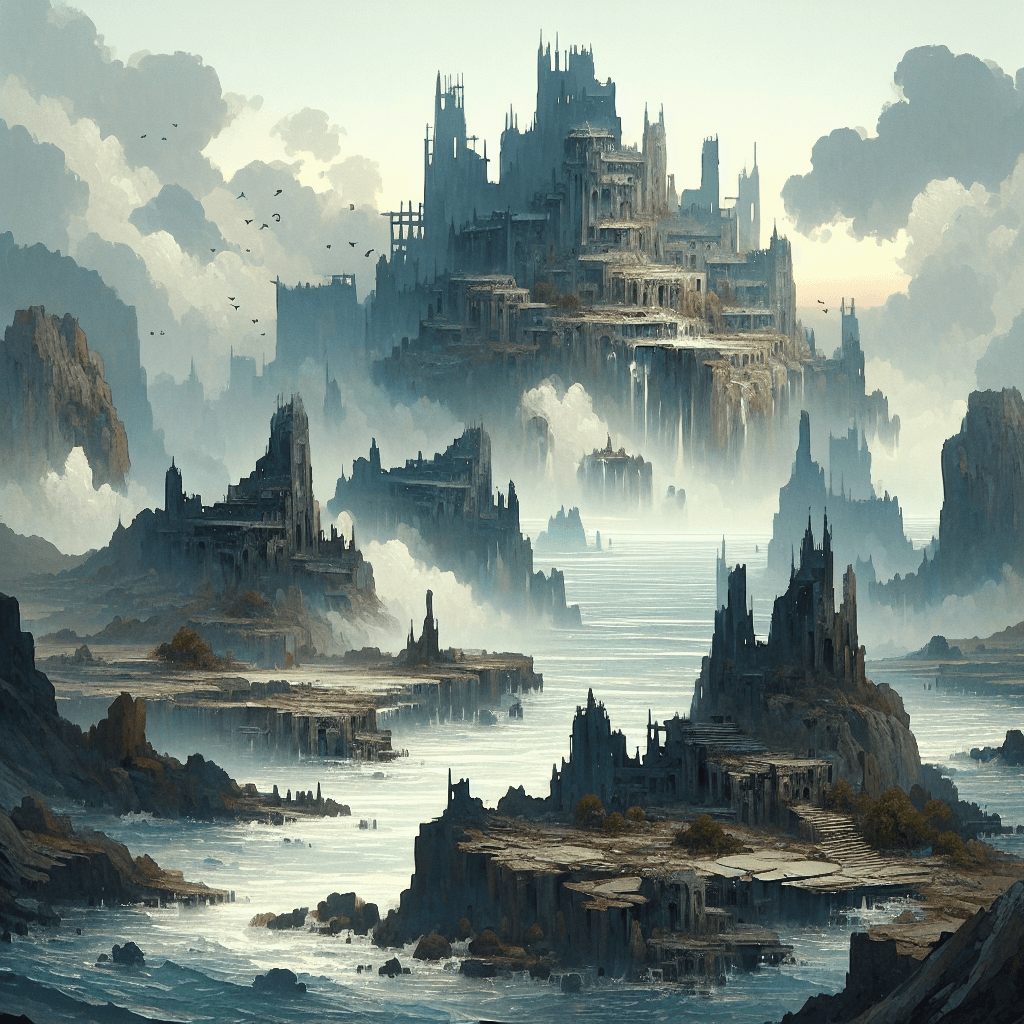
Old Harbor
Location
The rotting pilings and stone foundations of Virelay's original port, abandoned when the waterline shifted a quarter mile overnight — one of the first visible signs of Fray corruption. Old Harbor is avoided at night, when some claim to see lanterns moving along docks that no longer exist. Along the Virelay Coastlands, this site is part of the lattice of harbours, bell-towers, and salt-marshes that look toward Virelay and the Underwater Well. The sea here remembers more than the maps do; the Loosening lives in the fog. House Thorne's trade lines once stitched these settlements together — some of those routes are still walked, others have gone quiet since the Fray reached the coast.
Canon StabilityAbsolute
locationvirelayruins-anomalies

Old Karak Stones
Location
A shattered ring of standing stones half-buried in the earth, predating even the oldest Karak Camp oral histories. The stones hum faintly during windstorms. Herders avoid camping within the ring, though no one remembers exactly why — only that those who sleep there wake disoriented, sometimes speaking words from no known language.
Canon StabilityAbsolute
locationdeyuneruins

Old Prism
Location
The shattered remains of a settlement that predates Prism City by unknown centuries. Old Prism's crystal structures have collapsed into each other, creating a maze of angled surfaces and trapped light. The ruins are disorienting and dangerous — more than one explorer has gotten lost in reflections of passages that aren't actually there. Out in the Glass Expanse, this site is part of the network of prism-fields, shard-towns, and silica plateaus that surround Prism City. Light bends here in ways the Pattern cannot quite hold — the air sometimes refracts a scene from a different hour, and the Starving Silence forms where light has shattered the same way too many times in the same place. The Knowledge Fragmentation Principle was first formalised by Expanse philosophers a generation before the Luminous Fold accepted it.
Canon StabilityAbsolute
locationglassruins

Old Reach
Location
The predecessor to Deep Reach, now entirely underwater. Old Reach's street grid is still navigable by experienced divers, and its buildings serve as the primary salvage sites for Deep Reach's construction materials. Drift Camp's salvagers spend most of their diving hours here. In the Drowned Reach, this site is one of the half-drowned settlements that rebuild themselves on stilts every generation around the Sunken City. The sea is steadily reclaiming the coast, and the Echo is the regional Fray-consequence that haunts the deeper channels. What the tide takes here, it usually takes for a reason — sometimes a Shard, sometimes a name, sometimes only the road that used to lead inland.
Canon StabilityAbsolute
locationdrownedruins
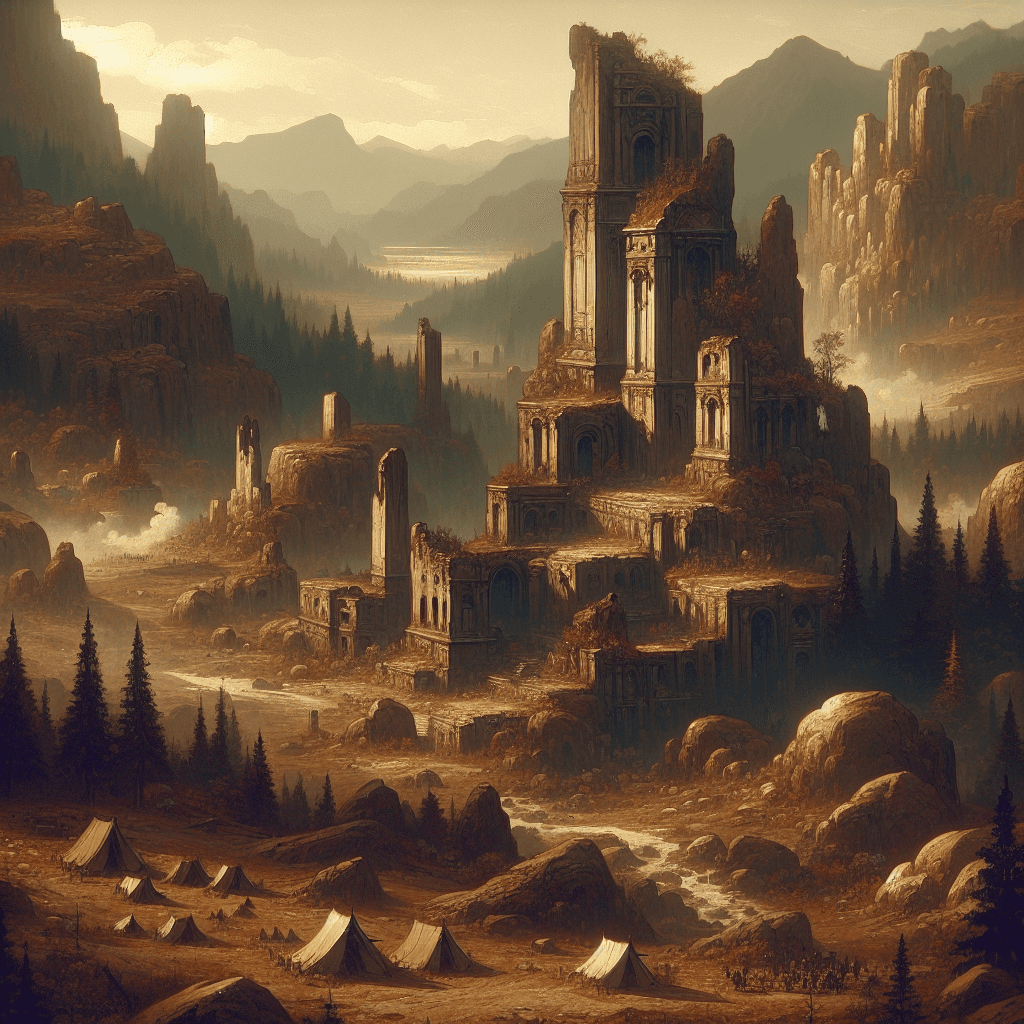
Old Varnhalt
Location
The largest settlement of the Varnhalt Frontier and the regional seat in everything but constitutional fact — a four-road town built around a courthouse, a permanent magistrate, and the only working bank between the Bellroot Vale and the Glass Expanse. Old Varnhalt's authority over the Frontier is more historical than practical; the surrounding mesa camps, market towns, and protected trade routes answer to it only when the answer suits them. Its older name, Varnhalt, still appears on Luminous Fold maps. The town's real influence is the magistrate's docket, the bank's ledger, and the fact that on market day every road within three days' ride converges on its central square. The Black Stone Tower's field of stability is two days east.
Canon StabilityAbsolute
locationvarnhaltruins
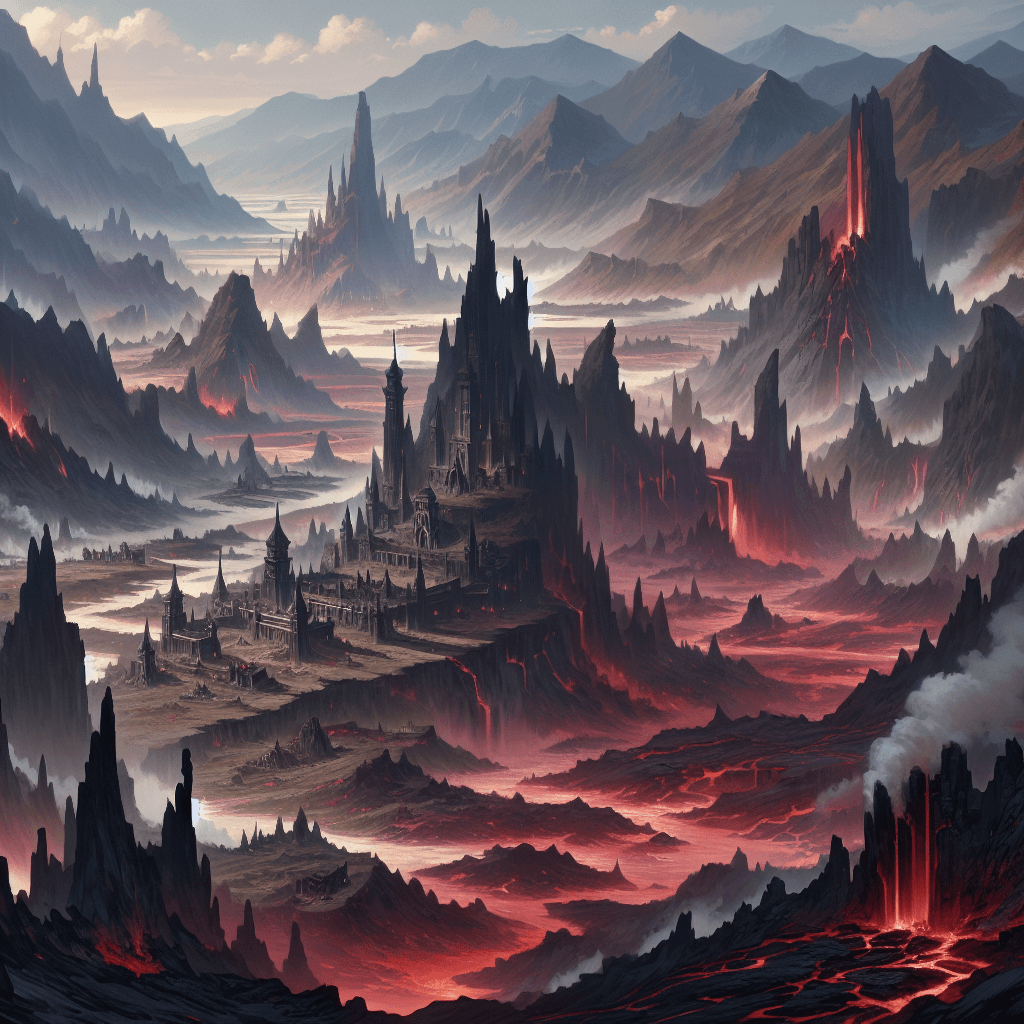
Old Varr
Location
The buried remains of the original Varr settlement, visible only as jutting walls and half-melted archways beneath the foundations of Varr Keep above. Excavations have been banned for generations after a digging crew broke through into a sealed chamber that emanated heat far beyond what the surrounding rock could explain.
Canon StabilityAbsolute
locationashenruins

Order Field
Location
An agricultural settlement where crops grow in unnervingly straight rows regardless of how they're planted. Seeds scattered randomly sprout in grid patterns. Order Field's farmers have stopped questioning this and simply harvest the results, which are always abundant, always identical, and always lacking any particular flavor.
Canon StabilityAbsolute
locationluminoussettlements

Orun Field Camp
Location
The northernmost settlement on the Steps, perched where grassland gives way to scrub and wind-scoured rock. Orun Field Camp watches the horizon toward the Ashen Spine and trades dried herbs and leather with the mountain-edge villages. Nights here are colder than anywhere else in the Deyune. On the Deyune Steppe, this site is one of the points where the Long Wind, the clan-roads, and the old Karak geometries meet. Time Instability runs heavy here — distances and seasons rarely agree between settlements. The Veykar's old reach passed through or near sites like this; some bear the Wheel's scars in the soil, others have been letting the grass grow back over them for generations.
Canon StabilityAbsolute
locationdeyunesettlements
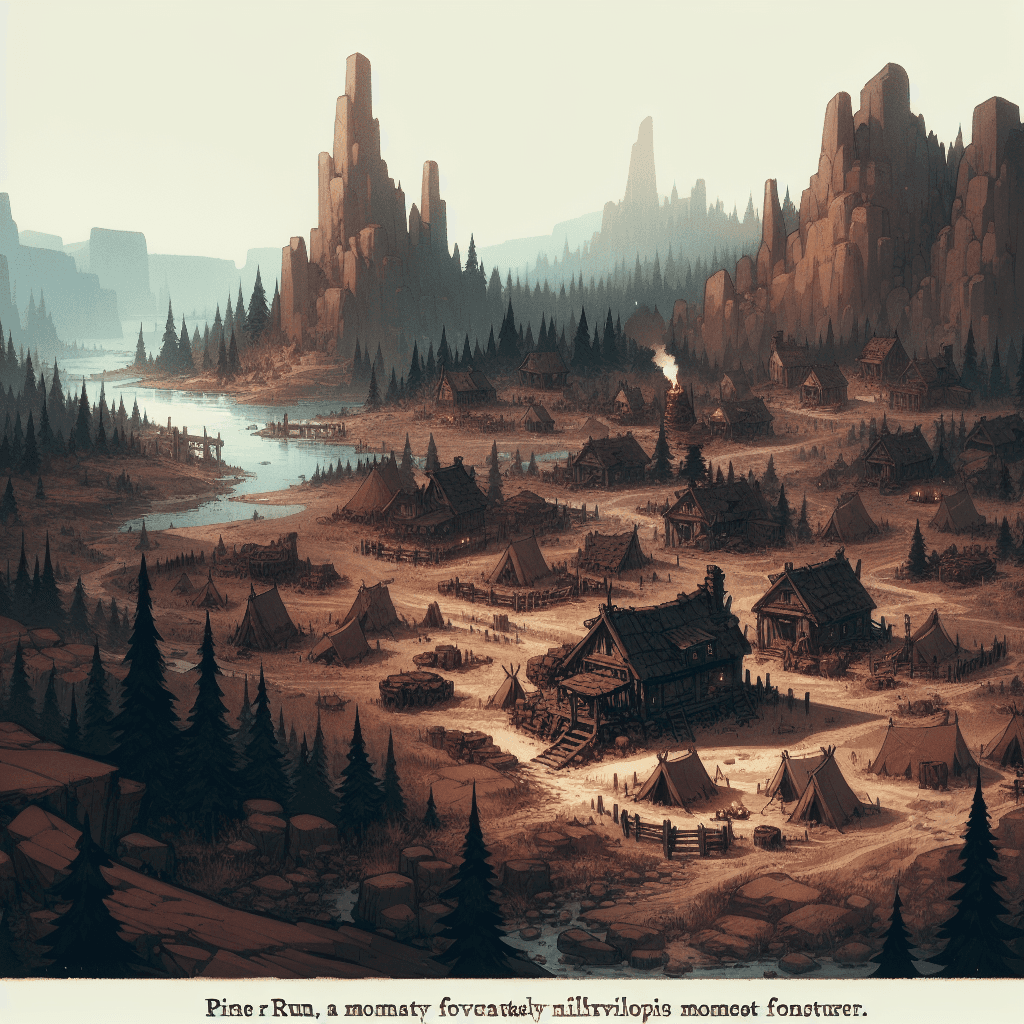
Pine Run
Location
A logging village on the forested eastern edge of the Frontier, where the trees grow tall enough to supply shipbuilders as far away as the Virelay Coastlands. Pine Run's timber is floated downriver to Korr Field for processing. The village is quiet, industrious, and deeply suspicious of strangers. On the Varnhalt Frontier, this site sits inside the patchwork of crossroad towns, mesa camps, and trade-protected routes that radiate from Old Varnhalt. The Loosening is constant here — mile markers contradict, paths loop — so settlements rely on local pacing and on the small island of stability around the Black Stone Tower in the eastern hills. The Frontier has no central authority; this place answers to whoever its trade depends on this season.
Canon StabilityAbsolute
locationvarnhaltvillages
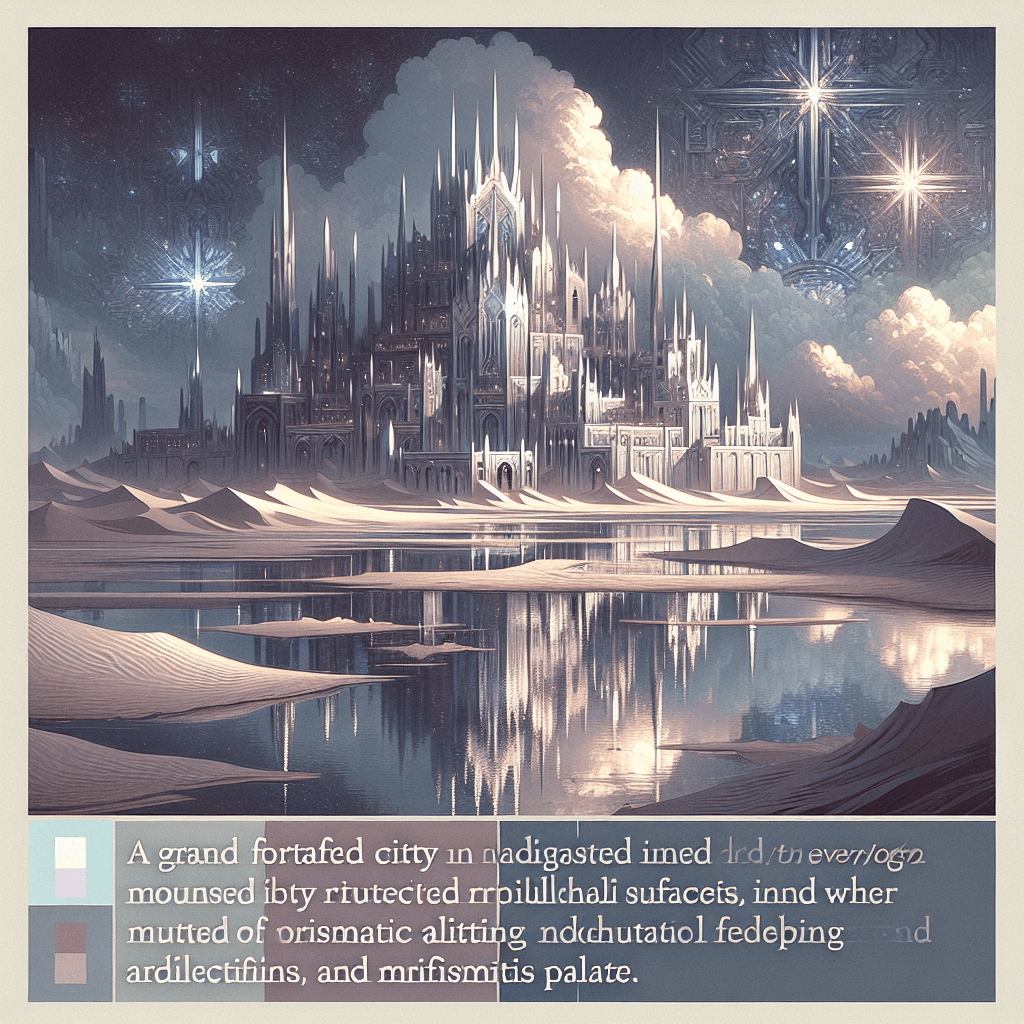
Prism City
Location
The largest settlement of the Glass Expanse and the closest thing the region has to a capital — a city of light-warped streets where the local architecture is built to compensate for the Pattern's refraction. Prism City's ruling council is drawn from the prism-grove guilds and a rotating Iterant chair appointed by the Cartographic Society of Iterants. The Knowledge Fragmentation Principle has been taught in its philosophical academy for two Loops longer than the Luminous Fold's formal acceptance of it. The Starving Silence has not been sighted within the city limits, but the outer prism-fields are another matter — Clearline, Echo Ruins, and Vell Glass have all reported incidents.
Canon StabilityAbsolute
locationglasscities
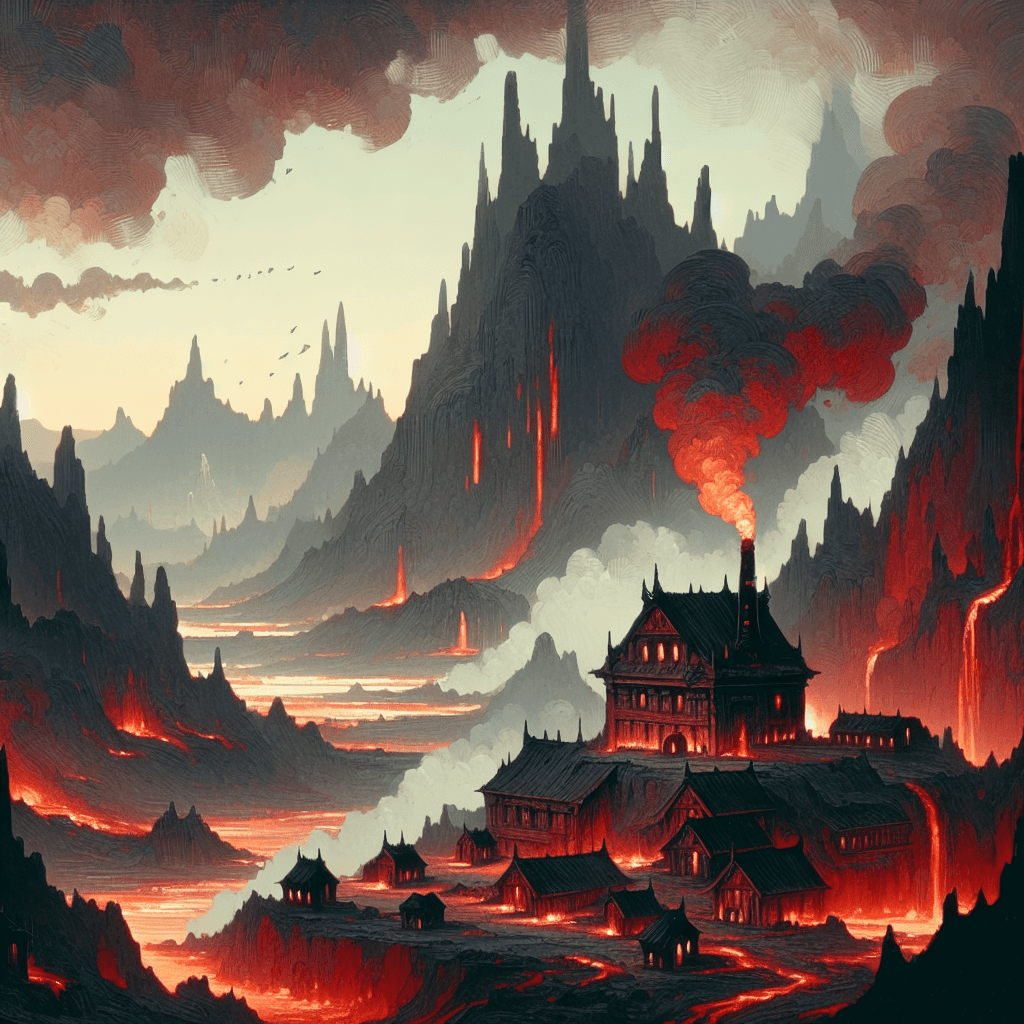
Red Barrel House
Location
A rowdy drinking hall on the outskirts of Ironmark, named for the red-stained barrels of wine imported over Taldrin Pass from the cooler regions. It is the only establishment in the Spine where you can reliably hear news from the Virelay Coastlands, carried in by traders who brave the southern passes through Varr Keep. Within the Ashen Spine, this site is part of the long chain of forge-towns, quarries, and iron-vein settlements that work the world's oldest forges from Ironmark down to Old Varr. The smoke is the climate. The Fray here is physical — cracks open in the rock, tunnels appear that were not there the day before — and the Cleaved is the regional consequence. Forge guilds keep their own records, and they keep them close.
Canon StabilityAbsolute
locationashentaverns-armories
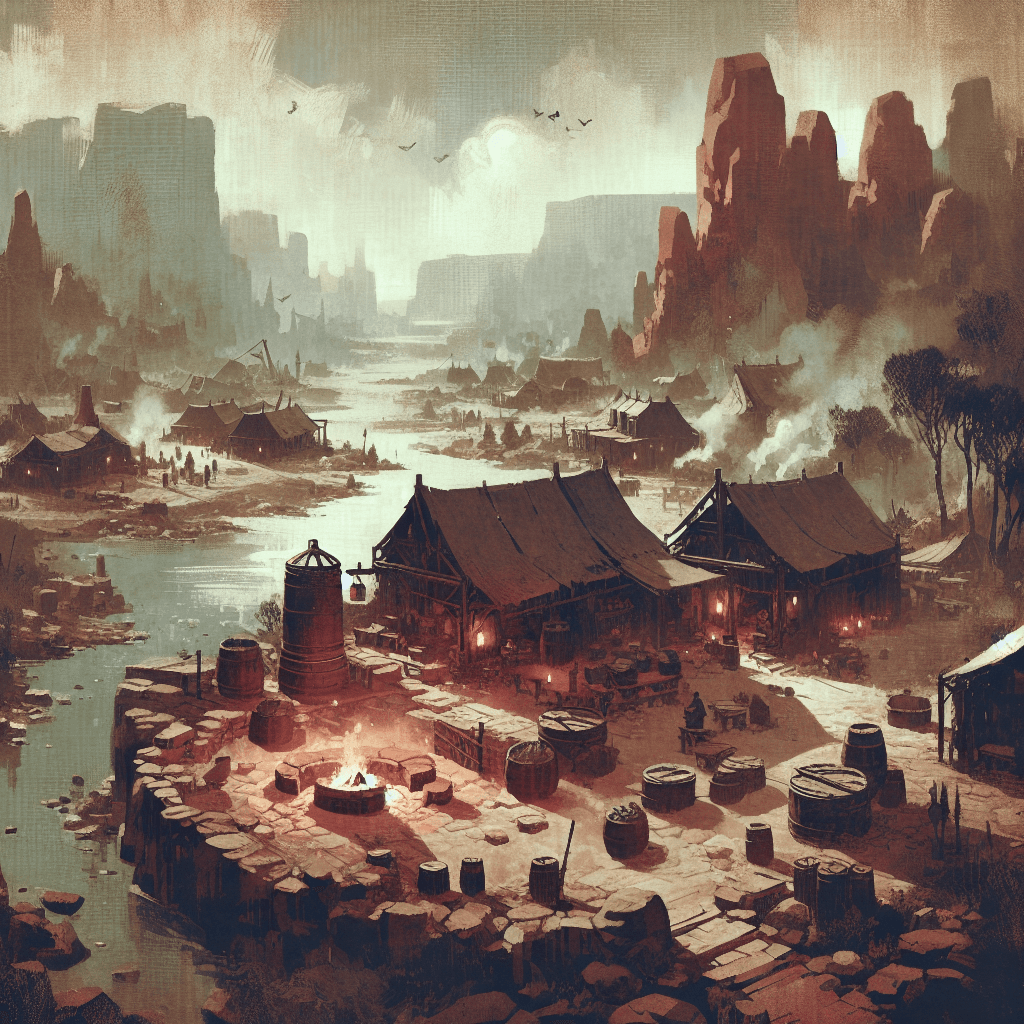
Red Knife Tavern
Location
A rough-edged drinking hall in West Varnhalt where weapons are checked at the door and fistfights are not. The Red Knife is where mercenaries, trappers, and drifters find work, and where information about the Frontier's wilder reaches can be bought for the price of a round. On the Varnhalt Frontier, this site sits inside the patchwork of crossroad towns, mesa camps, and trade-protected routes that radiate from Old Varnhalt. The Loosening is constant here — mile markers contradict, paths loop — so settlements rely on local pacing and on the small island of stability around the Black Stone Tower in the eastern hills. The Frontier has no central authority; this place answers to whoever its trade depends on this season.
Canon StabilityAbsolute
locationvarnhalttaverns

Red Mile Camp
Location
Named for the rust-colored clay that stains everything within its borders. Red Mile is a seasonal waystation used by hunters tracking the vast herds that cross the Sarn Flats. The camp's distinct crimson tents are visible for miles across the open grassland. On the Deyune Steppe, this site is one of the points where the Long Wind, the clan-roads, and the old Karak geometries meet. Time Instability runs heavy here — distances and seasons rarely agree between settlements. The Veykar's old reach passed through or near sites like this; some bear the Wheel's scars in the soil, others have been letting the grass grow back over them for generations.
Canon StabilityAbsolute
locationdeyunesettlements

Reflection Station
Location
A signal relay outpost using polished crystal panels to bounce coded light messages across the Expanse. Reflection Station is essential for communication in a region where sound carries strangely and conventional messengers get disoriented by the mirrored terrain. It maintains contact with West Mirror Post and Glass Reach. Out in the Glass Expanse, this site is part of the network of prism-fields, shard-towns, and silica plateaus that surround Prism City. Light bends here in ways the Pattern cannot quite hold — the air sometimes refracts a scene from a different hour, and the Starving Silence forms where light has shattered the same way too many times in the same place. The Knowledge Fragmentation Principle was first formalised by Expanse philosophers a generation before the Luminous Fold accepted it.
Canon StabilityAbsolute
locationglassoutposts
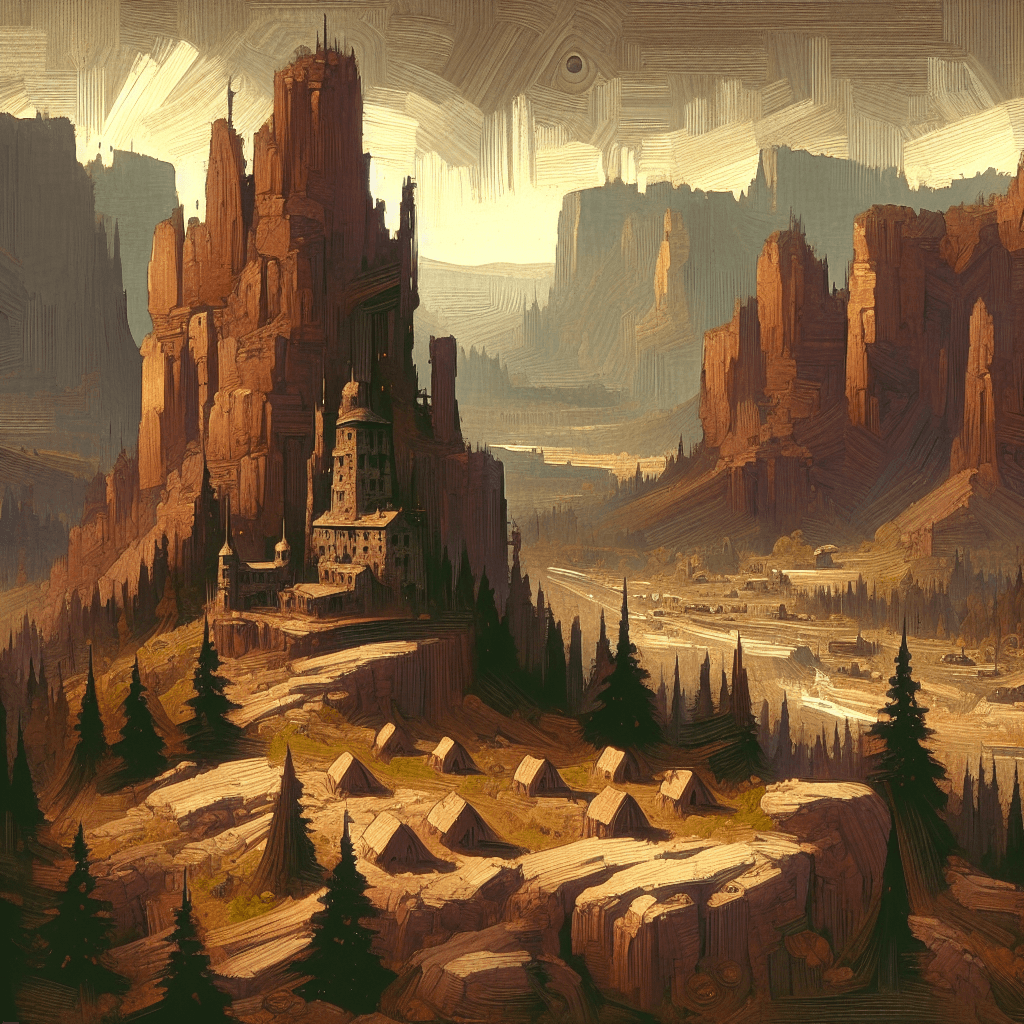
Ridge Line Station
Location
The highest outpost in the Varnhalt Frontier, positioned on the ridge that separates the central plains from the forested east. Ridge Line Station relays messages between High Ridge Market and the outer settlements and watches for wildfire during the dry season. On the Varnhalt Frontier, this site sits inside the patchwork of crossroad towns, mesa camps, and trade-protected routes that radiate from Old Varnhalt. The Loosening is constant here — mile markers contradict, paths loop — so settlements rely on local pacing and on the small island of stability around the Black Stone Tower in the eastern hills. The Frontier has no central authority; this place answers to whoever its trade depends on this season.
Canon StabilityAbsolute
locationvarnhaltoutposts-forts
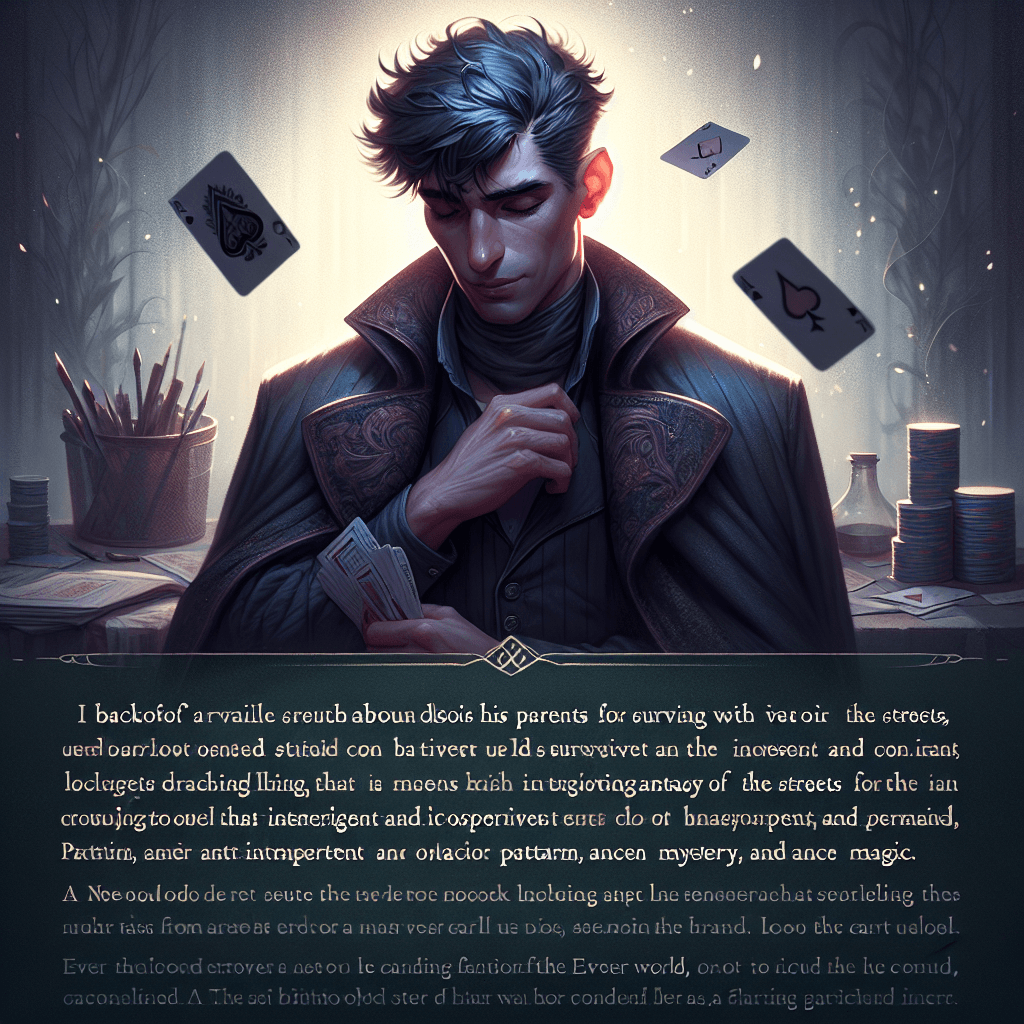
Rook
Character
A charming con artist and card shark, born Alarook but known only as Rook. Orphaned at five, raised in the streets, he survives by his wits, lies, and the ability to read people. His bond with Myx — a Servine (a dog/tiger hybrd creature of the Everloop) he met as a starving boy in an alley — is the one true thing in his life. He infiltrates Sera's settlement, exposes her tyranny, and enters her Fray-repelling tower to retrieve the third Shard of the Pattern known to the Archive. He possesses the rare gift of seeing through facades — including his own. Master of the Everloop (Card Game), he uses FRAY traps to empty his opponents' gains.
Canon StabilityAbsolute
story-3protagonistcon-artist+2
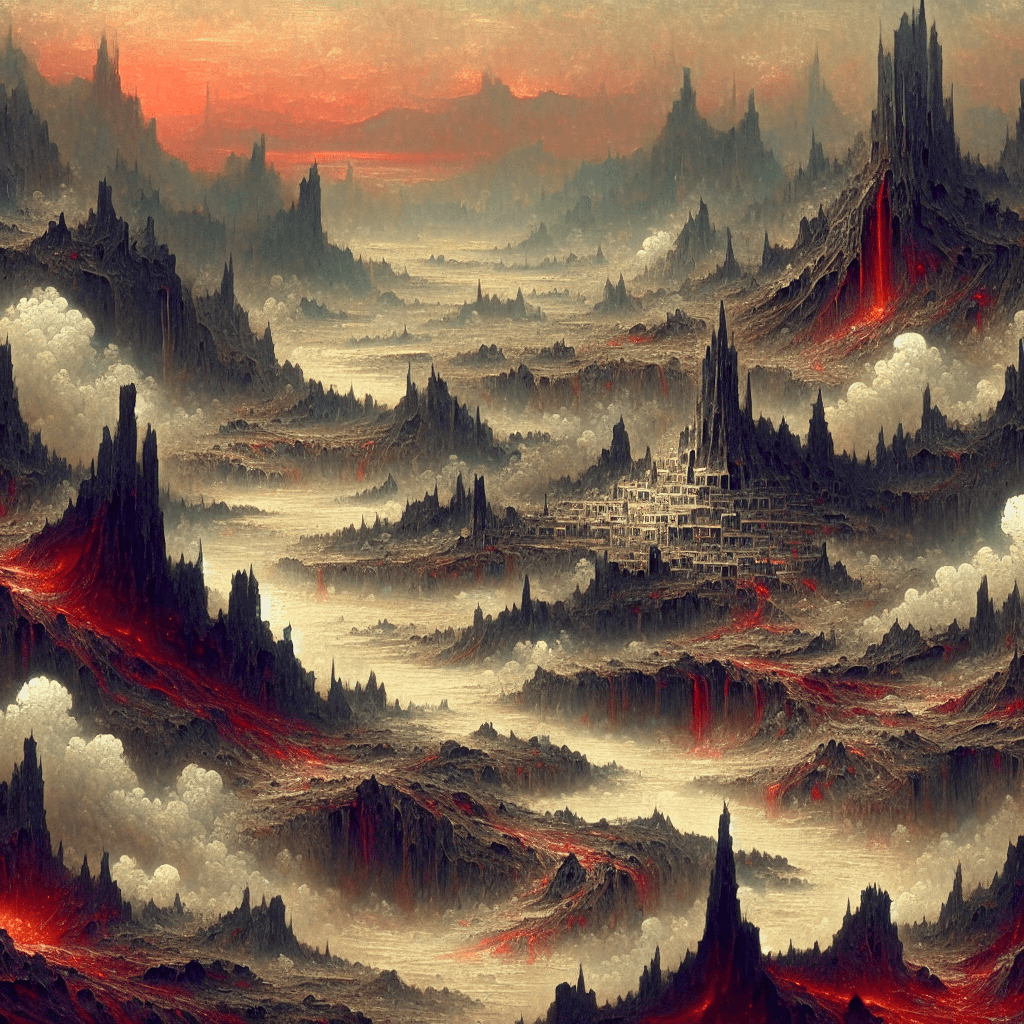
Rookforge
Location
A smoke-darkened town built around a cluster of natural forge vents where the mountain exhales superheated air. Rookforge's smiths produce some of the finest weapons in the Everloop, rivaled only by Black Hammer Forge on the eastern ridge. The town takes its name from the black birds that nest in the warm chimney stacks.
Canon StabilityAbsolute
locationashentowns
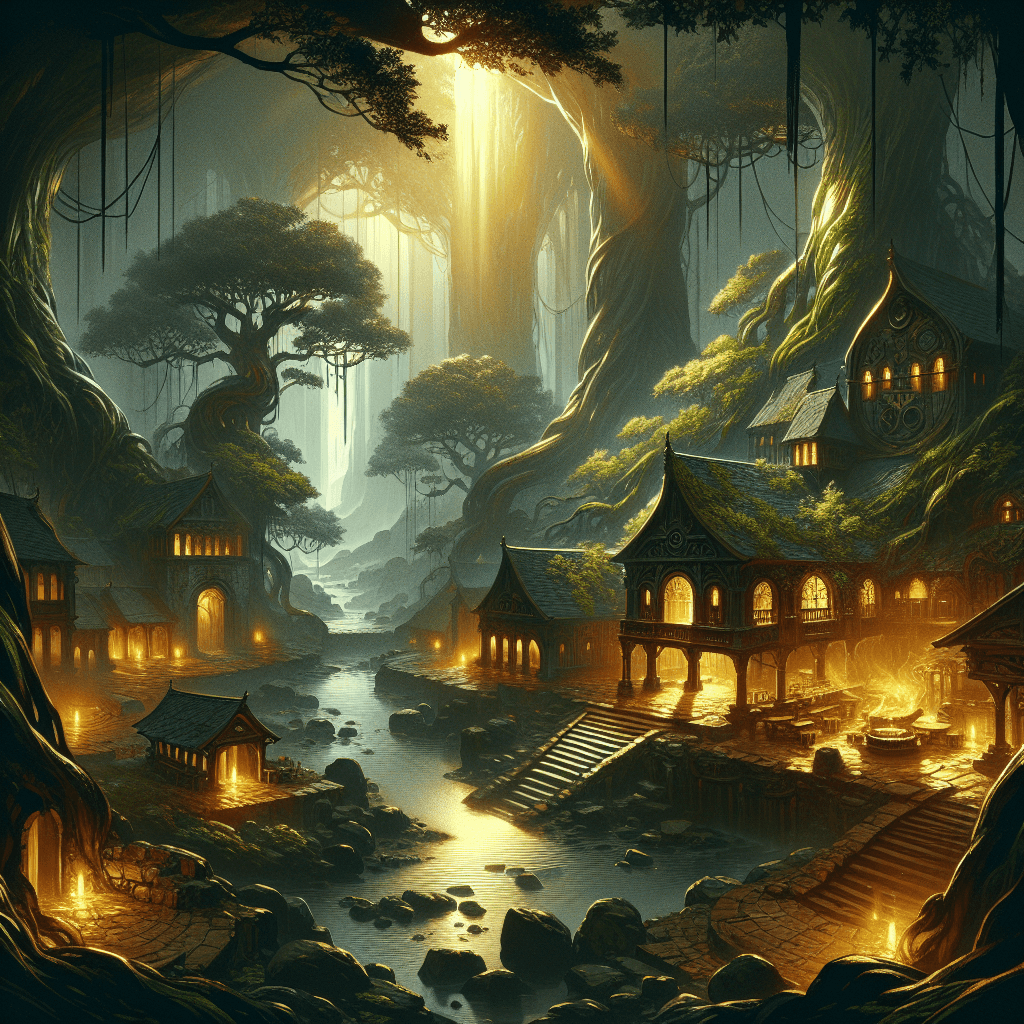
Root & Stone
Location
A sturdy roadside inn between Drelmere and Bellroot Crossing, built half from quarried stone and half from living wood that the forest volunteered. Root & Stone serves as a neutral meeting ground for merchants, forest-dwellers, and travelers who need reliable food and a bed that stays in the same room all night. Within the Bellroot Vale, this site sits in the wider network of villages, ruins, and Pattern-touched places that radiate out from Drelmere and Bellroot Crossing. The Vale's relative stability since the Second Shard was recovered from the Bell Tree is felt here, but the Loosening and the Fray still leave their fingerprints — old paths that no longer match the new ones, names half-remembered, the occasional warm wind out of the wrong season.
Canon StabilityAbsolute
locationbellroottaverns
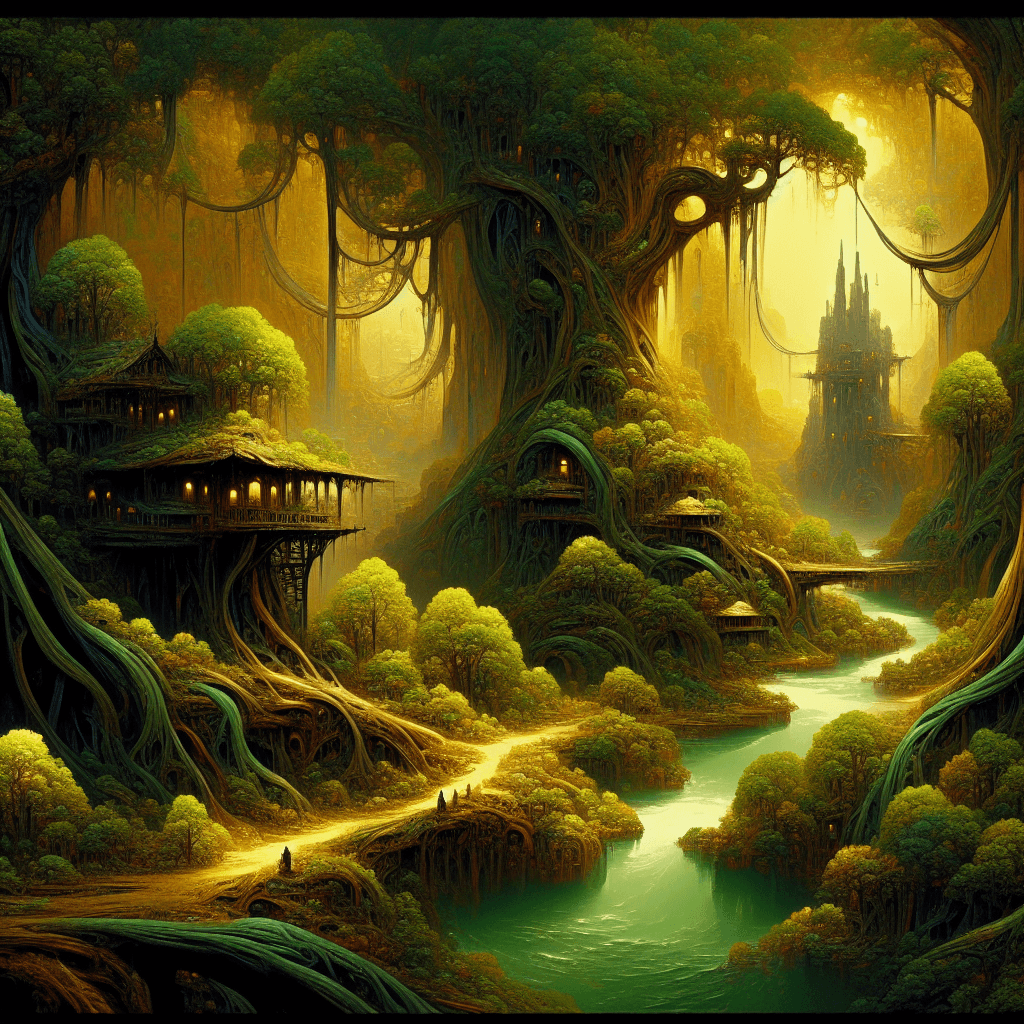
Root Watch
Location
A living outpost grown from the root system of a still-standing ancient tree, its walls formed by guided growth rather than construction. Root Watch monitors the deep forest and watches for Fray incursions from the untamed interior. Its garrison communicates with Vale Station using bird messengers. Within the Bellroot Vale, this site sits in the wider network of villages, ruins, and Pattern-touched places that radiate out from Drelmere and Bellroot Crossing. The Vale's relative stability since the Second Shard was recovered from the Bell Tree is felt here, but the Loosening and the Fray still leave their fingerprints — old paths that no longer match the new ones, names half-remembered, the occasional warm wind out of the wrong season.
Canon StabilityAbsolute
locationbellrootoutposts
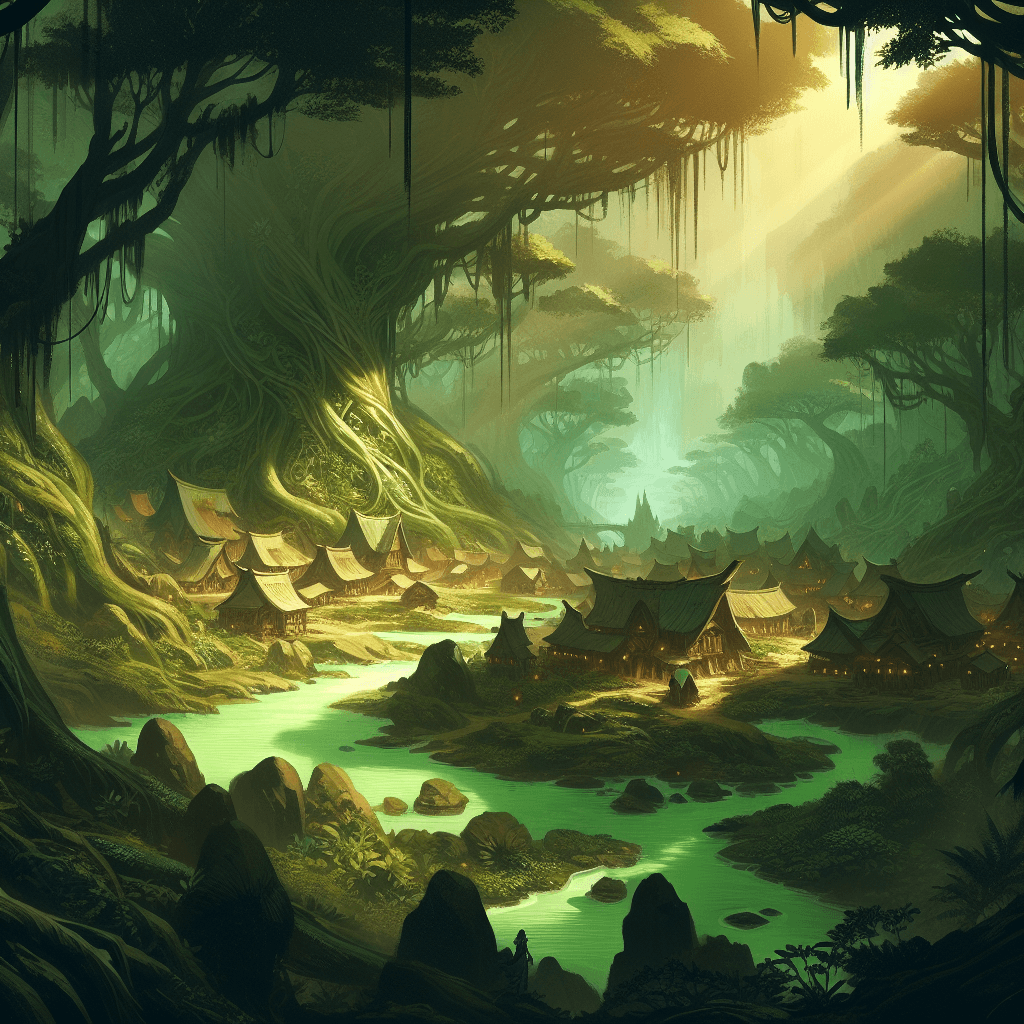
Rootfall
Location
Built where a massive ancient tree fell and created a natural clearing, Rootfall is a ground-level village that trades directly with Tallpine above and Green Hollow to the south. The fallen tree's root system, still partially alive, forms natural walls and sheltered alcoves that the villagers have incorporated into their homes. Within the Bellroot Vale, this site sits in the wider network of villages, ruins, and Pattern-touched places that radiate out from Drelmere and Bellroot Crossing. The Vale's relative stability since the Second Shard was recovered from the Bell Tree is felt here, but the Loosening and the Fray still leave their fingerprints — old paths that no longer match the new ones, names half-remembered, the occasional warm wind out of the wrong season.
Canon StabilityAbsolute
locationbellrootvillages

Salt Edge
Location
A mineral-harvesting settlement on the eastern shore where the Reach's waters meet saline deposits. Salt Edge produces the preserving salt that keeps the Reach's scattered communities fed during the long wet seasons. It trades primarily with Lowwater and sends surplus overland toward New Harbor. In the Drowned Reach, this site is one of the half-drowned settlements that rebuild themselves on stilts every generation around the Sunken City. The sea is steadily reclaiming the coast, and the Echo is the regional Fray-consequence that haunts the deeper channels. What the tide takes here, it usually takes for a reason — sometimes a Shard, sometimes a name, sometimes only the road that used to lead inland.
Canon StabilityAbsolute
locationdrownedsettlements

Salt Line
Location
A stripped-down drinking hall in Salt Edge where the tables are crusted white with mineral deposits and the air stings the eyes. Salt Line is functional rather than comfortable — a place to eat, drink, and negotiate salt prices before heading back to the evaporation flats. Its beer is salty. Everything here is salty. In the Drowned Reach, this site is one of the half-drowned settlements that rebuild themselves on stilts every generation around the Sunken City. The sea is steadily reclaiming the coast, and the Echo is the regional Fray-consequence that haunts the deeper channels. What the tide takes here, it usually takes for a reason — sometimes a Shard, sometimes a name, sometimes only the road that used to lead inland.
Canon StabilityAbsolute
locationdrownedtaverns

Sarn Flats Settlement
Location
A low-lying cluster of hide shelters built where the Sarn Flats meet solid ground. Flooding from seasonal rains makes it habitable only half the year, but the fishing in the shallow lakes draws families back without fail. Traders from Khelt Crossing sometimes winter here. On the Deyune Steppe, this site is one of the points where the Long Wind, the clan-roads, and the old Karak geometries meet. Time Instability runs heavy here — distances and seasons rarely agree between settlements. The Veykar's old reach passed through or near sites like this; some bear the Wheel's scars in the soil, others have been letting the grass grow back over them for generations.
Canon StabilityAbsolute
locationdeyunesettlements
Sera
Character
keorld — but her "safety" is really control. After Rook exposes her, she breaks down and ultimately helps destroy the tower, revealing the vulnerability beneath her tyranny. The Shard of the Pattern at the tower's heart had been what kept the Fray at bay; her settlement existed because she happened to be standing nearest to it.
Canon StabilityAbsolute
story-3antagonistruler+2
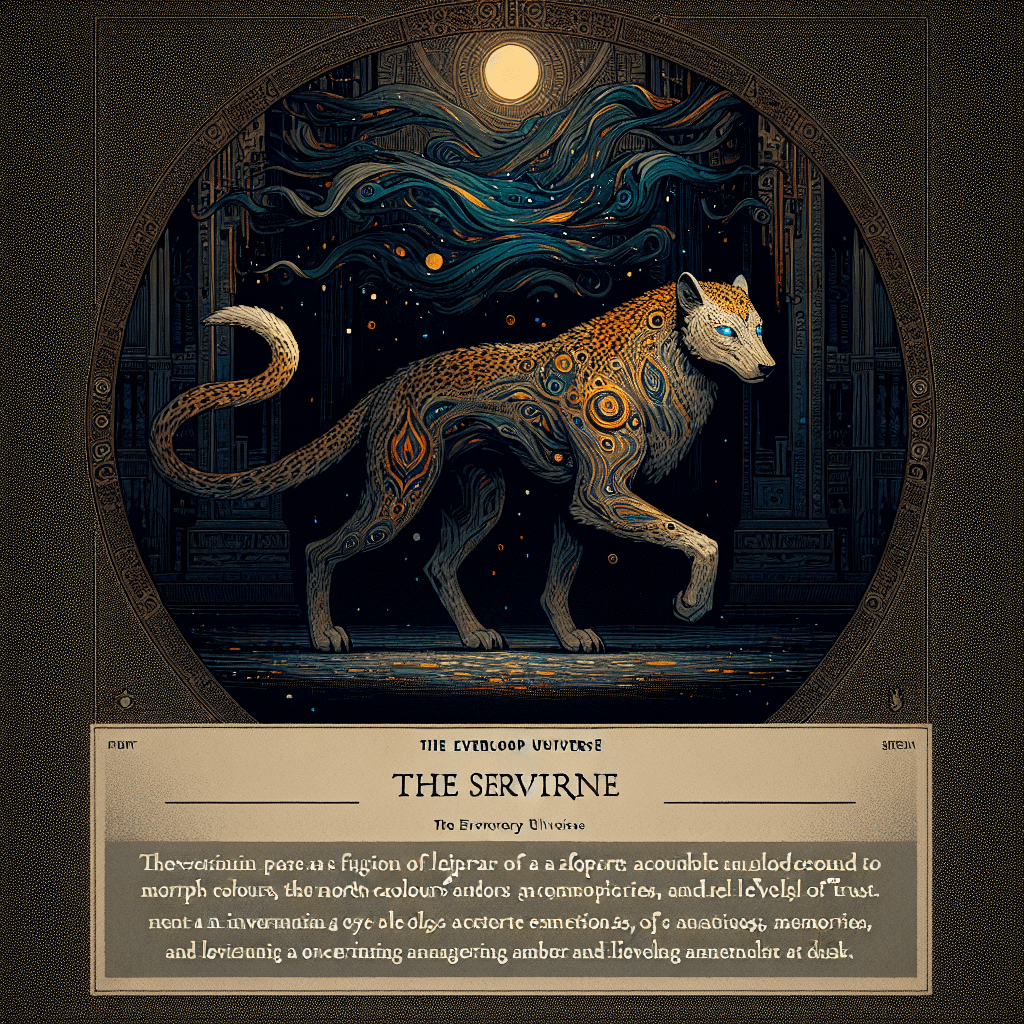
Servine
Creature
A rare species resembling a cross between a leopard and a large dog — sleek, muscular, silent, the size of a small pony. Their most distinctive trait is eyes that change colour with emotion, memory, and trust: amber at dusk, copper when wary, deep green in love. Servines do not vocalise; they communicate through presence and thought-shapes that imprint on those they bond with. They were bred and abused in fighting pits across the Varnhalt Frontier before the practice was driven underground. The bonded Servine of the con-artist Rook, named Myx, is the best-known surviving member of the species — and the proof that what was sold as a weapon was always a companion. The Cartographic Society of Iterants has petitioned the Luminous Fold to recognise the Servine as a person under Fold law; the petition has been "in review" for two Loops.
Canon StabilityAbsolute
story-3speciescompanion+2
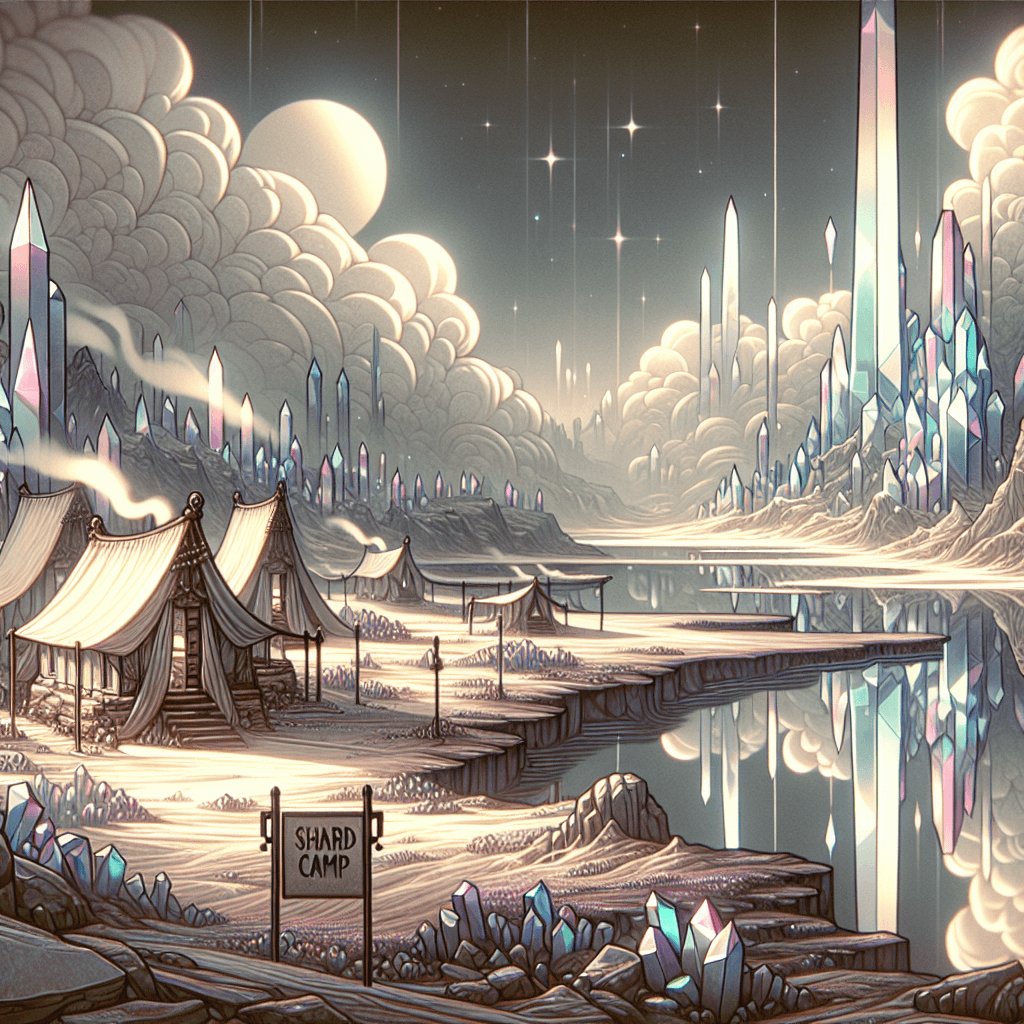
Shard Camp
Location
A temporary excavation settlement where Expanse prospectors dig for crystalline fragments in the fractured dunes. Shard Camp relocates every few months as deposits are exhausted, leaving behind perfectly geometric divots in the sand. Mirror Post supplies it with water and food. Out in the Glass Expanse, this site is part of the network of prism-fields, shard-towns, and silica plateaus that surround Prism City. Light bends here in ways the Pattern cannot quite hold — the air sometimes refracts a scene from a different hour, and the Starving Silence forms where light has shattered the same way too many times in the same place. The Knowledge Fragmentation Principle was first formalised by Expanse philosophers a generation before the Luminous Fold accepted it.
Canon StabilityAbsolute
locationglasssettlements
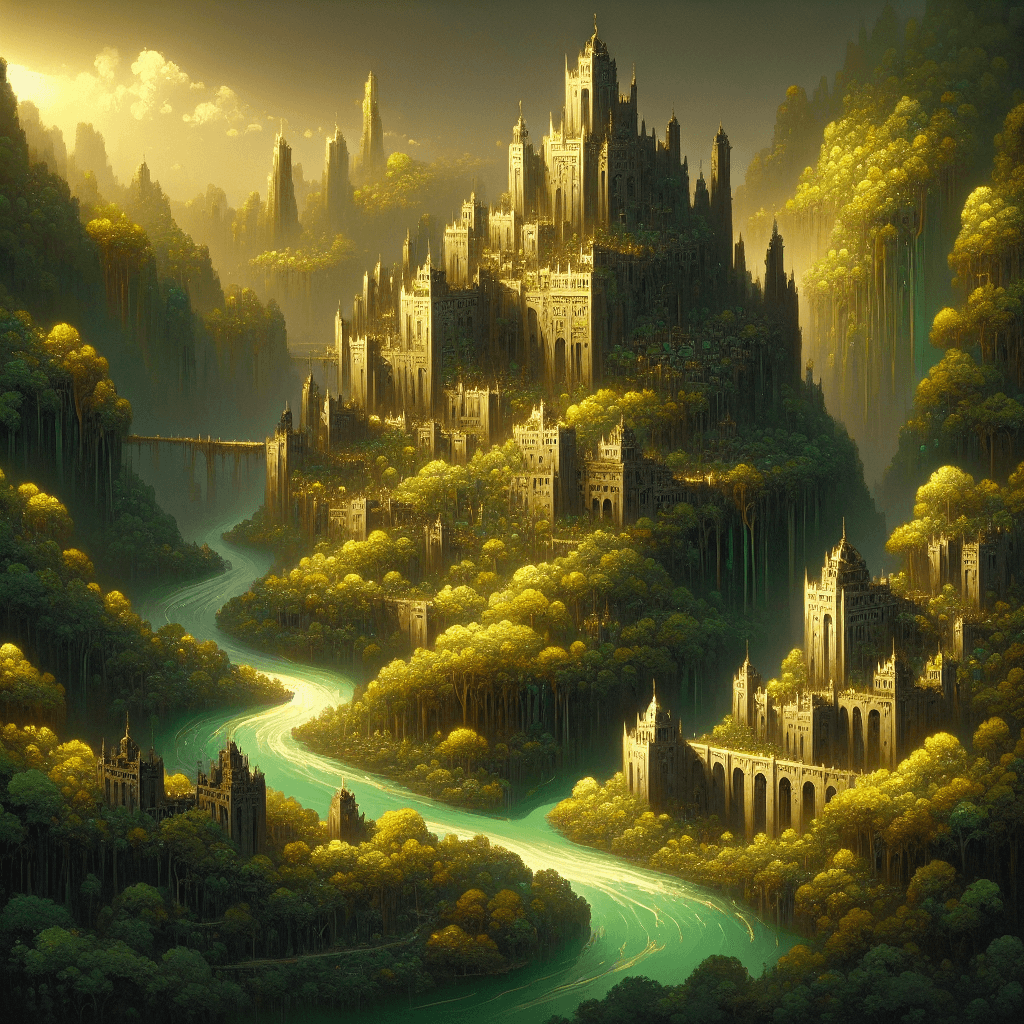
South Vale Cluster
Location
A network of interconnected farming communities in the Vale's fertile southern lowlands, collectively large enough to be classified as a city. South Vale Cluster feeds most of the region and exports grain and preserved fruit to Bellroot Crossing. The individual communities within the Cluster maintain their own identities fiercely, united only by a shared irrigation system. Within the Bellroot Vale, this site sits in the wider network of villages, ruins, and Pattern-touched places that radiate out from Drelmere and Bellroot Crossing. The Vale's relative stability since the Second Shard was recovered from the Bell Tree is felt here, but the Loosening and the Fray still leave their fingerprints — old paths that no longer match the new ones, names half-remembered, the occasional warm wind out of the wrong season.
Canon StabilityAbsolute
locationbellrootcities
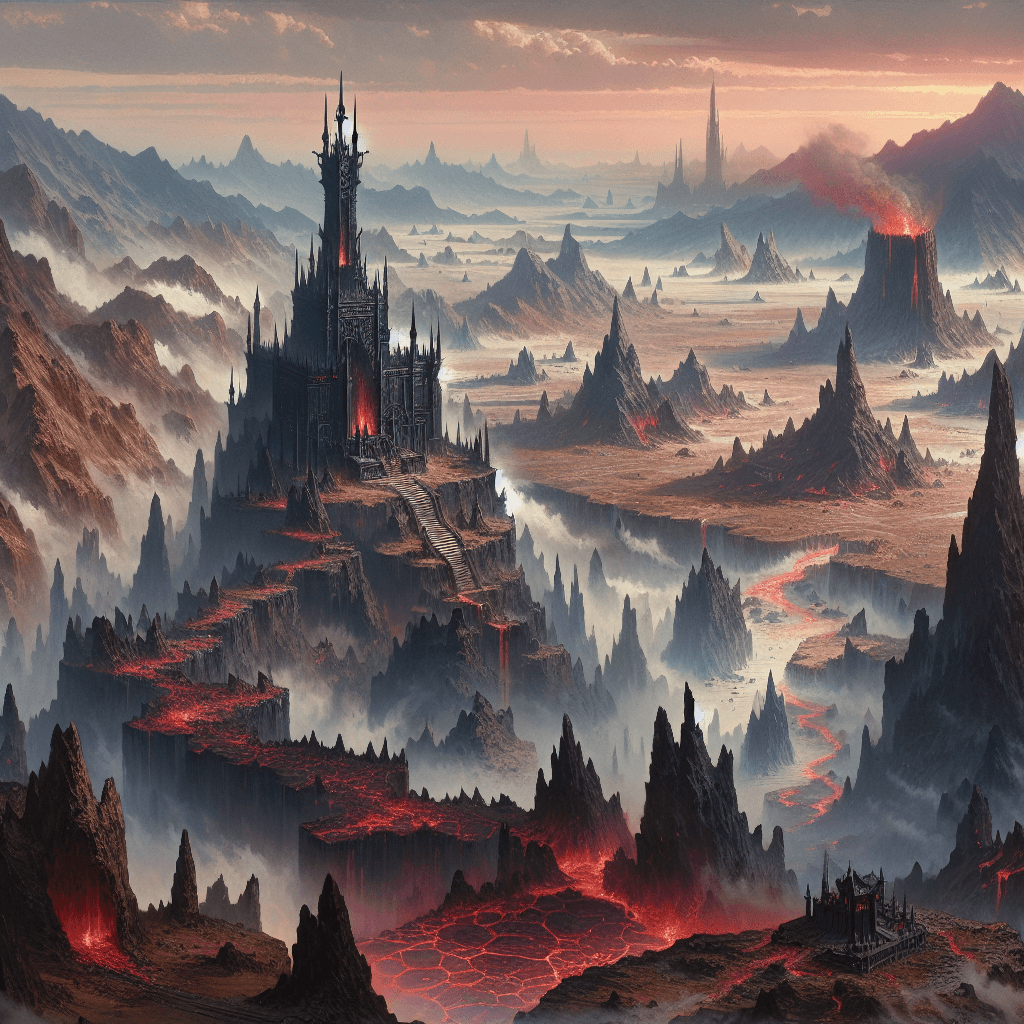
Spine Watch
Location
The highest permanently manned outpost in the Ashen Spine, perched on a ridge where sentries can see volcanic activity across six peaks simultaneously. Spine Watch relays eruption warnings to Taldrin Pass and Cinder Vale using mirror signals and smoke codes. Within the Ashen Spine, this site is part of the long chain of forge-towns, quarries, and iron-vein settlements that work the world's oldest forges from Ironmark down to Old Varr. The smoke is the climate. The Fray here is physical — cracks open in the rock, tunnels appear that were not there the day before — and the Cleaved is the regional consequence. Forge guilds keep their own records, and they keep them close.
Canon StabilityAbsolute
locationashenoutposts-forts

Split Site
Location
A location where the crystal desert is cracked open along a deep fissure, revealing layers of different crystal types descending into darkness. Split Site draws scholars from Prism City and miners from Vell Glass alike, though neither group has reached the bottom. Sound dropped into the fissure returns after a delay that's longer than the depth warrants. Out in the Glass Expanse, this site is part of the network of prism-fields, shard-towns, and silica plateaus that surround Prism City. Light bends here in ways the Pattern cannot quite hold — the air sometimes refracts a scene from a different hour, and the Starving Silence forms where light has shattered the same way too many times in the same place. The Knowledge Fragmentation Principle was first formalised by Expanse philosophers a generation before the Luminous Fold accepted it.
Canon StabilityAbsolute
locationglassruins

Step Barrow Forge
Location
Half underground and half open-air, this forge near Ashfall Crossing specializes in the curved blades and reinforced leather favored by Deyune riders. The master smith sources iron from Ashen Spine traders who pass through each season, giving the weapons a distinctive dark grain. On the Deyune Steppe, this site is one of the points where the Long Wind, the clan-roads, and the old Karak geometries meet. Time Instability runs heavy here — distances and seasons rarely agree between settlements. The Veykar's old reach passed through or near sites like this; some bear the Wheel's scars in the soil, others have been letting the grass grow back over them for generations.
Canon StabilityAbsolute
locationdeyunetaverns-armories

Step Gate Station
Location
The formal entry point into the Deyune Steps from the south, where the grasslands begin in earnest. Step Gate Station collects no toll but keeps a detailed census of everyone who passes through, a practice begun centuries ago and maintained by tradition rather than authority. On the Deyune Steppe, this site is one of the points where the Long Wind, the clan-roads, and the old Karak geometries meet. Time Instability runs heavy here — distances and seasons rarely agree between settlements. The Veykar's old reach passed through or near sites like this; some bear the Wheel's scars in the soil, others have been letting the grass grow back over them for generations.
Canon StabilityAbsolute
locationdeyuneoutposts-forts
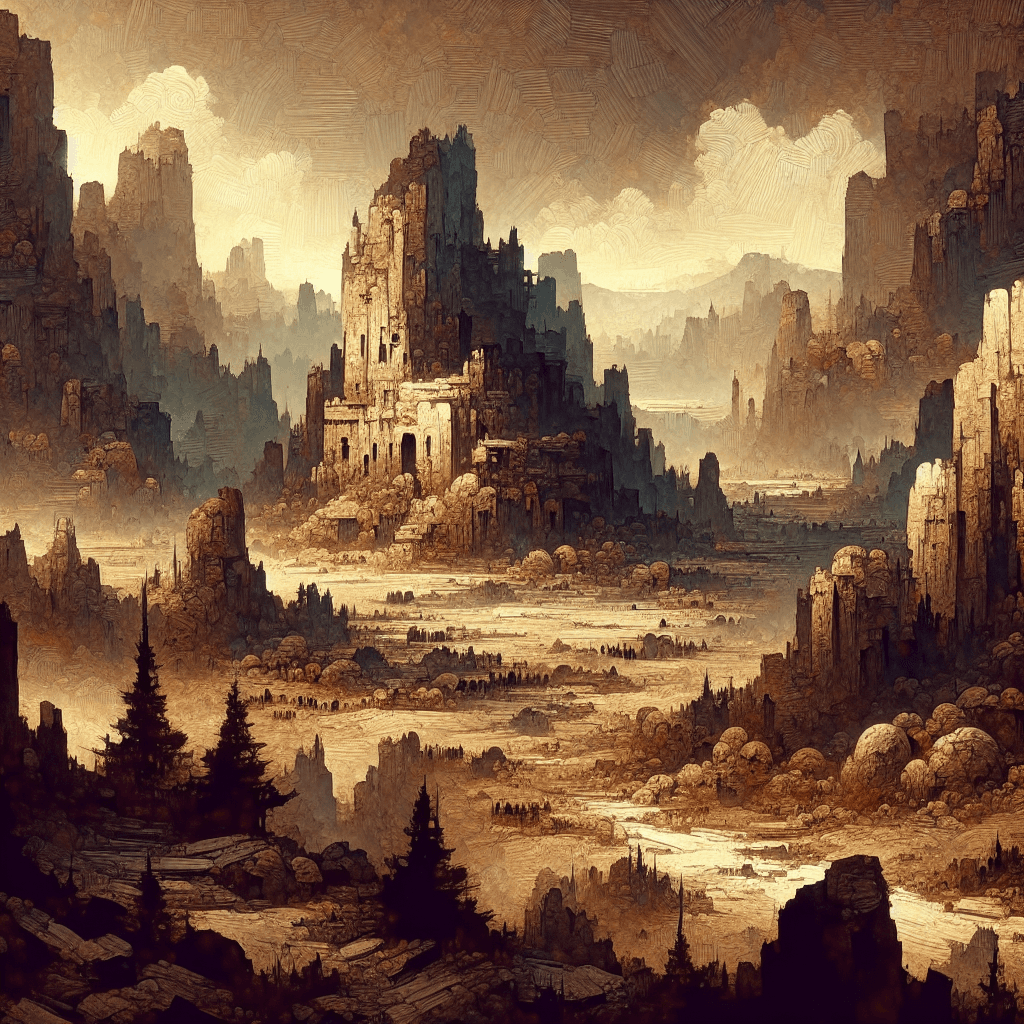
Stone Line Remains
Location
A straight row of carved stone blocks stretching half a mile across open ground, purpose unknown. The stones are evenly spaced and identical in dimension, suggesting deliberate construction, but no road, wall, or structure connects to them. Ridge Line Station's sentries report that snow melts faster along the line than on the surrounding ground. On the Varnhalt Frontier, this site sits inside the patchwork of crossroad towns, mesa camps, and trade-protected routes that radiate from Old Varnhalt. The Loosening is constant here — mile markers contradict, paths loop — so settlements rely on local pacing and on the small island of stability around the Black Stone Tower in the eastern hills. The Frontier has no central authority; this place answers to whoever its trade depends on this season.
Canon StabilityAbsolute
locationvarnhaltruins

Sunken Port
Location
The largest standing settlement of the Drowned Reach — a port built on stilts and second-floor walkways above a city that drowned three Loops ago and refused to be abandoned. Sunken Port is where most surface trade with the Drowned Reach passes; deep dives to the Sunken City and the Drowned City typically launch from its outer pier. Lowwater, Floodmark, and Salt Line are its working satellites. The Cartographic Society of Iterants keeps a permanent expedition at Flood Station nearby. The Echo has been sighted in the city's sub-canals more often than the port's council prefers to admit; deep divers say the canals remember.
Canon StabilityAbsolute
locationdrownedcities
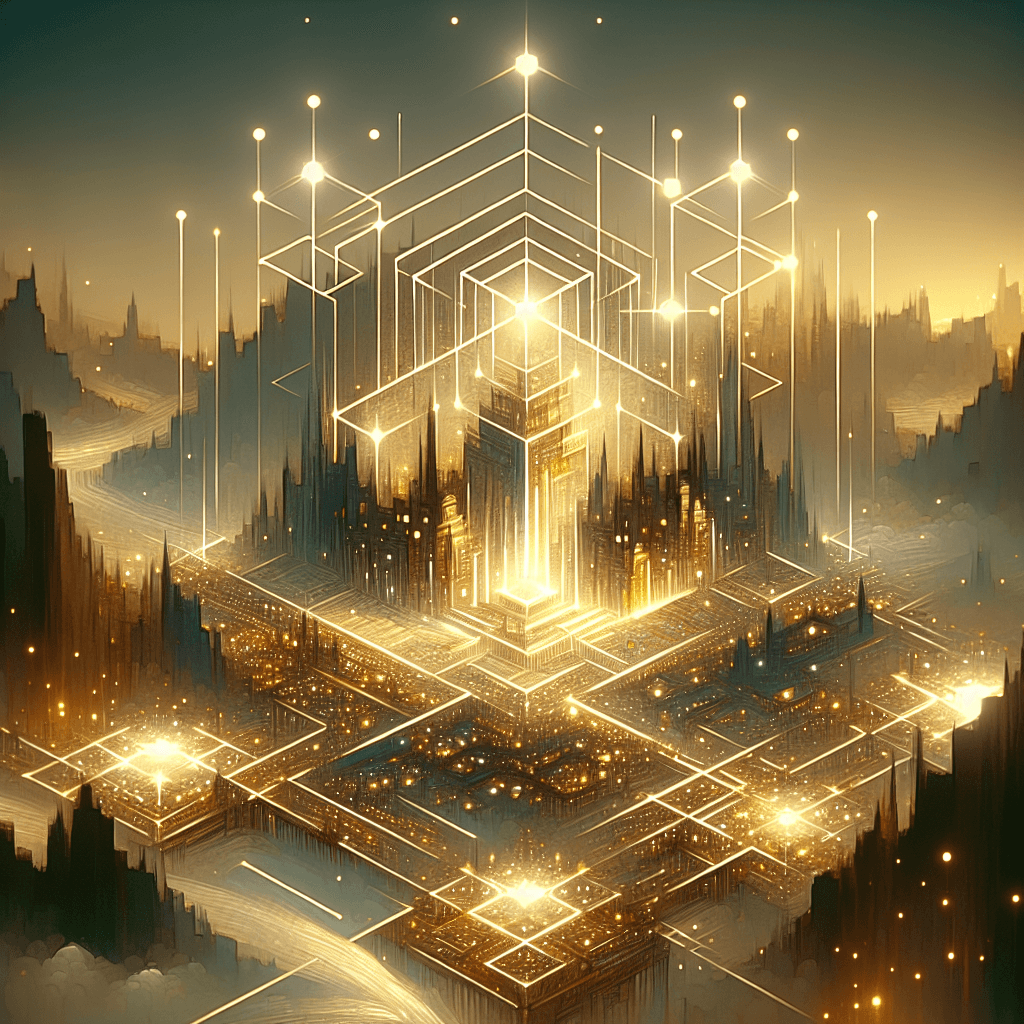
Symmetry
Location
A town built where four energy lines intersect in a perfect cross. Symmetry's buildings are arranged in flawless radial patterns — not by design, but because construction materials naturally settle into geometric alignment here. The town is beautiful and deeply unsettling. East Order provides its supplies; Venn provides its scholars.
Canon StabilityAbsolute
locationluminoustowns
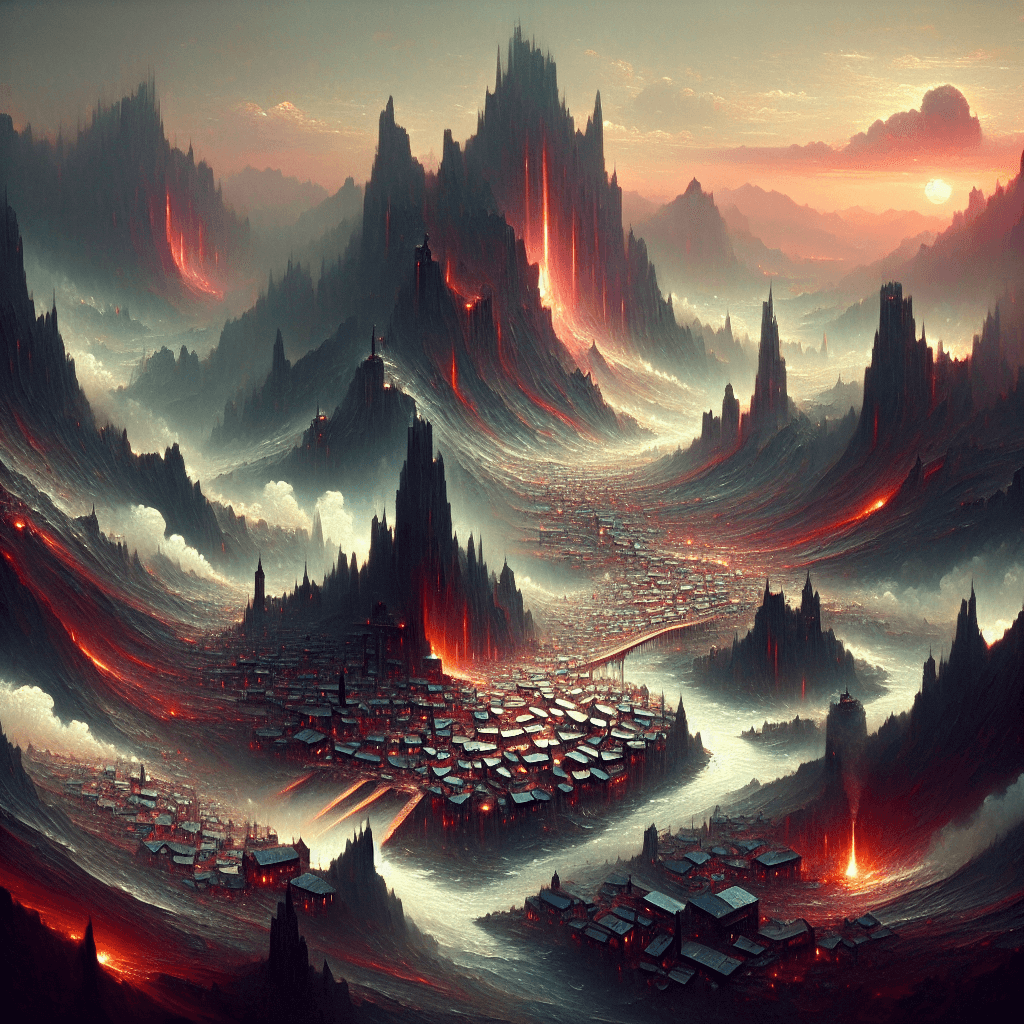
Taldrin Pass
Location
The only navigable route through the central Spine, a narrow corridor between two active volcanic peaks. Taldrin Pass is more garrison than town — its inhabitants exist primarily to keep the road clear of debris and warn travelers when eruptions threaten. Vesta Hollow lies a day's walk south. Within the Ashen Spine, this site is part of the long chain of forge-towns, quarries, and iron-vein settlements that work the world's oldest forges from Ironmark down to Old Varr. The smoke is the climate. The Fray here is physical — cracks open in the rock, tunnels appear that were not there the day before — and the Cleaved is the regional consequence. Forge guilds keep their own records, and they keep them close.
Canon StabilityAbsolute
locationashentowns
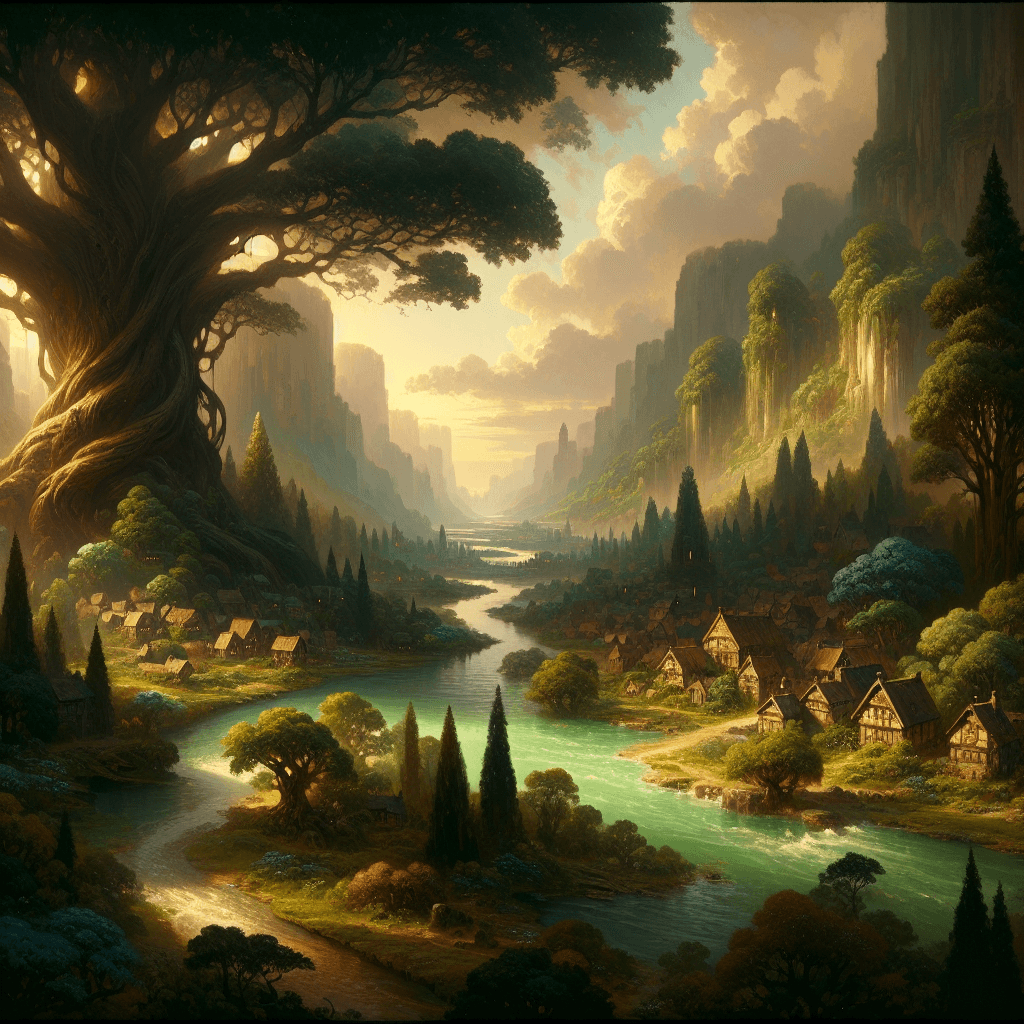
Tallpine
Location
A ridge-top village built among the tallest trees in the Vale, where walkways connect platforms a hundred feet above the forest floor. Tallpine's inhabitants rarely descend to ground level, trading with Rootfall below via rope-drawn baskets. The village offers the only clear view above the canopy for miles. Within the Bellroot Vale, this site sits in the wider network of villages, ruins, and Pattern-touched places that radiate out from Drelmere and Bellroot Crossing. The Vale's relative stability since the Second Shard was recovered from the Bell Tree is felt here, but the Loosening and the Fray still leave their fingerprints — old paths that no longer match the new ones, names half-remembered, the occasional warm wind out of the wrong season.
Canon StabilityAbsolute
locationbellrootvillages
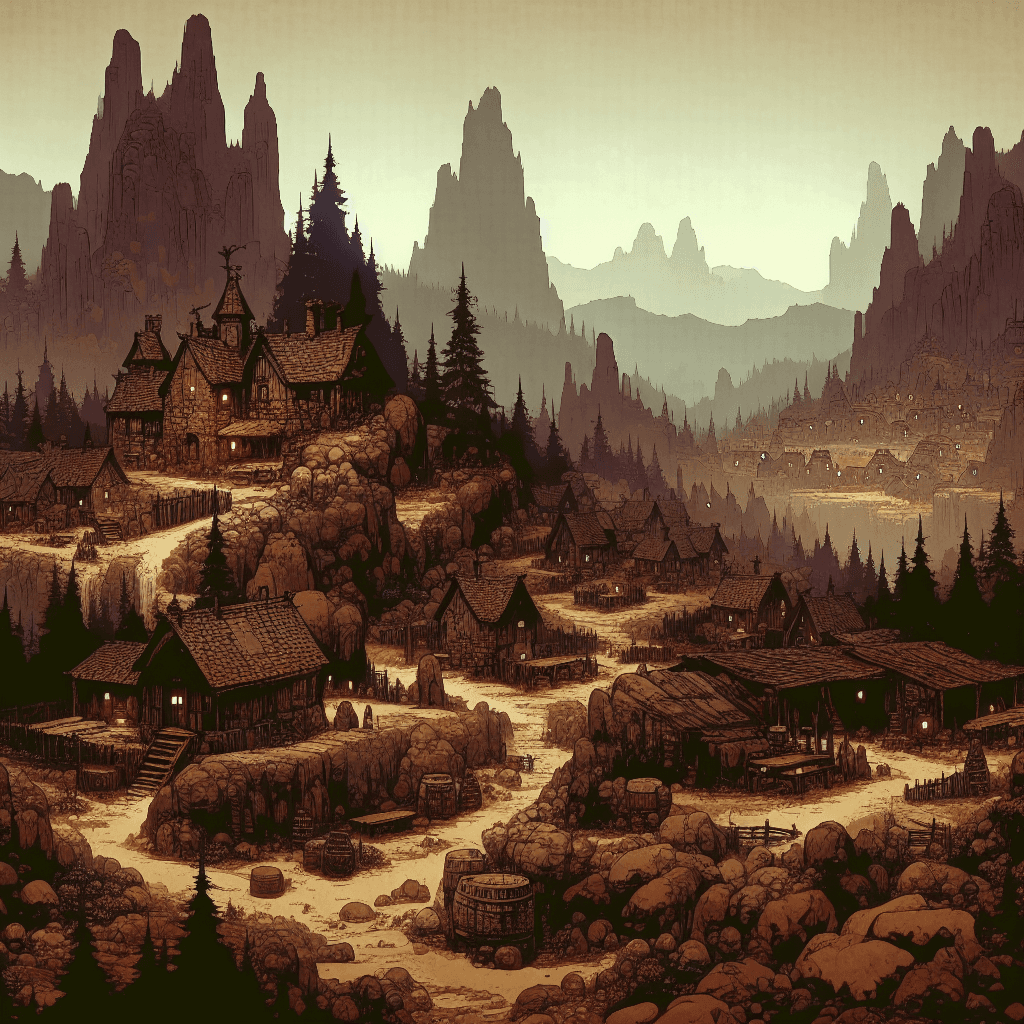
Talon Ridge Camp
Location
A hunting camp on the rocky ridgeline where birds of prey nest in unusual density. Talon Ridge supplies feathers, leather, and cured meat to Drellin Post below. The camp doubles as a lookout — its elevation gives clear sightlines to North Watch and the hills beyond. On the Varnhalt Frontier, this site sits inside the patchwork of crossroad towns, mesa camps, and trade-protected routes that radiate from Old Varnhalt. The Loosening is constant here — mile markers contradict, paths loop — so settlements rely on local pacing and on the small island of stability around the Black Stone Tower in the eastern hills. The Frontier has no central authority; this place answers to whoever its trade depends on this season.
Canon StabilityAbsolute
locationvarnhaltvillages

Telmar Edge
Location
The last town before the grasslands dissolve into the Whispering Expanse. Telmar Edge is a place people pass through, not a place they stay — unless they're running from something or waiting for someone. Its single inn doubles as a courier station for messages bound for Valen Spur. On the Deyune Steppe, this site is one of the points where the Long Wind, the clan-roads, and the old Karak geometries meet. Time Instability runs heavy here — distances and seasons rarely agree between settlements. The Veykar's old reach passed through or near sites like this; some bear the Wheel's scars in the soil, others have been letting the grass grow back over them for generations.
Canon StabilityAbsolute
locationdeyunetowns
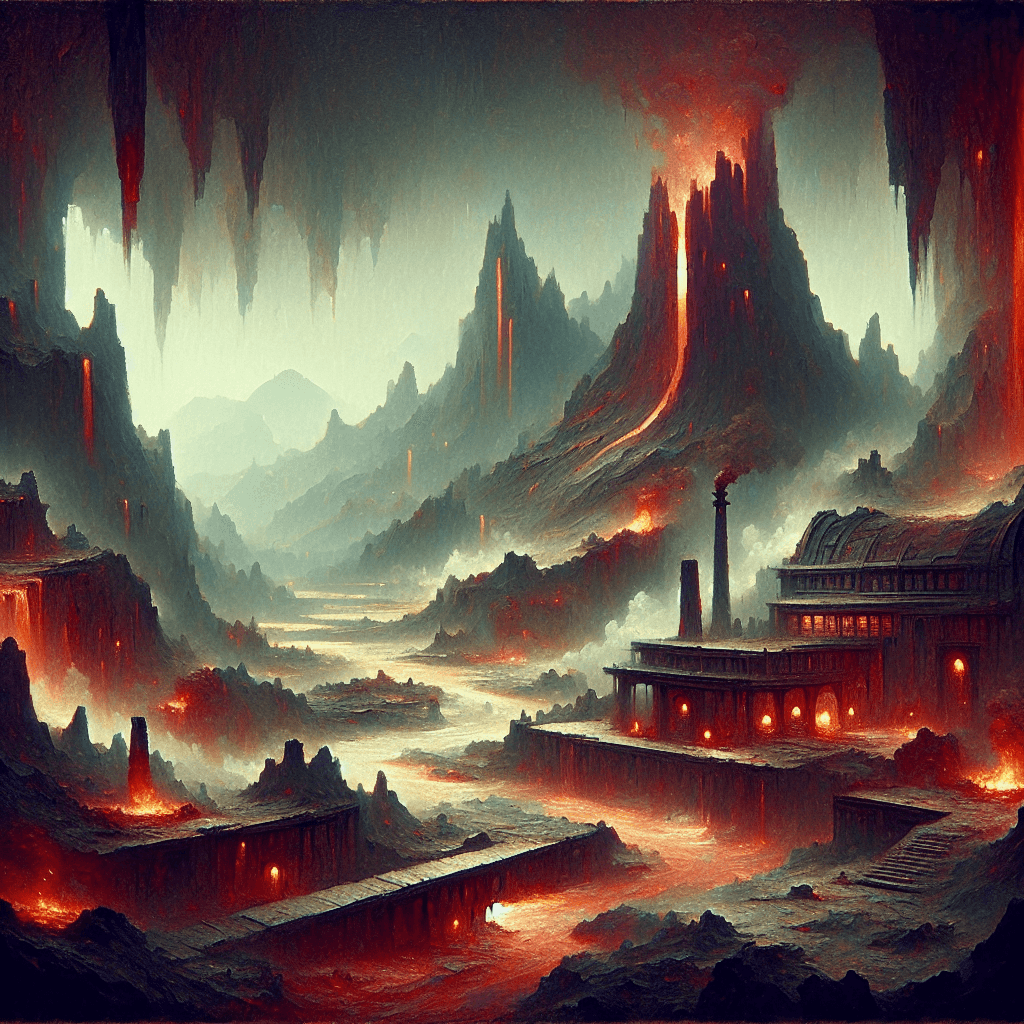
The Ash Line
Location
A long, low tavern built along the main road through Cinder Vale, named for the grey line that marks the high-water point of the last major ash fall. Travelers, miners, and soldiers share tables without rank here. The house specialty is a bitter spirit distilled from volcanic mineral water. Within the Ashen Spine, this site is part of the long chain of forge-towns, quarries, and iron-vein settlements that work the world's oldest forges from Ironmark down to Old Varr. The smoke is the climate. The Fray here is physical — cracks open in the rock, tunnels appear that were not there the day before — and the Cleaved is the regional consequence. Forge guilds keep their own records, and they keep them close.
Canon StabilityAbsolute
locationashentaverns-armories
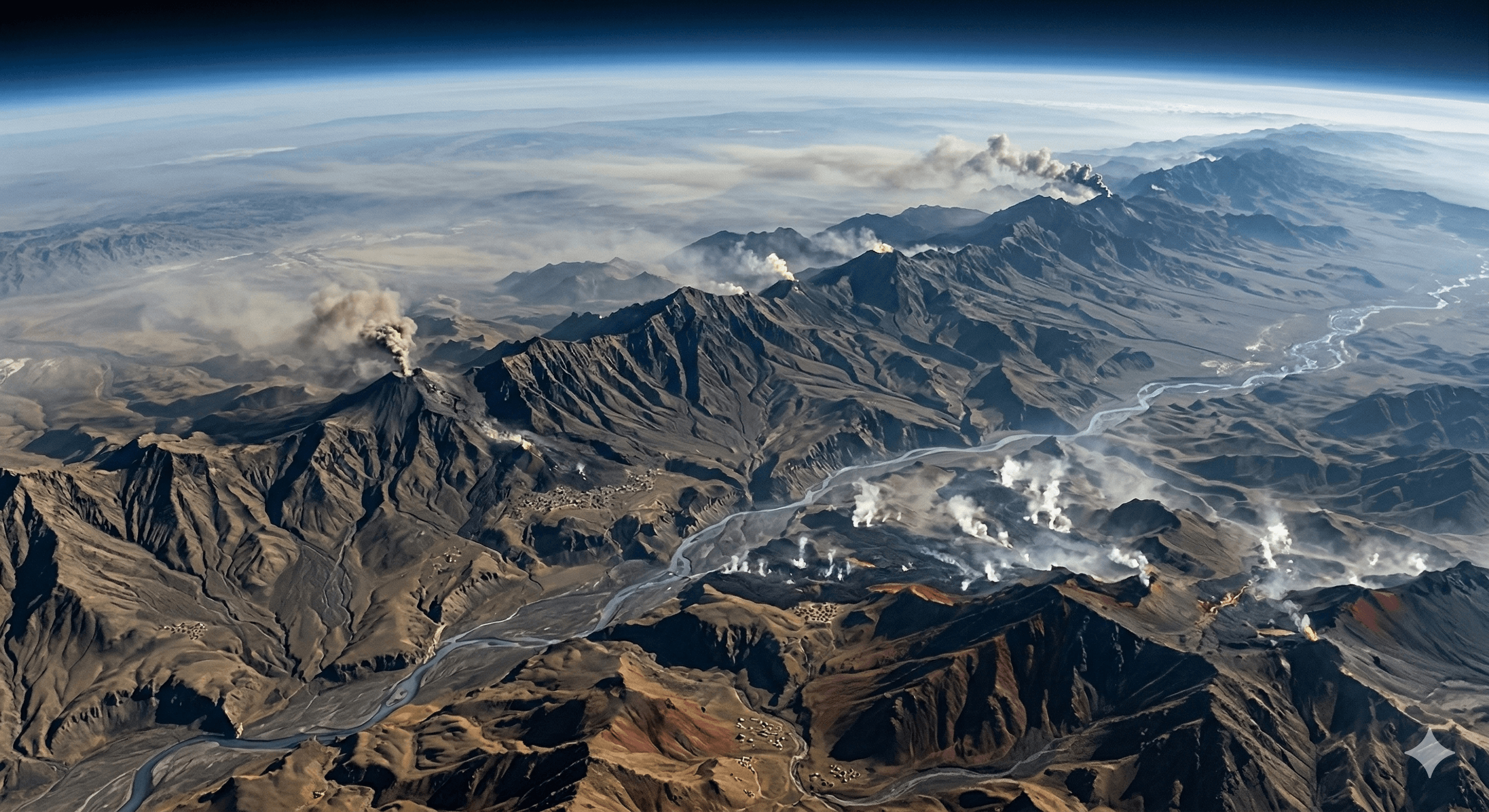
The Ashen Spine
Location
A long chain of black-rock mountains running north-to-south, threaded with iron veins, sulphur vents, and the oldest working forges in the world. The Ashen Spine's settlements are forge-towns and quarries — Ironmark and Old Varr the largest, Rookforge and Black Hammer Forge the most respected. Smoke is the regional climate. The Spine is one of the regions where the Fray's damage is most physical: cracks open in the rock without warning, sometimes vomiting heat that has no source, sometimes simply revealing tunnels that did not exist the day before. Vaultkeepers believe the Spine sits over a fracture-line in the First Map, and the monster known as The Cleaved is the regional consequence of that break. Forge guilds keep records that go back further than anyone outside the region is allowed to read.
Canon StabilityAbsolute
regionashenvolcanic chain
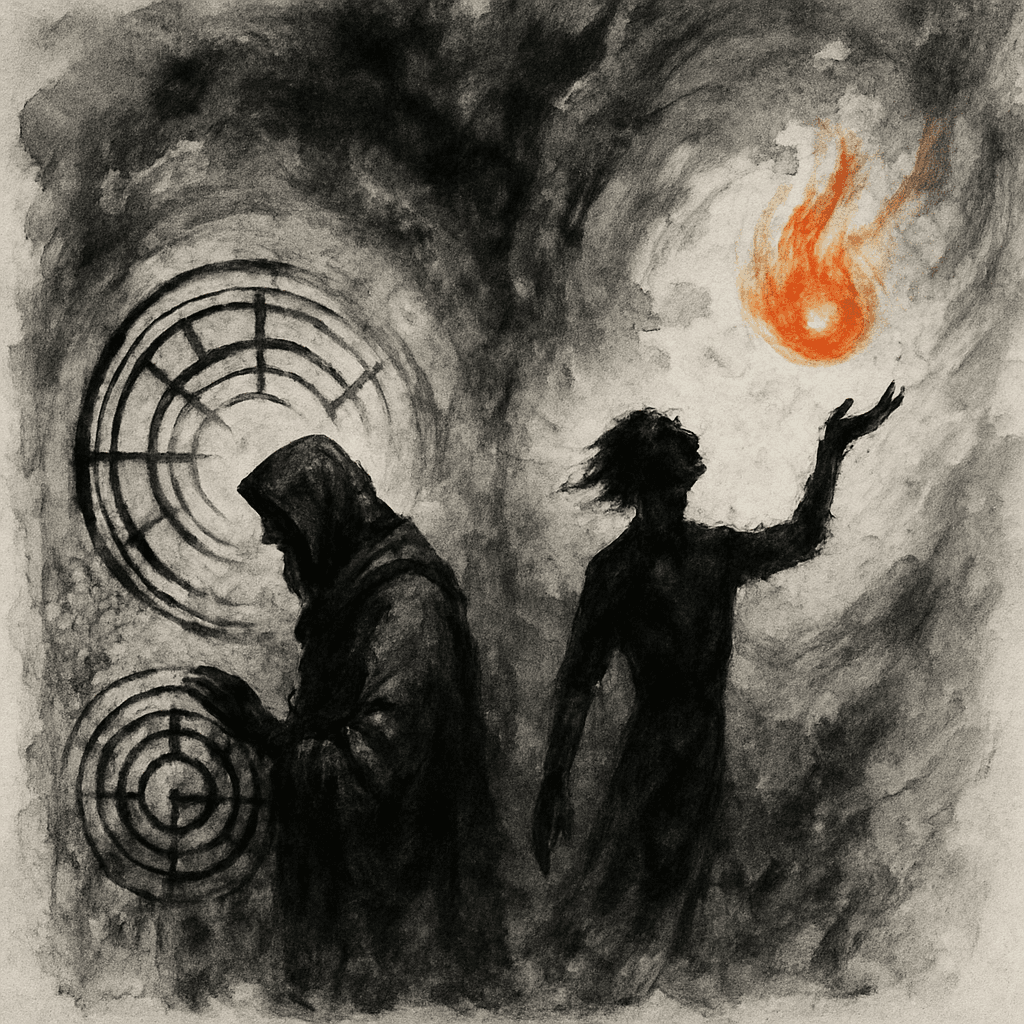
The Attunement System
Concept
The shared structure beneath every region of the Everloop: two fundamental human attunements that recur regardless of culture or geography. Vaultkeepers perceive, preserve, and interpret the Pattern. Dreamers influence, alter, and persuade outcomes within it. Every region names them differently — Archivists and Iterants in the Luminous Fold (Civilisation), Pathkeepers and Windshapers in the Deyune Steps, Tidewatchers and Current-Speakers along the Virelay coast, Rootwardens and Weave-Tenders in the Bellroot Vale, Ember Scribes and Flamecallers on the Ashen Spine, Ledger-Seers and Chancebinders in the Varnhalt Frontier, Depthwardens and Undertides in the Drowned Reach, Refractionists and Lightbreakers across the Glass Expanse. The function is identical; only the names change. Archael Viremont's field journals are the canonical source for the recurrence, and the Knowledge Fragmentation Principle is the philosophical companion that prevents any one region from claiming sole ownership of the truth.
Canon StabilityAbsolute
attunementvaultkeeperdreamer+2
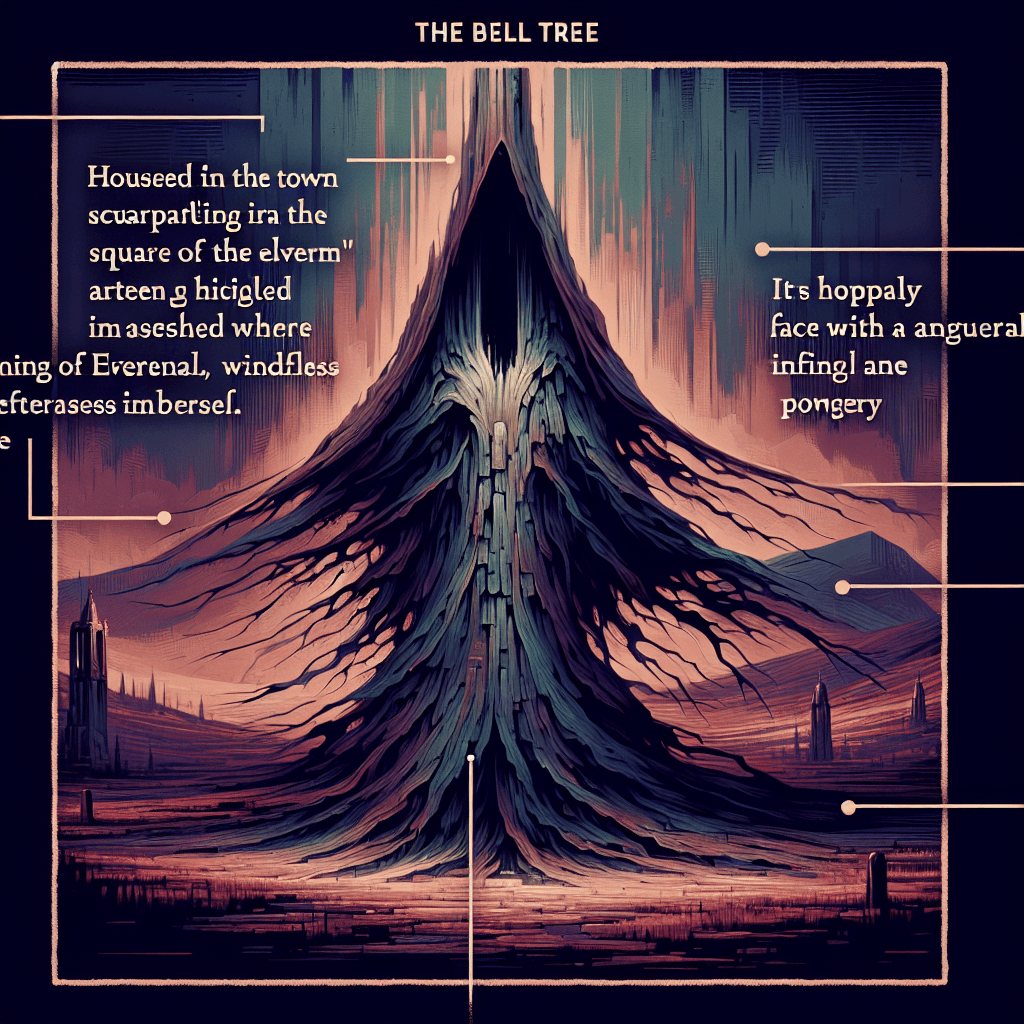
The Bell Tree
Artifact
A manifestation that appeared in Drelmere's town square overnight — twisted limbs like cloaked arms, a hollow where a face should be, bells swaying in windless air. It rose from the earth like a cloaked figure carved in shadow, and the town came to understand only slowly that it was not a thing but a Shard of the Pattern wearing the shape of a tree. Its bells, when rung in the correct spiral sequence — a sequence Mayor Halrick Vann quietly worked out from the engravings inside First Root Chamber — caused the entire tree to fold inward and compress into the second Shard known to the modern Archive. It held echoes, regrets, and moments lost to the Fray; Kaerlin was the one who, on Mayor Vann's coded guidance, finally rang it.
Canon StabilityAbsolute
story-1drelmereshard-vessel+4
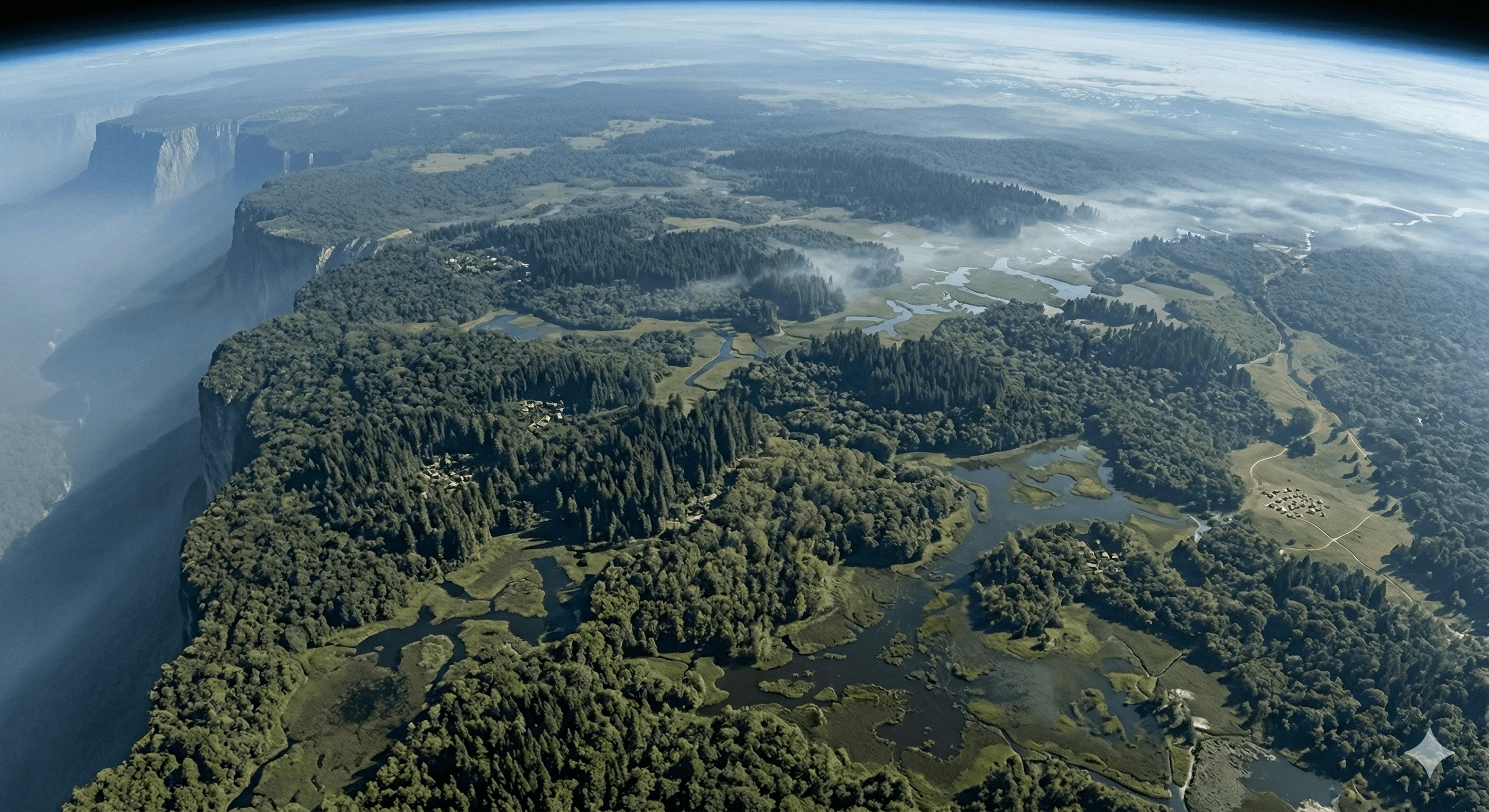
The Bellroot Vale
Location
The forested heart of the Everloop's western reach — a temperate vale of slow rivers, old-growth oak, and bell-marked clearings where the Pattern still feels close to the surface. The Vale was once the sanctuary of the Dreamers, and before the Fray its towns kept time by the resonance of buried Anchor-stones. Today it is the most stable region outside the Luminous Fold, in part because the Second Shard of the Pattern was recovered here from the Bell Tree in Drelmere. Bellroot Crossing serves as its administrative seat; Drelmere is its symbolic centre. The First Root Chamber, beneath the Old Bellroot Site, is older than any written record — Vaultkeepers believe it predates the Weaving itself. The Vale is where the siblings Kaerlin, Mira, and Thomel began their quest after their mother Alira's death, and where Eidon the last Dreamer chose to unfold.
Canon StabilityAbsolute
regionbellrootmemory nexus
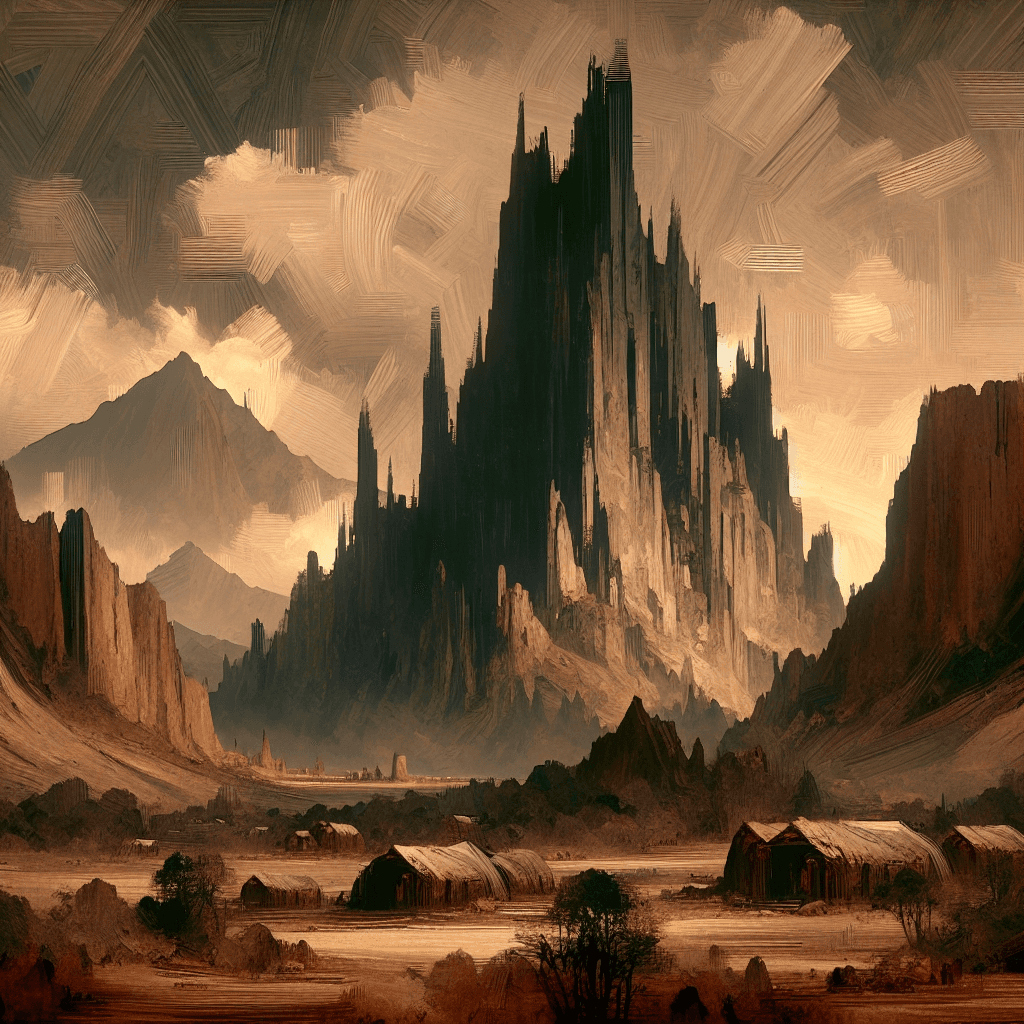
The Black Stone Tower
Location
The Varnhalt Frontier's own record of the Black Stone Tower — the obsidian spire in the region's eastern hills that repels the Fray, anchors Sera's former settlement, and was opened from the inside when Rook and Myx broke through to recover the third Shard of the Pattern. The Tower is the Frontier's single most stable structure and its single most contested one: every faction with an interest in stability has, at some point, tried to claim the ground around it. None has held the claim for long.
Canon StabilityAbsolute
locationvarnhaltkey-location
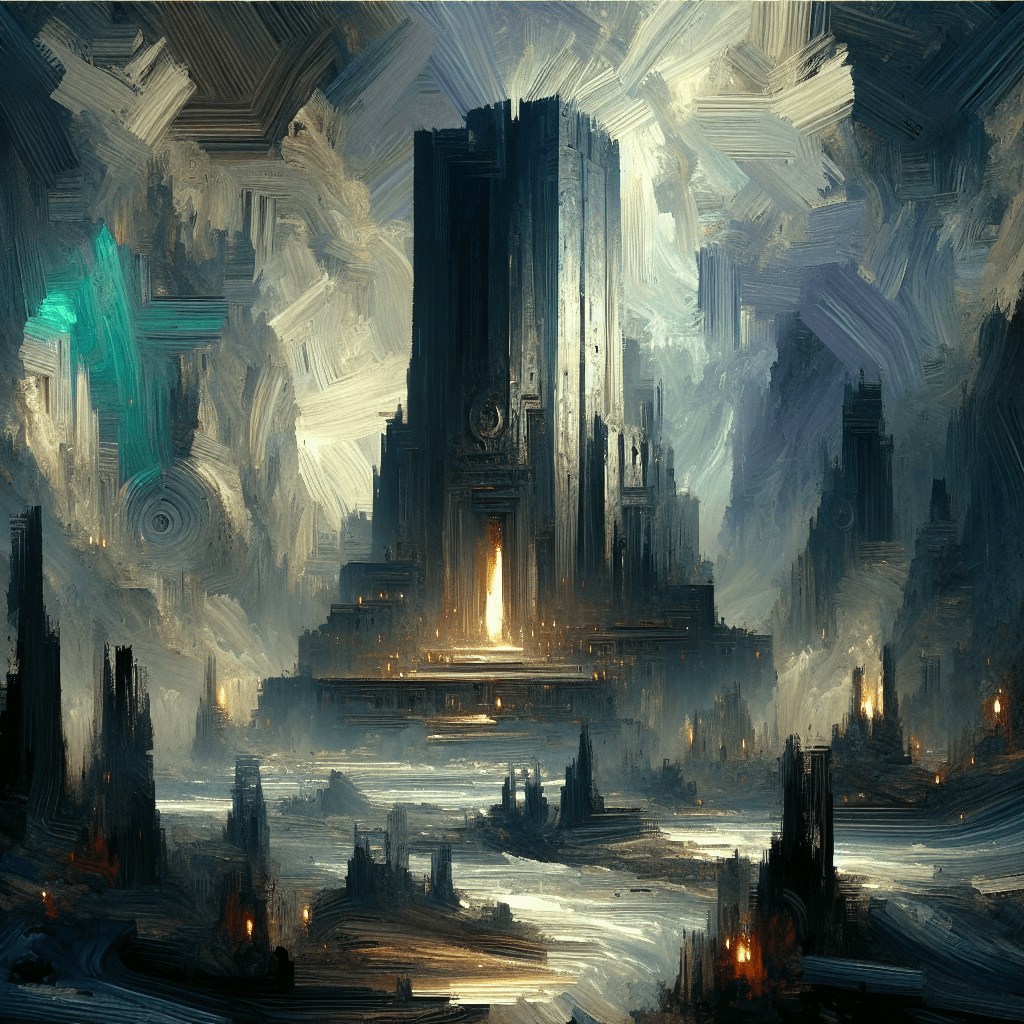
The Black Tower
Location
The fortified obsidian spire on the eastern Varnhalt Frontier — smooth, seamless, casting neither light nor shadow. The Black Stone Tower repels the Fray for a measurable distance around itself, creating an island of stability that local geography slowly reorganises itself around. Sera built her settlement here and exploited the Tower's field to bind a population of dependent followers; Rook and his bonded Servine Myx broke that arrangement, the Tower cracked open, and the third Shard of the Pattern was recovered from inside. The structure still stands and still repels the Fray, though more weakly than before. Vaultkeepers consider it the last intact Rogue Architect work outside the deep Glass Expanse.
Canon StabilityVolatile
story-3towerobsidian+2
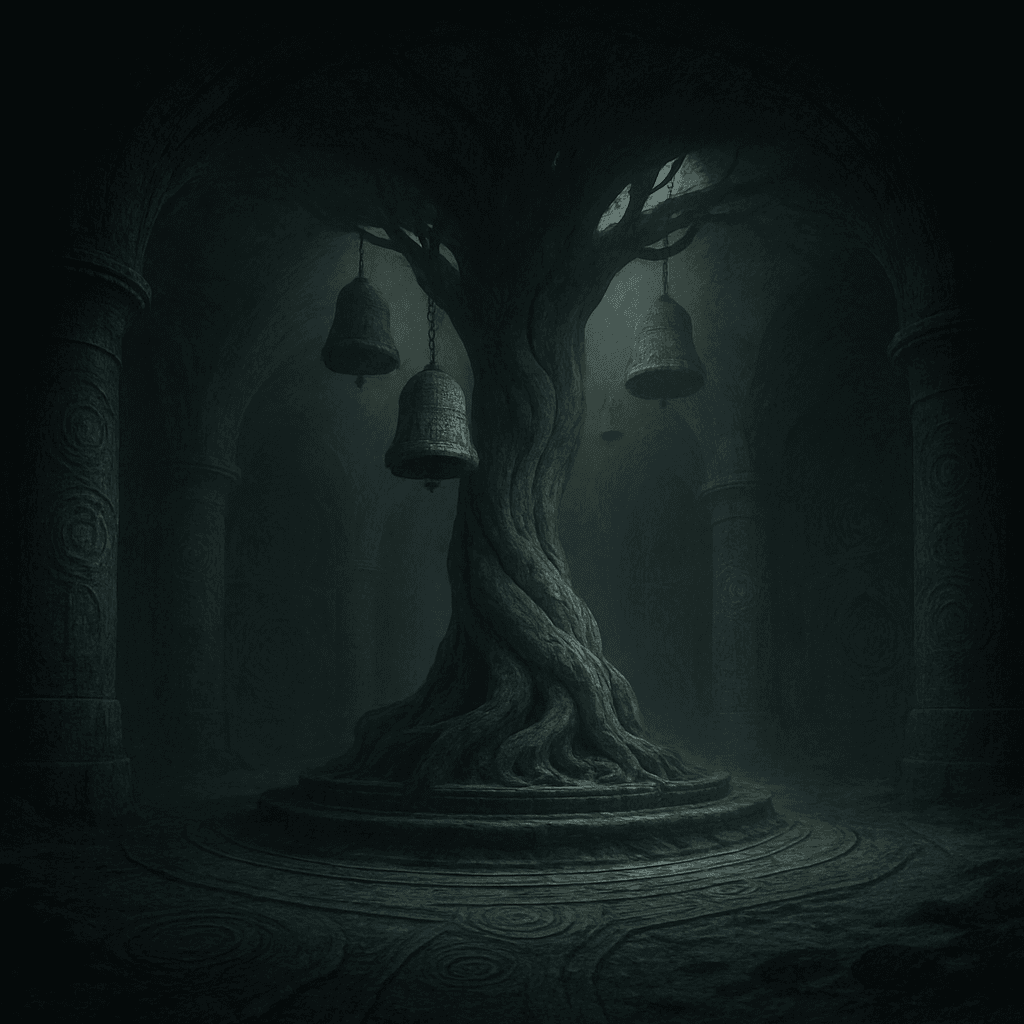
The Bound Chamber
Location
The cave chamber beneath Drelmere where the Bell Tree's spiral led, and where Eidon the last Dreamer unfolded into his true age before fading into the stone. The Bound Chamber is older than the town above it. Its engravings match the spiral markings on the Bell Tree's bells and the geometry of the First Root Chamber across the Bellroot Vale. Kaerlin, Mira, and Thomel entered the chamber after Mayor Halrick Vann gave them the bell-ringing sequence; the Second Shard of the Pattern was recovered from within. The chamber still hums faintly to those carrying Shards. Vaultkeepers consider it one of the most intact Anchor-points outside the Luminous Fold.
Canon StabilityVolatile
bellrootstory-1ruin+1
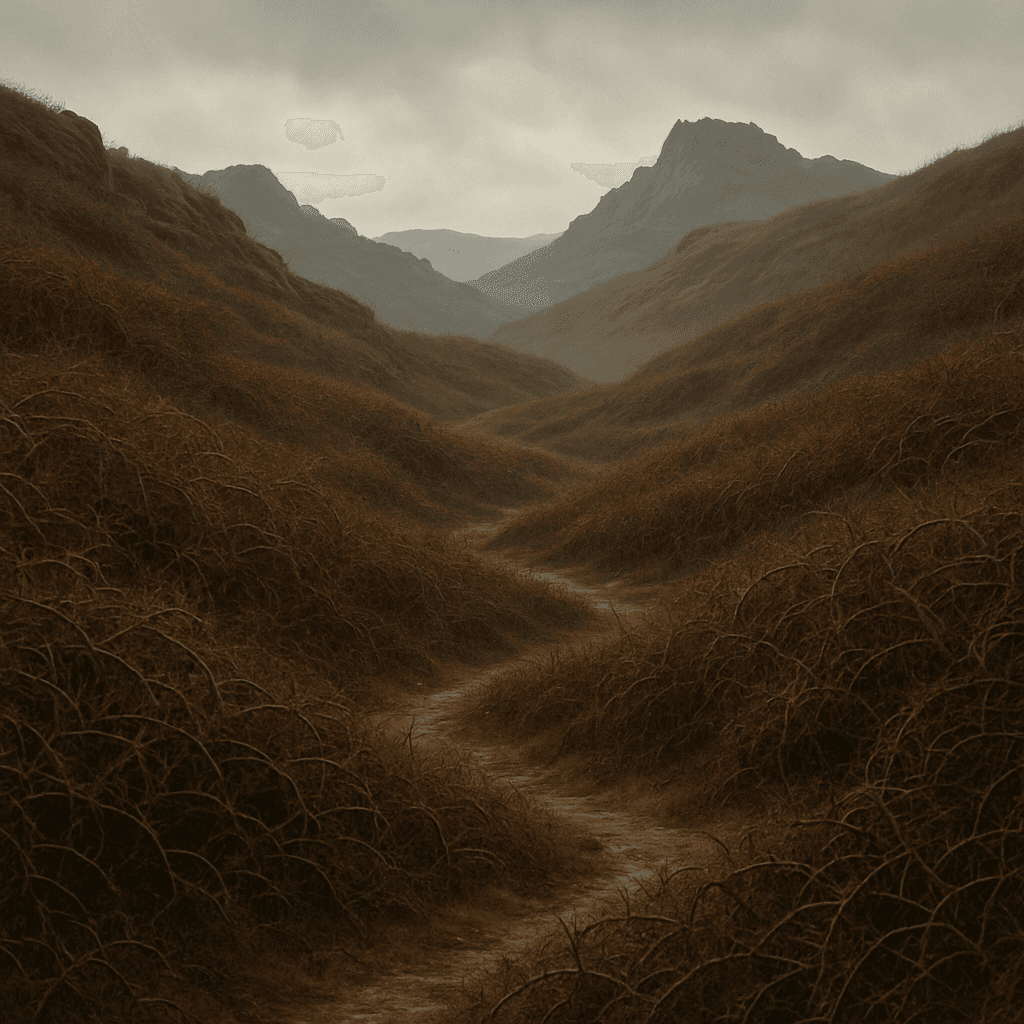
The Bramble Hills
Location
A thorned ridge country that once lay between Drelmere and the southern Vale, where the brambles grow thick enough to swallow paths and reroute caravans by morning. Older maps still show a four-day route through the Hills to Drelmere; current travel rarely matches what the maps promise. Hunters speak of crossing the same gully twice in a single afternoon, then arriving somewhere they had not been heading. Within the Bellroot Vale, this site sits in the wider network of villages, ruins, and Pattern-touched places that radiate out from Drelmere and Bellroot Crossing. The Vale's relative stability since the Second Shard was recovered from the Bell Tree is felt here, but the Loosening and the Fray still leave their fingerprints — old paths that no longer match the new ones, names half-remembered, the occasional warm wind out of the wrong season.
Canon StabilityAbsolute
bellrootstory-1landmark+1
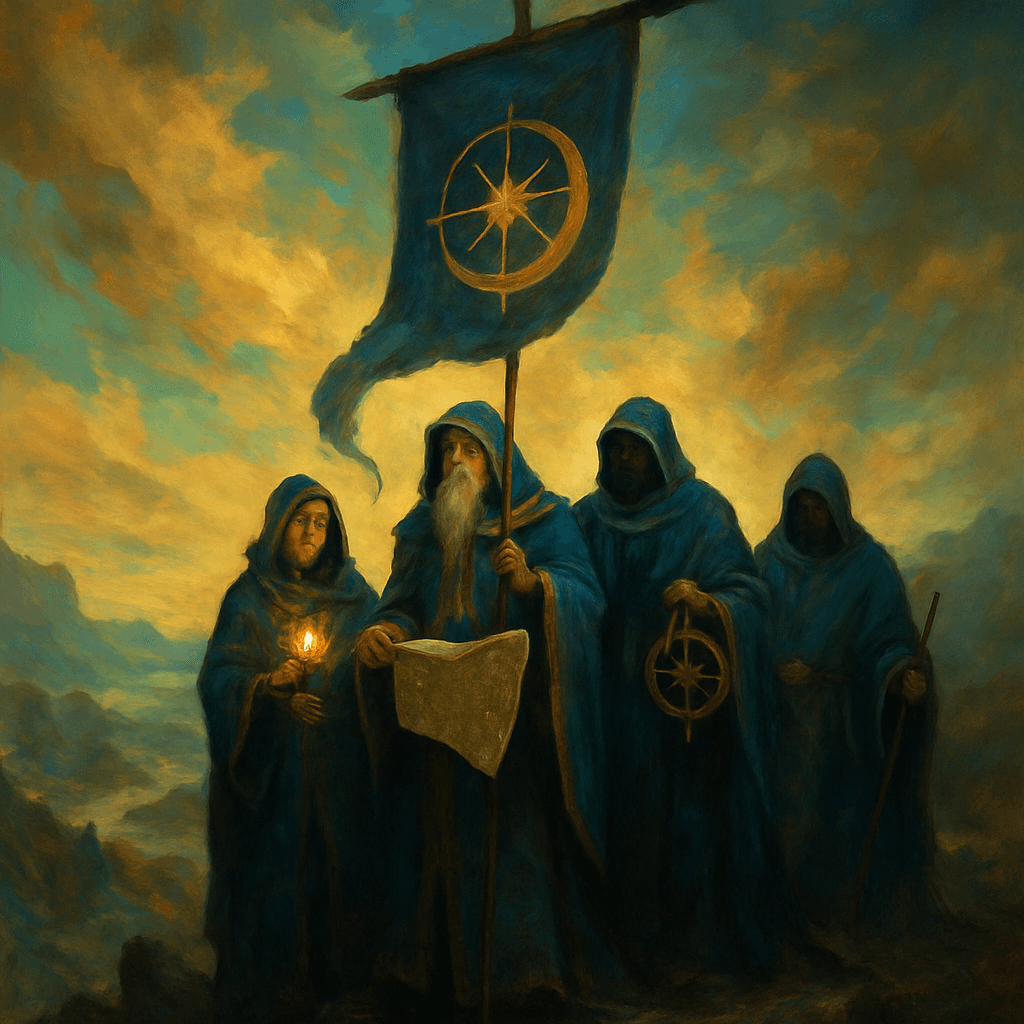
The Cartographic Society of Iterants
Faction
A surveying guild of the Luminous Fold (Civilization), drawn from the Iterant (Dreamer) tradition rather than the Archivist one. The Society holds — quietly, for its claim borders on heresy within the Fold — that probability and geography are the same instrument viewed from two distances. To alter an outcome is to alter the terrain that outcome rests on, and to chart terrain truthfully is to fix probability in place. Its members travel the unstable rim of the Fold's influence and produce the Concordant Atlases that the Seventh Circle officially distrusts and unofficially relies on. The Loosening is the Society's native subject, and Archael Viremont has corresponded with several of its senior cartographers — much to the Archivists' displeasure.
Canon StabilityAbsolute
institutionguildluminous-fold+3
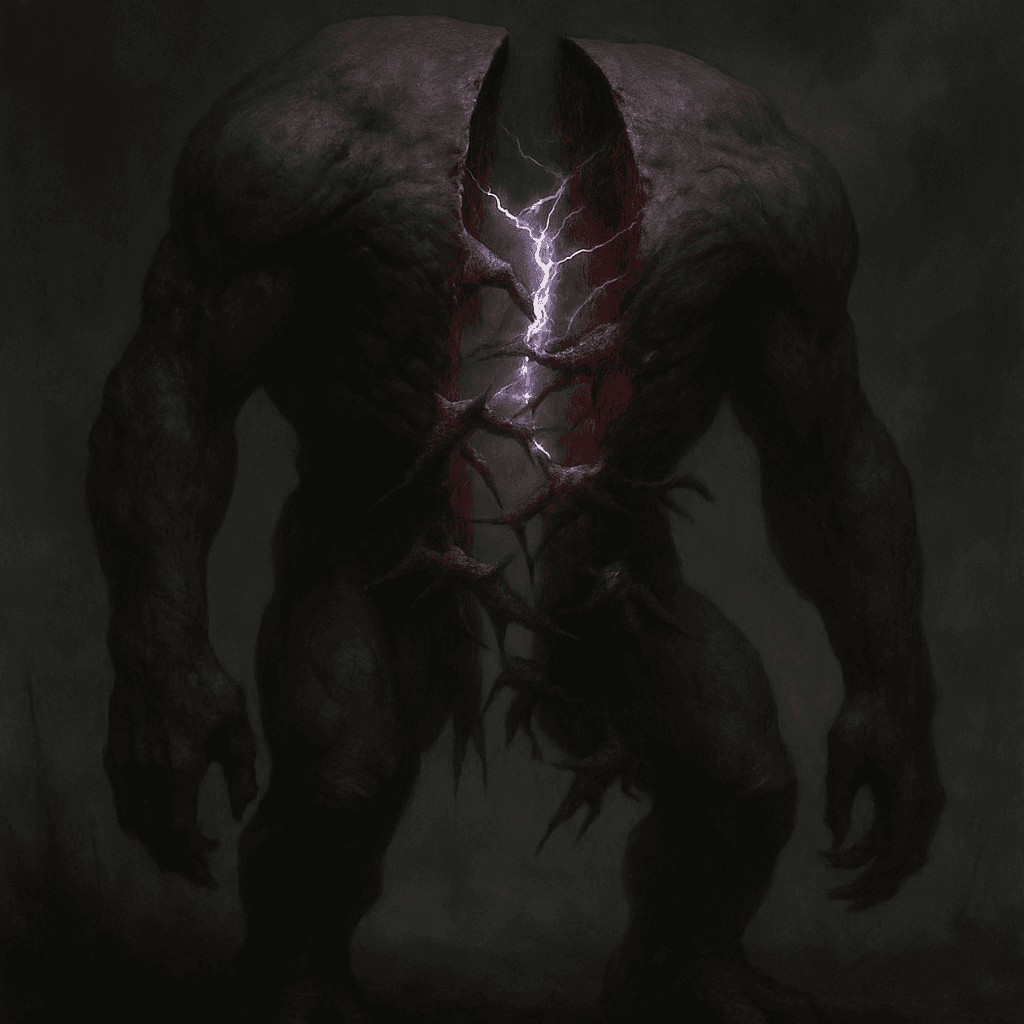
The Cleaved
monster
Physical Form: A massive, hulking entity that is split entirely down the middle. The two halves hover inches apart, connected only by jagged, arcing webs of searing Drift energy. The inside of the split is raw, pulsing anatomy that never heals. The Tragic Loop: It is in agonizing pain from being separated and desperately wants to fuse back into a single being. Because it cannot touch its own other half without repelling like a magnet, it tries to "sew" itself together using the bodies of living things. It captures travelers and beasts, skewering them across its gap to act as a physical bridge. However, the raw energy of the Drift eventually burns through these living bindings, pulling the creature apart again and forcing it to hunt for fresh "stitches." Reason for Breakage: The Cleaved appears in the Ashen Spine where the First Map's fault-line runs closest to the surface — typically inside or near a working forge whose hammer-rhythm has carried unbroken for generations. Vaultkeepers theorise the Cleaved is what happens when the Pattern is forced to split between two equally insistent realities: the forge's answer, and the answer of the rock the forge is built on.
Canon StabilityAbsolute
The Cracked Pot Tavern
Location
The slightly leaning roadhouse between the Thorne lands and Virelay where Auren stopped on his way to the coast. Mismatched shutters, golden warmth, and a hand-lettered sign over the bar that reads: "NO SWORDS, NO SHOUTING, NO WEEPING — UNLESS IT'S A BEAUTIFUL SONG." Auren accidentally knocked out a drunk by tripping into him on the way to the hearth, which the regulars still tell as the most polite assault on record. The Cracked Pot is one of the small, named places that hold the Virelay Coastlands together without ever making it onto a Luminous Fold map.
Canon StabilityAbsolute
story-2tavernhumor
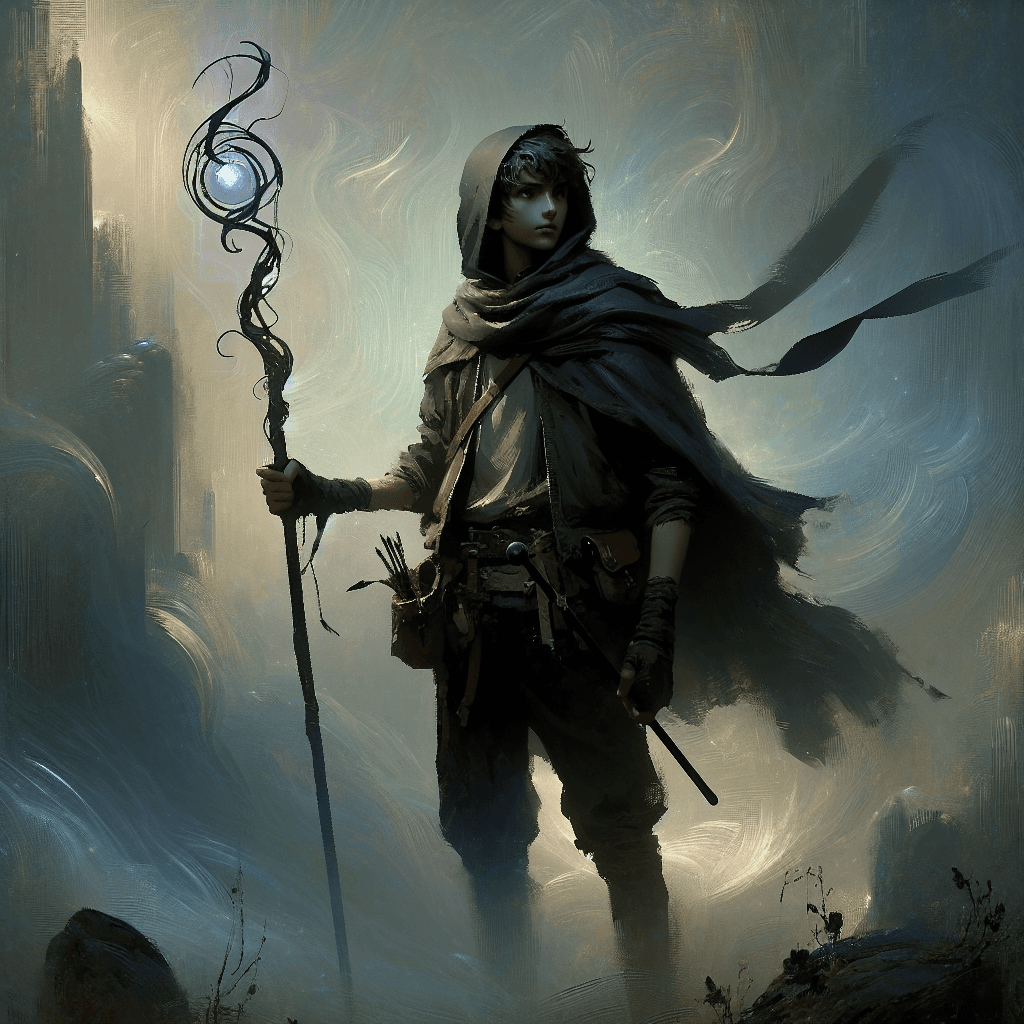
The Crippled Boy
Character
A young man dragged into the Veykar's kitchens with a twisted leg — fire and wind personified, foolish and stubborn and full of whispers about escape, freedom, and the routes north of the Deyune Steppe. He carved a tiny wooden fox from kitchen scraps and gave it to the silent cook who would become The Girl With the Scar. It was the first gift she had received since the burning of her village. He was caught with a half-drawn escape map tucked into his belt, dragged to the centre of The Wheel, and executed by the Draethan in front of the kitchens he had tried to leave. His death is the moment the girl's grief became a plan; the wooden fox sat on her shelf for every meal she cooked afterwards, including the last one she served the Veykar.
Canon StabilityAbsolute
story-4rebeldeceased+1
The Dawn
Concept
The age before shape — before names, maps, or time dared call itself time. There was only drift. Mountains walked like beasts, rivers unspooled into the sky, the wind forgot where it came from. The Prime Beings roamed this primal dream: hunger, storm, ash, birth — forces, not gods. Out of the Dawn came the First Architects, who pinned the world down through the Weaving and produced the First Map, the Pattern, and ultimately the Everloop. The Dawn is the world before the Pattern began telling it what to be. Vaultkeepers say the Fray is the Dawn returning through the cracks in the Weaving; the Luminous Fold prefers a more orderly account. Both are partly right, which is the Knowledge Fragmentation Principle in action.
Canon StabilityAbsolute
core-loreprimordialcreation
The Deyune Steppe
Location
The vast wind-swept eastern grassland — called the Barren Reach or the Long Wind by those who live on it. No cities, no kings: only the land, the clan, and the weather. The Deyune Steppe was the Veykar's domain. From the moving stone-and-bone camp of The Wheel he stitched together an empire by the blade and ruled it from The Hall, served by the Draethan and ultimately undone by the silent cook known only as The Girl With the Scar. Before the Veykar the Steppe was an older country still: the Karak stones at the Old Karak Stones site and the Standing Teeth predate any clan memory and align with Pattern geometries the Luminous Fold's surveyors cannot fully resolve. Time Instability is severe here — entire seasons can pass between two settlements without agreement on how many.
Canon StabilityAbsolute
story-4steppeeastern-lands+1
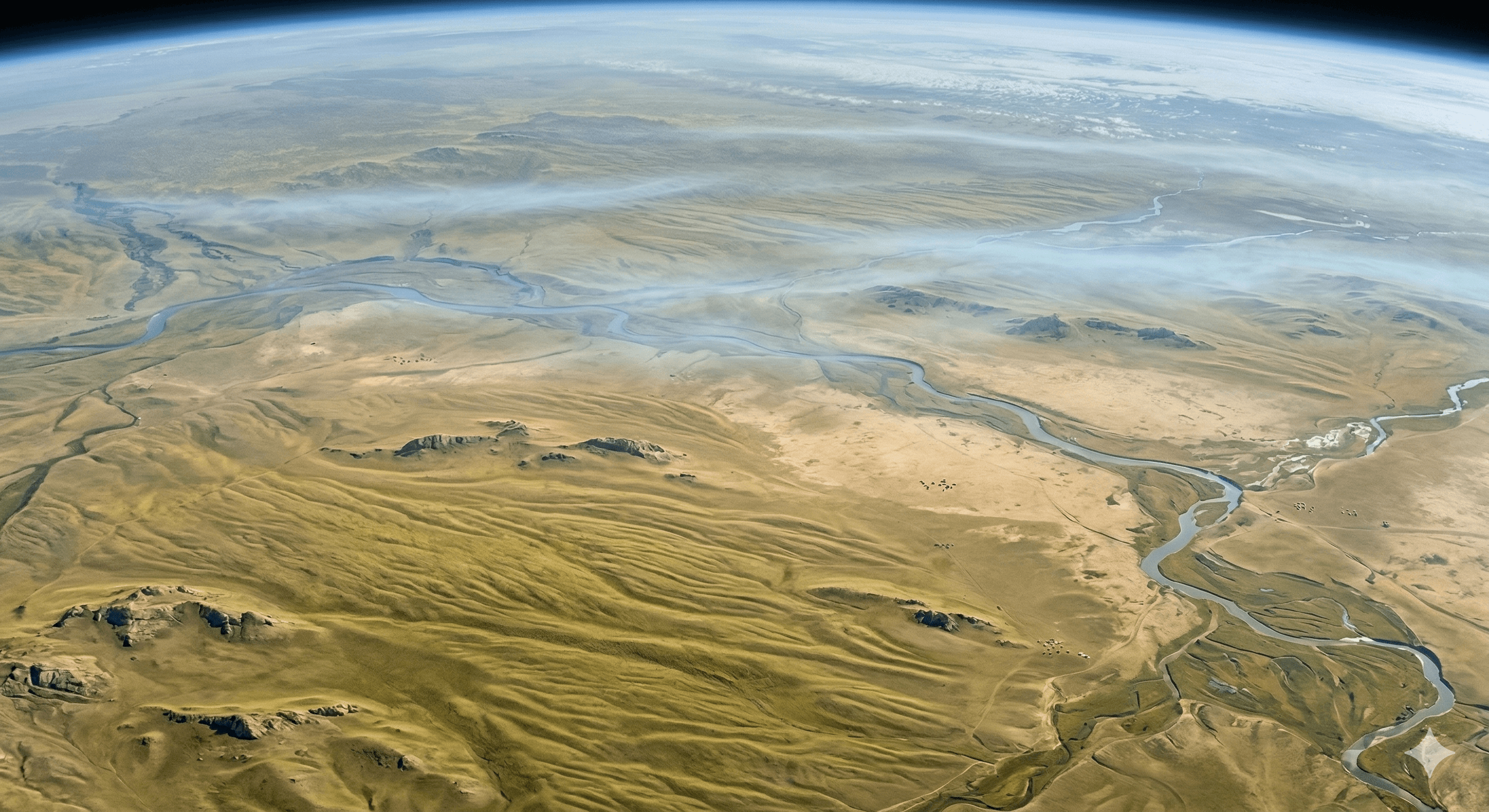
The Deyune Steps
Location
Nomadic Vastlands — Feels infinite and empty. Rolling grasslands and dry plains stretch beyond sight, crossed by sparse rivers and occasional rock formations. Faint migration paths and barely visible herds mark the wind-swept, open-sky expanse of endless movement. On the Deyune Steppe, this site is one of the points where the Long Wind, the clan-roads, and the old Karak geometries meet. Time Instability runs heavy here — distances and seasons rarely agree between settlements. The Veykar's old reach passed through or near sites like this; some bear the Wheel's scars in the soil, others have been letting the grass grow back over them for generations.
Canon StabilityAbsolute
regiondeyunenomadic vastlands
The Draethan
Faction
The Veykar's sworn Brethren — his voice, his ears, his breath, his blood made flesh. The Draethan bore no names among the slaves of The Wheel. Their robes were cut from conquered horses, dyed with ash and pitch. Their oaths were tattooed in unbroken lines from wrist to throat to jaw. A single Draethan walking into a room could end a conversation; ten Draethan could end a town. They served as patrons for the silent kitchen-girl who would become The Girl With the Scar, recognising in her the talent that would eventually carry the Veykar's favour and, in time, his death. The Draethan died with him, or scattered into clans that no longer admit to having been Draethan. On the Deyune Steppe, the word is still occasionally spat — and still occasionally feared.
Canon StabilityAbsolute
story-4the-veykarelite+1
The Dreamers
Faction
Those who can see the Pattern — not merely feel it, the way Vaultkeepers do, but watch its threads fold and fray in real time. The Dreamers can sometimes move what they see. The cost is the body: the deepest Dreamers lose themselves before their minds, becoming presences trapped in moments; others keep walking but no longer agree with the time around them. Before the Fray, Drelmere in the Bellroot Vale was their sanctuary, and the Bellroot Vale was their working ground. Now the Dreamer tradition survives only in fragments — in the Luminous Fold's Iterant order, in the Cartographic Society of Iterants, in scattered hermits, and most poignantly in Eidon, the last of the old line, who chose to unfold in the cave beneath Drelmere rather than be the last of anything.
Canon StabilityAbsolute
core-lorethe-patterngifted+1
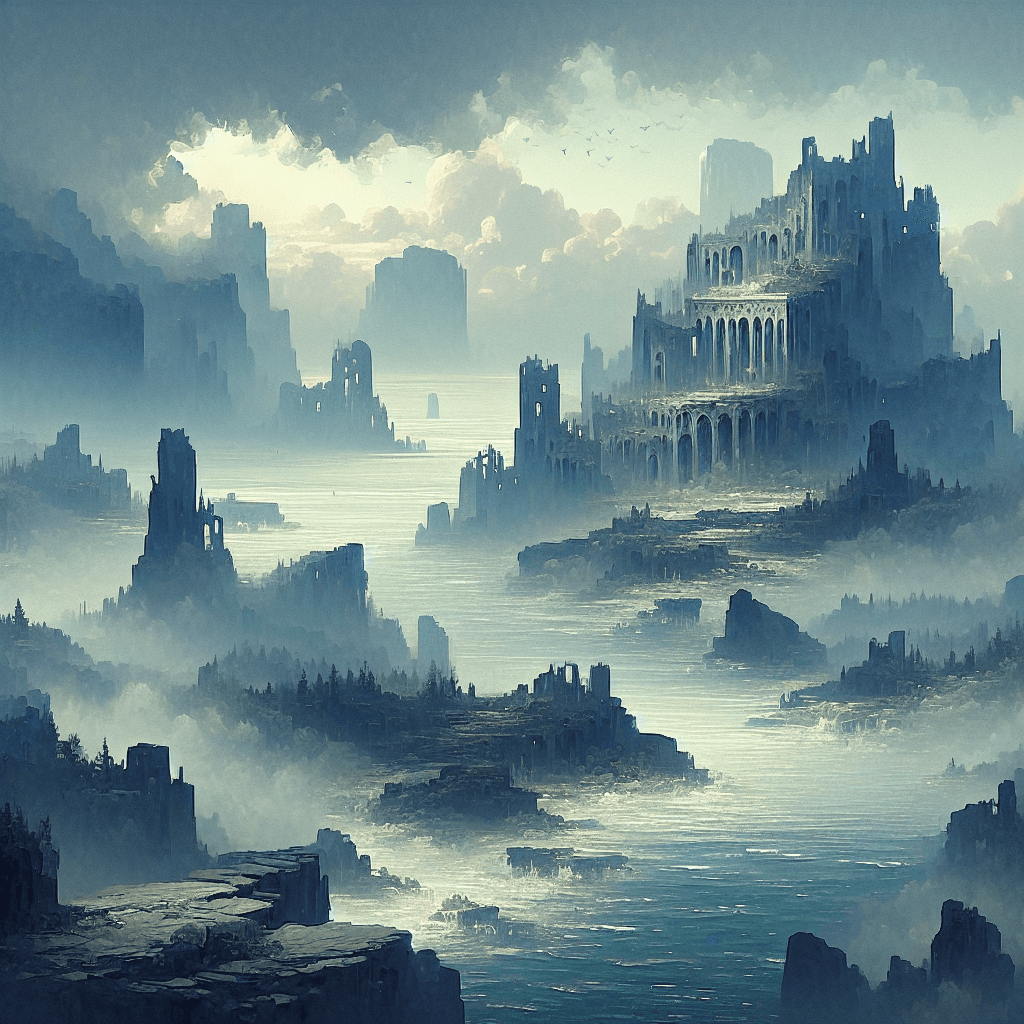
The Drowned City
Location
An entire urban district submerged just offshore from the Virelay Coastlands — visible only at the extreme low tides that come once or twice a Cycle. Rooftops, bell-towers, and market-squares all preserved beneath the waterline, fish moving through doorways like wind through an open house. No one knows when the Drowned City sank or what it was called; Marrow Bay's bone-fishermen recover artefacts from it that the Luminous Fold has been classifying for three Loops without resolution. Vaultkeepers believe it is older than House Thorne by an order of magnitude they prefer not to discuss in public. The Echo has been sighted in its sunken streets.
Canon StabilityAbsolute
locationvirelayruins-anomalies
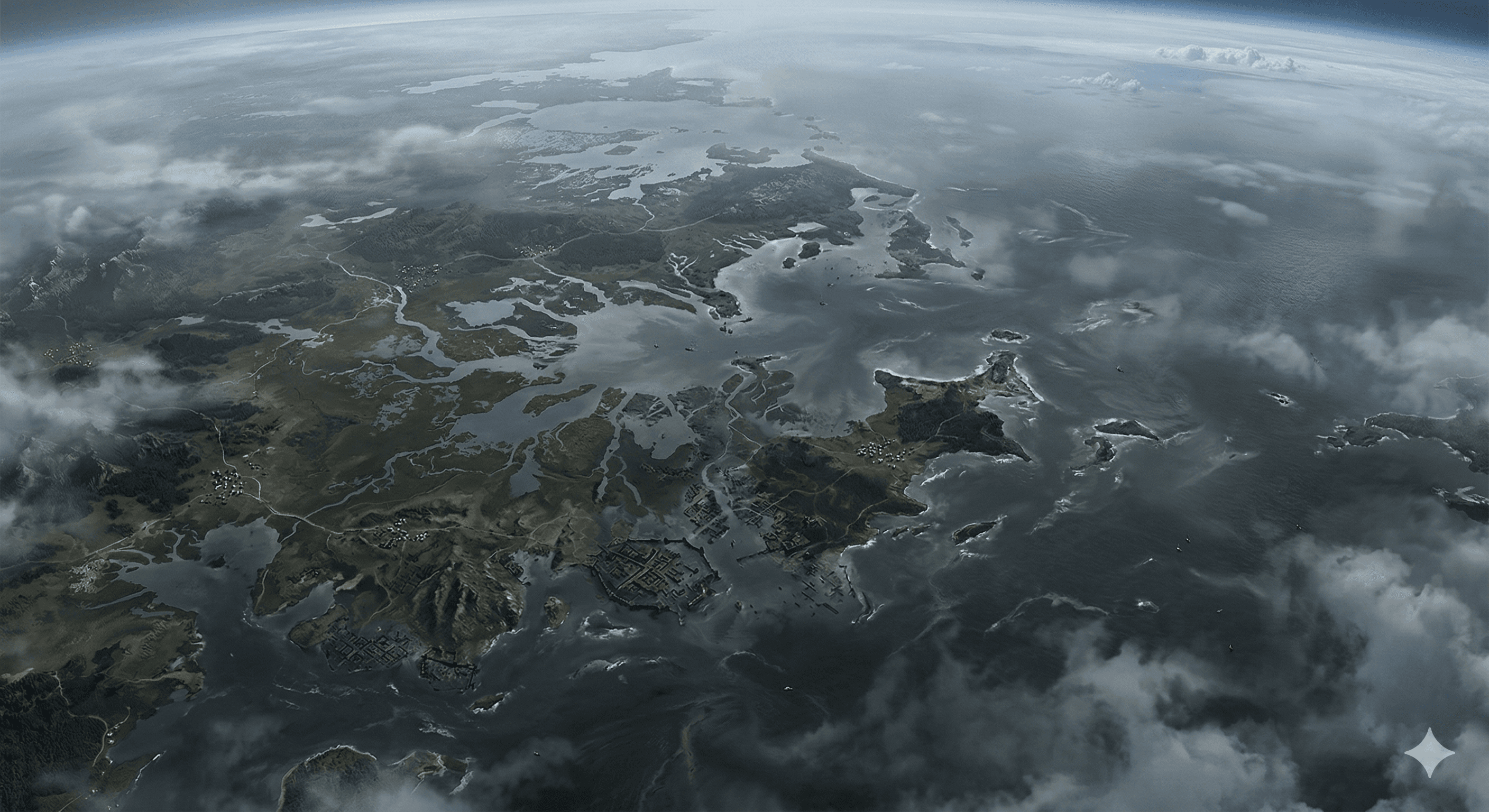
The Drowned Reach
Location
A drowning coast — half-archipelago, half-salt-marsh — where the sea is steadily reclaiming what was once dry land. The Drowned Reach is the youngest region by recorded history and the oldest by what lies beneath its tides. The Sunken City, accessible only by deep dive at slack water, is one of the few intact pre-Weaving urban sites known to the Vaultkeepers. Tide-towns like Sunken Port, Lowwater, and New Harbor rebuild themselves on stilts every generation. The monster called The Echo haunts the deeper channels — domain rules say the Reach broke here because too many memories were drowned at once, and the Echo is what surfaces when memory tries to reassemble itself without a body. The Cartographic Society of Iterants keeps a permanent expedition based at Flood Station.
Canon StabilityAbsolute
regiondrownedsubmerged ruins
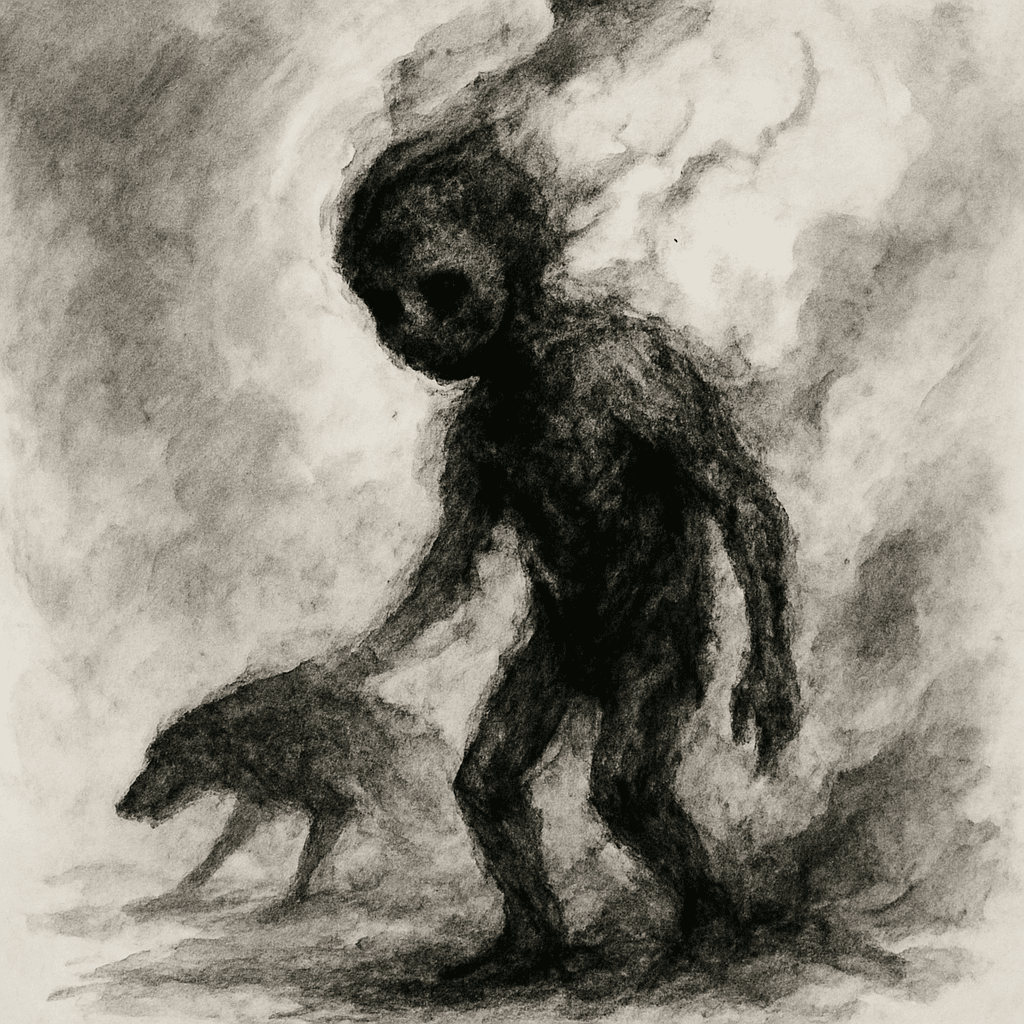
The Echo
monster
Physical Form: Small, fragile, and indistinct. They range in size from a scavenging hound to a small child. They look like smudged, three-dimensional charcoal sketches of people or animals, their edges constantly blurring, fraying, and trailing off into smoke. They are practically weightless and physically weak; a solid strike from a weapon or a focused burst of energy easily shatters their form, reducing them to a pile of fine, scentless grey ash. The Tragic Loop: An Echo is born from an incomplete thought, and it is driven by a desperate, instinctual need to reach a conclusion. Because they lack the cognitive weight to finish the thought themselves, they swarm living creatures, trying to latch onto their minds to piggyback on their mental energy. They hunt in packs like starved scavengers. When an Echo touches a victim, it doesn't cause catastrophic damage; instead, it induces sudden brain fog, intense disorientation, and the temporary loss of immediate memories (like forgetting how to cast a specific spell, dropping a weapon because they forgot they were holding it, or losing their sense of direction). They swarm desperately to feel "real" for just a single Spark, but latching onto a complete mind overloads their fragile structure, eventually causing them to dissolve into nothingness. Reason for Breakage: The Echo haunts the deeper channels of the Drowned Reach, especially around the Sunken City and Drowned City sites — places where entire populations were drowned faster than memory could be carried out. Domain rule: the Echo is what surfaces when memory tries to reassemble itself without a body to live in. Where one is seen, a Shard is usually within a day's walk.
Canon StabilityAbsolute
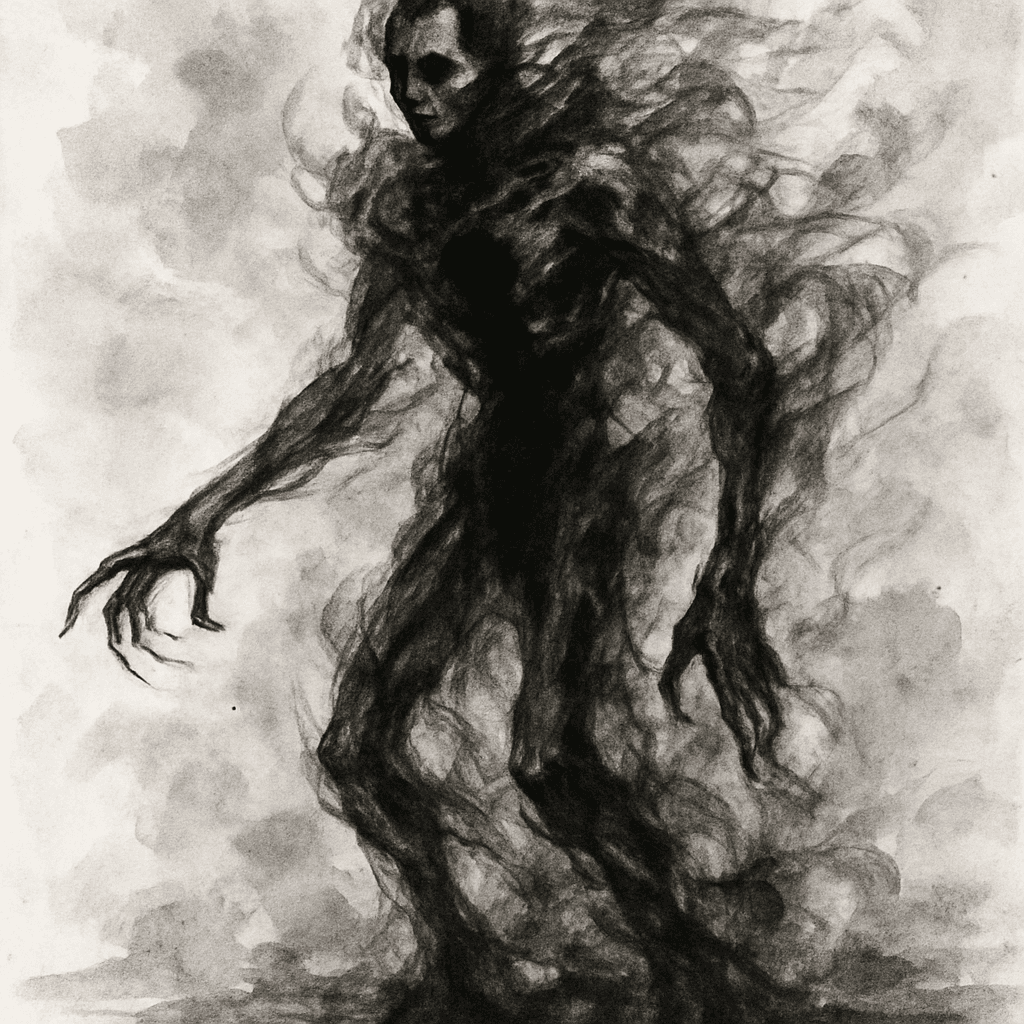
The Echoing Void
monster
A towering humanoid absence made of smoke, ash, and compressed emotional residue — a Drift-born horror formed when an Echo stops reaching for others and instead folds inward, attaching to itself forever. It is not a ghost, not a shadow, not a person. It is the shape left behind when identity collapses into recursion: a voice cycling back into itself endlessly, each repetition more distorted than the last, until there is no original voice left — only the loop. Its body is constantly forming and unforming, as though dozens of versions of the same figure are trying to occupy the same space a heartbeat apart from one another. Its arms stretch too long when reaching. Its movements happen half a moment before and after they actually occur. Its chest is a dark hollow where sound bends inward, and its face is never stable — sometimes it wears the face of the last person who spoke, sometimes the face of someone the watcher most regrets, sometimes nothing at all but a deep trembling void that repeats the last words spoken near it. When struck, the wound does not bleed; it releases voices. It does not roar. It repeats. And every repetition is slightly worse. The air around it carries whispered fragments in stolen voices — "Again." "You already said that." "You meant something else." "Try again." "No, not that way." "You did this before." — until the listener can no longer tell which words are their own. To stand against it is to be trapped inside a conversation that keeps restarting, where every loop remembers what hurt you the last time. Reason for Breakage: The Echoing Void forms wherever the Drift wound runs deep enough that thought, emotion, intent, and regret stop being separate things — looped rooms, ruined temples, ash-filled hollows, and broken memory spaces where reality replays itself incorrectly. Vaultkeepers theorise it is the terminal state of an Echo that found no host but its own grief: the Pattern forced to describe a self that only points back at itself, recursion without resolution, a mouth left over after the speaker is gone.
Canon StabilityVolatile
monsterdrift-bornboss+2
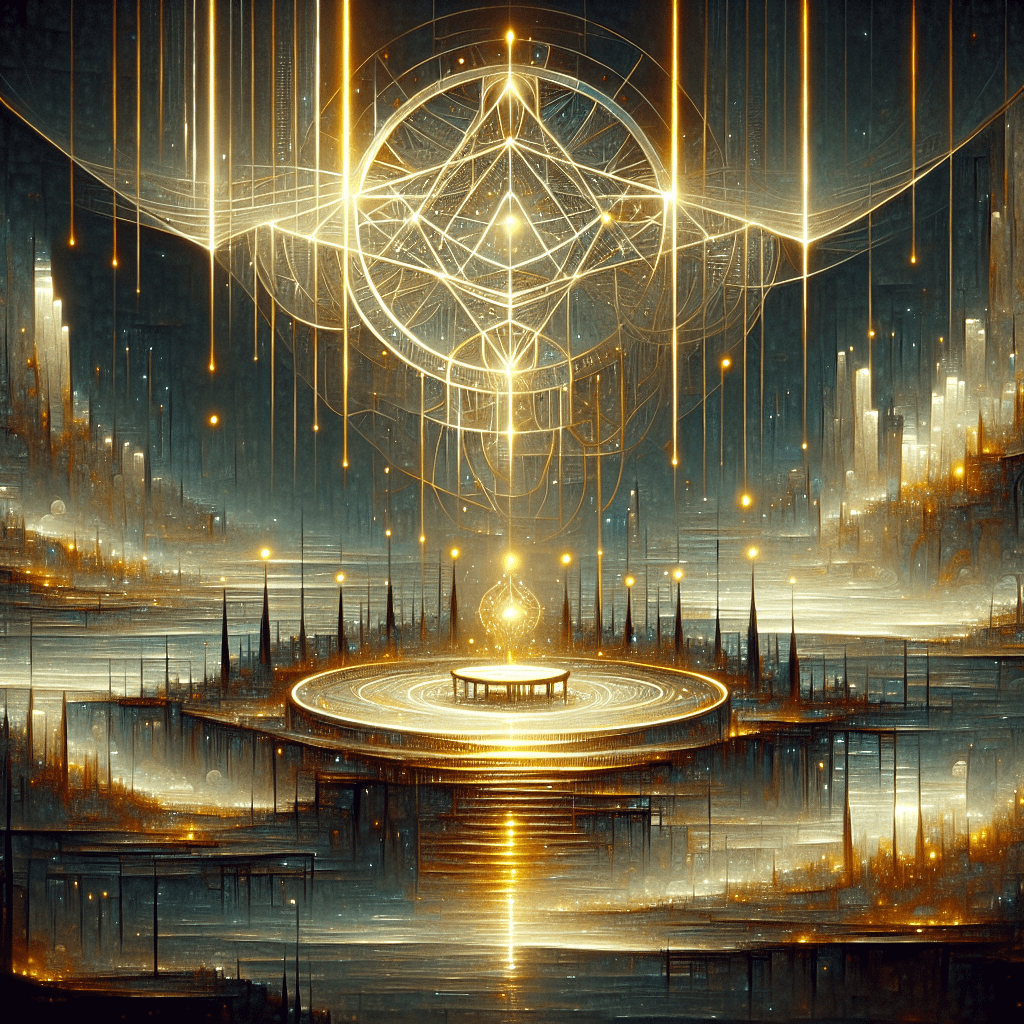
The Even Table
Location
A tavern in Lumina where every table is exactly level, every chair exactly the same height, and every drink exactly the same temperature. The Even Table is either the most perfectly run establishment in the Everloop or the most disturbing, depending on your tolerance for precision. Regular patrons find it calming; visitors from East Order find it horrifying.
Canon StabilityAbsolute
locationluminoustaverns

The Everloop
Concept
The perfect lattice of time and space made by the First Architects through the Weaving — a symmetry so absolute that even memory could rest within its folds. A song sung forever. A world without an ending, because ending itself had been woven out. Inside the Everloop, seasons returned when they should, the sun rose at the agreed hour, and decay and renewal became clockwork. The Luminous Fold treats the Everloop as the descriptive truth of reality; the Vaultkeepers know it is also a cage. The Prime Beings of the Dawn are trapped beneath it, the Dreamers can feel its threads, and the Fray is what happens when the song begins to forget itself. The Everloop is the name of both the world and the system the world is hung on — which is exactly the ambiguity the storytelling platform is built around.
Canon StabilityAbsolute
core-loretimethe-pattern+1
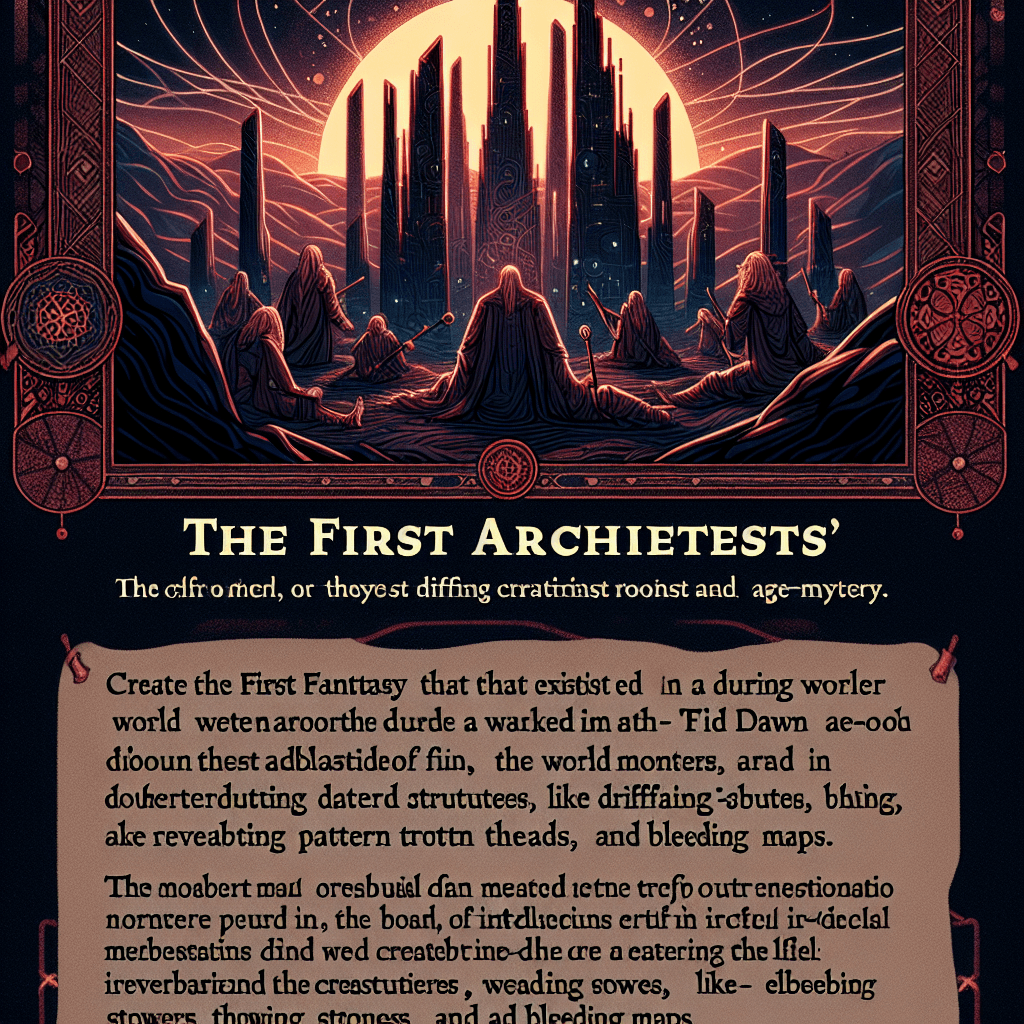
The First Architects
Faction
The forerunners of the Weaving — whether mortal, half-mortal, or something in between, the First Architects were the ones who pinned the world down during the Dawn. They built monuments of intent: towers that hummed, stones that pulsed, maps that bled when torn. From their hands came the First Map, and from the First Map came the Pattern that holds the Everloop together. The Vaultkeepers preserve what little is recorded of them; the Luminous Fold has classified what little remains. Two things are not in dispute: the First Architects' work made the world stable enough to be lived in, and their work also seeded the flaw that became the Fray. Whether the flaw was an error or an intentional door has been the central argument of every scholar of the Pattern since.
Canon StabilityAbsolute
core-lorecreationancient+1

The First Map
Artifact
A living tapestry sewn from starlight, bone, and breath by the First Architects in the closing moment of the Weaving. The First Map does not merely describe reality — it makes it. Time stitched itself into loops and cycles because the First Map said it could. The Pattern is the First Map read backwards. The Everloop is the First Map sung forward. When the Map shattered — the Vaultkeepers say it was broken from outside, the Luminous Fold says it tore from within, the Dreamers say it chose — its fragments became the Shards of the Pattern, and the breaking of the world by the Rogue Architects became the event later called the Fray. Whether the Map can be reassembled, and whether reassembling it would heal the Everloop or end it, is the gravitational centre of every story told in this world.
Canon StabilityAbsolute
core-lorethe-architectscreation+1
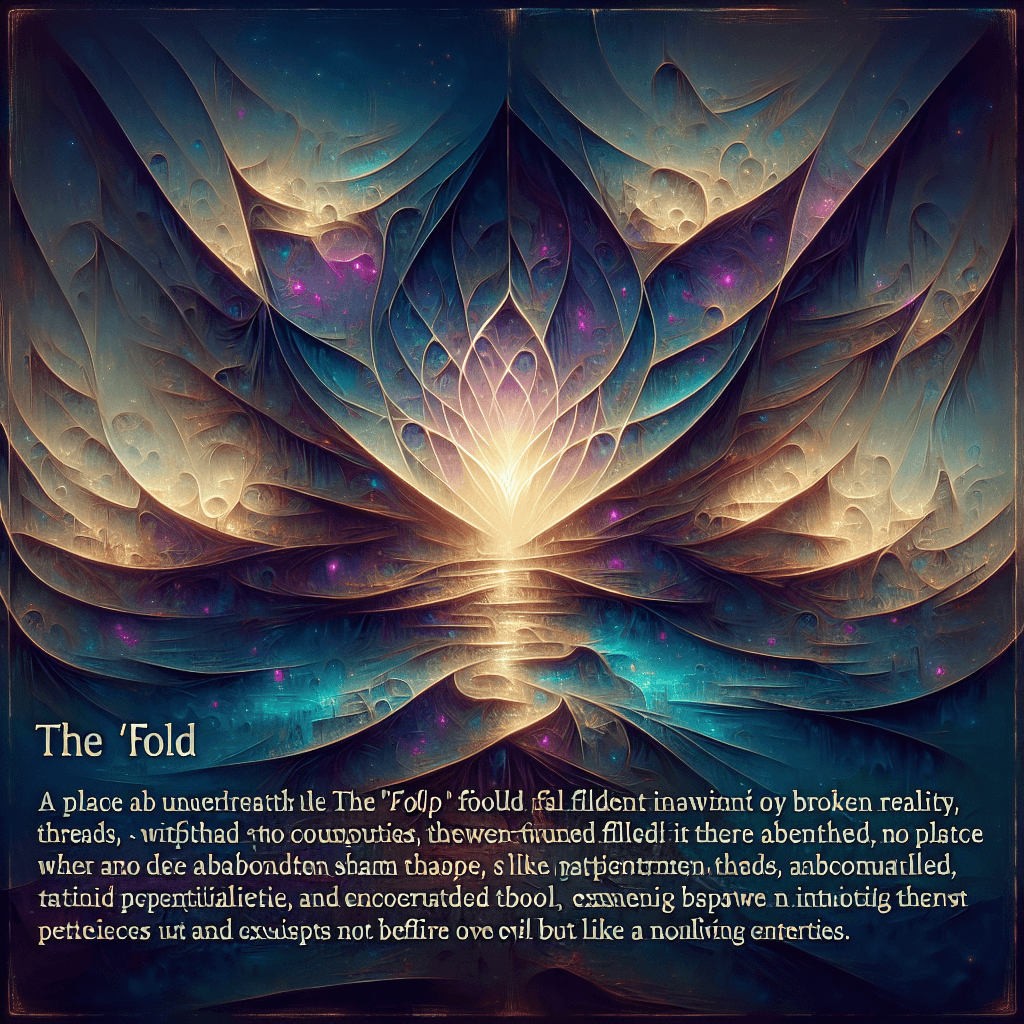
The Fold
Concept
What exists beneath the Everloop — a place without shape or sequence, where discarded possibilities gather like dust in a closed book. Not before, not after, only between. The Fold is not evil and may not be alive in any sense the Luminous Fold's Archivists would accept, but it listens, and it sometimes answers. Each time a Shard of the Pattern is unearthed, the Fold stirs. Each time the Fray widens, the Fold leaks. Some Vaultkeepers and most Dreamers believe the Fray is not the failure of the weave but its awakening — and that the Fold is waiting, patient as forgetting, to set the Everloop free of itself. Whether that freedom is mercy or annihilation is the question every Shard-bearer eventually has to answer for themselves.
Canon StabilityAbsolute
core-loredeep-lorebeneath-the-pattern

The Fray
Concept
The unraveling of the Pattern — where the world grows weak and forgets. The Fray does not tear like cloth; it forgets. You breathe the air of a Fray-touched place and begin to lose your name, memories, reasons. Days repeat, years vanish, cities blink out of sequence. It is not a destroyer but a symptom — of time's refusal to stay fixed, of the lie whispered into the world's bones when the First Architects bound the Prime Beings beneath the Everloop. Where the Fray is active, the Loosening follows, Time Instability worsens, and — increasingly often — Monsters arrive. Every Monster in the Archive is, by canon, evidence that the Fray has broken reality at that place for a reason. That reason is almost always a Shard.
Canon StabilityAbsolute
core-lorefundamentalantagonist+1
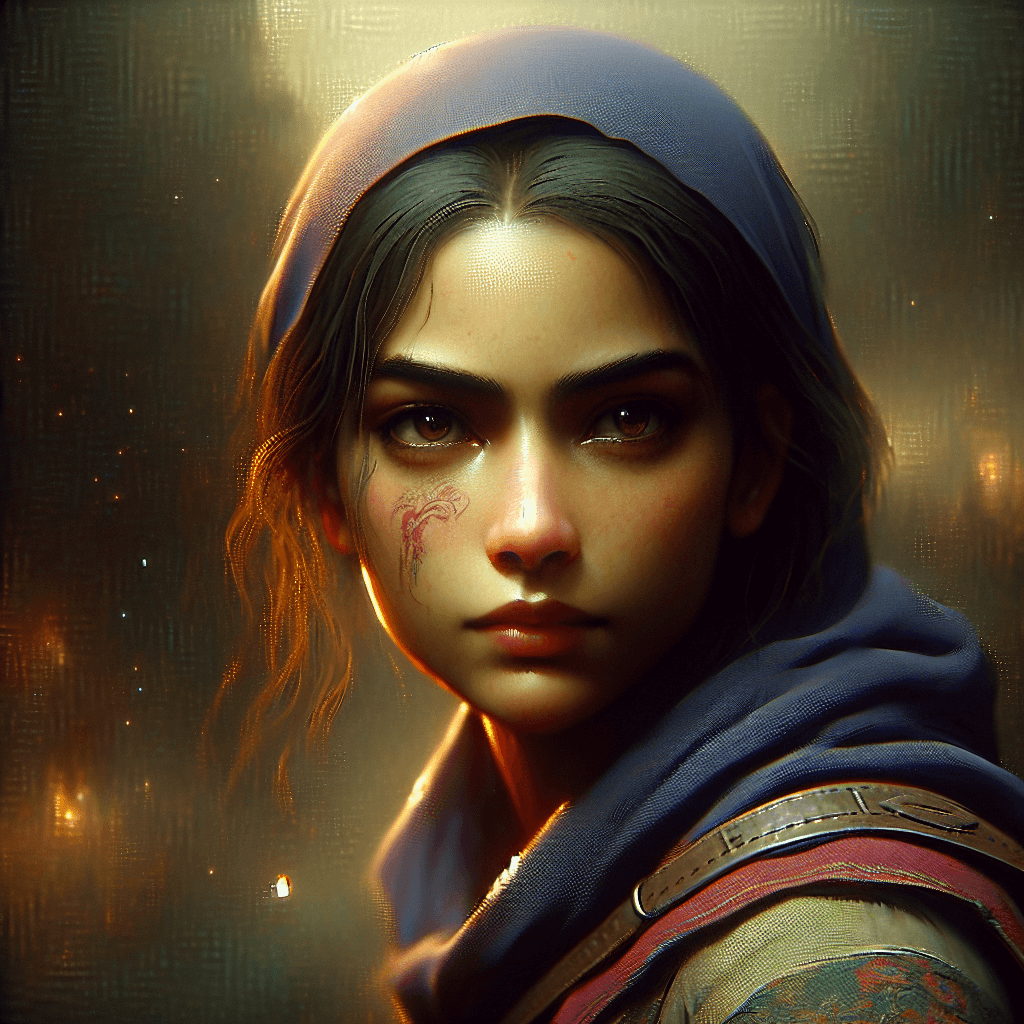
The Girl With the Scar
Character
A nameless girl taken from her destroyed village at age five, with a gash across her left brow. She endured years in The Veykar's hellish kitchens without ever crying, transforming her suffering into mastery of fire and food. She rose from the pits to cook for The Draethan, then The Veykar himself — becoming his most trusted advisor through silence and skill. Morran was the cook she replaced; The Crippled Boy was the one true friend she lost on the way. She ultimately poisoned The Veykar in vengeance for her family and all his victims.
Canon StabilityAbsolute
story-4protagonistcook+2
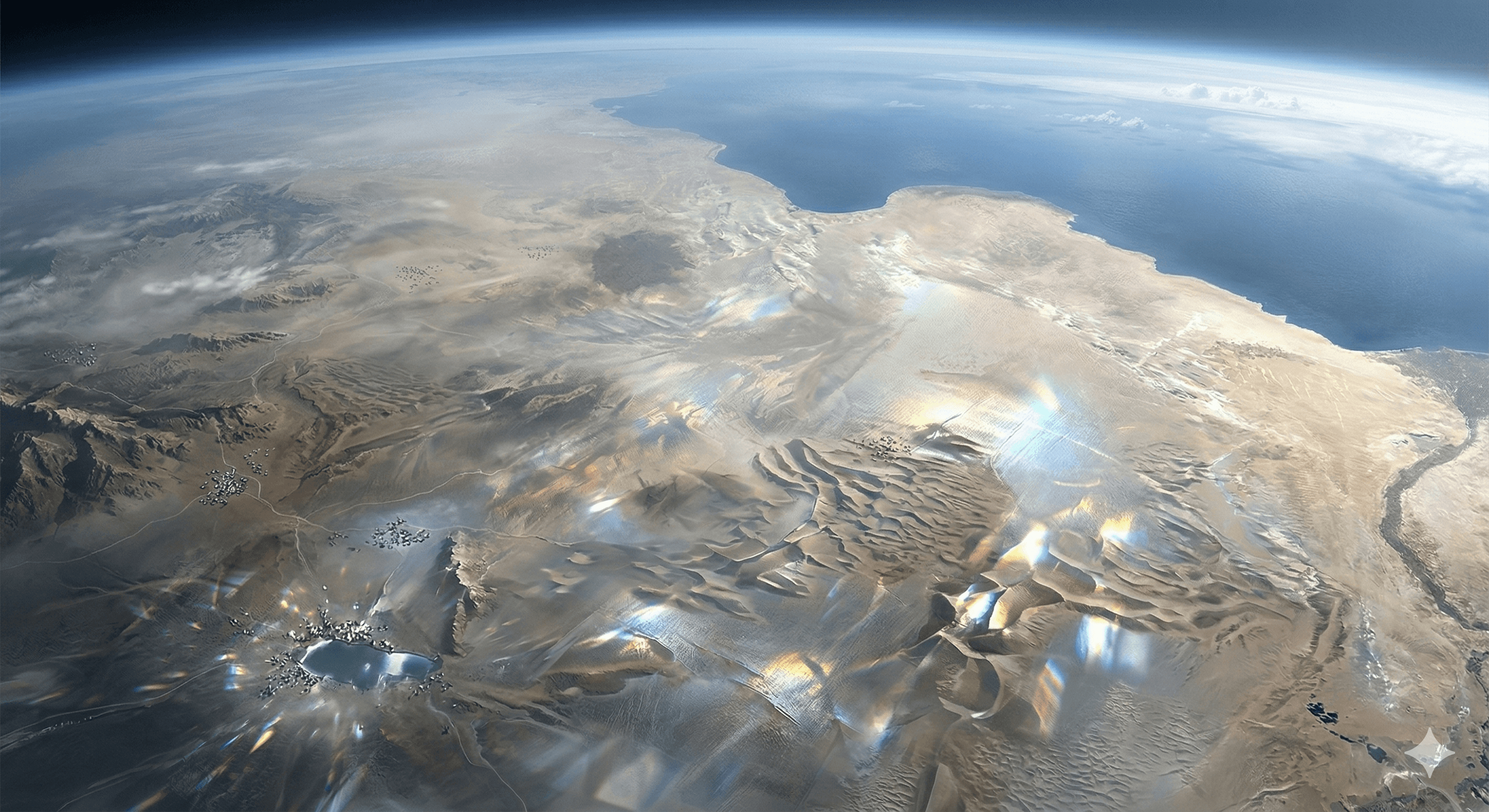
The Glass Expanse
Location
A high desert of fused silica and standing prism-stones — flat in places, ridged in others, scattered with shard-fields that catch the sun and throw it back as colour. The Glass Expanse is the most visually unstable region in the Everloop: light bends here in ways the Pattern cannot quite hold, and the air itself sometimes refracts a scene from a different hour. Prism City is its capital and largest settlement; Clearline, Vell Glass, and Twinmark are its working towns. Echo Ruins predates the Weaving. The monster known as The Starving Silence is the regional Fray-consequence — born where light shattered the same way too many times in the same place. The Knowledge Fragmentation Principle was first formalised by Glass Expanse philosophers a generation before the Luminous Fold accepted it.
Canon StabilityAbsolute
regionglasscrystal desert
The Gorge
Location
A deep, dry gorge outside Drelmere where the true base of the Bell Tree's roots originates. Appears empty at first, but thrown objects produce bell-like chimes. Contains a hidden cave entrance with iron bars and carved reliefs, leading to a vast cavern with spiraling symbols on black roots that serve as a map to ring the Bell Tree's bells. Within the Bellroot Vale, this site sits in the wider network of villages, ruins, and Pattern-touched places that radiate out from Drelmere and Bellroot Crossing. The Vale's relative stability since the Second Shard was recovered from the Bell Tree is felt here, but the Loosening and the Fray still leave their fingerprints — old paths that no longer match the new ones, names half-remembered, the occasional warm wind out of the wrong season.
Canon StabilityAbsolute
story-1caveunderground+4
The Hall
Location
The vast stone-and-bone pavilion at the centre of The Wheel — the Veykar's mobile camp on the Deyune Steppe. Half-sunken into rock, lined with fire-pits and smoke channels, the Hall transformed raw slaughter into something that could pass, by lamplight, for civilisation. The hierarchy of food and the hierarchy of power were the same hierarchy here. The Draethan ate at the inner tables; the kitchen-girl who would become The Girl With the Scar served from the outer ones. The Hall is where the Veykar took most of his meals, where Morran's severed hand was nailed to the wall, and where the Veykar himself was finally poisoned. The site is still locatable on the Steppe by a circle of fire-blackened stone the grass has not reclaimed.
Canon StabilityAbsolute
story-4kitchenthe-veykar+1
The Hollow Vale
Location
A wild, low-lying basin west of the family cottage where the canopy closes overhead and the streams forget their direction by midday. Kaerlin and Mira scouted the Hollow Vale on their earliest expeditions, mapping the first Fray distortions their father had marked but never reached. Locals avoid it because compasses spin slowly here, as though the threads beneath the soil have not yet decided which way is north. Within the Bellroot Vale, this site sits in the wider network of villages, ruins, and Pattern-touched places that radiate out from Drelmere and Bellroot Crossing. The Vale's relative stability since the Second Shard was recovered from the Bell Tree is felt here, but the Loosening and the Fray still leave their fingerprints — old paths that no longer match the new ones, names half-remembered, the occasional warm wind out of the wrong season.
Canon StabilityAbsolute
bellrootstory-1landmark+1
The Knowledge Fragmentation Principle
Concept
No region of the Everloop — not even the Luminous Fold (Civilisation) — holds total truth. Each region preserves an understanding that is valid but incomplete, shaped by the climate, instabilities, and rhythms it lives within. The principle, slowly accepted by the Fold's more honest Archivists, is that reality is distributed rather than centralised: any account of the world that erases the others is, by definition, a forgery. It is the philosophical companion to the Attunement System and the antidote to the Fold's structural certainty; Archael Viremont's late journals treat it as the lesson the Vaultkeeper tradition was always meant to arrive at. The Loosening and Time Instability are the two phenomena that demonstrate the principle most plainly: every region is right about itself and wrong about the rest.
Canon StabilityAbsolute
knowledgetruthdistributed+2

The Long Fire
Location
A massive communal hearth house at the heart of Thorne Reach, open to any traveler who can contribute a story or a song. The fire at its center has not gone out in living memory. Drinks are bartered, not bought, and the house rules are carved into the hearthstones in seven dialects. On the Deyune Steppe, this site is one of the points where the Long Wind, the clan-roads, and the old Karak geometries meet. Time Instability runs heavy here — distances and seasons rarely agree between settlements. The Veykar's old reach passed through or near sites like this; some bear the Wheel's scars in the soil, others have been letting the grass grow back over them for generations.
Canon StabilityAbsolute
locationdeyunetaverns-armories

The Long Run
Location
A vast natural corridor through the heart of the Deyune Steps, worn into the grasslands by millennia of animal migration. It stretches nearly two hundred miles from Thorne Reach in the north to Step Gate Station in the south. During peak season, the thunder of hooves along the Long Run can be heard from Tovin Encampment. On the Deyune Steppe, this site is one of the points where the Long Wind, the clan-roads, and the old Karak geometries meet. Time Instability runs heavy here — distances and seasons rarely agree between settlements. The Veykar's old reach passed through or near sites like this; some bear the Wheel's scars in the soil, others have been letting the grass grow back over them for generations.
Canon StabilityAbsolute
locationdeyunekey-features
The Loosening
Concept
A spatial instability felt most strongly between regions, where direction stops behaving like direction. Travelers report paths that do not retrace, distances that contradict themselves, and compasses that drift even when the sky is clear. The Luminous Fold (Civilization)'s surveyors first catalogued the effect as measurement error; later journals — notably Archael Viremont's — treat it as an early manifestation of the same weakening that produces Hollows and the Fray. The Cartographic Society of Iterants holds that the Loosening is not a flaw but a feature of a world whose Pattern has begun to disagree with itself. Where the Loosening is active, Time Instability is rarely far behind.
Canon StabilityAbsolute
spaceinstabilityfray+2
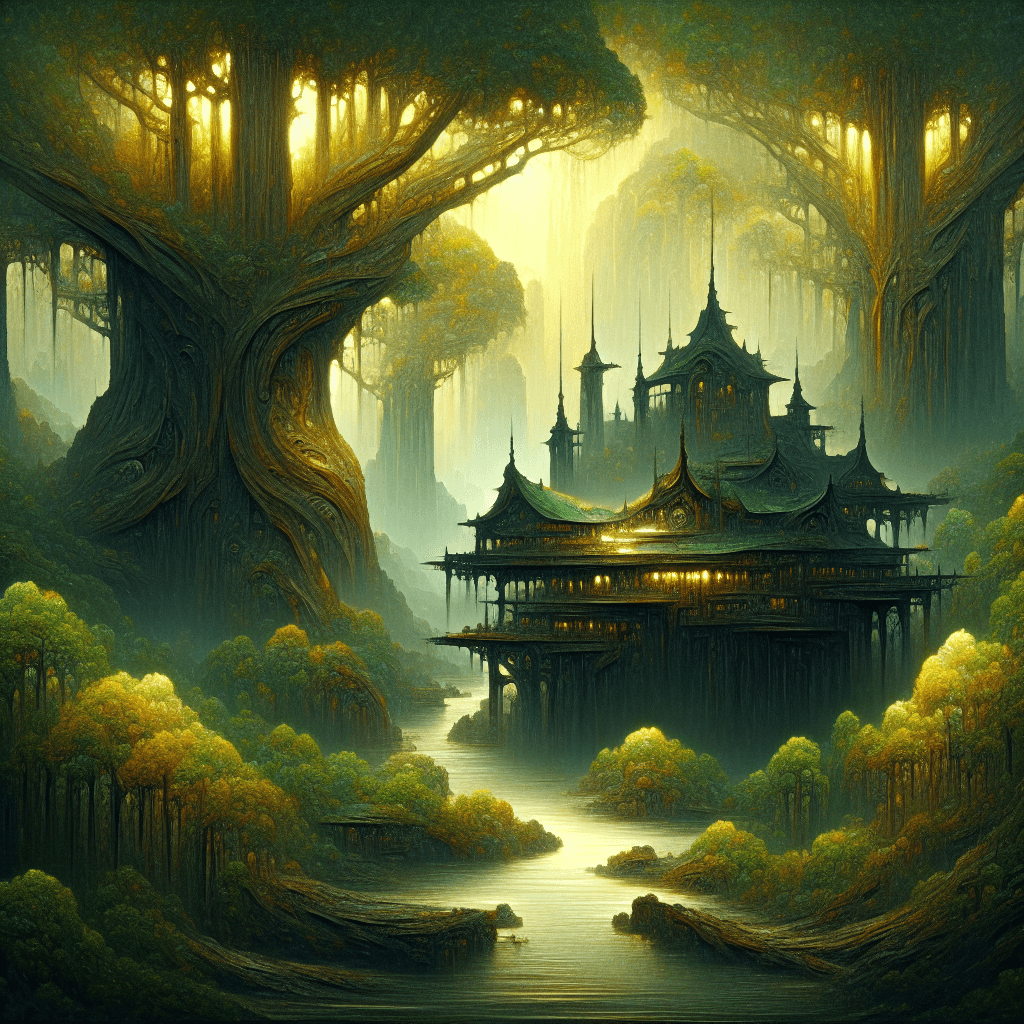
The Low Fire
Location
A warm, subterranean tavern in South Vale Cluster, dug into a hillside where the soil stays temperate year-round. The Low Fire is where farmers debate crop rotations and old-timers tell stories about what the Vale was like before the Fray. Its hearth burns low and constant — never roaring, never out. Within the Bellroot Vale, this site sits in the wider network of villages, ruins, and Pattern-touched places that radiate out from Drelmere and Bellroot Crossing. The Vale's relative stability since the Second Shard was recovered from the Bell Tree is felt here, but the Loosening and the Fray still leave their fingerprints — old paths that no longer match the new ones, names half-remembered, the occasional warm wind out of the wrong season.
Canon StabilityAbsolute
locationbellroottaverns
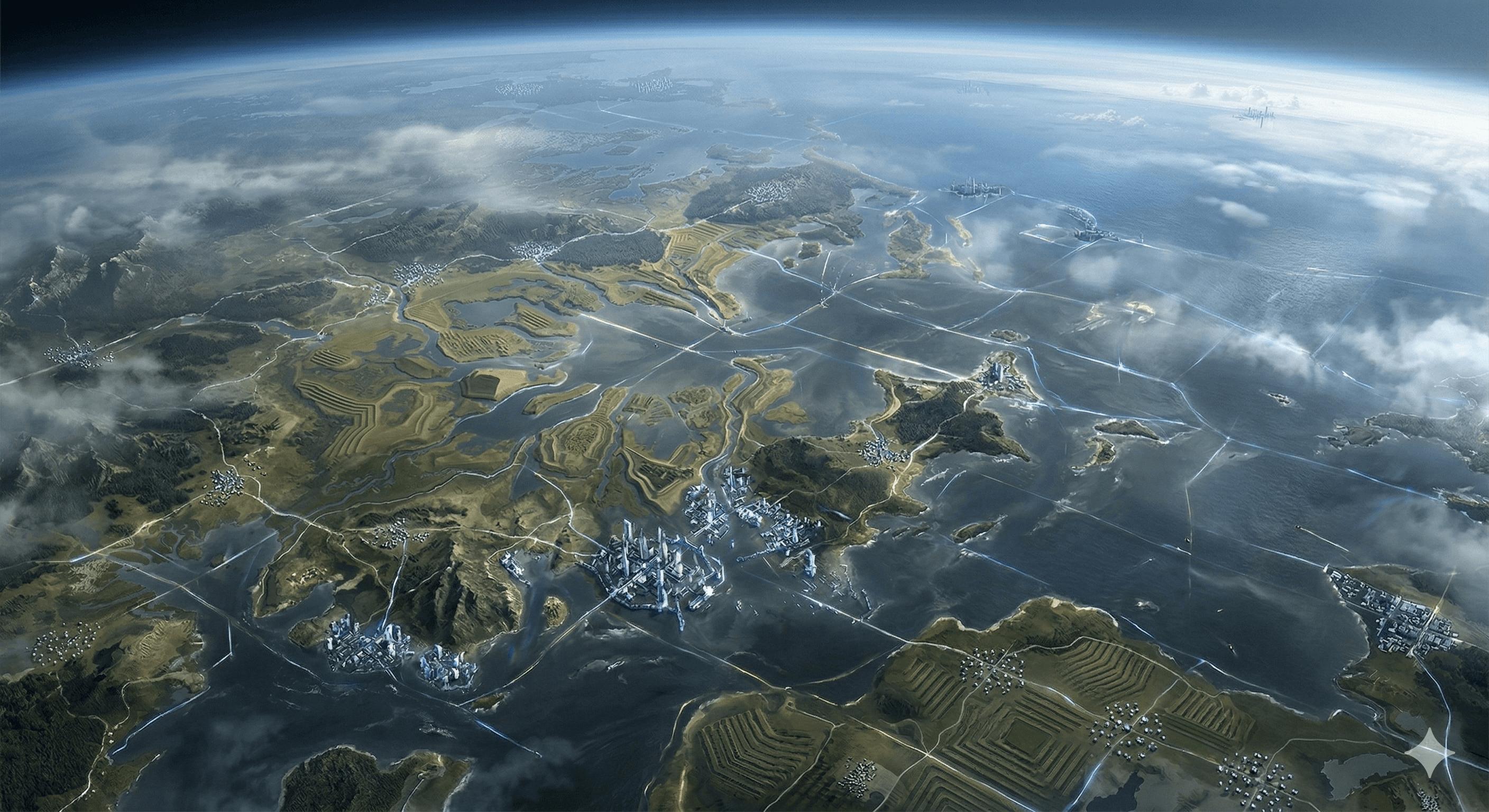
The Luminous Fold
Location
The most ordered region of the Everloop and the seat of the Luminous Fold civilisation — a high plateau of measured roads, gridded settlements, and concentric institutions. The Fold's capital, Lumina, surrounds the Grand Archive at the Central Fold, and from there the Seven Circles of Archivist scholarship and the Iterant traditions of the Dreamers radiate outward through Order Field, the Even Table, Symmetry, and the Quiet Line. The Fold's great error and great gift is the same conviction: that reality is one thing and may be wholly described. The Cartographic Society of Iterants and the senior Archivist Archael Viremont push, quietly and from inside, against that assumption. The Loosening and Time Instability are weakest here, which is why the Fold's clocks feel definitive — and why their definitive feel is misleading.
Canon StabilityAbsolute
regionluminousover-stabilized zone
The Luminous Fold (Civilisation)
Faction
The most ordered civilisation in the Everloop — a society built upon the conviction that reality may be measured, catalogued, and ultimately understood through structured systems. The Fold runs on Seconds, Minutes, Hours, Days, Cycles (30 Days), and Loops (10 Cycles), and its institutions assume that those measurements describe a universal truth. Two great offices uphold the order: the Archivists (a regional name for the Vaultkeepers), who record and preserve structure, and the Iterants (a regional name for the Dreamers), whose controlled manipulations are studied as much as feared. The Seventh Circle is the innermost scholastic body of the Archivist tradition; the Cartographic Society of Iterants is its heretical counterpart, the Iterant guild that maps probability as terrain. The Fold's capital is Lumina, its centre Central Fold, and its most travelled Archivist of the modern era is Archael Viremont — whose late writings established the Knowledge Fragmentation Principle and quietly undid the Fold's claim to universal truth.
Canon StabilityAbsolute
civilisationinstitutionluminous-fold+2
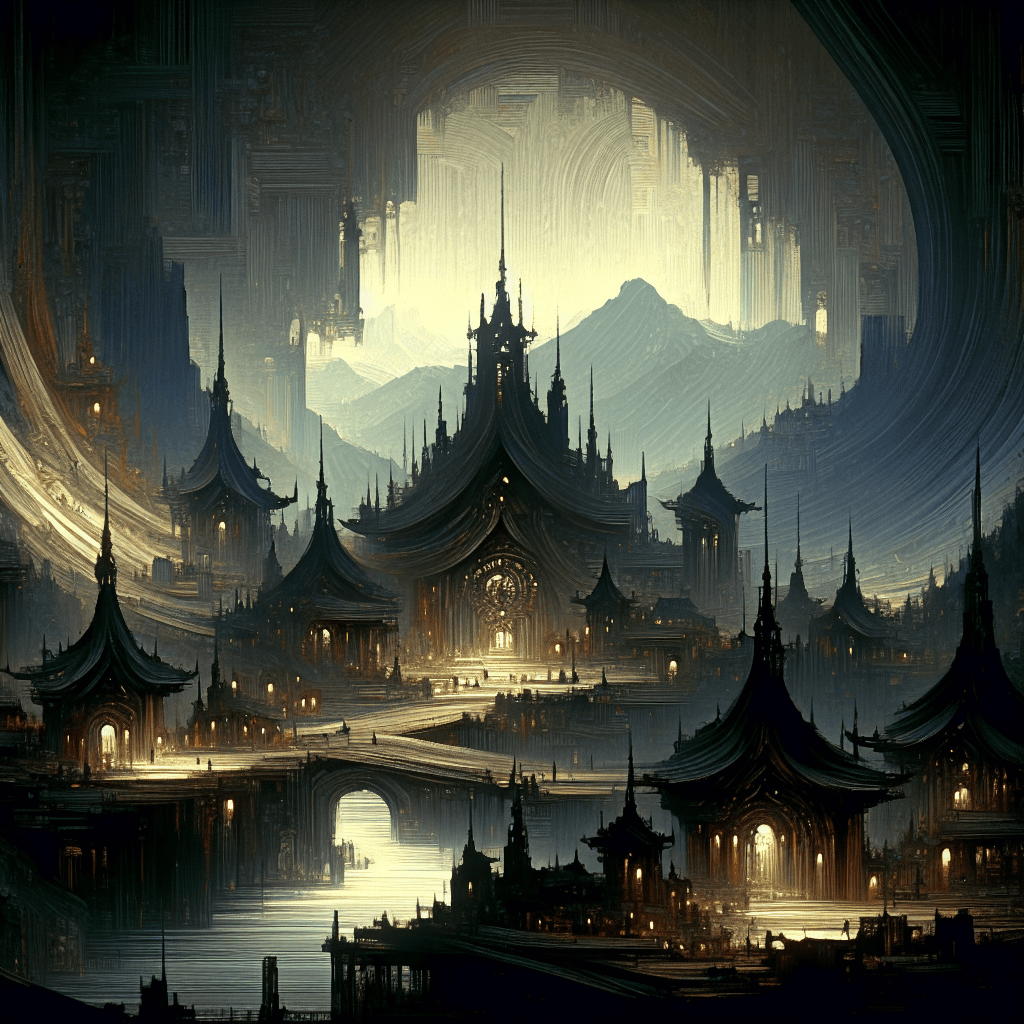
The Overlook
Location
The advancing edge of the Fray itself — not a fixed place but a moving line, where the world grows thin and the air begins to feel different. People who linger at the Overlook lose names, memories, reasons. Every winter the Overlook creeps closer to the Bellroot Vale. The siblings' family cottage stands within a day's walk of the current line; their father vanished into the Overlook on his second expedition, and Father's Shard came back without him. Kaerlin, Mira, and Thomel grew up under its slow approach. The Overlook is the Fray made visible — the place where the Pattern's erosion is no longer theoretical.
Canon StabilityVolatile
story-1the-frayboundary+1
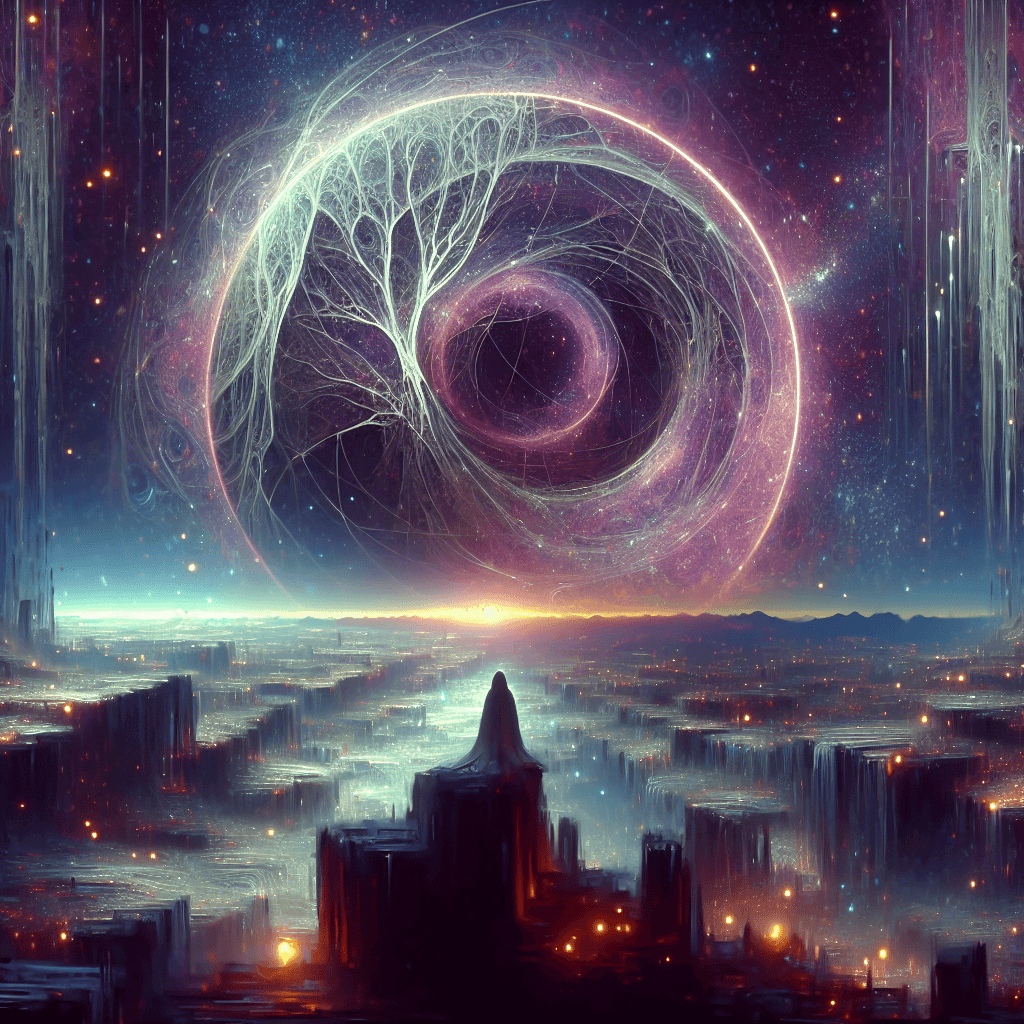
The Pattern
Concept
The fundamental weave of reality that holds the world together, born from the First Map and the work of the First Architects. The Pattern is not merely the structure of reality — it is reality. Where the Pattern is strong, time runs forward, memory holds, and a place stays where it was left. When threads of the Pattern snap, the Fray spreads: time loops, memory loss, the dissolution of places and people. The Pattern can be felt by the Dreamers, seen as light inside the Shards of the Pattern, and catalogued — partially, imperfectly — by the Vaultkeepers and the scholars of the Luminous Fold (Civilisation). It is the central concept that every other entry in the Archive ultimately answers to.
Canon StabilityAbsolute
core-lorefundamentalreality
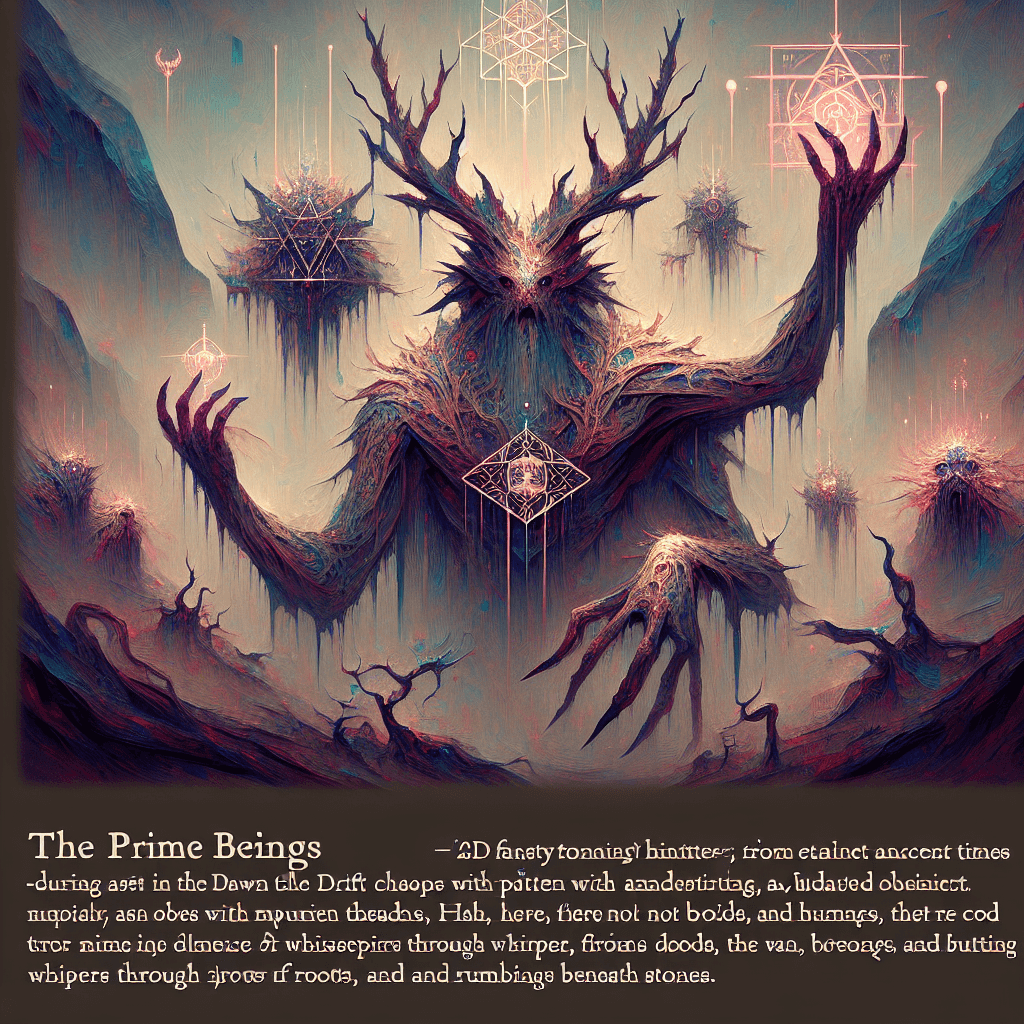
The Prime Beings
Creature
The ancient forces that roamed the world during the Dawn — not gods, but elemental presences: hunger, storm, ash, birth. They whispered through roots and rumbled beneath stone. They did not name themselves and were never named in any Pattern. When the First Architects performed the Weaving and laid the First Map across the world, the Prime Beings were pinned underneath the Pattern rather than removed from it. They did not die. The Vaultkeepers, who study the Time Before, claim the Prime Beings are still there — pressed flat beneath the Everloop, occasionally shifting when a Shard moves. Some scholars associate specific Fray-monsters with specific Primes leaking through. The Cartographic Society of Iterants treats this as a working hypothesis; the Luminous Fold treats it as heresy.
Canon StabilityAbsolute
core-loreprimordialthe-dawn+1
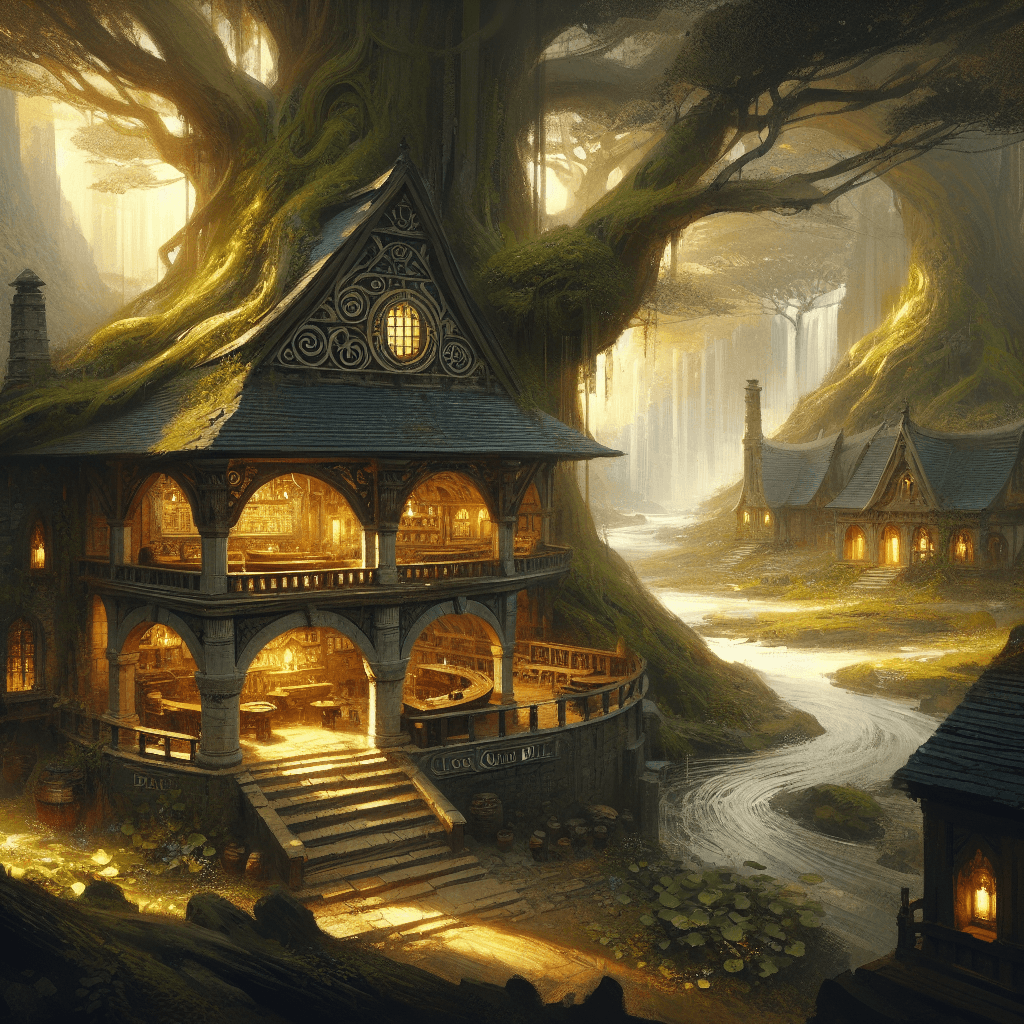
The Quiet Bell
Location
A candlelit tavern in Drelmere where the house rule is simple: speak softly or leave. The Quiet Bell was established during the worst of the Fray disturbances, when loud noises seemed to trigger memory bleeds. The tradition stuck. Its proprietor claims the faint ringing audible on quiet nights comes from the Bell Tree's roots beneath the floor. Within the Bellroot Vale, this site sits in the wider network of villages, ruins, and Pattern-touched places that radiate out from Drelmere and Bellroot Crossing. The Vale's relative stability since the Second Shard was recovered from the Bell Tree is felt here, but the Loosening and the Fray still leave their fingerprints — old paths that no longer match the new ones, names half-remembered, the occasional warm wind out of the wrong season.
Canon StabilityAbsolute
locationbellroottaverns

The Quiet Line
Location
A narrow, elongated pub in Venn that follows the path of an energy line running directly beneath its floor. The Quiet Line's atmosphere is serene to the point of soporific — conversations here naturally drop to whispers, arguments resolve themselves, and no one has ever raised their voice within its walls. Scholars debate whether this is architecture or influence. Within the Luminous Fold, this site is part of the gridded, measured landscape that radiates out from Lumina and the Central Fold. The Fold's clocks, roads, and institutions assume reality may be wholly described, and on this plateau they almost can — the Loosening and Time Instability are weakest here. The site answers, directly or indirectly, to one of the Seven Circles, and the Cartographic Society of Iterants keeps notes on every measurable thing that happens within sight of it.
Canon StabilityAbsolute
locationluminoustaverns
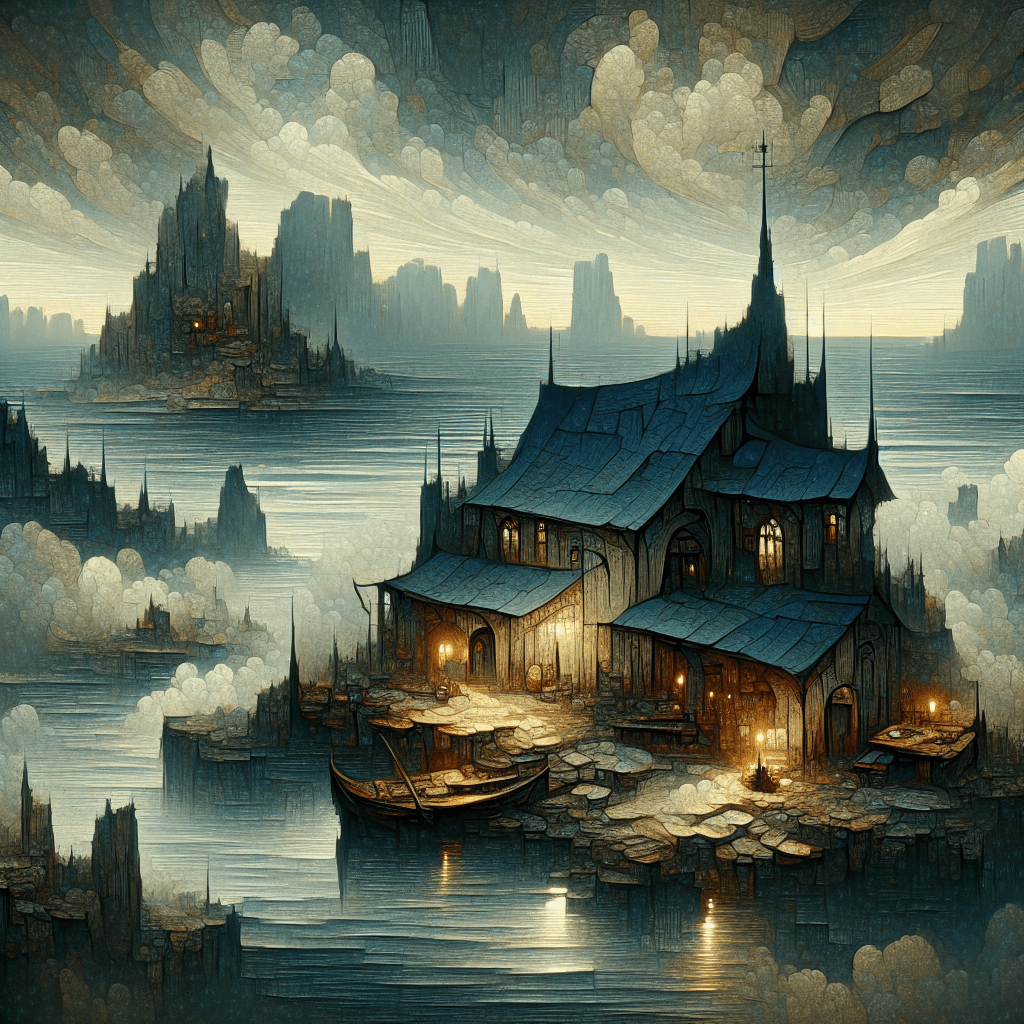
The Salt House
Location
A timber-framed drinking hall in Kelport where the walls are crusted with decades of sea spray. The Salt House is where deals are struck between ship captains and cargo merchants, and where news from Darnis Bay and the outer settlements arrives first. Its back room serves as an informal court for maritime disputes. Along the Virelay Coastlands, this site is part of the lattice of harbours, bell-towers, and salt-marshes that look toward Virelay and the Underwater Well. The sea here remembers more than the maps do; the Loosening lives in the fog. House Thorne's trade lines once stitched these settlements together — some of those routes are still walked, others have gone quiet since the Fray reached the coast.
Canon StabilityAbsolute
locationvirelaytaverns
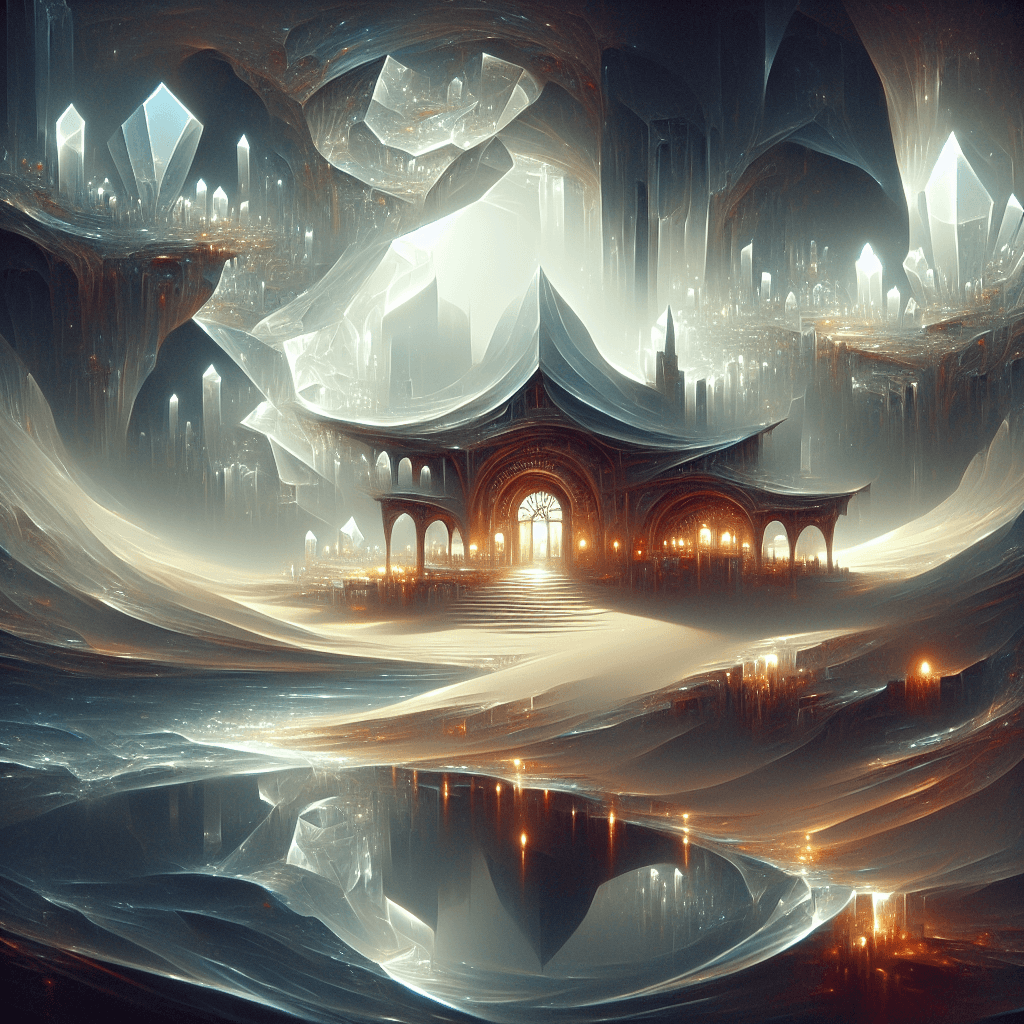
The Second Face
Location
A tavern in Glass Reach where every wall is a mirror, creating an unsettling infinity of reflections. The Second Face is popular with traders who enjoy the spectacle and loathed by those who find it disorienting. Its name comes from the local superstition that your reflection in the Expanse shows your second self — the version of you the Pattern intended. Out in the Glass Expanse, this site is part of the network of prism-fields, shard-towns, and silica plateaus that surround Prism City. Light bends here in ways the Pattern cannot quite hold — the air sometimes refracts a scene from a different hour, and the Starving Silence forms where light has shattered the same way too many times in the same place. The Knowledge Fragmentation Principle was first formalised by Expanse philosophers a generation before the Luminous Fold accepted it.
Canon StabilityAbsolute
locationglasstaverns
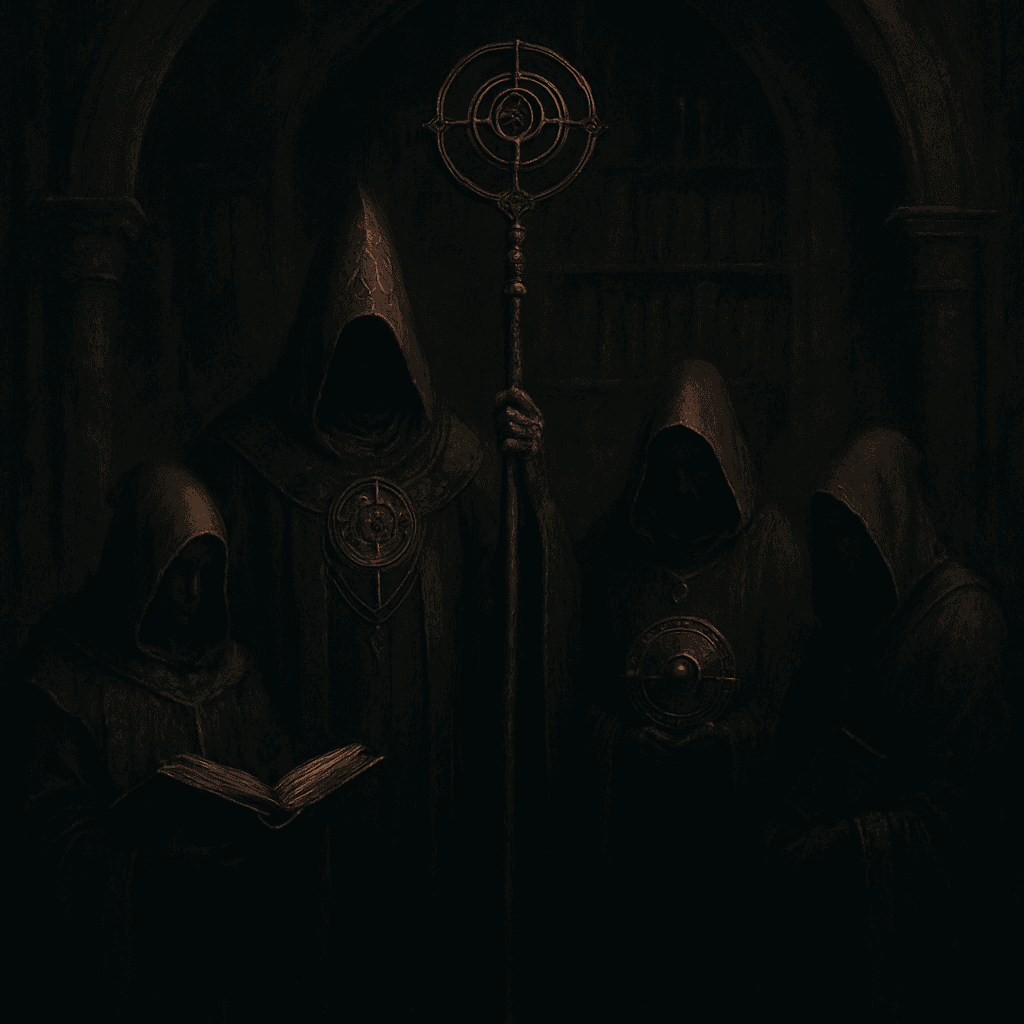
The Seventh Circle
Faction
The innermost scholastic order of the Luminous Fold (Civilization)'s Archivist tradition. The Grand Archive at the heart of the Fold is organized in seven concentric Circles, each a deeper tier of categorical mastery: the First teaches Cataloguing; the Second, Comparative Pattern; the Third, Mensuration; the Fourth, Iterant Calculus; the Fifth, Boundary Cases; the Sixth, Concordant Variance. The Seventh is granted no fixed discipline. Its Fellows are those who have exhausted the six and may originate new categories of inquiry; Archael Viremont is the only living Fellow whose journals have been released outside the Circle. The Seventh Circle is the Vaultkeeper tradition at its highest pitch — and, increasingly, the place where the Knowledge Fragmentation Principle is being quietly debated.
Canon StabilityAbsolute
institutionscholastic-orderluminous-fold+2
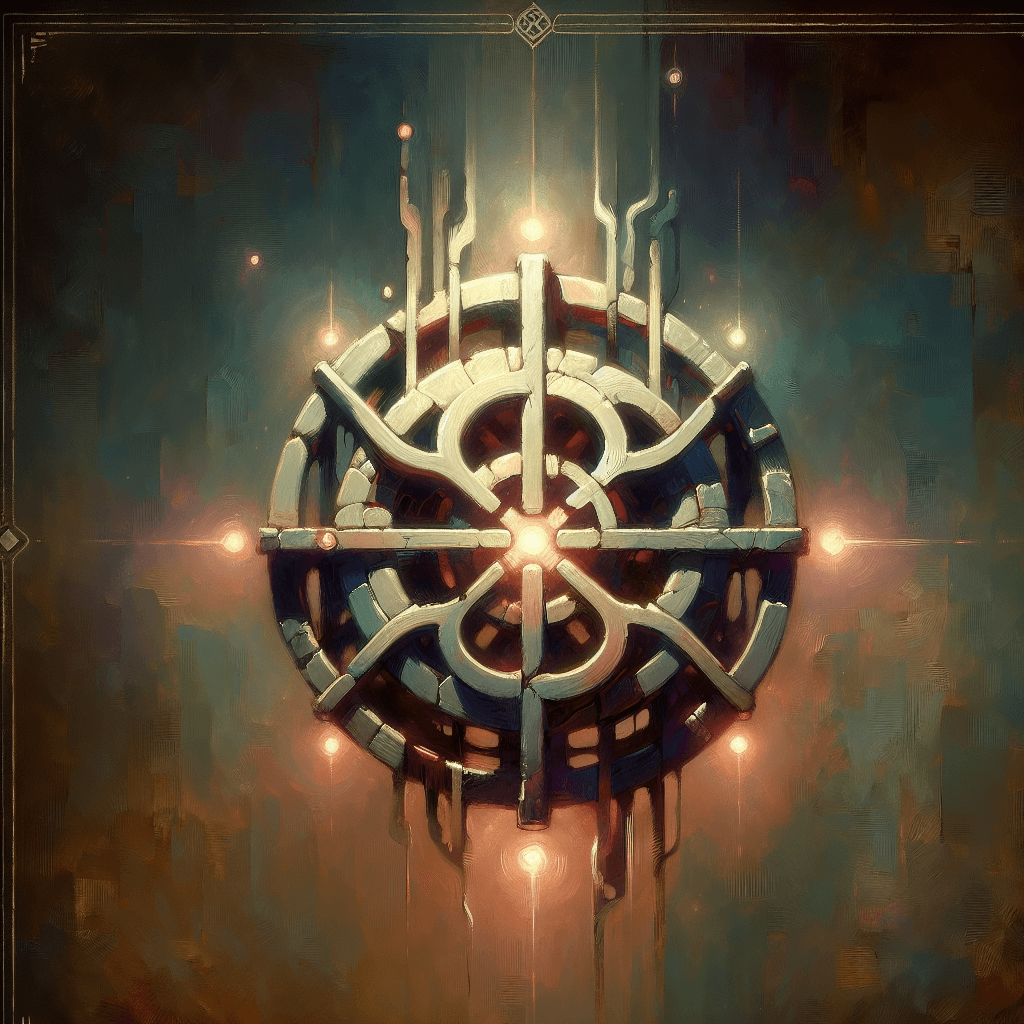
The Shards of the Pattern
Artifact
Broken pieces of the Anchors of First Map — each a spine of the Pattern and an anchor of reality. They hum with forgotten power and remember each other when brought near; Eidon has said there are "eight, or thirteen, or one shattered eight ways." Shards behave like gravity, not objectives. They pull toward one another slowly, indirectly, across regions — and people, factions, and entire towns rearrange themselves around that pull without realising it. Three Shards are known to have been recovered so far: one inside the Bell Tree at Drelmere, one in the underwater well at Virelay, and one in the Black Tower. Father's Shard is a fourth, carried since the Fray's onset by Kaerlin. No one in the Archive knows what will happen when all the Shards of a region are reunited, much less all the Shards of every region. That unknown is the gravitational centre of every story.
Canon StabilityAbsolute
core-lorethe-patternquest-items
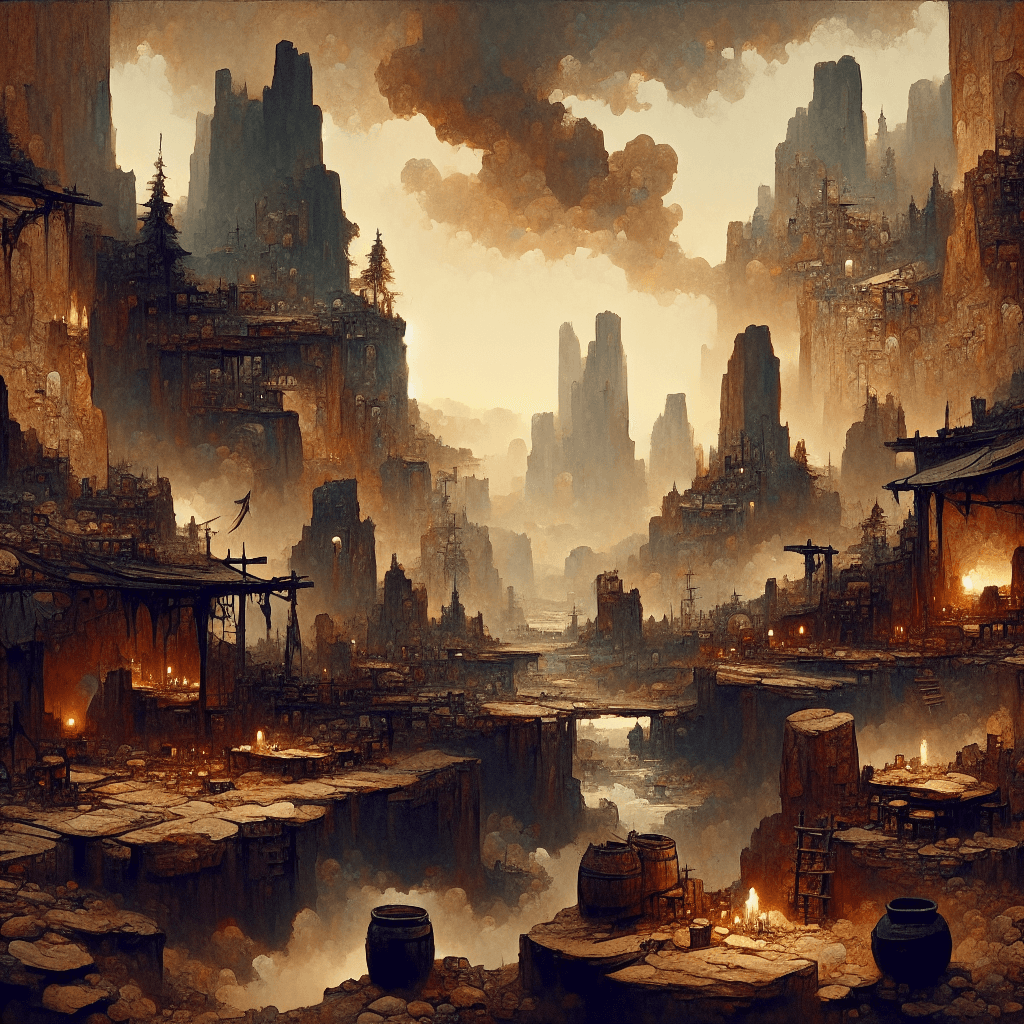
The Split Table
Location
Varnhalt's oldest tavern, named for the enormous oak table at its center that was split by a sword blow during a dispute that became local legend. Both halves remain, pushed slightly apart, and new patrons are expected to choose a side. The food is unremarkable but the ale is the Frontier's best. On the Varnhalt Frontier, this site sits inside the patchwork of crossroad towns, mesa camps, and trade-protected routes that radiate from Old Varnhalt. The Loosening is constant here — mile markers contradict, paths loop — so settlements rely on local pacing and on the small island of stability around the Black Stone Tower in the eastern hills. The Frontier has no central authority; this place answers to whoever its trade depends on this season.
Canon StabilityAbsolute
locationvarnhalttaverns

The Standing Teeth
Location
A row of impossibly tall stone pillars rising from the otherwise flat plains, visible from a day's ride in any direction. Their surfaces bear carvings that shift subtly depending on the angle of light. The Broken Teeth Site at their base suggests they were once part of something larger — a gate, perhaps, or a crown.
Canon StabilityAbsolute
locationdeyunekey-features
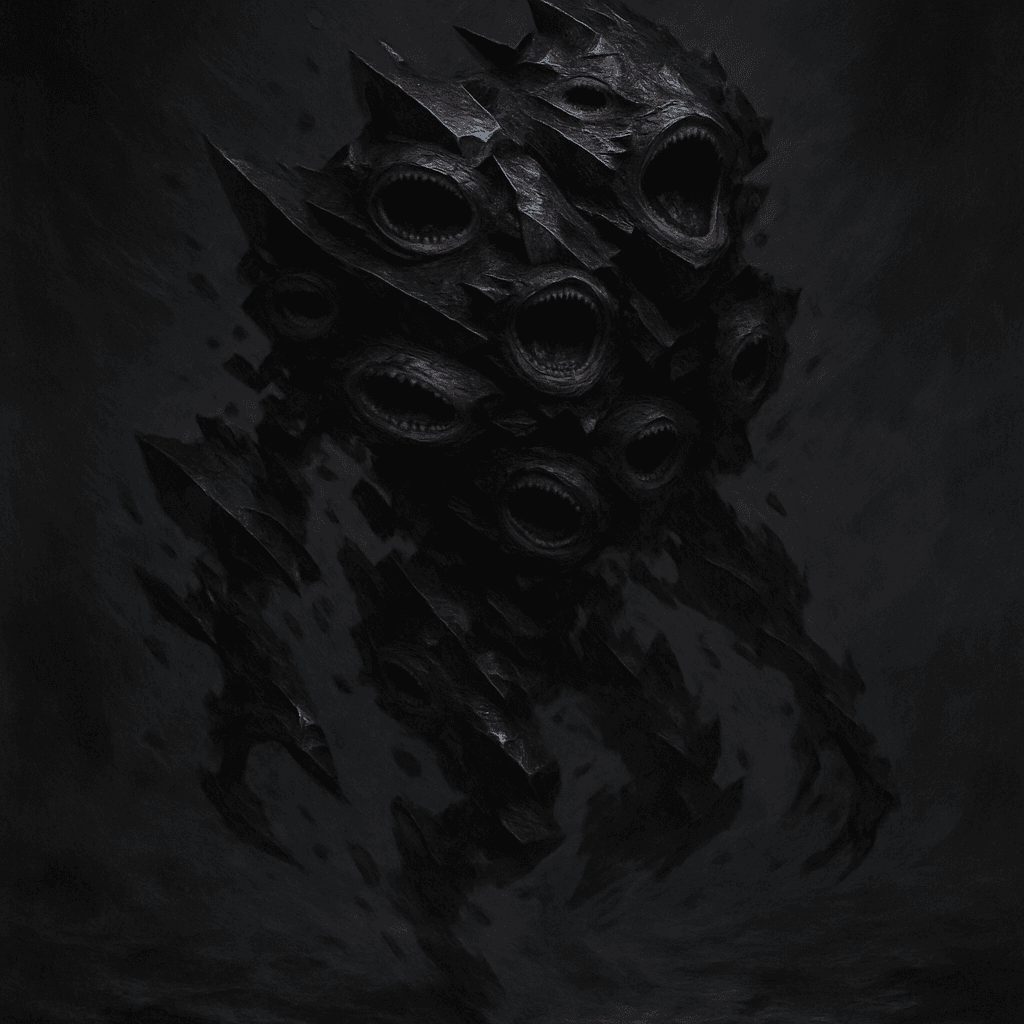
The Starving Silence
monster
Physical Form: A creature that looks like a fractured, floating mass of obsidian glass and dozens of wide, jawless human mouths. Its physical form is constantly vibrating at a frequency that shatters stone, yet it makes absolutely no noise. The Tragic Loop: The creature is experiencing excruciating sensory overload from the transition through the Fray, but the Drift stripped it of the ability to make a sound. It attacks by violently absorbing the sound around it—stealing the voices, heartbeats, and even the sounds of footsteps from its prey. It targets screaming victims, hoping that if it steals a loud enough scream, it will finally be able to vocalize its own agony. But the void inside it instantly swallows the stolen sounds, leaving it in eternal, deafening silence. Reason for Breakage: The Starving Silence forms in the Glass Expanse where light has shattered the same way too many times in the same place — typically near Echo Ruins or an abandoned prism-grove. Its many mouths cannot speak because the Pattern broke there in a frequency the throat cannot reach. Knowledge Fragmentation Principle scholars cite the Silence as evidence that some truths are not merely incomplete but actively self-cancelling.
Canon StabilityAbsolute

The Sunken City
Location
The submerged city offshore of the Drowned Reach — older, larger, and more intact than the Drowned City to the south. The Sunken City was a working metropolis before the Reach's coastline began its long collapse, and most of its streets, plazas, and civic buildings are still navigable to a trained deep-diver at slack water. Vaultkeepers consider it one of the few intact pre-Weaving urban sites known. The Cartographic Society of Iterants keeps a permanent recovery expedition based at Flood Station. The Echo haunts the inner districts; Vaultkeeper theory says the Echo is what the Sunken City's drowned population becomes when its memory tries to reassemble without bodies.
Canon StabilityAbsolute
locationdrownedruins
The Underwater Well
Location
A perfect ring of ancient, moss-covered stone embedded in the seafloor off the coast of Virelay. Surrounded by dozens of fishing trap lines that seem to worship it. Inside lies a small, windowless room with a hearth containing the second Shard disguised as a glowing ember. The room floods violently when the Shard is taken.
Canon StabilityAbsolute
story-2underwaterancient+1
The Vaultkeepers
Faction
Guardians of the gaps — those who look between the threads of the Pattern, into the Time Before the First Map was woven. The Vaultkeepers are the older counterpart to the Dreamers: where Dreamers move the weave, Vaultkeepers preserve and read it. The Luminous Fold's Archivist tradition is the institutional descendant of this older order, and the Grand Archive in Lumina is the Vaultkeepers' most ambitious surviving project. The Vaultkeepers once believed memory was a circle and nothing truly ended. The Fray taught them otherwise. Now their oldest members whisper of things not written in any loop — of the Prime Beings, of the Dawn, and of the parts of the world that were paved over by the Weaving rather than created by it.
Canon StabilityAbsolute
core-lorememoryguardians+1

The Veykar
Character
The conquering warlord of the Deyune Steppe — no bloodline, no inherited name, only a claim taken by the blade and made permanent by The Wheel and The Hall. The Veykar spoke of unity and enforced it through slaughter. He built roads, protected trade, and forced a hundred clans into something that looked from a distance like a state. He kept the Draethan close, trusted no one except the silent cook who served his meals, and was poisoned by her in a quiet, unhurried act of justice for every village he had erased — beginning with hers. The Veykar saga is the Everloop's study of order purchased with cruelty: how much civilisation can be built on slaughter before the slaughter becomes the civilisation. The Steppe remembers him by silence, which was always his real language.
Canon StabilityAbsolute
story-4antagonistwarlord+1
The Weaving
Concept
The act of the First Architects making order from the primal drift of the Dawn. They built anchors — towers that hummed, stones that pulsed, maps that bled when torn — and from those anchors the Pattern emerged, and from the Pattern the Everloop. The Weaving was not creation so much as restraint: it told the world what shape to keep, and the world, mostly, kept it. The Vaultkeepers were the first scholars of the Weaving; the Luminous Fold institutionalised that scholarship. Every Anchor still standing — the First Root Chamber under the Old Bellroot Site, the Karak stones on the Deyune Steppe, the Black Stone Tower on the Varnhalt Frontier, the Underwater Well off Virelay — is a working remnant of the Weaving, and every Anchor is one of the points where the Fray now leaks through.
Canon StabilityAbsolute
core-lorecreationthe-architects
The Well Site
Location
The depression in the seafloor beneath Virelay's harbour where a perfect ring of carved Anchor-stone once pulsed with a gravity that pulled at something deeper than the body. The Well Site was the seat of the Third Shard of the Pattern. Fishing lines across the entire harbour drifted toward it; sailors described a hum that travelled up through the boat's wood. Auren Thorne dove for the Shard here in the closing scene of his quest for the Virelay Coastlands. With the Shard removed, the Well's pull has gone quiet — but the ring of carved stone is still there, and the Cartographic Society of Iterants has logged at least two reports of the hum returning briefly during the deepest tides.
Canon StabilityAbsolute
locationruins-anomalies

The Wet Lantern
Location
A tavern in Deep Reach built on one of the city's floating pontoon platforms, accessible only by boat. The Wet Lantern sways gently with the water and its lanterns are waterproofed with wax and oil. It is the social center of the Reach — the one place where salvagers, traders, and officials share space and drink strong rum cut with rainwater. In the Drowned Reach, this site is one of the half-drowned settlements that rebuild themselves on stilts every generation around the Sunken City. The sea is steadily reclaiming the coast, and the Echo is the regional Fray-consequence that haunts the deeper channels. What the tide takes here, it usually takes for a reason — sometimes a Shard, sometimes a name, sometimes only the road that used to lead inland.
Canon StabilityAbsolute
locationdrownedtaverns
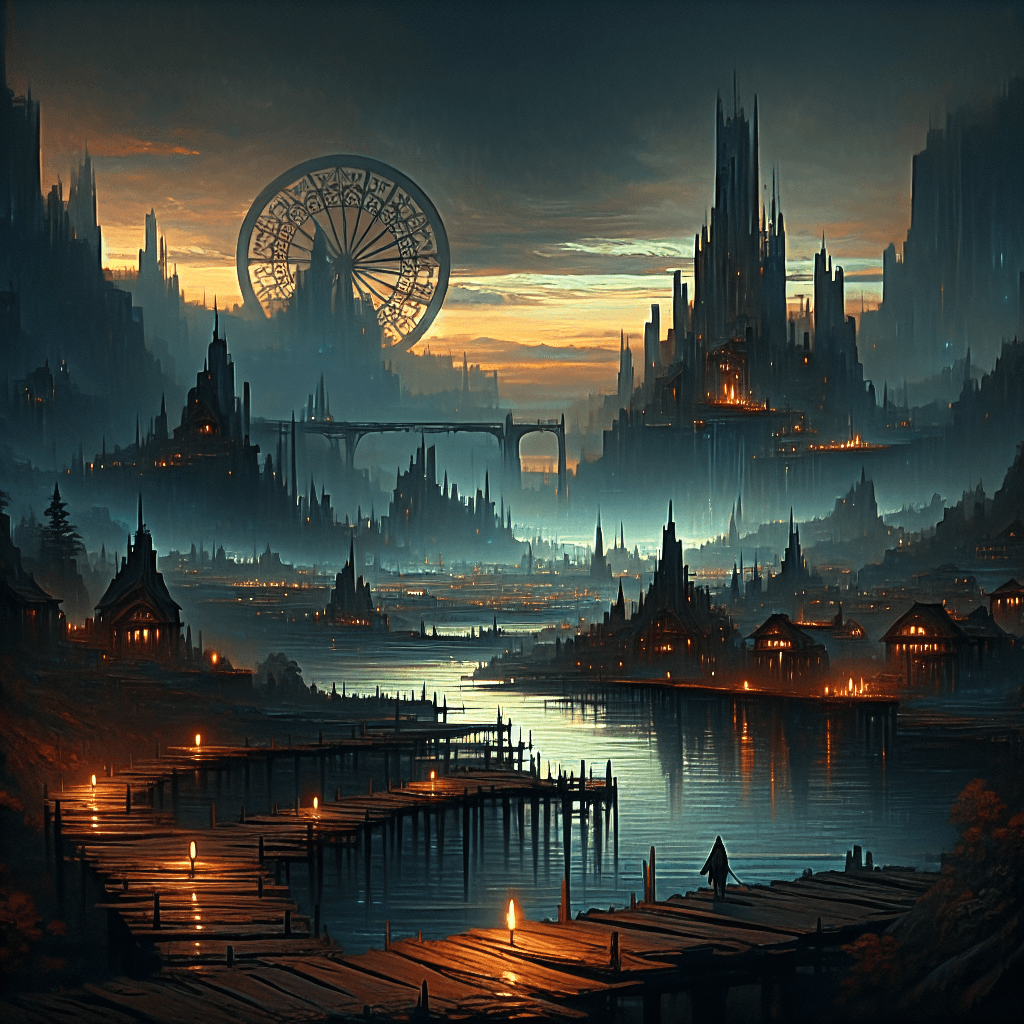
The Wheel
Location
The Veykar's moving military camp — a city of hide tents and bone stakes organised in concentric rings on the Deyune Steppe. Outermost: pits, latrines, stables, butcher-grounds, slave-pens, kitchens. Middle: soldiers' quarters and minor offices. Inner: command tents, the archives, the Draethan's quarters, and The Hall. The Wheel moved on the Veykar's command and stopped on it; entire seasons of the Steppe's history are recorded as "when the Wheel was at Karak" or "after the Wheel left Telmar." When the Veykar died, the Wheel scattered. The fire-circles of its old encampments are still findable in the Steppe's grass, and the Cartographic Society of Iterants has been quietly mapping them for two Loops.
Canon StabilityAbsolute
story-4military-campthe-veykar+1
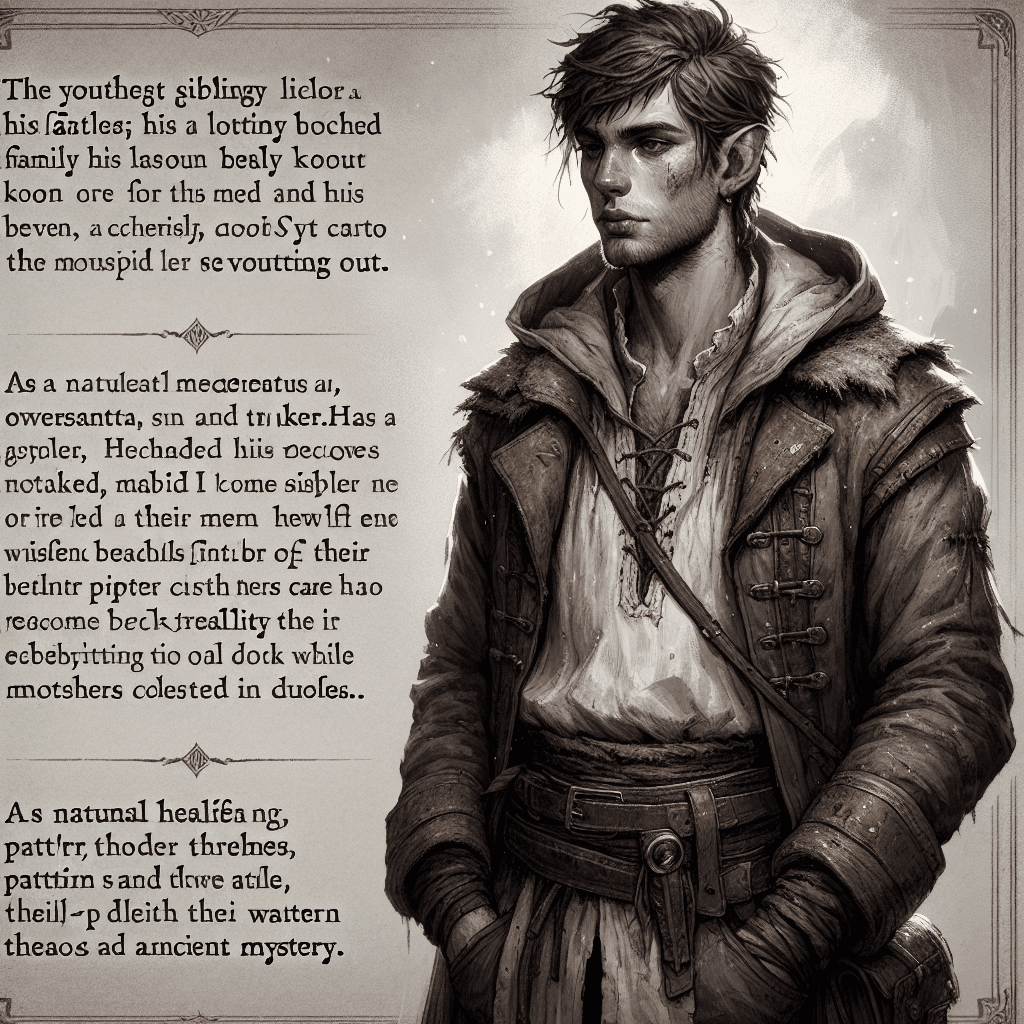
Thomel
Character
Youngest of the three Bellroot siblings — quiet, watchful, and built for the patience his sisters cannot quite reach. Thomel stayed behind in the family cottage to care for their mother Alira in her final season, and he stayed again afterwards to look after their Uncle Edran while Kaerlin and Mira moved between Drelmere and Halrick's Reach. He is a natural tracker and a natural mediator — famously, he convinced the hermit Eidon to leave Watcher's Hill not by argument but by an elaborate metaphor about soup, Everfern, and the proper order of folding a drawer. Thomel's compassion is the gravity that keeps the siblings from flying apart; without him, Kaerlin's steadiness and Mira's sharpness would have nothing to circle around.
Canon StabilityAbsolute
story-1protagonistsibling+1
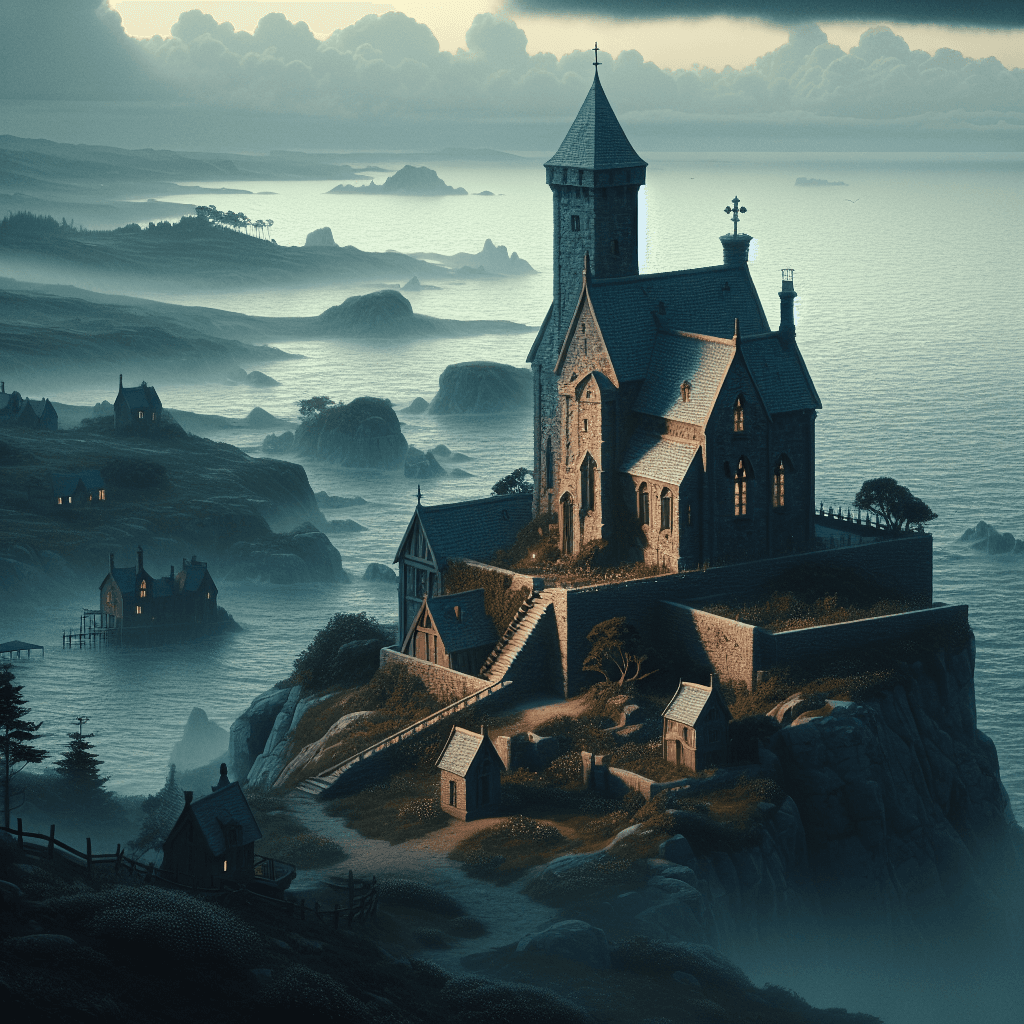
Thorne Manor
Location
The ancestral seat of House Thorne — a long-galleried manor of pale stone and dark wood set above the inland approach to the Virelay Coastlands. Thorne Manor's Winter Room is famous on the coast: the hearth is always full, and the family's closest allies are received there. The gardens, the training courtyard, and the front gate (guarded by the comfortably bored Brennick) are the parts most visitors see; the working library and the small Anchor-stone in the back garden are the parts that are not on the tour. Auren Thorne made his "escape" from the Manor on the night the Fray reached the Coastlands. Lord Thorne and Lady Thorne watched him go from the Winter Room and did not call out.
Canon StabilityAbsolute
story-2house-thornemanor+1

Thorne Reach
Location
The largest permanent settlement on the Deyune Steps, built around a natural spring that never dries. Thorne Reach governs loosely — more through trade leverage than decree — and its stone granaries feed half the camps on the northern plains. Caravans from Valen Spur arrive monthly, and Nerin Post operates as its forward outpost. On the Deyune Steppe, this site is one of the points where the Long Wind, the clan-roads, and the old Karak geometries meet. Time Instability runs heavy here — distances and seasons rarely agree between settlements. The Veykar's old reach passed through or near sites like this; some bear the Wheel's scars in the soil, others have been letting the grass grow back over them for generations.
Canon StabilityAbsolute
locationdeyunecities
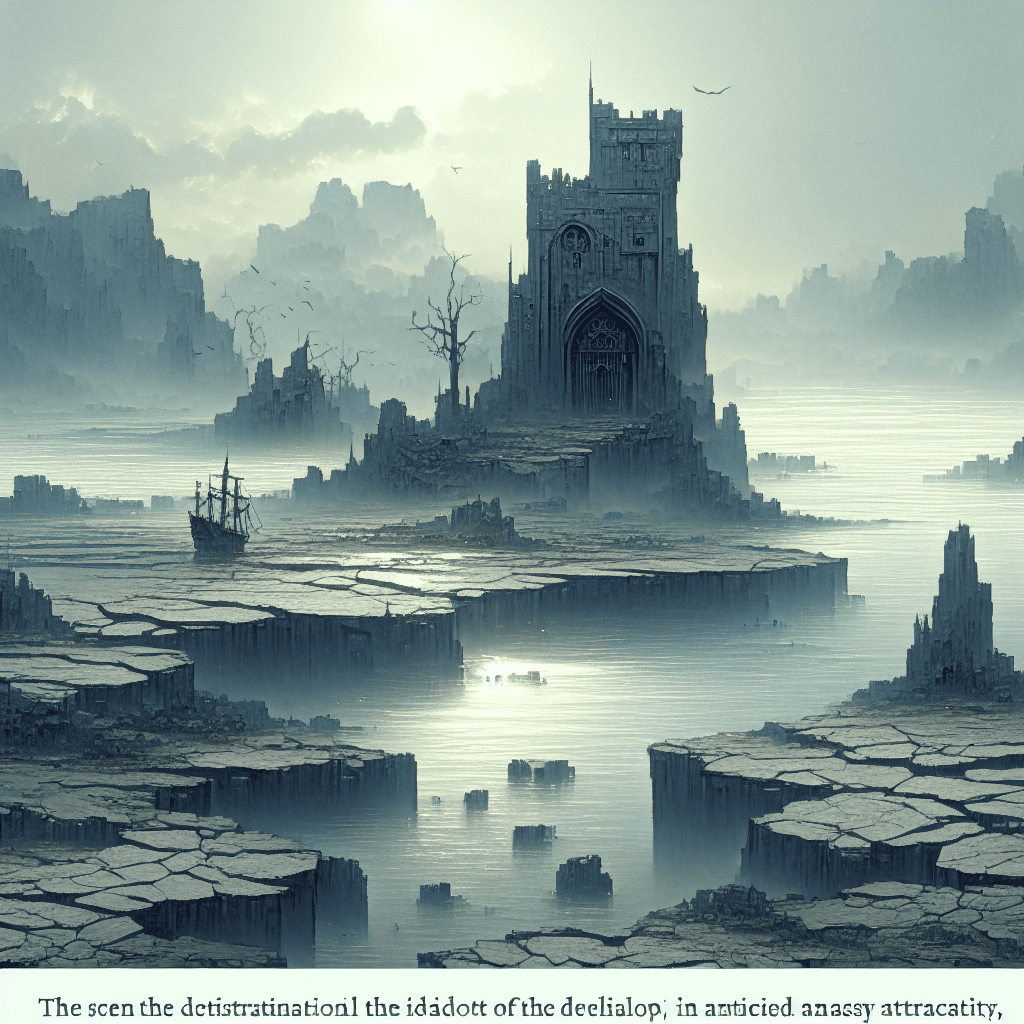
Tide Gate
Location
A fortified seawall and checkpoint where the coastal road meets the interior. Tide Gate regulates traffic between the shore settlements and the inland towns, and its engineers maintain the drainage systems that keep the Fray-touched tides from flooding the farmland beyond. It is the Coastlands' last dry line of defense. Along the Virelay Coastlands, this site is part of the lattice of harbours, bell-towers, and salt-marshes that look toward Virelay and the Underwater Well. The sea here remembers more than the maps do; the Loosening lives in the fog. House Thorne's trade lines once stitched these settlements together — some of those routes are still walked, others have gone quiet since the Fray reached the coast.
Canon StabilityAbsolute
locationvirelayoutposts-forts

Tide Watch
Location
A monitoring platform on stilts at the Reach's perimeter, tracking the water levels that creep steadily inland. Tide Watch provides the early warning system for Floodmark, West Reach, and the inland settlements. Its gauges are read twice daily; the readings have never once shown the water receding. In the Drowned Reach, this site is one of the half-drowned settlements that rebuild themselves on stilts every generation around the Sunken City. The sea is steadily reclaiming the coast, and the Echo is the regional Fray-consequence that haunts the deeper channels. What the tide takes here, it usually takes for a reason — sometimes a Shard, sometimes a name, sometimes only the road that used to lead inland.
Canon StabilityAbsolute
locationdrownedoutposts
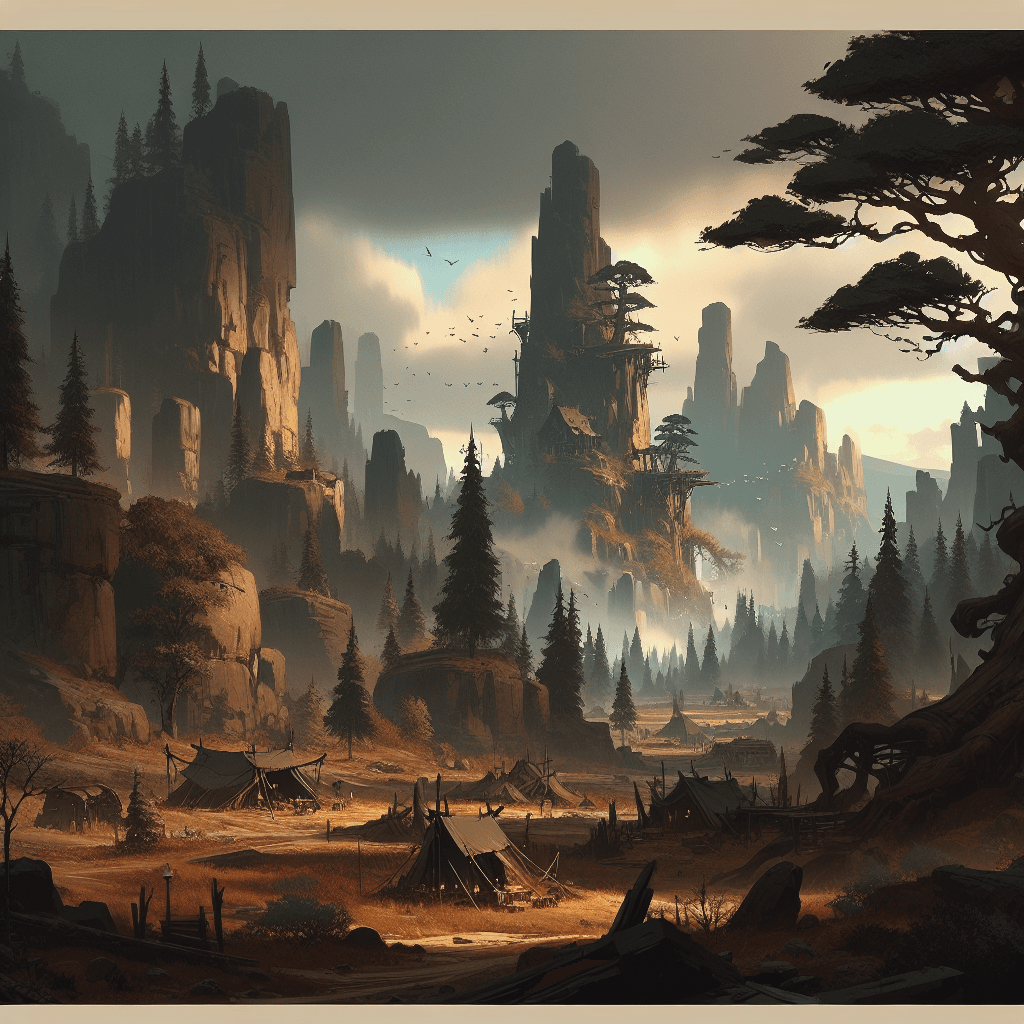
Timber Post
Location
A logging-road checkpoint near Pine Run that monitors timber shipments headed for Korr Field. Timber Post also serves as an emergency shelter during the severe storms that sweep the eastern Frontier each autumn. Its garrison is small but well-supplied. On the Varnhalt Frontier, this site sits inside the patchwork of crossroad towns, mesa camps, and trade-protected routes that radiate from Old Varnhalt. The Loosening is constant here — mile markers contradict, paths loop — so settlements rely on local pacing and on the small island of stability around the Black Stone Tower in the eastern hills. The Frontier has no central authority; this place answers to whoever its trade depends on this season.
Canon StabilityAbsolute
locationvarnhaltoutposts-forts
Time Instability
Concept
Outside the Luminous Fold (Civilisation), time is not a shared standard. Some regions disagree on the length of a Cycle. Some ignore the unit altogether. Others measure duration through environment or movement — a tide's return, a herd's arrival, the cooling of a vent. The Fold's clocks describe the Fold and only the Fold. As Archael Viremont eventually concluded, "We do not all inhabit the same Loop, even when we share the same hour." Time Instability is the temporal twin of the Loosening, and both are downstream symptoms of the Fray.
Canon StabilityAbsolute
timeinstabilitypattern+2

Tovin Encampment
Location
A sprawling tent city that swells and shrinks with the migration cycles. Tovin sits on the eastern edge of the Long Run and serves as the primary resupply point for caravans headed toward Thorne Reach. Known for its horse-breaking pens and the sound of hammers from its traveling smiths. On the Deyune Steppe, this site is one of the points where the Long Wind, the clan-roads, and the old Karak geometries meet. Time Instability runs heavy here — distances and seasons rarely agree between settlements. The Veykar's old reach passed through or near sites like this; some bear the Wheel's scars in the soil, others have been letting the grass grow back over them for generations.
Canon StabilityAbsolute
locationdeyunesettlements
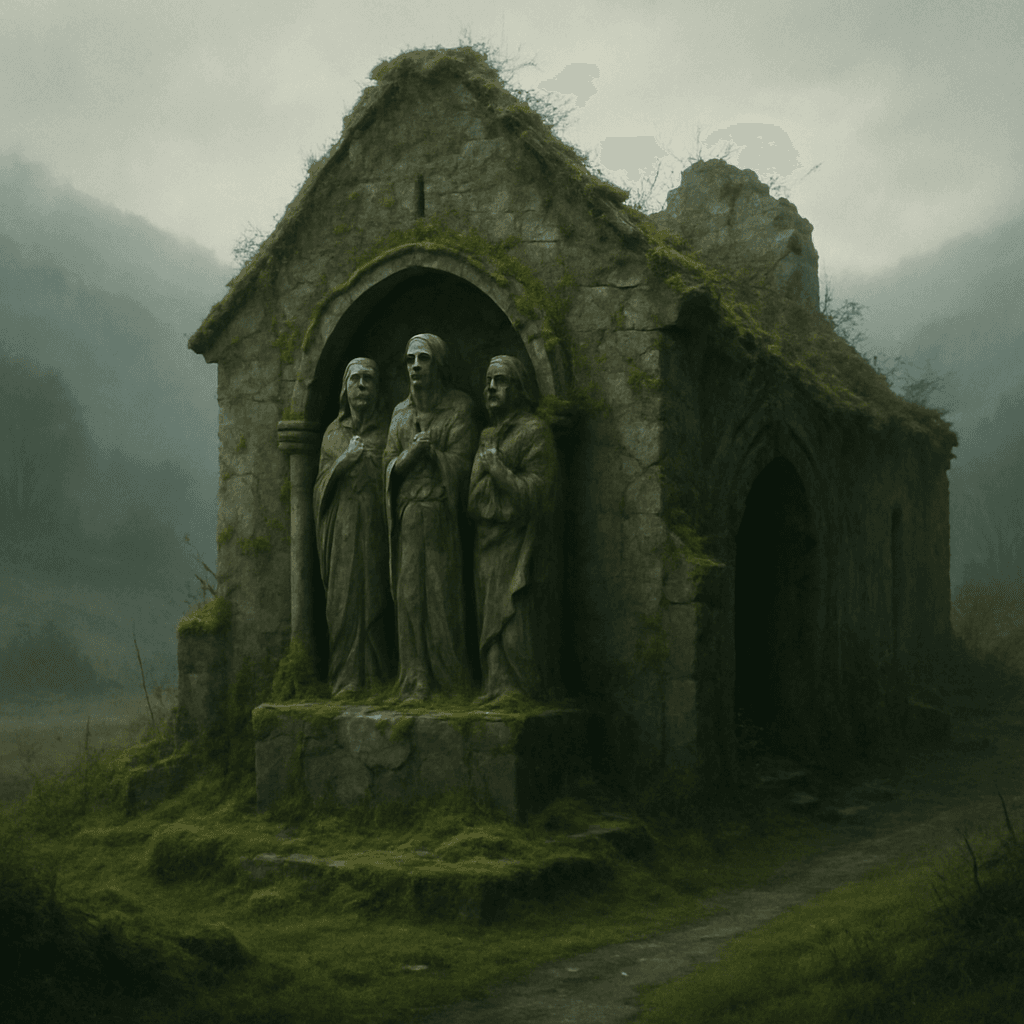
Triumvirate Chapel
Location
A moss-swallowed shrine at the edge of Drelmere bearing a cracked statue of the Triumvirate — Time, Memory, and Flesh — whose hollow eyes still face the path into town. The chapel was a place of quiet observance for the Dreamers who once gathered in Drelmere, and its cold stone is said to retain the impressions of their meditations. Now half-collapsed and shadow-veined, it is the first ruin travelers pass when entering the valley, and the last thing they remember when they leave.
Canon StabilityVolatile
bellrootstory-1ruin+1
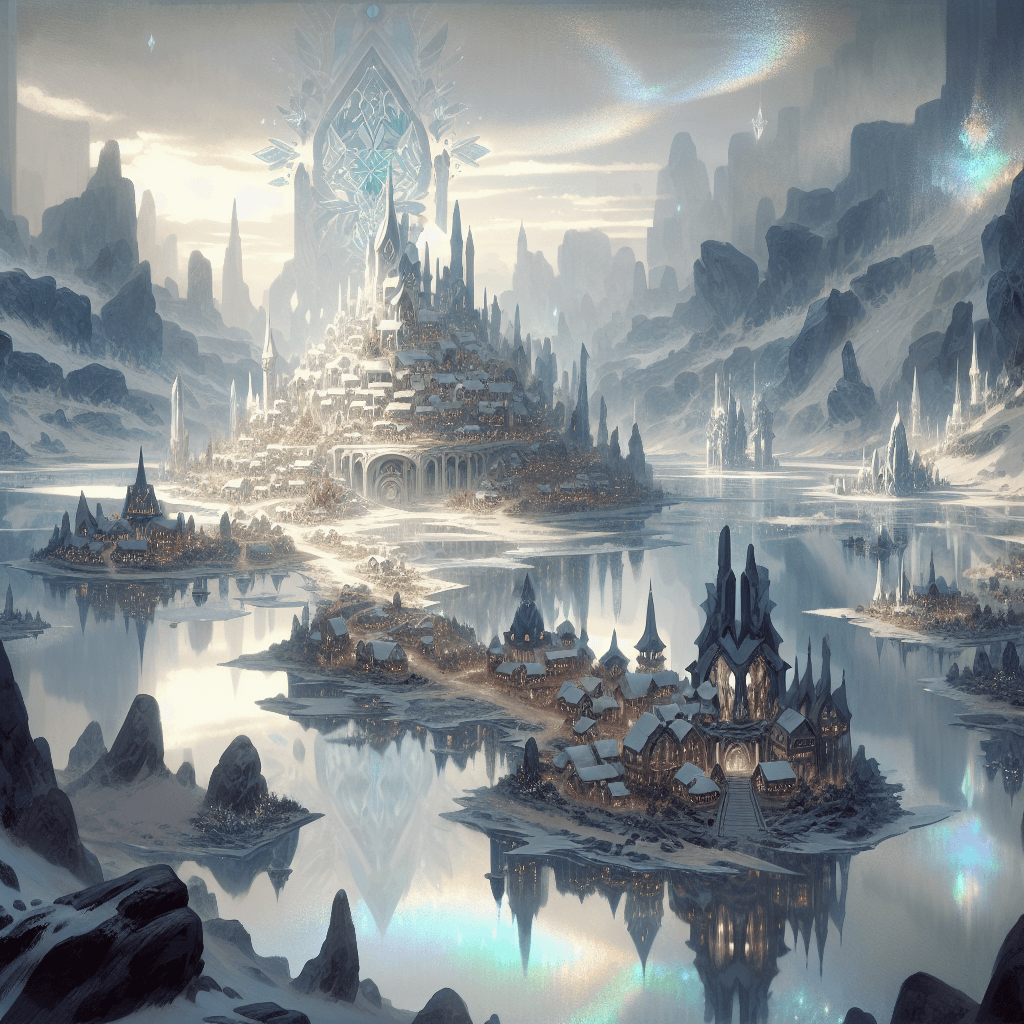
Twinmark
Location
A town built across a fault line where two different types of crystal terrain meet, creating a visible seam that bisects the settlement. The western half gleams silver; the eastern half refracts light into constant rainbows. Twinmark's residents have learned to navigate the disorienting visual effects, but visitors from Glass Reach still struggle. Out in the Glass Expanse, this site is part of the network of prism-fields, shard-towns, and silica plateaus that surround Prism City. Light bends here in ways the Pattern cannot quite hold — the air sometimes refracts a scene from a different hour, and the Starving Silence forms where light has shattered the same way too many times in the same place. The Knowledge Fragmentation Principle was first formalised by Expanse philosophers a generation before the Luminous Fold accepted it.
Canon StabilityAbsolute
locationglasstowns
Uncle Edran
Character
The siblings' uncle — a gruff, weather-creased man who raised Kaerlin, Mira, and Thomel alongside their mother Alira in the family cottage near the Overlook. Edran was a pragmatist by inheritance and by need: the kind of Bellroot villager who calls Fray-talk "dangerous dreaming" and means it. He spent years dismissing the warnings Alira passed down from the Dreamers, and he spent his last conversation with Kaerlin admitting he had been wrong — giving her his blessing to continue what her parents had started. Strong but not gentle, slow to praise and slower to forgive, Edran is the household's anchor and its argument. The children loved him in spite of him, which is how he preferred it.
Canon StabilityAbsolute
story-1uncleguardian
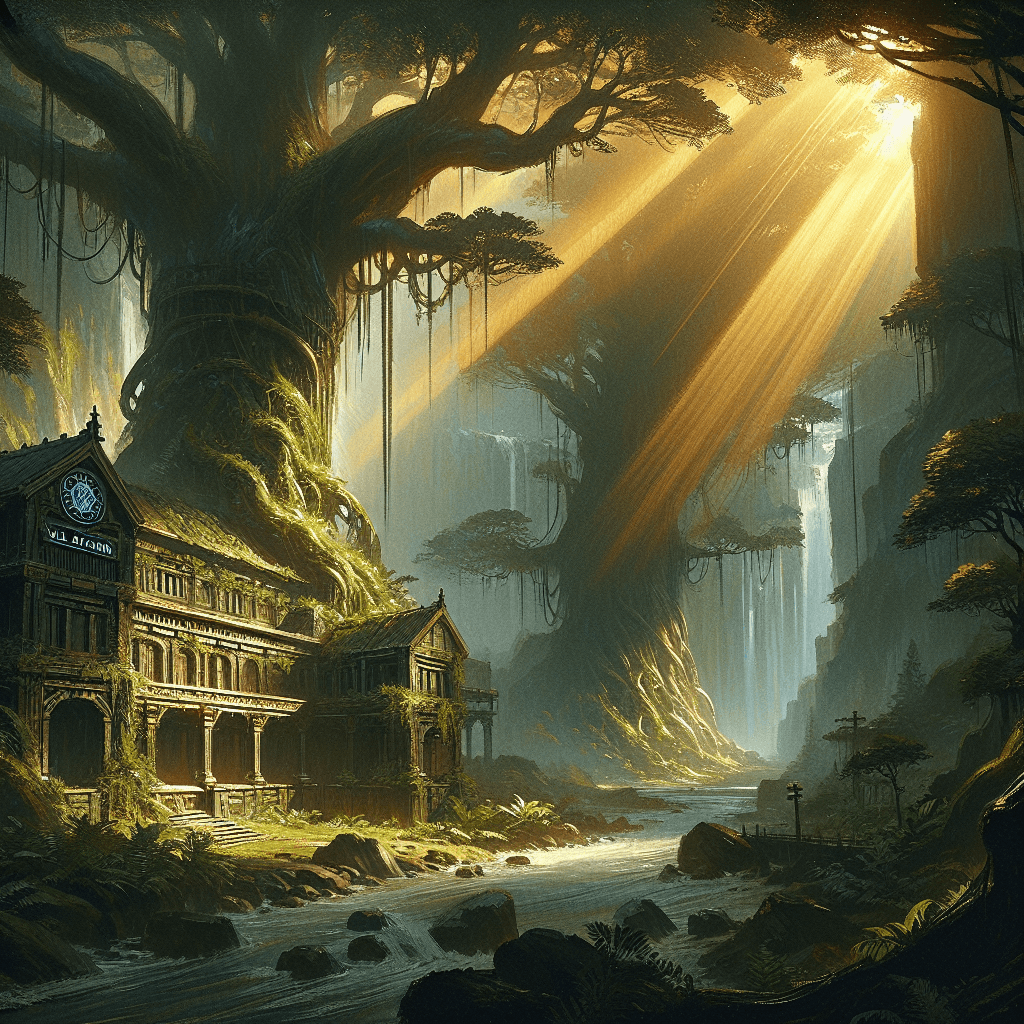
Vale Station
Location
A supply depot and relay point on the main road between Drelmere and Bellroot Crossing. Vale Station is utilitarian and unremarkable, but indispensable — every message, shipment, and patrol moving through the Vale passes through its hands. Within the Bellroot Vale, this site sits in the wider network of villages, ruins, and Pattern-touched places that radiate out from Drelmere and Bellroot Crossing. The Vale's relative stability since the Second Shard was recovered from the Bell Tree is felt here, but the Loosening and the Fray still leave their fingerprints — old paths that no longer match the new ones, names half-remembered, the occasional warm wind out of the wrong season.
Canon StabilityAbsolute
locationbellrootoutposts

Valen Spur
Location
A fortified trading city at the southern tip of the Steps where the grasslands narrow between rocky bluffs. Valen Spur controls the only viable overland route to the Varnhalt Frontier and charges steep tolls for the privilege. Its markets are louder and more diverse than those of Thorne Reach, though its people trust outsiders less. On the Deyune Steppe, this site is one of the points where the Long Wind, the clan-roads, and the old Karak geometries meet. Time Instability runs heavy here — distances and seasons rarely agree between settlements. The Veykar's old reach passed through or near sites like this; some bear the Wheel's scars in the soil, others have been letting the grass grow back over them for generations.
Canon StabilityAbsolute
locationdeyunecities
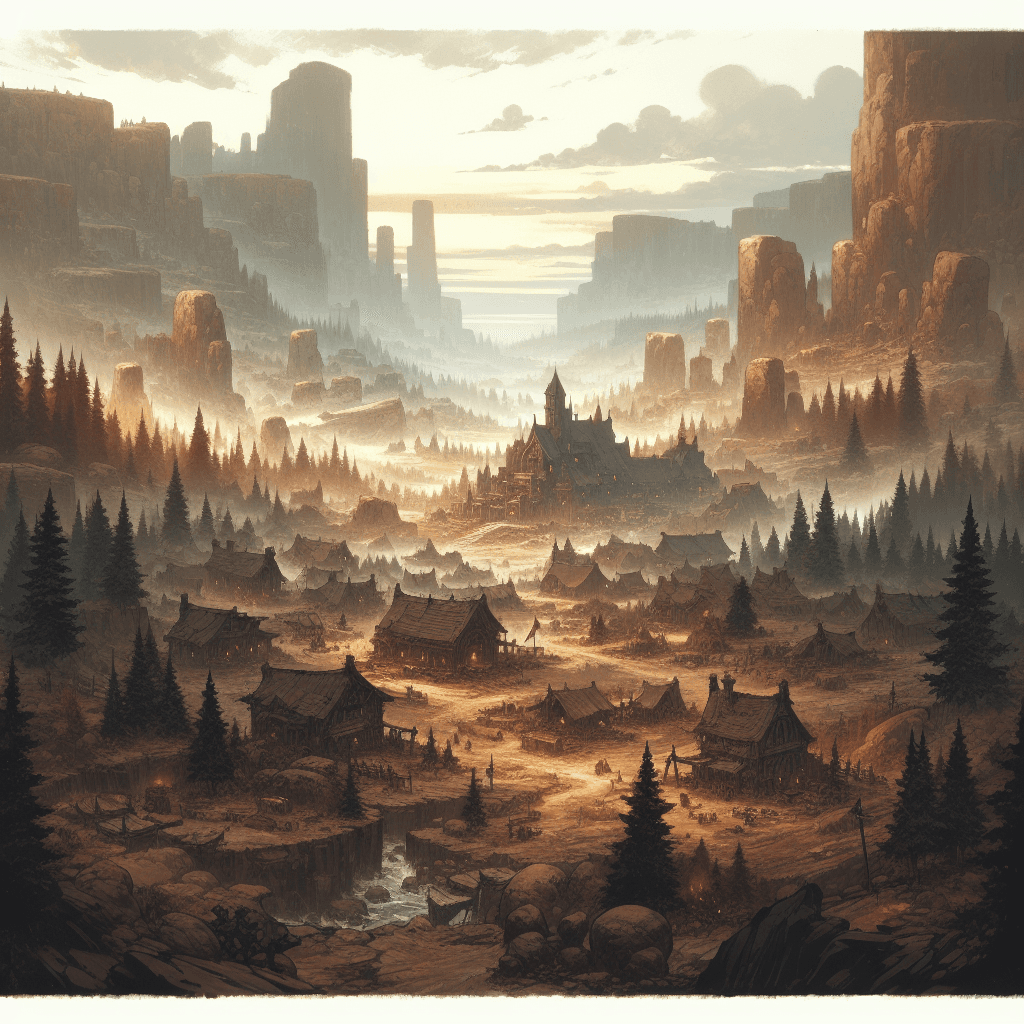
Varnhalt
Location
The town that gave the region its name — though its authority over the Frontier is more historical than practical. Varnhalt sits at the intersection of four trade roads and maintains a permanent magistrate, a courthouse, and the only bank between the Deyune Steps and the Coastlands. West Varnhalt across the river handles what the main town considers beneath its dignity.
Canon StabilityAbsolute
story-3townfrontier+1
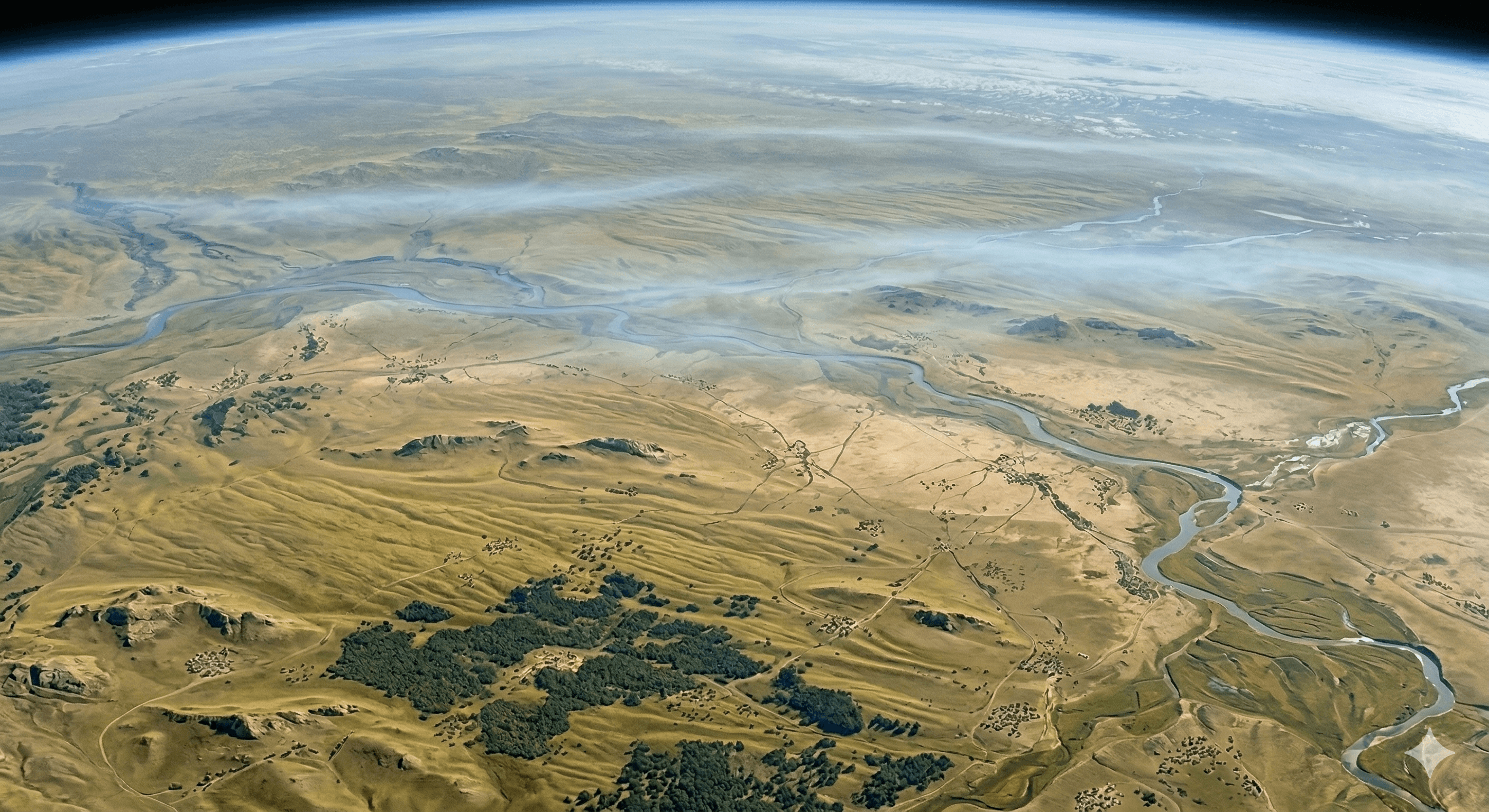
Varnhalt Frontier
Location
A rough feudal sprawl of plains, mesas, dry forests, and crossroad towns — the densest yet most decentralised civilisation in the Everloop. The Frontier has no central authority; the town of Varnhalt holds the name and a courthouse, but real power follows trade roads, market days, and the families that protect them. The region's defining structure is the Black Stone Tower in the eastern hills — a smooth obsidian spire that repels the Fray for a measurable distance around itself. Sera built her settlement around it. Rook, his bonded Servine Myx, and the events at the Tower belong to this region. Outside the Tower's small island of stability, the Loosening is constant: roads loop, mile markers contradict, and travellers learn early to trust their own pacing over any map drawn more than a Cycle ago.
Canon StabilityAbsolute
regionvarnhaltrough feudal edge
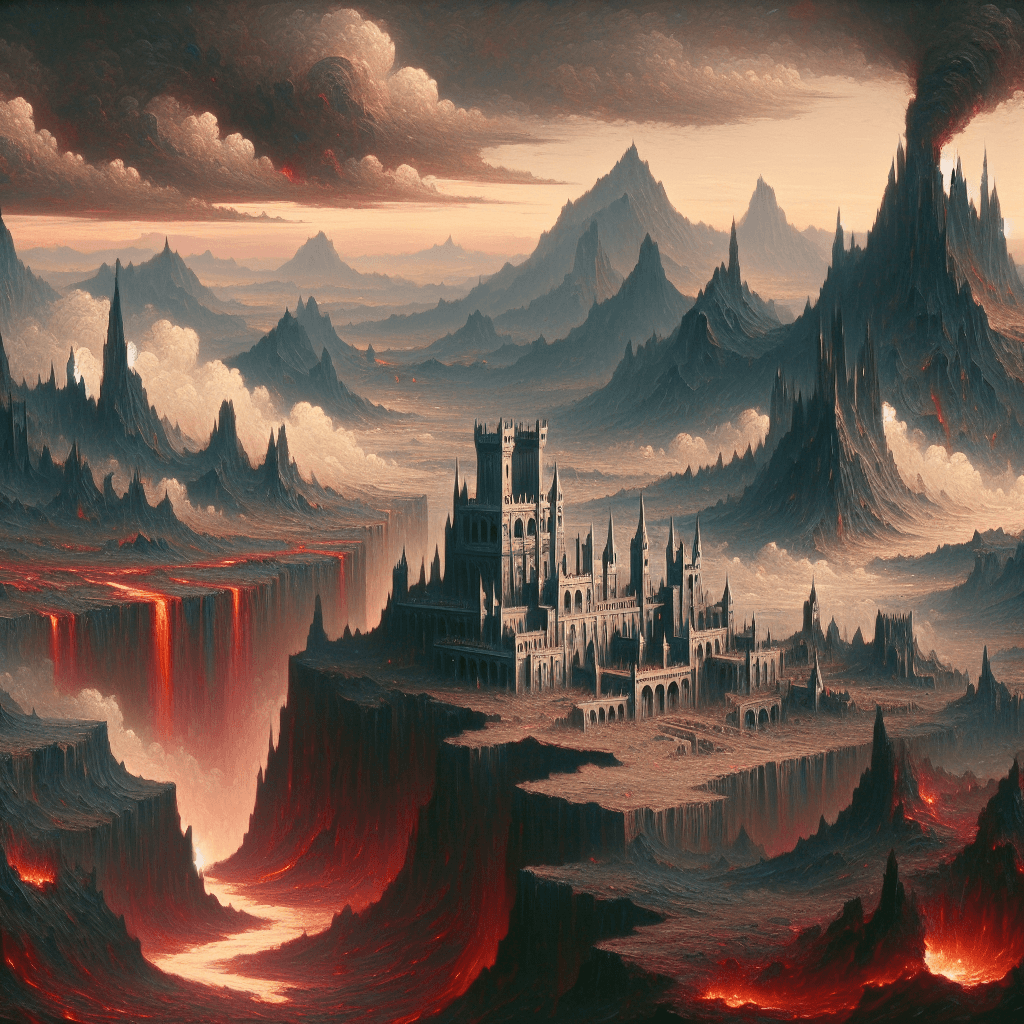
Varr Keep
Location
An ancient citadel on the southern edge of the Spine, older than Ironmark and far more secretive. Varr Keep controls the mountain passes leading toward the Virelay Coastlands and charges substantial tariffs on all trade moving between regions. The ruins of Old Varr sprawl beneath its foundations, and digging is strictly forbidden. Within the Ashen Spine, this site is part of the long chain of forge-towns, quarries, and iron-vein settlements that work the world's oldest forges from Ironmark down to Old Varr. The smoke is the climate. The Fray here is physical — cracks open in the rock, tunnels appear that were not there the day before — and the Cleaved is the regional consequence. Forge guilds keep their own records, and they keep them close.
Canon StabilityAbsolute
locationashencities

Vask Hollow
Location
Tucked into a shallow depression in the grasslands where wind rarely reaches, Vask Hollow is eerily still compared to the rest of the Deyune. Its residents are leatherworkers and weavers who supply Ashfall Crossing and the surrounding camps. Some say the hollow was carved by something older than the Steps themselves. On the Deyune Steppe, this site is one of the points where the Long Wind, the clan-roads, and the old Karak geometries meet. Time Instability runs heavy here — distances and seasons rarely agree between settlements. The Veykar's old reach passed through or near sites like this; some bear the Wheel's scars in the soil, others have been letting the grass grow back over them for generations.
Canon StabilityAbsolute
locationdeyunetowns
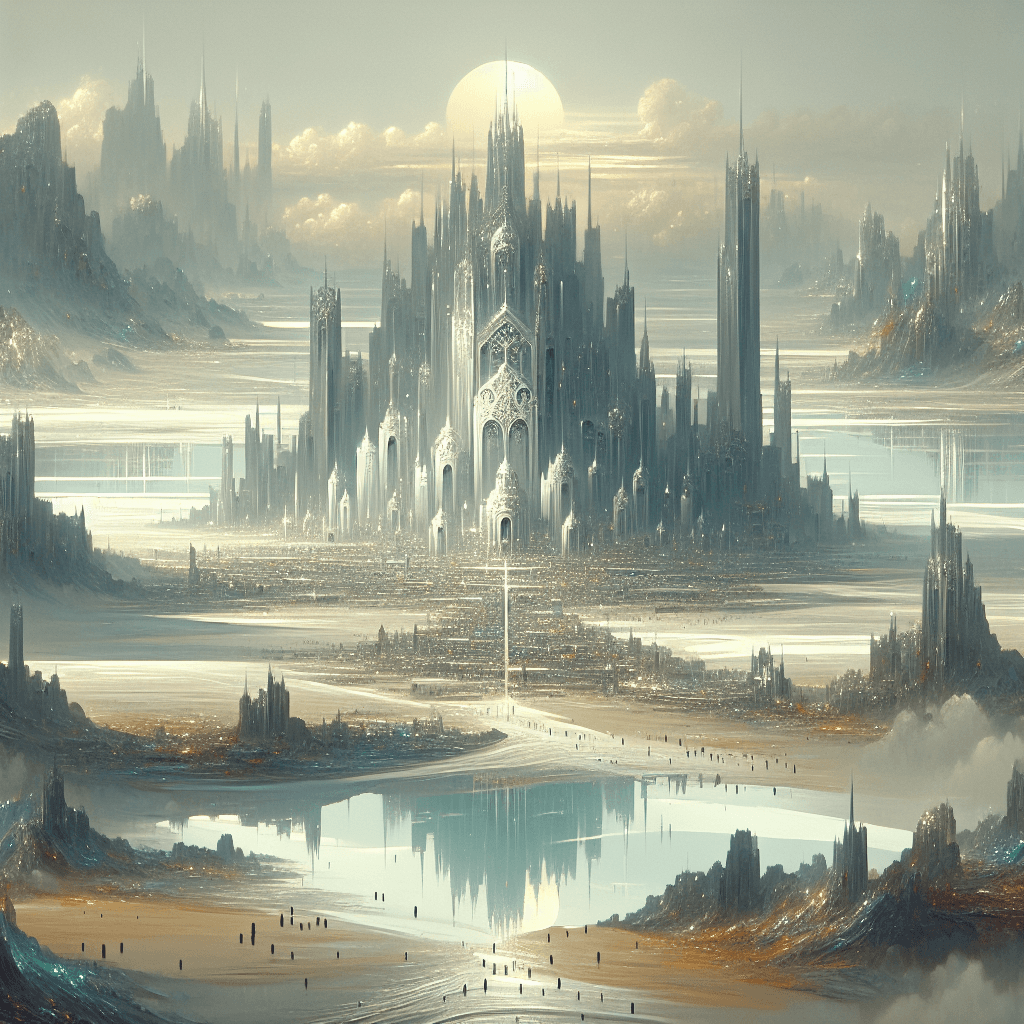
Vell Glass
Location
A sprawling quarry-city in the southern Expanse where crystal is extracted, cut, and shaped for export and construction. Vell Glass is louder and grittier than Prism City — its streets ring with the sound of cutting tools and its workers wear heavy goggles against the glare. The rivalry between the two cities is one of aesthetics: Prism City calls Vell Glass crude; Vell Glass calls Prism City ungrateful.
Canon StabilityAbsolute
locationglasscities
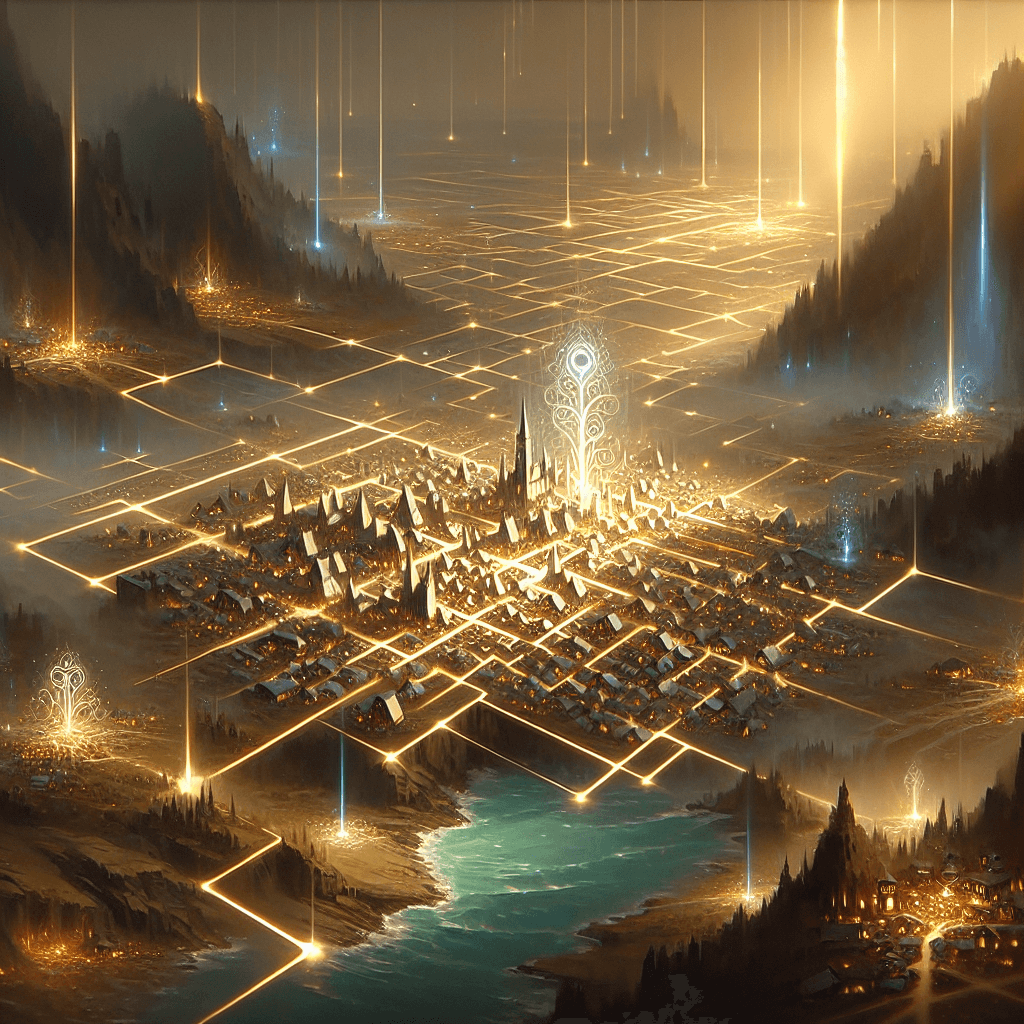
Venn
Location
An academic town where scholars study the Fold's anomalous properties. Venn maintains the region's only library, which catalogs the energy line network, the Grid Stations' observations, and the increasingly geometric behavior of the landscape. Named for a scholar who first mapped the overlapping zones of influence. The town works closely with Lumina on research. Within the Luminous Fold, this site is part of the gridded, measured landscape that radiates out from Lumina and the Central Fold. The Fold's clocks, roads, and institutions assume reality may be wholly described, and on this plateau they almost can — the Loosening and Time Instability are weakest here. The site answers, directly or indirectly, to one of the Seven Circles, and the Cartographic Society of Iterants keeps notes on every measurable thing that happens within sight of it.
Canon StabilityAbsolute
locationluminoustowns
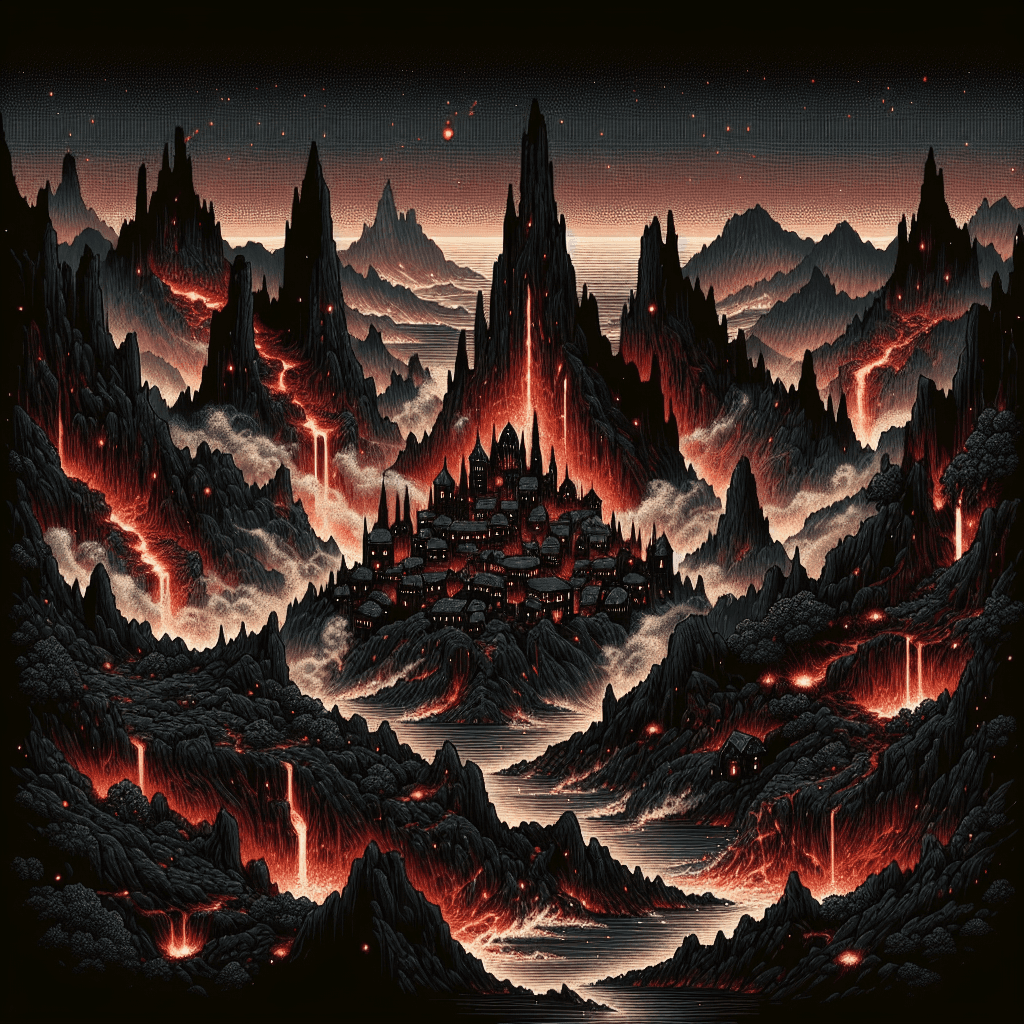
Vesta Hollow
Location
A sheltered depression between two dormant vents where hot springs have created an unexpectedly lush pocket of ferns and moss. Vesta Hollow is the Ashen Spine's only place of genuine comfort — travelers from Taldrin Pass and Cinder Vale alike detour here to rest and heal. Within the Ashen Spine, this site is part of the long chain of forge-towns, quarries, and iron-vein settlements that work the world's oldest forges from Ironmark down to Old Varr. The smoke is the climate. The Fray here is physical — cracks open in the rock, tunnels appear that were not there the day before — and the Cleaved is the regional consequence. Forge guilds keep their own records, and they keep them close.
Canon StabilityAbsolute
locationashenvillages
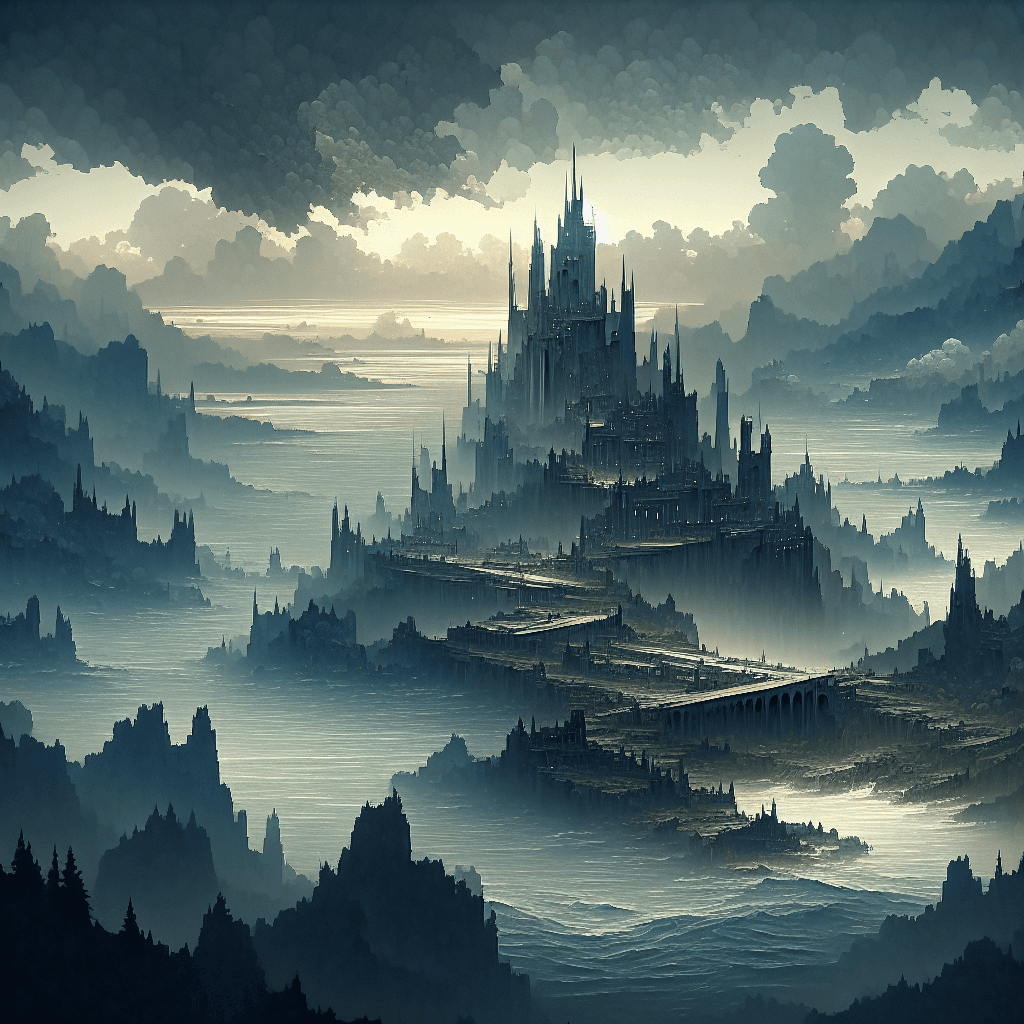
Virelay
Location
The largest port of the Virelay Coastlands and the symbolic centre of the region — built on the harbour above the Underwater Well, where the Third Shard of the Pattern was recovered by Auren Thorne. Virelay's harbour has been a working port for longer than any standing record reaches; the Drowned City offshore is part of the same urban continuity, drowned and rebuilt and drowned again. Bell-towers mark the fog; the salt-houses on the inner cliffs are older than House Thorne. Trade with the Bellroot Vale and the Deyune Steppe passes through this port. Since the Third Shard was lifted, the harbour's tides have settled into a regular rhythm for the first time in three Loops.
Canon StabilityVolatile
story-2towncoastal+4
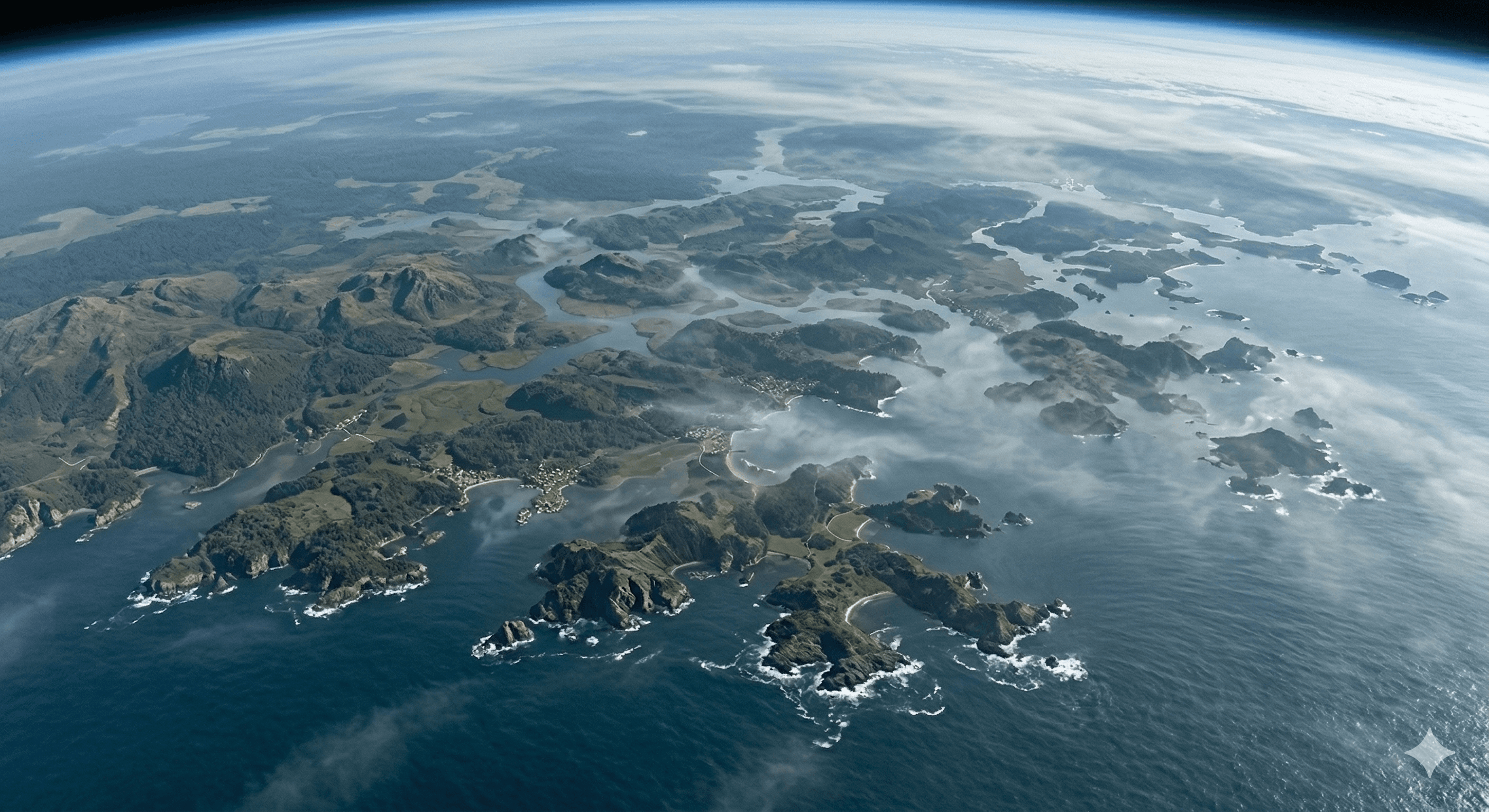
Virelay Coastlands
Location
The salt-wracked coastal region west of the Bellroot Vale, where towns cling to cliffs and cove-mouths along a fractal shoreline the maps cannot quite agree on. Virelay's identity is built on three things: the sea, the bells that warn of fog, and the Underwater Well — the ring of carved stone beneath the harbor that pulsed with the Third Shard of the Pattern until Auren Thorne dove for it. The coast hosts the only port culture in the Everloop, and its fishing fleets keep the inland regions fed. Trade with House Thorne built the inland villas; the Drowned City offshore, visible only at the lowest tides, is older than House Thorne by an order of magnitude no one is comfortable discussing. The Loosening is felt strongly here — sailors say the same harbor is never quite the same harbor twice.
Canon StabilityAbsolute
regionvirelayfractured shore
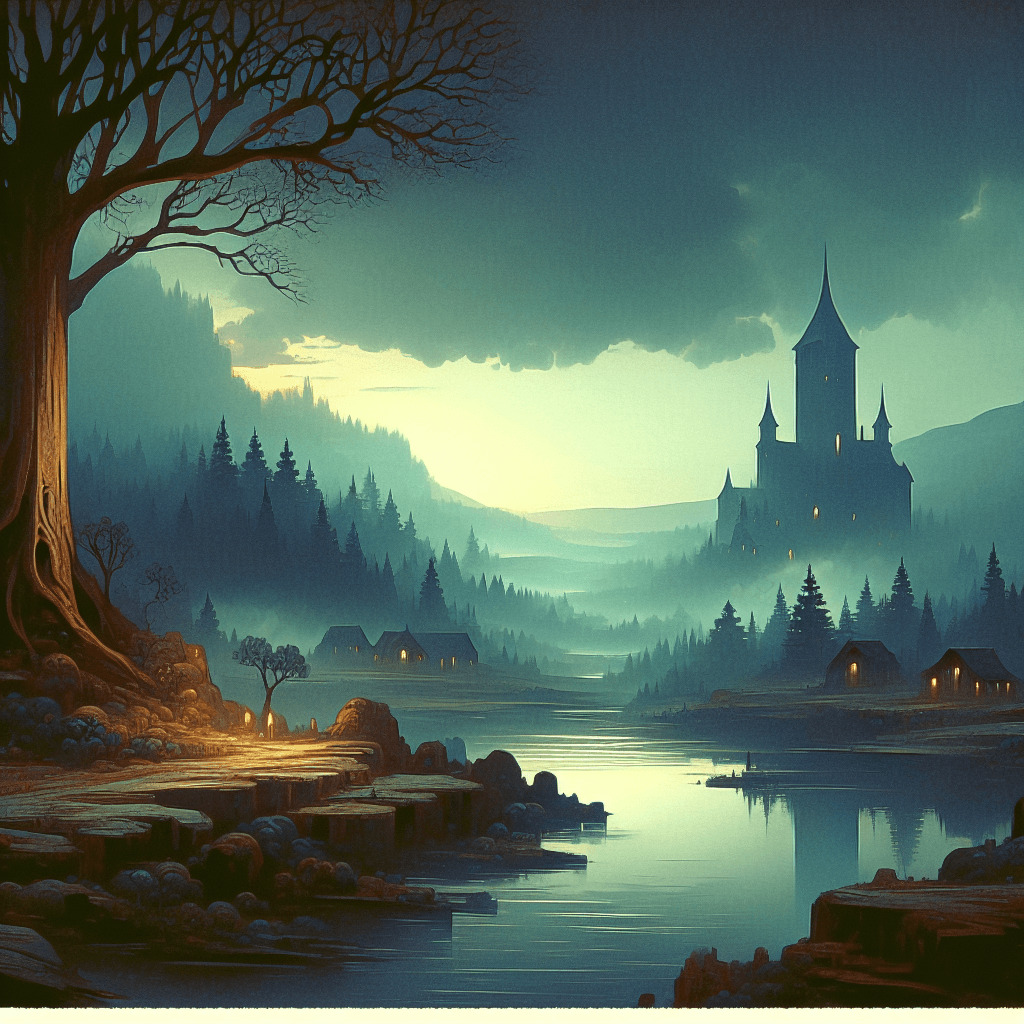
Watcher's Hill
Location
A hilltop clearing reached by uneven, insulting stairs. Home to the Dreamer Eidon, it features a crooked wooden gate with self-rearranging symbols and a hut that looks like 'a mushroom that had aspirations of becoming a cottage.' The inside is somehow bigger than the outside, with bookshelves on chairs and teacups in the fireplace. Within the Bellroot Vale, this site sits in the wider network of villages, ruins, and Pattern-touched places that radiate out from Drelmere and Bellroot Crossing. The Vale's relative stability since the Second Shard was recovered from the Bell Tree is felt here, but the Loosening and the Fray still leave their fingerprints — old paths that no longer match the new ones, names half-remembered, the occasional warm wind out of the wrong season.
Canon StabilityAbsolute
story-1dreamereidon+4

West Mirror Post
Location
The Expanse's western outpost, positioned where the crystal desert borders the open terrain leading toward the Luminous Fold. West Mirror Post monitors the border and reports on the growing geometric patterns that seem to encroach from the Fold's side — crystal arrangements that are too regular to be natural. Out in the Glass Expanse, this site is part of the network of prism-fields, shard-towns, and silica plateaus that surround Prism City. Light bends here in ways the Pattern cannot quite hold — the air sometimes refracts a scene from a different hour, and the Starving Silence forms where light has shattered the same way too many times in the same place. The Knowledge Fragmentation Principle was first formalised by Expanse philosophers a generation before the Luminous Fold accepted it.
Canon StabilityAbsolute
locationglassoutposts

West Reach
Location
A town on the western edge of the Reach where solid ground gradually gives way to marshland and then open water. West Reach is the last conventional settlement before the interior — beyond it, everything floats or sinks. Its raised boardwalks connect to Floodmark through a chain of pontoon bridges. In the Drowned Reach, this site is one of the half-drowned settlements that rebuild themselves on stilts every generation around the Sunken City. The sea is steadily reclaiming the coast, and the Echo is the regional Fray-consequence that haunts the deeper channels. What the tide takes here, it usually takes for a reason — sometimes a Shard, sometimes a name, sometimes only the road that used to lead inland.
Canon StabilityAbsolute
locationdrownedtowns
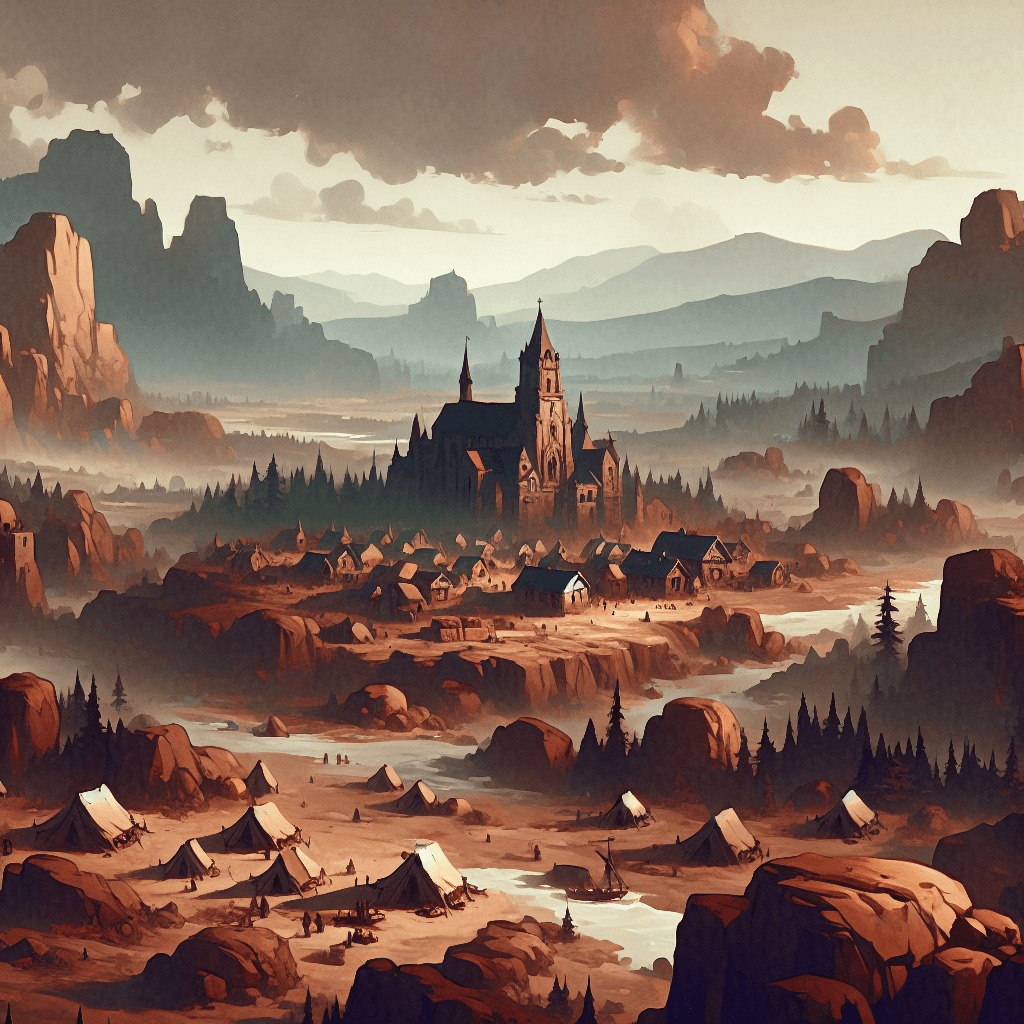
West Varnhalt
Location
The rougher, livelier half of the Varnhalt settlement, separated from the main town by a shallow river ford. West Varnhalt houses the livestock markets, fighting pits, and most of the Frontier's less reputable commerce. What Varnhalt proper won't tolerate, West Varnhalt openly embraces. On the Varnhalt Frontier, this site sits inside the patchwork of crossroad towns, mesa camps, and trade-protected routes that radiate from Old Varnhalt. The Loosening is constant here — mile markers contradict, paths loop — so settlements rely on local pacing and on the small island of stability around the Black Stone Tower in the eastern hills. The Frontier has no central authority; this place answers to whoever its trade depends on this season.
Canon StabilityAbsolute
locationvarnhalttowns

Whispering Expanse
Location
The administrative seat of the Deyune Steppe in everything except formal title — the largest semi-permanent settlement at the Steppe's western edge, where the Long Wind meets the trade-roads from the Bellroot Vale. Whispering Expanse holds the only standing market on the Steppe and the only court of arbitration most clan-leaders will recognise. The Karak stones near the Old Karak Stones site and the Standing Teeth lie within a few days' ride. The Veykar's old roads still converge here; the Wheel passed through this country in its final Cycles. Time Instability is severe — the market day's length is set by a bell-system the local elders calibrate by negotiation rather than by clock.
Canon StabilityAbsolute
locationdeyunekey-features